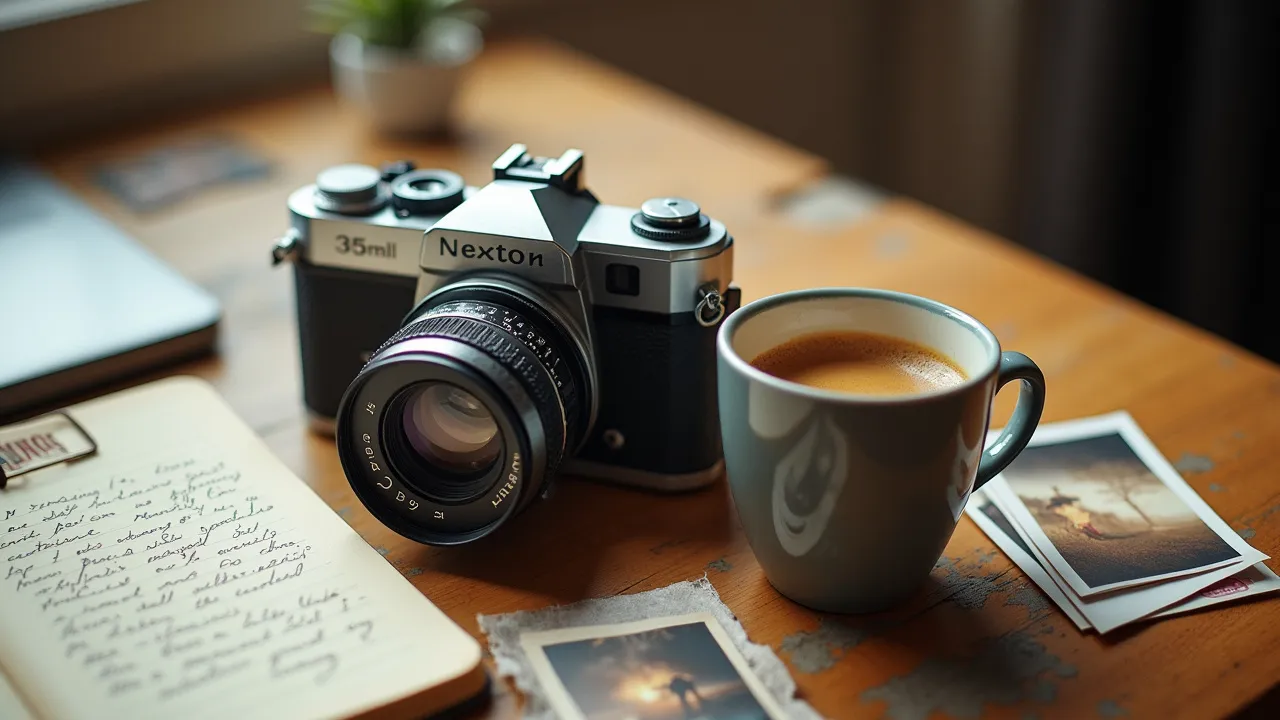
Celebrate National Camera Day on June 29th by capturing memories, exploring photography techniques, and honoring the invention that changed how we see the world. Grab your camera and start shooting!
History and Origins of National Camera Day
National Camera Day, observed annually on June 29th, celebrates the art and science of photography. While the exact origins of this unofficial holiday are unclear, it likely emerged from early 2000s online photography communities that sought a dedicated day to honor the camera. The date June 29th was chosen to coincide with the anniversary of the first commercially successful camera? Actually, no — the first Kodak camera was introduced in 1888, not June 29th. Some suggest it aligns with the founding of the Camera Club of New York in 1884, but that is on June 25th. Regardless, the day has become a global celebration.
The Foundational Catalyst
The camera's journey began centuries before National Camera Day. The camera obscura, known since antiquity, projected images onto surfaces. In the 1820s, Nicéphore Niépce created the first permanent photograph using a camera obscura and bitumen of Judea. Louis Daguerre later introduced the daguerreotype in 1839, making photography accessible to the public. The invention of roll film by George Eastman in 1888 led to the Kodak camera, with the slogan "You press the button, we do the rest." This democratized photography, turning it from a professional tool into a household staple.
The Legislative/Official Adoption
Unlike federal holidays, National Camera Day is not legislated. It instead grew organically through camera clubs, photography blogs, and social media hashtags. The day gained traction in the United States around 2005 when enthusiast forums began promoting June 29th as a day to share photos, explore new equipment, and teach photography. Today, it is recognized by many photography organizations and camera manufacturers, though it remains unofficial.
Modern Global Legacy
With the smartphone revolution, cameras are now ubiquitous. National Camera Day has evolved to include digital photography, mobile photography, and social media sharing. The day now serves as a reminder to appreciate the technology and artistry behind every image. It is celebrated worldwide, albeit with different names like "World Photography Day" on August 19th, but June 29th remains a key date for camera enthusiasts.
How to Celebrate National Camera Day
National Camera Day offers countless ways to engage with photography, whether you're a beginner or a pro. Below are actionable strategies for individuals, schools, and organizations.
For Individuals
- Take a photo walk: Explore your neighborhood or a local park with your camera, focusing on composition and lighting.
- Learn a new technique: Experiment with long exposures, macro photography, or portrait lighting using online tutorials.
- Host a photo contest: Invite friends or colleagues to submit their best shots on a theme, with small prizes.
For Schools and Education
- Photography workshop: Organize a session where students learn about camera basics, then go on a shoot.
- Photo scavenger hunt: Create a list of subjects (e.g., something red, something round) for students to photograph.
- History lesson: Teach students about the evolution of cameras using old models or virtual museums.
For Organizations and Businesses
- Employee photo challenge: Encourage staff to capture moments at work or home, share in a company channel.
- Camera drive: Collect used cameras and donate to schools or nonprofits that teach photography.
- Social media campaign: Use hashtags like #NationalCameraDay to showcase user-generated content.
Global Variations
While June 29th is the main date in the US, other countries celebrate photography on different days. For example, World Photography Day on August 19th commemorates the invention of the daguerreotype. In Japan, there is Camera Day on November 15th? Not really. It's best to check local customs, but June 29th is widely recognized online.
The Evolution of Camera Technology
From bulky wooden boxes to pocket-sized smartphones, camera technology has undergone revolutionary changes. This section explores key milestones.
The Analog Era
The first cameras were large and required long exposure times. The daguerreotype camera (1839) used a copper plate. By the 1860s, dry plates allowed shorter exposures. George Eastman's Kodak camera (1888) introduced roll film, making photography portable. The 35mm film format, popularized by Leica in the 1920s, became standard for decades.
The Digital Revolution
In 1975, Steven Sasson at Kodak built the first digital camera: 0.01 megapixels, 23 seconds to record. The 1990s saw consumer digital cameras like the Apple QuickTake (1994) and the first megapixel camera (1997). DSLRs became affordable in the 2000s, offering interchangeable lenses and manual controls.
The Smartphone Era
Modern smartphones combine convenience and quality. The iPhone 4 (2010) introduced a 5MP camera with HD video; today's devices feature multiple lenses, AI enhancement, and computational photography. Mirrorless cameras, drones, and action cams have also expanded possibilities.
Key innovations: autofocus, image stabilization, burst mode, and HDR. Each allows photographers to capture moments that were previously impossible.
Photography as an Art Form and Cultural Force
Photography is more than recording reality; it is a powerful medium for expression, documentation, and change. National Camera Day honors its role in society.
Documenting History
Photographs have chronicled wars, social movements, and everyday life. Iconic images like the "Migrant Mother" (1936) or the "Napalm Girl" (1972) stirred global emotions. Photojournalism remains a vital branch of journalism.
Artistic Movements
From straight photography (Ansel Adams) to surrealism (Man Ray), photographers push boundaries. Modern art photography includes conceptual, abstract, and digital manipulation. Galleries worldwide exhibit photographic works.
Social Media Influence
Platforms like Instagram and Flickr have turned everyone into a photographer. Visual storytelling shapes trends, travel, and personal branding. National Camera Day encourages mindful creation beyond the filter.
The Impact of Smartphone Photography
Smartphones have made cameras omnipresent, but what does this mean for photography? National Camera Day is a chance to reflect on both the positives and concerns.
Democratization of Photography
Nearly everyone carries a capable camera. This has led to a surge in visual communication, from family snapshots to citizen journalism. The barrier to entry is lower than ever, fostering creativity.
Technical Advancements
Smartphone cameras now rival point-and-shoots. Features like night mode, portrait bokeh, and ultra-wide lenses are common. Computational photography uses algorithms to enhance images beyond hardware limits.
Concerns and Etiquette
Ovresharing, privacy issues, and the decline of printed photos are downsides. National Camera Day promotes responsible photography: ask permission, respect private moments, and back up your digital memories.
How to Start Your Photography Journey
Whether you're a beginner or looking to deepen your skills, National Camera Day is the perfect time to start. This section provides a roadmap.
Choosing Your First Camera
Start with what you have: a smartphone camera is fine. If buying a dedicated camera, consider these options:
- Point-and-shoot: Compact, easy to use; ideal for travel.
- DSLR: Interchangeable lenses, full control; good for learning.
- Mirrorless: Lighter than DSLRs, same benefits; modern choice.
Learning the Basics
Understand the exposure triangle: aperture, shutter speed, ISO. Practice with manual mode. Study composition rules like the rule of thirds, leading lines, and framing. Free resources: YouTube tutorials, online courses, photography blogs.
Building a Portfolio
Shoot regularly, join photography clubs, and share on social media. Participate in photo challenges. Critiques from peers improve your work. National Camera Day is a great occasion to set goals: take 100 photos in a day, or master one technique.
Global Celebrations and Variations
While National Camera Day is primarily observed in the United States on June 29th, photography enthusiasts worldwide celebrate related days. This diversity reflects the universal love for capturing moments.
World Photography Day (August 19)
Commemorating the announcement of the daguerreotype by the French government in 1839. It is recognized by UNESCO and celebrated with exhibitions, workshops, and online galleries.
Other Photography Days
- International Photo and Video Day (September 8) - Focus on visual content creation.
- National Camera Day (UK) - Sometimes observed on June 29th as well, but not official.
- Camera Day in Japan - Not a specific date; more associated with product launches.
National Camera Day remains distinct for its focus on the device itself, while other days celebrate the art or the resulting image.
Historical Timeline
The Chinese philosopher Mozi describes the camera obscura, a device that projects an image onto a surface through a pinhole.
Nicéphore Niépce creates the first permanent photograph, 'View from the Window at Le Gras,' using a camera obscura and bitumen.
Louis Daguerre announces the daguerreotype process, reducing exposure time to minutes and making photography practical for portraiture.
George Eastman introduces the Kodak camera with the slogan 'You press the button, we do the rest,' popularizing roll film and amateur photography.
Leica introduces the first practical 35mm camera, leading to compact, high-quality cameras for professionals and enthusiasts.
The 35mm single-lens reflex (SLR) camera, the Exacta, is introduced, allowing photographers to see through the lens.
Steven Sasson at Kodak invents the first digital camera, a large machine that captures 0.01-megapixel images onto cassette tape.
Apple QuickTake 100 becomes one of the first consumer digital cameras, with a 640x480 resolution and 1MB of internal memory.
The first iPhone is released, embedding a 2-megapixel camera and laying the foundation for modern smartphone photography.
National Camera Day likely begins gaining recognition on photography forums and social media, celebrated on June 29th.
Instagram launches, transforming photography into a social media staple and popularizing filters and mobile editing.
Smartphones now feature 200-megapixel sensors, computational photography, and AI enhancements, making professional-grade images accessible to all.