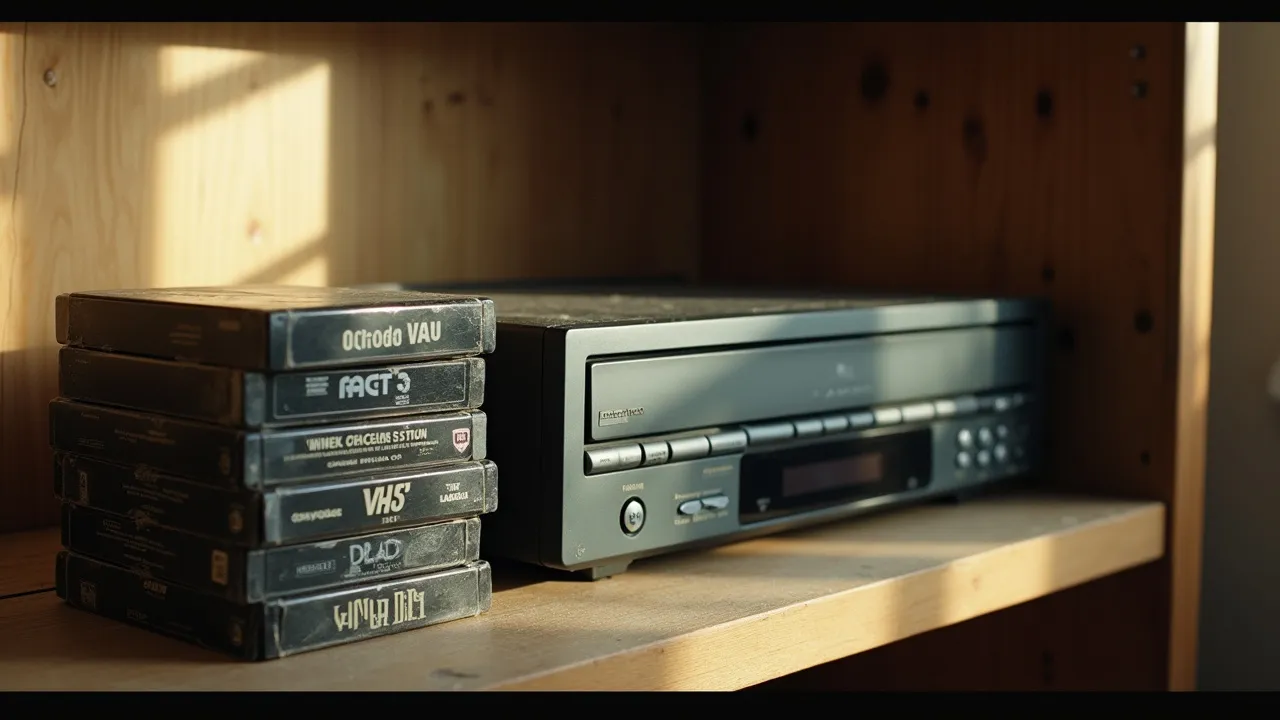
National VCR Day on June 7th celebrates the video cassette recorder that revolutionized home entertainment. Learn about its history, cultural impact, and how to honor this vintage technology.
The Historical Origins & Evolutionary Journey
National VCR Day, observed annually on June 7th, commemorates the video cassette recorder (VCR) — a device that fundamentally transformed how people consumed and shared video content. To understand its significance, we must explore the technology's inception, its rise to ubiquity, and the cultural shifts it ignited.
The Foundational Catalyst
The VCR's story begins in the 1950s with early magnetic tape recording. The first practical consumer VCR was introduced by Sony in 1975 with the Betamax format, followed shortly by JVC's VHS in 1976. These devices allowed users to record television broadcasts and play pre-recorded movies, giving birth to the home video market.
The format war between Betamax and VHS defined the late 1970s and early 1980s. VHS eventually won due to longer recording times and more lenient licensing, leading to the dominance of VHS tapes throughout the 1980s and 1990s.
The Rise of Home Video Culture
By the 1980s, VCR penetration in U.S. households exceeded 50%. This spawned an entire rental industry, led by chains like Blockbuster Video. People could now watch movies on their own schedule, a revolutionary concept. The VCR also enabled time-shifting — recording shows to watch later — which disrupted traditional broadcast schedules.
Modern Global Legacy
Although the VCR was largely replaced by DVD players and later streaming services, its impact endures. National VCR Day serves as a nostalgic reminder of a bygone era. The day is celebrated by enthusiasts who still collect VHS tapes, repair old machines, and share memories of tape rewinding and rental store visits.
How to Celebrate National VCR Day
Whether you're a nostalgic adult or a curious new generation, National VCR Day offers many ways to engage with the history and fun of analog video. Here are actionable ideas for individuals, families, schools, and organizations:
For Individuals and Families
- Watch a VHS movie: Dig out an old VCR and play a classic film. Many thrift stores still sell tapes.
- Host a retro movie night: Gather friends for a double feature of '80s or '90s hits, complete with popcorn and rewinding rituals.
- Create a mixtape: If you have recording equipment, compile TV clips or old home videos onto a blank tape.
For Schools and Educational Groups
- History lesson: Teach students about the evolution of video technology, from VCRs to streaming.
- Hands-on demonstration: Show a working VCR and explain how magnetic tape stores video.
For Organizations and Museums
- Exhibit: Display vintage VCR models, VHS tapes, and related memorabilia.
- Workshop: Offer a repair clinic for old VCRs to promote preservation.
In different regions, celebrations may vary. In Japan, where the VCR was invented, some tech museums host special exhibits. In the United States, home video collectors often organize swap meets.
Technological Evolution: From Analog to Digital
The Dawn of Magnetic Recording
The first video tape recorder (VTR) was introduced by Ampex in 1956, but it was large and expensive. The consumer VCR shrank this technology and made it affordable. The key innovation was the helical scan recording method, which wrapped tape around a spinning head drum to achieve high-density storage.
Format Wars and Standards
- Betamax (1975): Superior picture quality but limited recording time (1 hour).
- VHS (1976): Lower quality but 2+ hours, eventually dominating the market.
- SVHS and Hi8: Upgraded formats for enthusiasts and professionals.
The VCR's mechanical complexity — with moving heads, tape tension arms, and loading mechanisms — made it prone to wear. But its robustness allowed millions of units to operate for decades.
Decline and Legacy
By the early 2000s, DVD players offered superior quality and convenience. The last major VCR manufacturer, Funai Electronics, stopped production in 2016. Yet the VCR's influence persists: streaming services borrowed the idea of renting movies, and DVRs inherited the time-shifting feature.
Cultural and Societal Impact of the VCR
Democratization of Media
The VCR gave consumers control over what and when to watch, challenging broadcast networks. This led to the rise of cable TV channels and eventually on-demand streaming. The ability to record also sparked legal battles over copyright and fair use, most famously the Sony v. Universal City Studios case (1984), which upheld the legality of home recording.
Home Video Rental Industry
Blockbuster Video became a cultural icon, with its blue-and-yellow stores offering thousands of VHS tapes. By 2004, Blockbuster had 9,000 stores worldwide. The VCR also enabled independent filmmakers to distribute their work cheaply, leading to the "direct-to-video" market.
Nostalgia and Collecting
Today, VHS tapes are collectible items, especially rare horror movies and original Disney releases. The VCR is celebrated in retro gaming communities and among "VHS enthusiasts" who appreciate the analog aesthetic. National VCR Day taps into this nostalgia, reminding us of a time when rewinding was a simple pleasure.
Preservation and the Future of Analog Video
Challenges of Obsolescence
VCRs and tapes degrade over time. Tapes lose magnetic signal, rubber belts in VCRs harden, and playback heads clog. Many historic home movies are locked on VHS, threatened by format rot. Organizations like the Video Preservation Services work to digitize analog tapes before they are lost.
Community Efforts
On National VCR Day, many local libraries and archives host digitization workshops. Enthusiast forums like VCR Repair Collective share tips on fixing old machines. The day also raises awareness about the need to transfer family memories to digital formats.
Why Analog Still Matters
Analog video has a distinct look — the softness, color bleeding, and tracking lines — that digital filters try to mimic. The tactile experience of inserting a tape and pressing play is irreplaceable. Preserving VCR technology ensures future generations can experience this genuine artifact of late 20th-century culture.
Global Observations and Variations
While National VCR Day is primarily a U.S. observance, the device had worldwide impact. In the United Kingdom, similar celebrations occur on the same date. Japan honors the VCR's invention with exhibits at the Sony Museum. In countries where VCRs remained popular longer (e.g., parts of Latin America and Africa), the day may highlight ongoing use of analog technology for education and community viewing. However, June 7th stands as the unified date for most international enthusiasts, often celebrated online through social media hashtags like #NationalVCRDay.
Historical Timeline
Ampex introduces the first commercial video tape recorder (VTR), the VR-1000, used by broadcasters.
Sony launches the Betamax VCR, the first consumer video recorder, in Japan.
JVC introduces the VHS format, which offers longer recording time and eventually dominates the market.
The U.S. Supreme Court rules in Sony v. Universal City Studios that home recording of TV shows for time-shifting is fair use.
VCR penetration in U.S. households exceeds 50%. Blockbuster Video and other rental chains boom.
VHS remains dominant; DVD players begin to emerge late in the decade.
DVD overtakes VHS. Many rental stores switch to DVD; VCR production declines.
David A. Donat establishes National VCR Day, celebrated on June 7th.
The last major VCR manufacturer, Funai Electric, ceases production.
VHS and VCRs see a resurgence in nostalgic collecting; National VCR Day gains online popularity.