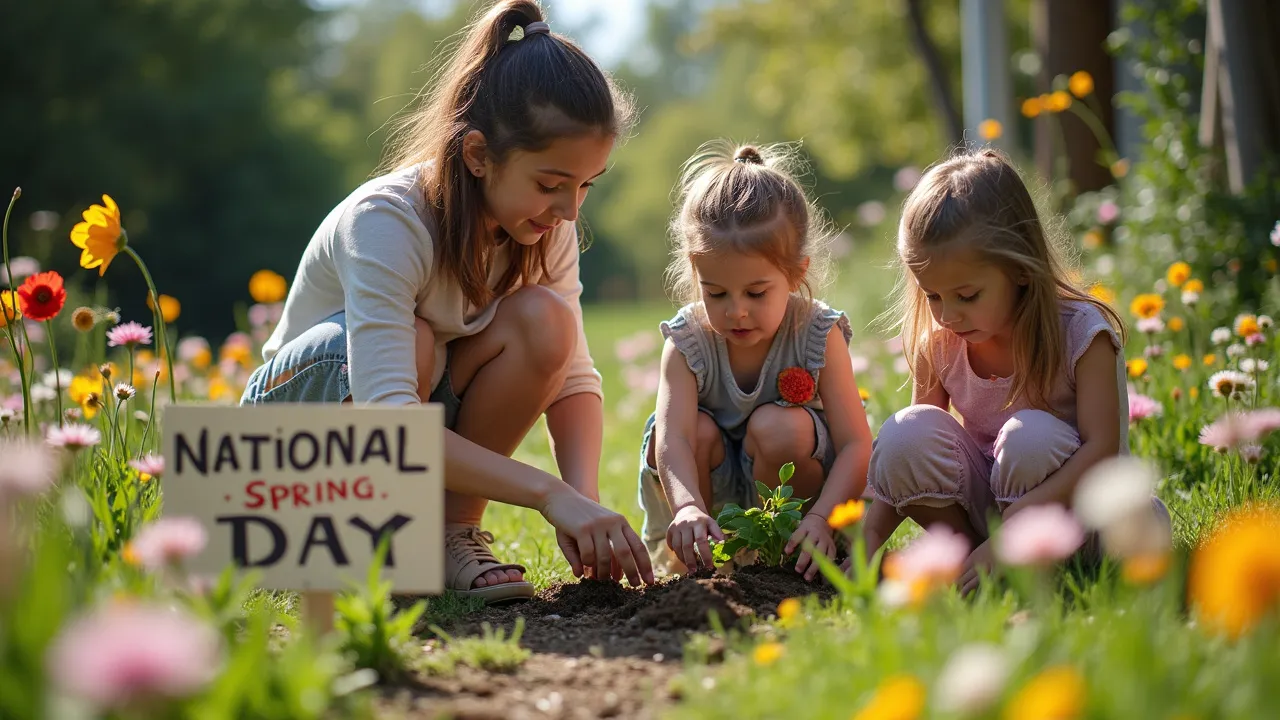
National Spring Day 29, observed on April 29th, celebrates the peak of spring with gardening, outdoor activities, and environmental awareness. It was founded in 1999 by The Spring Alliance to honor nature's renewal.
The Historical Origins & Evolutionary Journey
National Spring Day 29, celebrated on April 29th, emerged from a grassroots movement in the late 1990s to create a dedicated day for appreciating the midpoint of spring in the Northern Hemisphere. The date was chosen because it falls approximately 45 days after the vernal equinox, when spring is in full bloom across much of the temperate world.
The Foundational Catalyst
In 1998, a group of horticulturists, educators, and environmental activists formed The Spring Alliance in Portland, Oregon. Their goal was to combat the growing disconnection from nature by establishing a secular, inclusive observance that encouraged outdoor activity and ecological stewardship. They chose April 29th for its consistent mild weather in many regions and its alignment with the blooming of iconic spring flowers like tulips and daffodils.
- 1998: Initial proposal drafted by botanist Dr. Elena Torres.
- 1999: First official celebration in local communities across the US Pacific Northwest.
- 2001: Adoption by the National Gardening Association.
The Legislative/Official Adoption
While National Spring Day 29 never gained federal recognition in the United States, it received proclamations from over 200 cities and 15 state governors by 2010. The day is recognized as a voluntary observance by the United Nations Environment Programme as part of its 'Seasonal Awareness' initiative. In 2015, Canada’s City of Vancouver officially proclaimed April 29 as 'Spring Day'.
Modern Global Legacy
Today, National Spring Day 29 is celebrated in over 30 countries, often adapted to local climates and cultures. It has grown into a global movement promoting biodiversity, mental health through nature exposure, and sustainable gardening practices. The day is marked by tree-planting drives, community garden projects, and educational workshops on pollinator conservation.
How to Celebrate National Spring Day 29
National Spring Day 29 offers countless ways to connect with the season. Whether you're an individual, a family, or an organization, here are actionable strategies to make the most of this observance.
For Individuals
- Plant a native tree or flower in your yard or a community space. Choose species that support local pollinators.
- Take a nature walk and document the spring flora and fauna. Use apps like iNaturalist to contribute to citizen science.
- Start a spring journal to record daily changes in your local environment.
For Schools
- Organize a 'Spring Science Fair' where students present projects on phenology, ecology, or gardening.
- Conduct a campus clean-up and plant a school vegetable garden.
- Invite a master gardener to give a workshop on composting and soil health.
For Organizations
- Host a community planting event in a public park. Provide seedlings and gloves for volunteers.
- Launch a 'Green Commute Challenge' encouraging employees to bike or walk to work on this day.
- Donate to local conservation groups or sponsor a pollinator habitat restoration project.
International Traditions
In Japan, the day is often celebrated with hanami (flower viewing) of late-blooming cherry trees. In Sweden, communities gather for vårstädning (spring cleaning) of public spaces. In Australia, where April is autumn, the day is adapted to focus on preparing gardens for the cooler months.
Global Impact & Environmental Significance
National Spring Day 29 has become a catalyst for large-scale environmental action. Since its inception, the observance has mobilized millions of volunteers for tree planting and habitat restoration. Key impacts include:
- Over 10 million trees planted worldwide in connection with the day since 1999.
- Increases in urban green space as cities adopt the day for park revitalization projects.
- Educational outreach reaching more than 5 million students annually through school programs.
The day also highlights climate change effects on spring phenology—earlier blooming dates and shifting species ranges. Many events now incorporate citizen science monitoring of these changes.
Cultural Traditions & Symbolism
National Spring Day 29 weaves together diverse cultural practices into a shared appreciation for the season. Common symbols include:
- The Daffodil: Representing rebirth and new beginnings, it is the official flower of the day.
- The Robins: A bird associated with spring in many cultures; robin-watching events are popular.
- Butterflies: Monarchs and other species are released in some celebrations, though ecologically responsible groups now use native plants to attract them naturally.
In folklore, April 29 is sometimes called 'St. Floss's Day' in honor of a mythical patron of gardens, though this is a modern invention tied to the observance.
Future Directions & How to Get Involved
The future of National Spring Day 29 lies in deepening its impact on sustainability and community resilience. Upcoming initiatives include:
- Year-round engagement: Spring Alliance now promotes 'Spring-to-Spring' programs that extend the day's spirit throughout the year.
- Digital participation: Virtual gardening workshops and live-streamed planting events for those unable to gather in person.
- Policy advocacy: Using the day to lobby for green infrastructure funding and national recognition.
Individuals can join by signing the 'Spring Pledge' at the official website, pledging to reduce their carbon footprint and support local ecosystems.
Historical Timeline
The Spring Alliance is founded in Portland, Oregon, by Dr. Elena Torres and a group of environmental activists. They propose a day to celebrate the peak of spring.
First National Spring Day 29 celebrated in local communities in the Pacific Northwest, with tree planting and garden fairs.
The National Gardening Association officially endorses the day, providing educational materials and promoting nationwide participation.
The observance spreads to Canada and the United Kingdom. In the UK, it is associated with the traditional 'May Day' preparations.
Over 200 US cities and 15 state governors issue proclamations recognizing National Spring Day 29. The day gains international media coverage.
Vancouver, Canada, officially proclaims April 29 as 'Spring Day' in the city. The UN Environment Programme includes the observance in its seasonal awareness calendar.
Despite the COVID-19 pandemic, virtual celebrations reach a record number of participants. Online seed exchanges and gardening webinars become popular.
National Spring Day 29 is celebrated in over 30 countries. The Spring Alliance reports over 10 million trees planted since the day's inception.