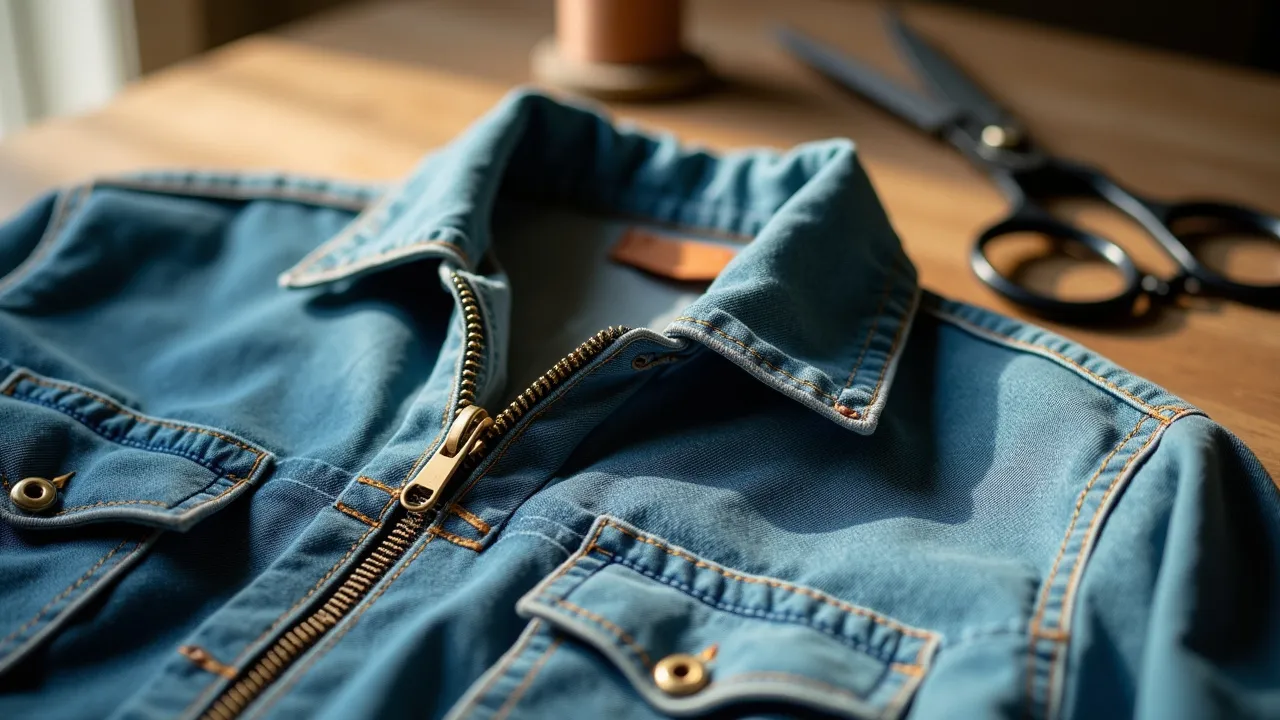
Celebrated on April 29th, National Zipper Day honors the ingenious fastening device that revolutionized clothing and accessories. Learn about the zipper's history, its impact on fashion, and creative ways to observe this everyday marvel.
The Historical Origins & Evolutionary Journey
National Zipper Day, observed annually on April 29th, pays tribute to one of the most ubiquitous yet overlooked inventions in modern history: the zipper. This day commemorates the ingenuity behind a fastening device that seamlessly combines form and function, impacting everything from haute couture to space suits.
The Foundational Catalyst
The zipper's story begins in the late 19th century with American inventor Whitcomb L. Judson, who patented a "clasp locker" for shoes in 1893. Judson's design featured a series of hooks and eyes that could be fastened with a sliding clasp. However, his invention was bulky and unreliable. It was not until 1913 that Swedish-born engineer Gideon Sundback improved the design, creating the modern zipper with interlocking teeth and a slider mechanism. Sundback's version, patented in 1917, became the foundation for the zipper we know today.
The Legislative/Official Adoption
While National Zipper Day does not have a formal legislative origin, its observance has been popularized by fashion historians, sewing enthusiasts, and organizations like the International Sewing Machine Collectors' Society. The date April 29th was chosen to coincide with the anniversary of a key patent or marketing milestone, though the exact rationale remains folklore. Over time, the day has gained traction on social media and in craft communities, serving as a reminder of the zipper's profound impact on daily life.
Modern Global Legacy
Today, the zipper is a symbol of efficiency and design. It appears in over 3 billion garments annually worldwide, with countries like China, Japan, and Germany leading production. National Zipper Day encourages people to appreciate this small but mighty component, often overlooked in the fast-paced world of fashion. From aviation to upholstery, the zipper continues to evolve, with innovations like waterproof and magnetic zippers expanding its utility.
How to Celebrate National Zipper Day
National Zipper Day offers a unique opportunity to engage with this everyday object in creative and educational ways. Whether you are a fashion enthusiast, a DIY crafter, or simply curious, there are numerous activities to mark the occasion.
For Individuals and Families
- Zipper Art Projects: Create homemade greeting cards or wall art using old zippers. Paint or glue them onto canvas to form abstract shapes or letters.
- Fashion Makeover: Update an old jacket or pair of jeans by replacing a broken zipper with a colorful new one. This practical skill reduces waste and adds a personal touch.
- Host a Zipper-Themed Party: Encourage guests to wear clothing with visible zippers, and play games like “zipper relay races” where participants must zip and unzip quickly.
For Schools and Educational Institutions
- History Lesson: Teach students about the industrial revolution and the invention of the zipper. Include a hands-on demonstration of how a zipper works using a model or a large-scale replica.
- Design Challenge: Have students design a new use for zippers, such as in furniture or accessories. Present projects in a mini-exhibition.
- Sewing Workshop: Collaborate with a local tailor or craft store to offer a beginner sewing class focused on installing zippers.
For Corporations and Organizations
- Employee Appreciation: Gift employees with custom zipper pulls or small zipper-themed merchandise.
- Product Showcase: Highlight products that feature innovative zipper technology, such as backpacks with easy-access zippers or boots with waterproof zippers.
- Charity Drive: Collect old clothing with zippers for donation to textile recycling programs, promoting sustainability.
Across Different Cultures
In Japan, where meticulous craftsmanship is revered, National Zipper Day is sometimes celebrated with exhibitions of high-end zipper manufacturers like YKK. In Italy, fashion houses may release limited-edition zipper accessories. Meanwhile, in the United States, sewing bloggers often host online tutorials and giveaways. The universality of the zipper makes it a truly global celebration.
The Zipper's Cultural Impact & Symbolism
Beyond its practical function, the zipper has acquired cultural and symbolic meanings across different eras and societies.
The Zipper in Pop Culture
The zipper frequently appears in film and music as a metaphor for opening up or revealing hidden truths. For instance, the iconic "zipper" sound effect in horror movies evokes tension. In fashion, designers like Elsa Schiaparelli and Alexander McQueen used zippers as decorative elements, challenging societal norms about fastenings.
Gender and the Zipper
Historically, the zipper played a role in gender equality in clothing. The invention of the zipper fly for trousers allowed women to adopt more practical styles, such as pants in the 1920s and 30s. Today, ungendered clothing often uses zippers to create adjustable fits.
Psychological Associations
From a psychological standpoint, zippers symbolize control and security. The act of zipping up a jacket can provide a sense of safety, while a broken zipper can cause frustration. This dual nature makes the zipper a powerful object in design and daily life.
Industrial Revolutions: How Zippers Changed Manufacturing
The zipper’s introduction set off a cascade of changes in manufacturing, labor, and consumer behavior.
Mass Production and Efficiency
Before zippers, buttons, laces, and hooks were common fasteners, which were time-consuming to attach. Zippers could be sewn in seconds, drastically reducing production time. The B.F. Goodrich Company coined the term "zipper" in 1923 for their rubber boots, and by the 1930s, zippers were standard on trousers and dresses.
Global Supply Chains
Today, the zipper industry is dominated by Japanese and Taiwanese manufacturers. YKK (Yoshida Kogyo Kabushikikaisha) alone supplies over 50% of the world's zippers. The company's vertical integration—from raw materials to finished products—ensures quality and innovation.
Sustainability Challenges
Modern zippers often contain metal and plastic components, posing recycling difficulties. In response, companies are developing biodegradable zippers and using recycled materials. National Zipper Day can spotlight these eco-friendly innovations.
Zippers in Fashion Design: From Function to Statement
Fashion designers have long exploited the zipper's potential as both a functional tool and a bold aesthetic statement.
The Rise of the Exposed Zipper
In the 1980s, punk and grunge movements embraced exposed zippers on clothing, jackets, and accessories. Designers like Vivienne Westwood used oversized zippers as a form of rebellion. In the 21st century, zippers became decorative elements on high-end dresses, with metallic zippers adding futuristic edge.
Iconic Zipper Uses
The zipper transform a simple garment into an interactive piece. For example, Issey Miyake created dresses with multiple zippers that allowed wearers to adjust the silhouette. Rick Owens often uses exaggerated zippers to create asymmetry. Such designs blur the line between clothing and sculpture.
Customization and DIY Culture
The rise of fast fashion has also led to a boom in zipper customization. Sewing enthusiasts replace standard zippers with decorative ones to personalize items. National Zipper Day encourages this creativity.
The Future of Zippers: Innovation and Beyond
As technology advances, the humble zipper continues to evolve, integrating smart features and new materials.
Smart Zippers
Researchers are developing conductive zippers that can transmit data or even act as switches. For instance, a zipper on a jacket might control a phone’s music player. Other prototypes include self-locking zippers for safety in children's clothing.
Biodegradable and Recycled Zippers
To combat textile waste, companies are creating zippers from plant-based polymers and recycled plastics. These innovations align with circular fashion principles. National Zipper Day can serve as a platform for promoting these sustainable alternatives.
3D-Printed Zippers
3D printing has enabled the creation of custom zippers with unique shapes and materials. Designers can now produce one-of-a-kind fasteners for haute couture, reducing inventory waste.
Historical Timeline
Whitcomb L. Judson patents the "clasp locker" for shoes, the precursor to the modern zipper.
Gideon Sundback redesigns the zipper with interlocking teeth and a slider, creating the modern mechanism.
Sundback patents the "Separable Fastener", and the first zipper factory opens in Meadville, Pennsylvania.
B.F. Goodrich Company coins the term "zipper" for their rubber boots, popularizing the name.
Zippers begin replacing buttons on trousers and dresses, becoming a staple in menswear and womenswear.
World War II boosts zipper production for military uniforms, leading to widespread adoption.
The zipper becomes a fashion symbol, with designer Elsa Schiaparelli using visible zippers as decoration.
YKK (Yoshida Kogyo Kabushikikaisha) becomes the world's largest zipper manufacturer through quality and innovation.
Punk and grunge subcultures embrace exposed zippers, influencing mainstream fashion.
Smart zippers and biodegradable zippers emerge, combining technology with sustainability.
National Zipper Day is celebrated globally, with enthusiasts sharing zipper art, tutorials, and history.