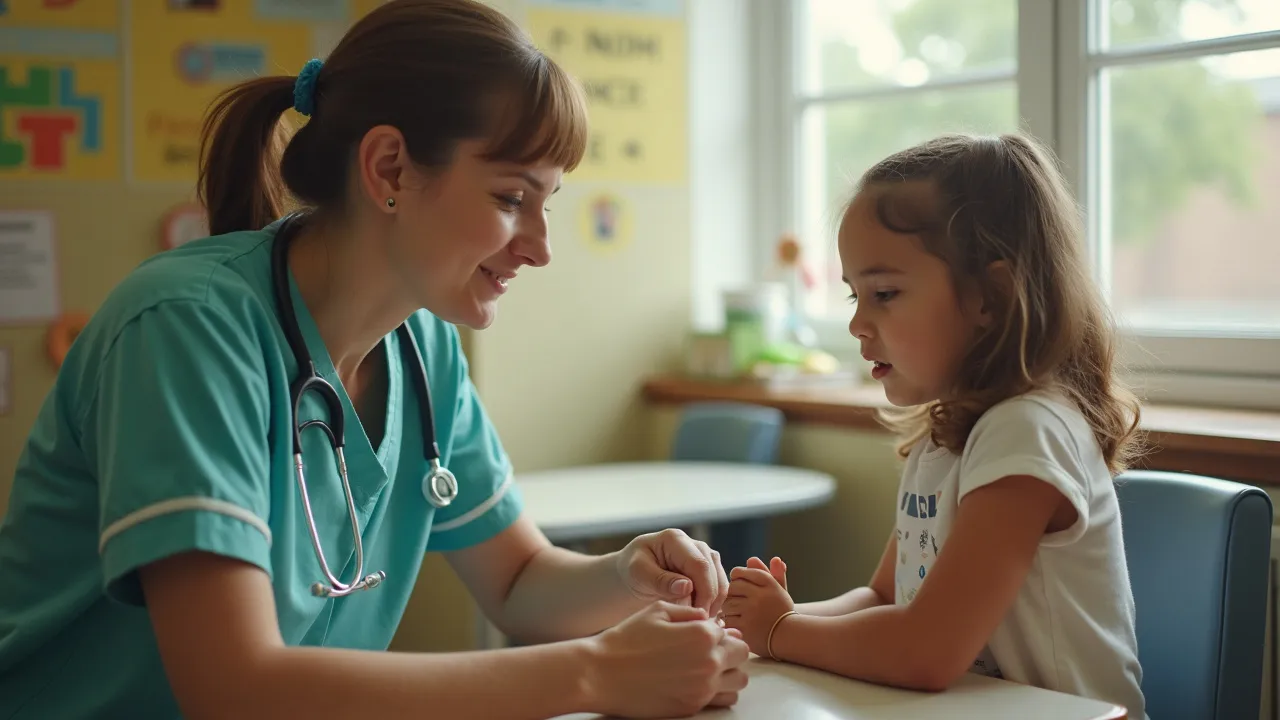
National School Nurse Day honors the dedicated professionals who safeguard student health and well-being. Observed on the Wednesday of National Nurses Week, it recognizes their vital role in schools.
The Historical Origins & Evolutionary Journey
National School Nurse Day traces its roots to the landmark efforts of Lillian Wald, who in 1902 placed the first school nurse in New York City schools to combat absenteeism caused by communicable diseases. This pioneering move demonstrated that a nurse on site could dramatically improve student health and attendance, laying the foundation for the profession.
The Foundational Catalyst: Lillian Wald and the Henry Street Settlement
Wald’s vision emerged from the Henry Street Settlement, where public health nurses provided care to immigrant families. She convinced the New York City Board of Education to fund a one-month experiment: a nurse named Lina Rogers visited schools, treated minor ailments, and educated families. Within a year, absenteeism dropped by 50%, proving the value of school nursing. By the 1920s, school nurses were employed in cities across the United States.
The Legislative/Official Adoption
The modern observance was established in 1972 by the National Association of School Nurses (NASN) to formally recognize the contributions of school nurses. The date was set as the Wednesday of National Nurses Week, which itself had been recognized since 1954 (expanded to a week in 1974). President George H.W. Bush signed a proclamation in 1991 urging Americans to celebrate National School Nurse Day. Since then, each year the NASN selects a theme to highlight current issues, such as mental health, chronic disease management, or pandemic response.
Modern Global Legacy
While National School Nurse Day is primarily a U.S. observance, its spirit has inspired similar recognitions in Canada (School Nurse Day in early May) and the United Kingdom (School Nursing Day in April). Internationally, the role of school nurses has expanded from first aid to comprehensive health services, including vision screenings, immunization programs, and mental health support. The day now serves as a platform for advocacy, funding awareness, and community appreciation.
How to Celebrate National School Nurse Day
Celebrating National School Nurse Day effectively requires thoughtful, inclusive activities that honor the unique contributions of school nurses. Below is a comprehensive guide with actionable strategies for individuals, schools, and organizations worldwide.
For Individuals and Families
- Write a thank-you note or create a handmade card expressing gratitude for the nurse’s care.
- Donate supplies to the school health office, such as bandages, thermometers, or hand sanitizer.
- Volunteer time to assist with health screenings or office organization (in coordination with school administration).
For Schools and Staff
- Host a recognition assembly with student speeches and a presentation of a certificate of appreciation.
- Decorate the nurse’s office with posters, balloons, and student artwork.
- Organize a staff potluck or treat basket for the school nursing team.
- Promote health education by inviting the nurse to lead a classroom session on hygiene, nutrition, or mental wellness.
For Organizations and Communities
- Social media campaigns: Use hashtags like #SchoolNurseDay and #ThankASchoolNurse to share stories.
- Partner with local health departments to offer free health screenings at schools.
- Advocate for funding by contacting legislators to support school health programs.
- Create a public art installation: Have students paint a mural that celebrates the nurse’s role.
Global Variations
In Canada, the day is often marked by provincial health authorities highlighting school nursing achievements. In the UK, School Nursing Day (typically in April) focuses on community outreach and school health workshops. Australia observes a similar day in May, emphasizing rural and remote school health services. No matter the location, the core message remains: school nurses are essential to educational success.
The Expanding Role of School Nurses in Modern Healthcare
School nurses today are far more than 'band-aid' dispensers. They manage chronic conditions like asthma, diabetes, and severe allergies; administer medications; provide mental health first aid; and coordinate care with families and physicians. During the COVID-19 pandemic, they became front-line responders—contact tracing, testing, and vaccinating students and staff. The American Academy of Pediatrics recommends at least one full-time nurse in every school, yet many schools still lack this resource. National School Nurse Day shines a spotlight on this gap and advocates for universal access.
Key Statistics
- Nearly 40% of U.S. schools have only a part-time nurse; over 20% have no nurse at all.
- School nurses in Japan (yogo teachers) are present in nearly all schools, providing integrated health and education support.
- The National Association of School Nurses estimates that 75% of school nurses report increased mental health consultations post-pandemic.
Tackling Health Disparities Through School Nursing
School nurses play a critical role in reducing health inequalities by ensuring students from underserved communities receive basic care. They conduct vision and hearing screenings that catch problems early, offer referrals to low-cost clinics, and educate families about nutrition. In many countries, school nurses are the only consistent health professional children see. National School Nurse Day highlights these equity-focused efforts and encourages policies that place nurses in Title I schools and rural districts.
Case Studies
In California, the 'Healthy Start' program pairs school nurses with community health workers to address social determinants of health. In Kenya, school nurses trained through the 'Nurses for Kids' initiative have drastically reduced preventable diseases in schools. These models show that investing in school nursing saves lives and money.
Collaboration Between Educators, Families, and Nurses
Effective school health requires teamwork. School nurses collaborate with teachers to accommodate students with medical needs—like creating seizure action plans or allowing extra time for insulin checks. They partner with parents to ensure immunization compliance and educate about home care. National School Nurse Day is an opportunity to strengthen these partnerships. Schools can host 'Nurse and Parent Tea' events or 'Health Curriculum Planning' meetings to integrate nursing expertise into lesson plans.
Technology in Collaboration
Electronic health records (EHRs) in schools are becoming standard, enabling real-time communication between nurses, administrators, and families. Telehealth services, facilitated by school nurses, expand access to specialists in remote areas. The day's activities often include technology demonstrations and training sessions.
The Future of School Nursing: Trends and Innovations
As schools face new challenges—student mental health crises, vaping epidemics, and climate-related allergies—the role of the school nurse continues to evolve. Trends include: telehealth expansion, allowing nurses to consult with physicians remotely; data-driven care, using analytics to identify health trends; trauma-informed care, training nurses to support students affected by adverse childhood experiences; and community health partnerships, connecting schools with local health systems. National School Nurse Day serves as a beacon for innovation, inspiring professional development and policy change.
Professional Development
The NASN offers certifications and conferences that empower nurses with the latest in pediatric care, legal issues, and crisis management. The day often features workshops on topics like opioid reversal in schools and LGBTQ+ youth health.
Historical Timeline
Lillian Wald and Lina Rogers launch the first school nursing program in New York City, leading to a 50% drop in absenteeism.
School nursing spreads across the United States, with cities like Los Angeles and Chicago hiring nurses.
National Nurses Week is first observed, later expanded to a full week in 1974.
The National Association of School Nurses (NASN) establishes National School Nurse Day on the Wednesday of National Nurses Week.
President George H.W. Bush signs a proclamation recognizing National School Nurse Day, urging Americans to celebrate.
The NASN launches the 'Healthy Kids, Healthy Future' campaign to address childhood obesity through school nursing.
The Affordable Care Act includes provisions supporting school-based health centers and school nurse services.
School nurses become essential during the COVID-19 pandemic, leading contact tracing, testing, and vaccination efforts.
The NASN releases updated guidelines on mental health support in schools, emphasizing the school nurse's role.
National School Nurse Day focuses on 'Equity in School Health', advocating for full-time nurses in every school.