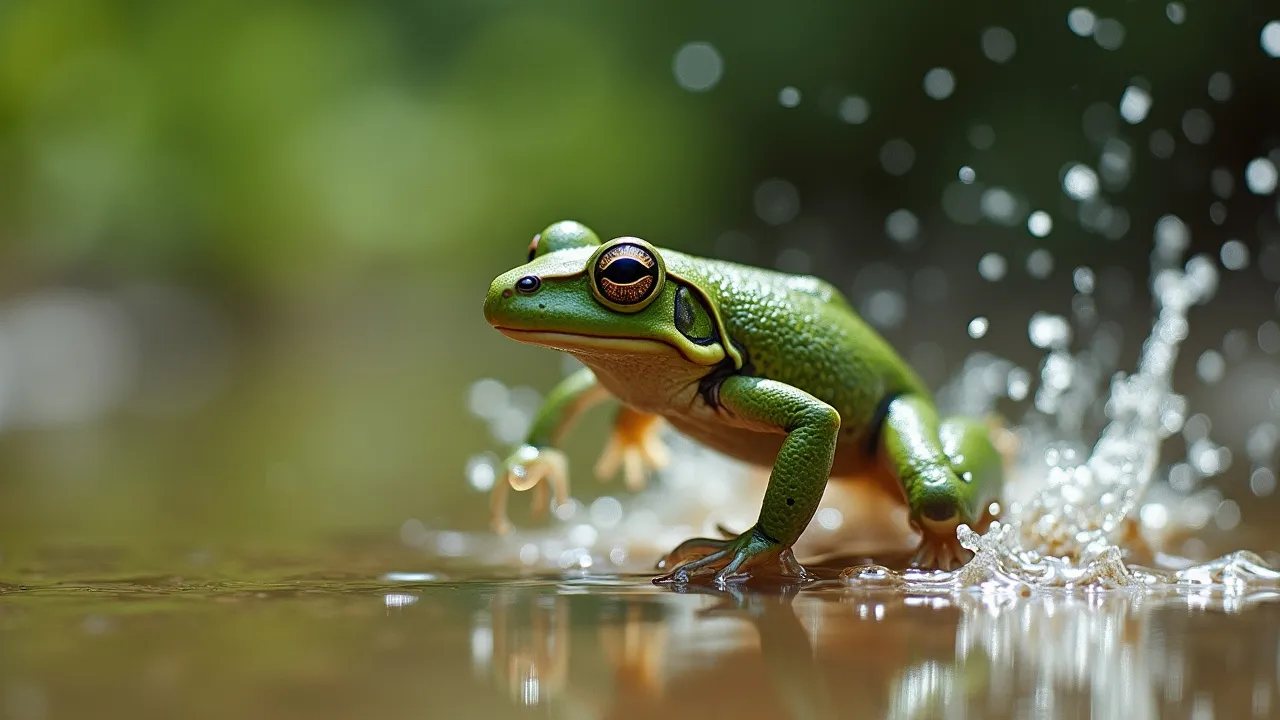
National Frog Jumping Day on May 13th celebrates the playful tradition inspired by Mark Twain's famous story. It's a day for frog jumping contests, learning about amphibian biology, and embracing the whimsy of these leaping creatures.
The Historical Origins & Evolutionary Journey
National Frog Jumping Day, observed annually on May 13th, traces its roots to the American literary classic The Celebrated Jumping Frog of Calaveras County by Mark Twain (1865). This humorous tale of a gambler and his trained frog propelled frog jumping into American folklore. However, the day's formal celebration began much later, intertwining with local fairs and eventually gaining national recognition through grassroots enthusiasm.
The Foundational Catalyst
Twain's story, first published in the San Francisco Sunday Examiner in 1865, introduced the world to Jim Smiley and his frog, Dan'l Webster. The story's popularity sparked interest in frog jumping as a competitive activity, leading to informal contests across the United States. The first official frog jumping contest took place in 1928 at the Calaveras County Fair in Angels Camp, California, where the story is set. This event, known as the Calaveras County Frog Jump, became an annual tradition and the cornerstone of National Frog Jumping Day.
The Legislative/Official Adoption
While National Frog Jumping Day is not a federal holiday, it gained official recognition through state proclamations and widespread media coverage. In 1958, the Calaveras County Fair officially trademarked the frog jumping contest, cementing its status as a cultural institution. By the 1970s, schools and community organizations across the United States began hosting their own frog jumping events on May 13th, aligning with the date of the original fair's festivities. The day is now unofficially recognized by various animal conservation groups and educational institutions as a fun way to engage with nature.
Modern Global Legacy
Today, National Frog Jumping Day is celebrated not only in the United States but also in countries such as Canada, Australia, and the United Kingdom, where frog jumping contests are held in parks and schools. The day has evolved to include educational components about amphibian conservation, as many frog species face habitat loss and disease. Events often feature hands-on activities, frog-themed crafts, and lessons on responsible interaction with wildlife. The Calaveras County Fair remains the flagship celebration, drawing thousands of visitors each year and maintaining the tradition with strict rules ensuring the frogs' safety.
How to Celebrate National Frog Jumping Day
Celebrating National Frog Jumping Day can be as simple as reading Mark Twain's story or as ambitious as organizing a community frog jumping contest. Below are detailed strategies for individuals, schools, and organizations to join the fun, with safety and conservation in mind.
For Individuals and Families
- Read the Classic Tale: Start by reading Mark Twain's The Celebrated Jumping Frog of Calaveras County aloud with family. Discuss the humor and history.
- Host a Backyard Contest: Use a small, clear area and a bucket of water for a safe frog landing zone. Ensure frogs are handled gently with damp hands and released immediately after. Use a measuring tape to record jumps.
- Create Frog Crafts: Build origami frogs or decorate frog masks. This is a great activity for young children.
- Learn About Local Frogs: Visit a nearby pond or nature center to observe frogs in their natural habitat. Use a field guide to identify species.
For Schools and Educational Groups
- Organize a Classroom Contest: Use toy frogs or model frogs for younger students to avoid handling live animals. For older students, consider a virtual frog jumping simulation.
- Integrate Science Lessons: Teach the biomechanics of frog jumping—discuss leg muscles, energy transfer, and adaptation. Use videos of real frog jumps.
- Field Trip to a Wetland: Partner with a local nature preserve to learn about frog habitats and conservation. Many reserves offer programs on amphibians.
For Organizations and Community Groups
- Host a Charity Frog Jump: Charge a small entry fee and donate proceeds to amphibian conservation organizations like the Amphibian Survival Alliance.
- Partner with a Fair: If possible, collaborate with existing fairs or festivals to include a frog jumping event. Use the Calaveras County Fair as a model.
- Promote Responsibly: Emphasize frog safety—use only healthy, wild-caught frogs that are temporarily held and released, or use toy frogs to avoid stress on animals.
Regional Variations: In the United Kingdom, some communities celebrate with 'frog racing' along a wet surface. In Australia, frog jumping is often combined with 'Save the Frogs Day' in April, focusing on conservation. Always check local regulations regarding handling amphibians.
The Cultural Impact of Frog Jumping
Frog jumping has left a mark on literature, tourism, and community identity. Mark Twain's story alone has been adapted into films, plays, and even a 1989 Disney animated short. The Calaveras County Frog Jump has become a symbol of small-town Americana, drawing tourists from around the world and generating significant economic impact for the region. Moreover, the day fosters a sense of wonder and respect for amphibians, encouraging people to learn about these often overlooked creatures.
Literary and Media Influence
Twain's tall tale is a cornerstone of American humor, and National Frog Jumping Day keeps this narrative alive. Schools frequently use the story to teach narrative structure and regional dialects. The event has also inspired modern children's books like Jump, Frog, Jump! by Robert Kalan, and numerous online resources.
Tourism and Economic Impact
The annual Calaveras County Fair, held over four days in May, sees over 50,000 visitors. The frog jumping contest is the main attraction, with participants from all 50 states and international guests. Local businesses benefit from increased revenue, and the event has spawned merchandise, memorabilia, and even a frog jumping museum.
Community and Identity
For many small towns, hosting a frog jumping event builds community spirit and provides a unique identity. In the UK, the World Frog Jumping Championships in the village of Bakewell (though not officially recognized) attract local media attention. These events reinforce the bond between people and nature.
Environmental and Ecological Considerations
While National Frog Jumping Day is a celebration, it also raises important questions about humane treatment and conservation. Frogs are sensitive creatures, and mishandling can cause stress or injury. Responsible celebrations incorporate best practices to ensure the welfare of the animals.
Handling Frogs Safely
- Use Clean Hands: Always wash hands before handling frogs to avoid transferring oils or chemicals. Use gloves if necessary.
- Keep Frogs Moist: Frogs absorb water through their skin, so keep them in a shallow, clean water dish between jumps.
- Limit Handling Time: Minimize the time frogs are out of their habitat. Return them to their natural environment immediately after the contest.
- Never Use Wild Frogs from Vulnerable Populations: Avoid taking frogs from endangered species or during breeding season.
Conservation Message
National Frog Jumping Day serves as an opportunity to educate the public about amphibian declines. Habitat loss, pollution, climate change, and disease are threatening frogs worldwide. Many organizers use the day to fundraise for conservation efforts, such as the Amphibian Ark project, which works to protect species in zoos and aquariums. By connecting fun activities with serious issues, the day helps foster a new generation of conservationists.
Famous Frog Jumping Events Around the World
While the Calaveras County Frog Jump is the most famous, numerous other frog jumping events take place globally. These events vary in rules, scale, and cultural significance.
- Calaveras County Frog Jump (USA): Held in Angels Camp, California, since 1928. Frogs are entered by owners and must jump three consecutive leaps. The world record stands at 21 feet 5.75 inches, set by Rosie the Ribeter in 1986.
- World Championship Frog Races (UK): An annual event in the village of Bakewell, Derbyshire, though not officially a championship. Frogs are raced on a wet track, and proceeds go to local charities.
- Australian Frog Jumping Competition (Australia): Held in various towns, often integrated with 'Save the Frogs Day'. Rules emphasize using native species and minimal handling.
- Japan's Kaeru Tobi Kyōsō: In some rural areas of Japan, frog jumping is a traditional children's game, though not a formal competition.
These events demonstrate the universal appeal of frog jumping, though each region adapts the tradition to its local context and conservation needs.
The Science of Frog Jumping
Frog jumping is a remarkable feat of biomechanics. Frogs are among the best jumpers in the animal kingdom, with some species capable of leaping over 150 times their body length. Understanding the science behind these jumps adds an educational dimension to National Frog Jumping Day.
Biomechanics
Frogs jump using a unique combination of muscle power and elastic energy storage. Their hind legs are highly adapted with strong muscles and long bones. Before a jump, a frog contracts its muscles to store energy in its tendons, then releases it rapidly like a catapult. This allows for sudden, powerful leaps. The feet also act as shock absorbers upon landing.
Record Jumps
The current world record for a frog jump (in a competition) is 21 feet 5.75 inches (6.55 meters), achieved by a frog named Rosie the Ribeter in 1986. In the wild, some tree frogs can jump distances over 50 times their body length. The South African sharp-nosed frog holds the record for the longest absolute jump relative to size.
Adaptations
Different frog species have evolved various jumping styles. For example, aquatic frogs have webbed feet for swimming, while arboreal frogs have sticky toe pads for climbing. The jumping ability is also linked to defense against predators and hunting prey. Studying these adaptations helps biologists understand how amphibians thrive in diverse environments.
Historical Timeline
Mark Twain publishes 'The Celebrated Jumping Frog of Calaveras County' in the San Francisco Sunday Examiner, popularizing the concept of frog jumping competitions.
The first official frog jumping contest is held at the Calaveras County Fair in Angels Camp, California, inspired by Twain's story.
The Calaveras County Fair trademarks the frog jumping contest, formalizing rules and establishing it as a major annual event.
National Frog Jumping Day begins to be observed informally on May 13th across the United States, with schools and communities hosting their own contests.
A frog named Rosie the Ribeter sets the world record at the Calaveras County Frog Jump with a leap of 21 feet 5.75 inches, a record that still stands.
National Frog Jumping Day gains international recognition, with events in Canada, the UK, and Australia, often combined with amphibian conservation awareness.
The day is widely promoted on social media, with many organizations and individuals sharing facts about frogs and hosting virtual or in-person jumping events.