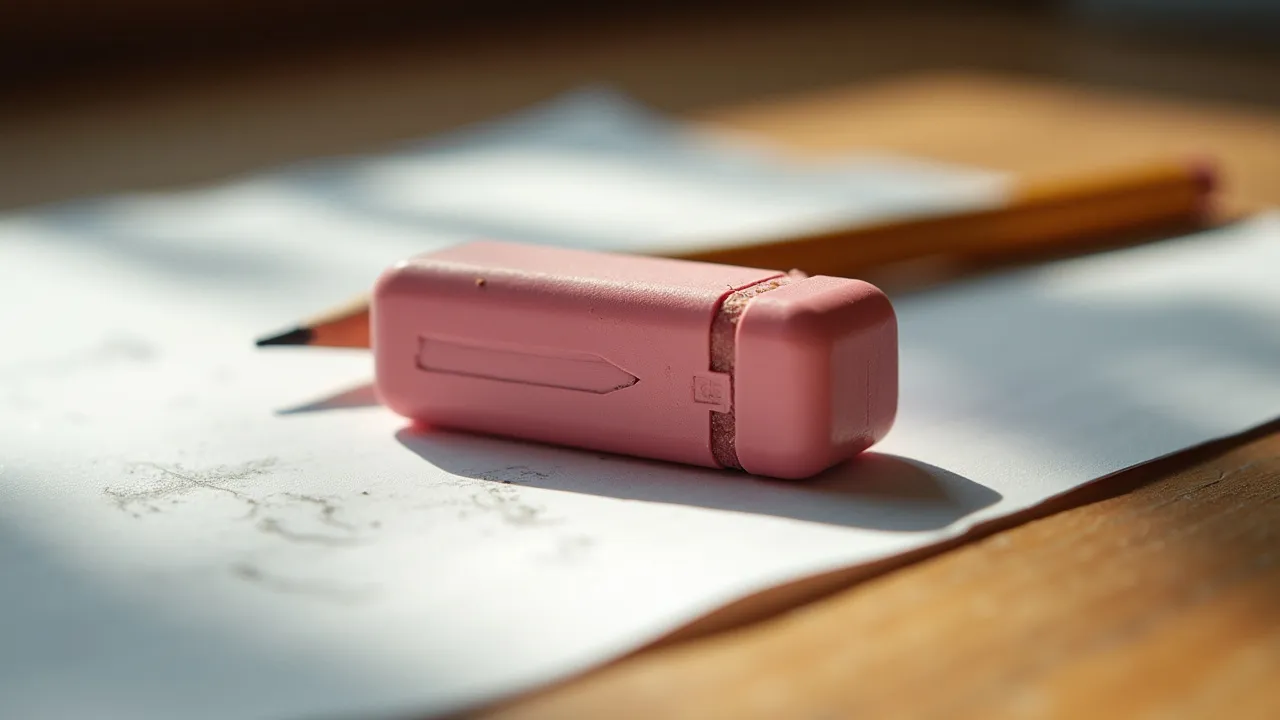
National Rubber Eraser Day, celebrated on April 15th, honors the humble eraser—a tool that corrects mistakes and fuels creativity. Learn its history, global traditions, and how to celebrate this overlooked invention.
The Historical Origins & Evolutionary Journey
National Rubber Eraser Day, observed on April 15th, is a tribute to the unassuming yet indispensable tool that allows us to perfect our written work. While the exact origins of this observance remain obscure—likely emerging from grassroots educator or office supply enthusiasts—the history of the eraser itself is a fascinating journey of innovation.
The Foundational Catalyst
Before the rubber eraser, mistakes were corrected using bread crumbs, pumice stones, or wax. The breakthrough came in 1770 when English engineer Edward Nairne accidentally picked up a piece of natural rubber instead of breadcrumbs. He discovered that rubber erased pencil marks far more effectively. Nairne began selling rubber erasers in London, but they were crude and smelly.
In 1839, Charles Goodyear's vulcanization process transformed rubber into a durable, stable material. This allowed for the mass production of the modern rubber eraser. The first patent for attaching an eraser to the end of a pencil was granted to Hyman Lipman in 1858, revolutionizing the stationery industry.
The Legislative/Official Adoption
Though no official government proclamation established National Rubber Eraser Day, it is widely recognized in the United States on April 15th—coincidentally Tax Day, a day when many Americans rely on erasers to fix returns. The day gained popularity through social media, office supply companies, and stationery blogs in the early 2000s. It is not an official federal holiday but a cultural observance.
Modern Global Legacy
Today, erasers come in diverse forms: pencil-top, block, mechanical, kneaded gum, and vinyl. They are used in art (charcoal erasers), drafting (plastic erasers), and even digital design (eraser tools). The observance highlights the role of correction in learning and creativity—embracing mistakes as part of progress.
How to Celebrate National Rubber Eraser Day
National Rubber Eraser Day offers a chance to appreciate the power of correction. Here are actionable ways to celebrate, from individual to organizational levels.
For Individuals and Students
Clean and test your erasers: Sort through your pencil case, test each eraser on paper, and discard those that smear.
Practice eraser art: Use a soft eraser to create highlights and textures in charcoal drawings.
Write about a mistake you corrected: Reflect on a personal or professional error that led to growth.
For Schools and Teachers
Host an 'Eraser History' lesson: Teach students the invention and evolution of erasers.
Conduct an eraser science experiment: Compare rubber, vinyl, and plastic erasers on different papers.
Encourage creative writing: Ask students to write a story titled 'The Day the Eraser Saved the World'.
For Offices and Organizations
Give away branded erasers: Custom erasers with company logo promote a 'learn from mistakes' culture.
Declare a 'No-Pressure To Be Perfect' day: Encourage team members to share past failures.
Sponsor a local art contest: Using erasers as the primary medium.
Regional Variations
While April 15th is the primary US date, other countries may have their own celebrations:
Japan (Eraser Day): Celebrated on March 3rd (Eraser Day based on pun 'keshigomu'). Schools hold eraser-stamp workshops.
United Kingdom: Often observed on February 12th (coinciding with Charles Darwin's birthday, symbolizing evolution).
Brazil (Dia da Borracha): September 26th, linked to rubber tappers' heritage.
The Science of Erasing: How Rubber Removes Graphite
Physical Mechanism
Rubber erasers work by abrasion: the eraser particles mechanically lift graphite flakes from paper fibers. Soft rubber (natural or synthetic) creates enough friction to remove graphite without tearing the paper. Vinyl erasers, used in drafting, produce fine crumbs that absorb graphite.Chemistry of Modern Erasers
Most erasers are made from styrene-butadiene rubber (SBR) or polyvinyl chloride (PVC). Plastic erasers (like those on pencils) are harder and less smeary. Kneaded erasers, used by artists, are a mixture of synthetic rubber and filler; they absorb graphite by sticking without leaving crumbs.Why Some Erasers Smear
Smearing occurs when eraser particles are too coarse or paper fibers are rough. High-quality erasers contain pumice or calcium carbonate as abrasives, ensuring clean lifts. Erasers for ink (like those on ink eraser pens) use solvents that chemically break down ink, not physical abrasion.Cultural Significance of Erasers in Education and Art
In Classrooms
The eraser is a symbol of learning from mistakes. Pedagogically, erasers encourage risk-taking: students are more likely to attempt difficult problems knowing they can correct errors. Some schools have 'Eraser-Free Days' to teach careful planning, but the eraser remains vital for iterative learning.In Art
Erasers are not just corrective tools but creative instruments. Charcoal artists use kneaded erasers to lift highlights, creating three-dimensional effects. 'Eraser art' (also called subtraction drawing) uses a dark background and erases to form an image. Famous eraser artist Claire Brewster creates intricate stencil-like works.In Popular Culture
The eraser has appeared in idioms—'rub out' (erase), 'clean slate'—and in movies like 'The Eraser' (action film). The phrase 'eraserhead' denotes someone who forgets easily. The eraser is also a metaphor for forgiveness and second chances.Economic and Environmental Impact of Eraser Production
Global Market
The global eraser market was valued at over $400 million in 2023, with steady growth from school and office demand. Major manufacturers include Faber-Castell, Paper Mate, Pentel, and Staedtler. The market is segmented into rubber, plastic, kneaded, and mechanical erasers.Environmental Concerns
Traditional erasers are non-biodegradable and often contain PVC, which has environmental and health risks. Many companies are shifting to natural rubber, recycled rubber, or plant-based plastics. Biodegradable erasers made from cornstarch or bamboo are emerging. Some erasers now come in recyclable cardboard packaging.Sustainable Alternatives
Consumers can choose erasers made from natural rubber (sustainably harvested) or buy refillable mechanical erasers to reduce waste. Encouragingly, the 'zerowaste' movement has popularized eraser-less pencils (like plastic pencils that don't need erasing) but the eraser persists as a low-cost tool with small environmental footprint if used wisely.Famous Eraser Innovations and Milestones
Pencil-Top Eraser (1858)
Hyman Lipman patented the first pencil with an attached eraser, selling it for $1. He later sold the patent for $100,000, a fortune then. This innovation made erasers portable and convenient.Kneaded Eraser (1950s)
Developed by artists for charcoal and pastel work, the kneaded eraser can be molded into fine points. It is also called 'putty rubber' and is self-cleaning when kneaded.Electric Eraser (1960s)
Battery-powered erasers (like the 'Eraser Mate') became popular for architects and drafters, providing rapid clean erasing without smearing.Digital Eraser (2000s)
In graphics software, the eraser tool is a metaphor. Some styluses have eraser-like tips for natural correction. The physical eraser remains essential in an increasingly digital world.Historical Timeline
Edward Nairne accidentally uses rubber to erase pencil marks, creating the first commercial eraser. He sells them in London.
Charles Goodyear invents vulcanization, making rubber durable and suitable for erasers.
Hyman Lipman patents the pencil with an attached eraser. He sells the patent for $100,000.
Eberhard Faber introduces the Pink Pearl eraser, which becomes an iconic classroom staple.
Kneaded erasers gain popularity among artists for their versatility and shaping ability.
Electric erasers are introduced for drafting and technical drawing, increasing efficiency.
Erasable ink pens use friction heat to erase; color erasers (like the famous pink and white) dominate market.
Digital eraser tools become standard in software; National Rubber Eraser Day gains traction online.
Eco-friendly erasers made from recycled rubber or plant-based materials enter mainstream markets.