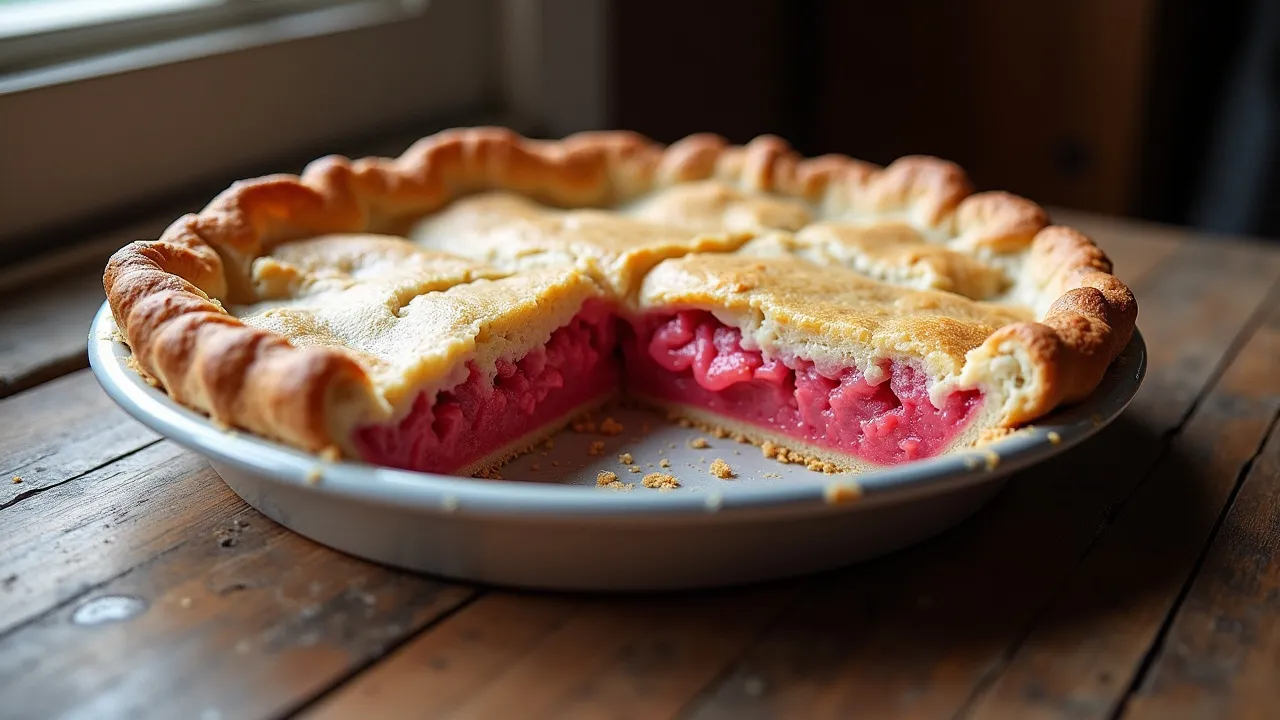
National Rhubarb Pie Day, observed on January 23rd, celebrates the tangy, sweet taste of rhubarb pie. This day honors a classic American dessert with deep historical roots and invites everyone to bake or enjoy a slice.
The Historical Origins & Evolutionary Journey
National Rhubarb Pie Day is an annual observance dedicated to the beloved dessert made from rhubarb, a vegetable often used as a fruit in pies. While the exact origin of this food holiday is unclear, it is believed to have been established in the mid-20th century in the United States, coinciding with the rise of convenience baking and the popularity of pie as a quintessential American dish. Rhubarb itself has a much longer history, dating back thousands of years to Asia, where it was first cultivated for medicinal purposes.
The Foundational Catalyst
The widespread domestication of rhubarb in Europe and North America began in the 18th century. In the United States, rhubarb became a staple in home gardens and commercial agriculture by the 19th century, especially in the Northeast and Midwest. The first recorded rhubarb pie recipe appeared in an American cookbook in the early 1800s. By the early 20th century, rhubarb pie had earned a place as a classic dessert, often served at church suppers and family gatherings. The establishment of a dedicated day likely emerged from grassroots efforts by pie enthusiasts and food bloggers in the late 20th century to promote this unique flavor.
The Legislative/Official Adoption
Unlike many official holidays, National Rhubarb Pie Day is not federally recognized. Instead, it has been popularized by food organizations, baking companies, and media outlets. The American Pie Council, which champions pie appreciation, has endorsed the day unofficially. Social media and food blogs have further cemented January 23rd as the date for celebrating rhubarb pie.
Modern Global Legacy
Today, National Rhubarb Pie Day is observed primarily in the United States, but rhubarb lovers in Canada, the United Kingdom, and Australia also participate. The day has evolved to include not just traditional rhubarb pie but also variations like rhubarb custard pie, strawberry-rhubarb pie, and gluten-free options. It serves as a reminder of the versatility and tartness of rhubarb, encouraging culinary creativity.
How to Celebrate National Rhubarb Pie Day
Celebrating National Rhubarb Pie Day can be as simple or elaborate as you like. Here are some actionable strategies for individuals, schools, and organizations:
For Individuals and Families
- Bake a classic rhubarb pie from scratch. Use fresh or frozen rhubarb, and try a lattice crust for visual appeal.
- Host a pie tasting party with friends, featuring different rhubarb pie recipes, including strawberry-rhubarb, rhubarb custard, and rhubarb crumble.
- Visit a local bakery that offers rhubarb pie and share your experience on social media with #NationalRhubarbPieDay.
- Share a slice with neighbors to spread community spirit.
For Schools and Educational Institutions
- Organize a baking workshop in home economics or culinary classes, teaching students how to make pie crust and rhubarb filling.
- Incorporate a history lesson on the agricultural and culinary history of rhubarb, linking to botany and food science.
- Hold a pie-baking contest among students, with categories like best traditional pie, most creative filling, and best decoration.
For Organizations and Businesses
- Restaurants and bakeries can feature a special rhubarb pie on their menu for the day, offering discounts or free samples.
- Food bloggers and influencers can publish recipe posts, videos, and historical tidbits to engage their audience.
- Community centers can host a pie social fundraiser, donating proceeds to local food banks.
International celebrations vary; for example, in the United Kingdom, rhubarb pie (often called rhubarb tart) is enjoyed with custard, and the day may coincide with the forced rhubarb season in Yorkshire.
Rhubarb Cultivation and Varieties
Rhubarb (Rheum rhabarbarum) is a perennial vegetable that thrives in cool climates. Its hollow stalks, which range in color from green to deep red, are the edible part, while the leaves are toxic due to oxalic acid. Understanding rhubarb cultivation is key to appreciating the pie.
Growing Regions
- United States: Major production in Washington, Oregon, and Michigan, with a season from April to June.
- United Kingdom: The "Rhubarb Triangle" in West Yorkshire is famous for forced rhubarb, grown in dark sheds to produce tender, pink stalks.
- Canada: Grown in British Columbia and Ontario, often for processing.
Popular Varieties for Pie
- Strawberry-Rhubarb: The most common pie, combining sweet strawberries with tart rhubarb.
- Raspberry-Rhubarb: A tangy-sweet twist.
- Rhubarb Custard: A rich, creamy filling that balances acidity.
- Rhubarb Crumble: A dessert with a crunchy oat topping instead of a top crust.
Nutritional Benefits of Rhubarb Pie
While pie is a treat, rhubarb offers several health benefits that make this dessert a slightly better choice than others. Rhubarb is low in calories and a good source of vitamin K, calcium, and dietary fiber. It also contains antioxidants like anthocyanins, which give red stalks their color. However, the sugar and butter in pie crust can offset these benefits, so moderation is key.
Health-Conscious Adaptations
Reduce sugar: Use natural sweeteners like honey or maple syrup.
Whole wheat crust: Substitute part of the flour with whole wheat or almond flour.
Gluten-free options: Use a gluten-free flour blend or nut-based crust.
Lower fat: Use oil-based crust or reduce butter.
Economic Impact of Rhubarb Pie Day
National Rhubarb Pie Day stimulates economic activity in several sectors. Rhubarb farmers see increased demand from both consumers and commercial bakers. Local bakeries and pie shops often run promotions, boosting sales. The day also encourages tourism to areas famous for rhubarb, such as the Rhubarb Triangle in the UK. Online search traffic for rhubarb recipes and pie-making tools spikes, benefiting food websites and kitchenware retailers.
Historical Timeline
Rhubarb first cultivated for medicinal use in East Asia.
Rhubarb introduced to Europe and North America as a food crop.
First known rhubarb pie recipe published in an American cookbook.
Rhubarb pie becomes a staple dessert in American households.
National Rhubarb Pie Day informally established, likely through community cooking clubs.
Social media and food blogs popularize the day, spreading awareness globally.