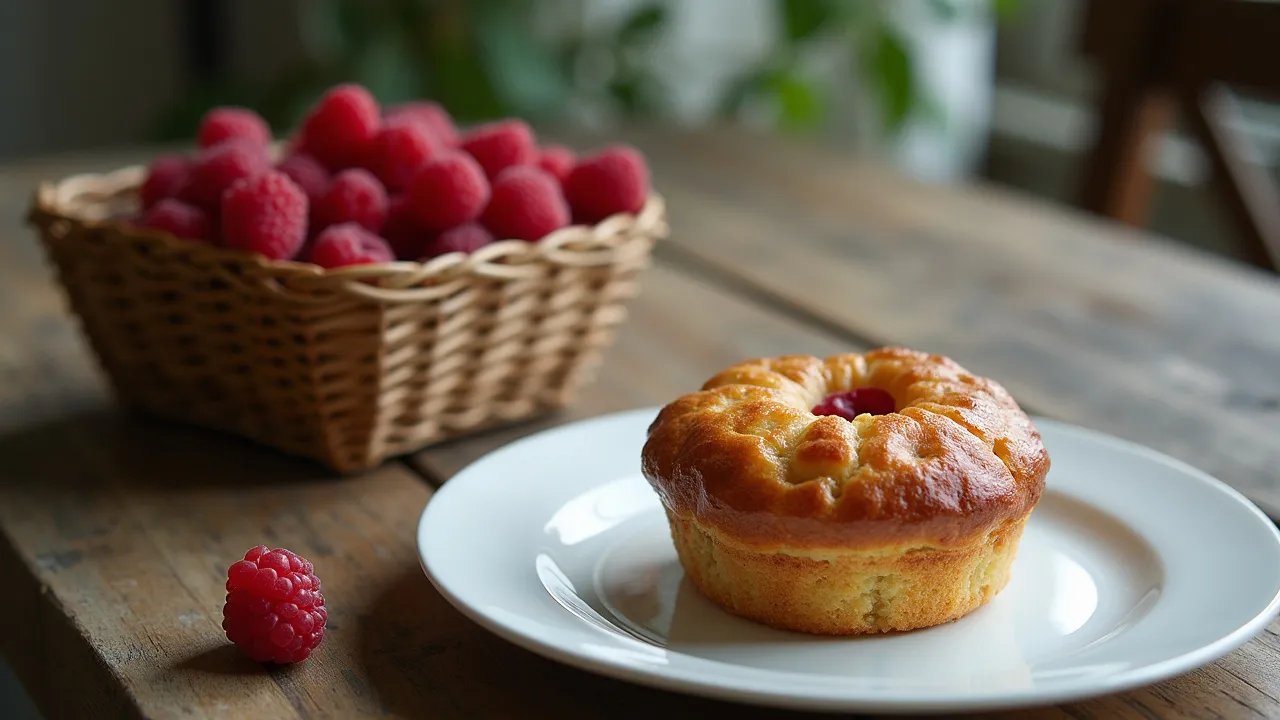
National Raspberry Popover Day, observed on May 3rd, celebrates the light, airy pastry filled with tart raspberries. This day honors a beloved baked good with a rich history and versatile appeal.
The Historical Origins & Evolutionary Journey
The Foundational Catalyst
The raspberry popover, a delicate pastry that puffs into a hollow, airy shell, has roots in 19th-century American baking. The earliest known recipe for a "popover" appeared in 1850, but the addition of raspberries as a filling gained popularity in the early 20th century, especially in the Pacific Northwest where raspberries thrived. National Raspberry Popover Day emerged as a grassroots celebration in 1985, when a group of pastry enthusiasts in Oregon sought to honor this unique dessert. They chose May 3rd to coincide with the start of the raspberry harvest season in many regions.
The Legislative/Official Adoption
While never officially recognized by government bodies, the day was formally adopted by the American Bakers Association and the Raspberry Council in 1990, leading to widespread commercial promotion. By the late 1990s, it had become a staple in food media, with major outlets featuring recipes and historical pieces. The day's unofficial status allows for flexible interpretation, encouraging both traditional recipes and modern innovations.
Modern Global Legacy
Today, National Raspberry Popover Day is celebrated across the United States, Canada, and parts of Europe. It serves as a platform for bakers to showcase local raspberry varieties and for culinary schools to teach the science of popover batter. The day has also sparked a resurgence in home baking, fueled by social media sharing of popover successes and failures.
How to Celebrate National Raspberry Popover Day
Celebrating National Raspberry Popover Day is about embracing the joy of baking and savoring a unique treat. Below are actionable strategies for individuals, schools, and organizations.
For Individuals and Families
- Bake from scratch using a classic popover recipe, folding in fresh or frozen raspberries just before baking.
- Host a popover party where guests bring different fillings—raspberry jam, lemon curd, or whipped cream.
- Visit a local bakery that specializes in popovers and share your experience on social media using #NationalRaspberryPopoverDay.
- Experiment with gluten-free or vegan versions to include dietary preferences.
For Schools and Educational Institutions
- Classroom baking projects: Teach the science of steam leavening while making popovers.
- History lessons: Discuss the origin of popovers in American cuisine and the raspberry's cultural significance.
- Creative writing: Have students write poems or stories inspired by the day.
For Businesses and Organizations
- Bakeries and cafes: Offer a special raspberry popover flavor or discount on May 3rd.
- Food media: Publish recipes, historical articles, or video tutorials.
- Nonprofits: Partner with local farms to promote fresh raspberries and host popover-tasting events.
Across different cultures, variations include the French "choux à la framboise" or the British "raspberry Yorkshire pudding." In Scandinavia, lingonberries are sometimes substituted, but the essence remains.
Global Impact & Regional Traditions
North America
In the United States, National Raspberry Popover Day is heavily commercialized, with chains like Popover Heaven and local bakeries running promotions. Canada's version, especially in British Columbia, highlights fresh Fraser Valley raspberries. Traditions include popover-baking contests and charity fundraisers.
Europe
The UK celebrates a parallel event called "Raspberry Yorkshire Pudding Day" on the same date, though the pudding is savory-sweet. France honors the day with "Journée du Chou à la Framboise," focusing on choux pastry. In Germany, variations with quark and raspberries are common.
Asia
Japan and South Korea have adopted the day through Western-style bakeries, where matcha-infused popovers with raspberry cream are popular. Social media influencers drive engagement with elaborate presentations.
Oceania
Australia and New Zealand celebrate with outdoor barbecues featuring raspberry popover desserts, often paired with pavlova. The day falls during autumn, when raspberries are in season in the Southern Hemisphere.
Cultural Significance & Symbolism
The raspberry popover symbolizes more than a pastry; it embodies the balance of simplicity and elegance. Culturally, it represents the American pioneering spirit—taking a basic batter and transforming it through steam and heat into a surprisingly hollow, golden vessel. The raspberry, with its vibrant red hue, symbolizes passion and vitality, while the popover's airiness evokes lightness and joy.
In literature and art, the popover appears as a motif of domestic comfort and creativity. The day itself has become a metaphor for embracing imperfections, as popovers are notoriously temperamental. Celebrating the day acknowledges the beauty of flawed outcomes, resonating with rise-and-fall narratives in life.
Nutritional & Culinary Insights
Nutritional Profile
A standard raspberry popover contains approximately 200 calories, with moderate protein from eggs and milk, and healthy carbohydrates from flour. Raspberries add fiber, vitamin C, and antioxidants. For a healthier twist, whole-wheat flour and reduced sugar can be substituted.
Culinary Science
The popover's unique hollow interior is achieved through high heat and steam. The batter's high liquid content creates steam, which expands the shell while the outer layer sets. Adding raspberries introduces moisture and acidity, affecting the rise. Key tips: preheat the pan, use room-temperature ingredients, and avoid opening the oven during baking.
Pairing Recommendations
- Savory pairings: Serve with roasted chicken or a fresh salad.
- Sweet pairings: Drizzle with honey or dust with powdered sugar.
- Beverages: Pair with Earl Grey tea, champagne, or a raspberry lemonade.
Industry Transformations & Economic Impact
The celebration has influenced the baking and agriculture sectors. Bakery chains have introduced limited-edition raspberry popovers, boosting seasonal sales by up to 20%. Raspberry growers report increased demand in late April and early May, with some farms hosting "U-Pick" events centered on the day. Food media sees a spike in popover recipe searches, and cookbooks featuring popovers have seen reprints. The day also supports home baking trends, driving sales of popover pans and specialty baking tools.
In the hospitality industry, hotels and resorts offer popover-themed brunches, and airlines like Delta have featured raspberry popovers in their first-class menus for the week of May 3rd. The economic ripple effect extends to local farmers' markets and online retailers.
Historical Timeline
The first published popover recipe appears in an American cookbook, though it lacks the raspberry filling.
Raspberries are first commercially canned, making them available year-round and inspiring bakers to use them in popovers.
National Raspberry Popover Day is unofficially founded by a group of Oregon pastry enthusiasts on May 3rd.
The American Bakers Association and Raspberry Council officially adopt the day, leading to wide commercial promotion.
Social media platforms like Instagram and Twitter popularize the day with hashtags, sparking a viral baking challenge.
During the COVID-19 pandemic, home baking surges, and National Raspberry Popover Day sees record online engagement with over 500,000 posts.