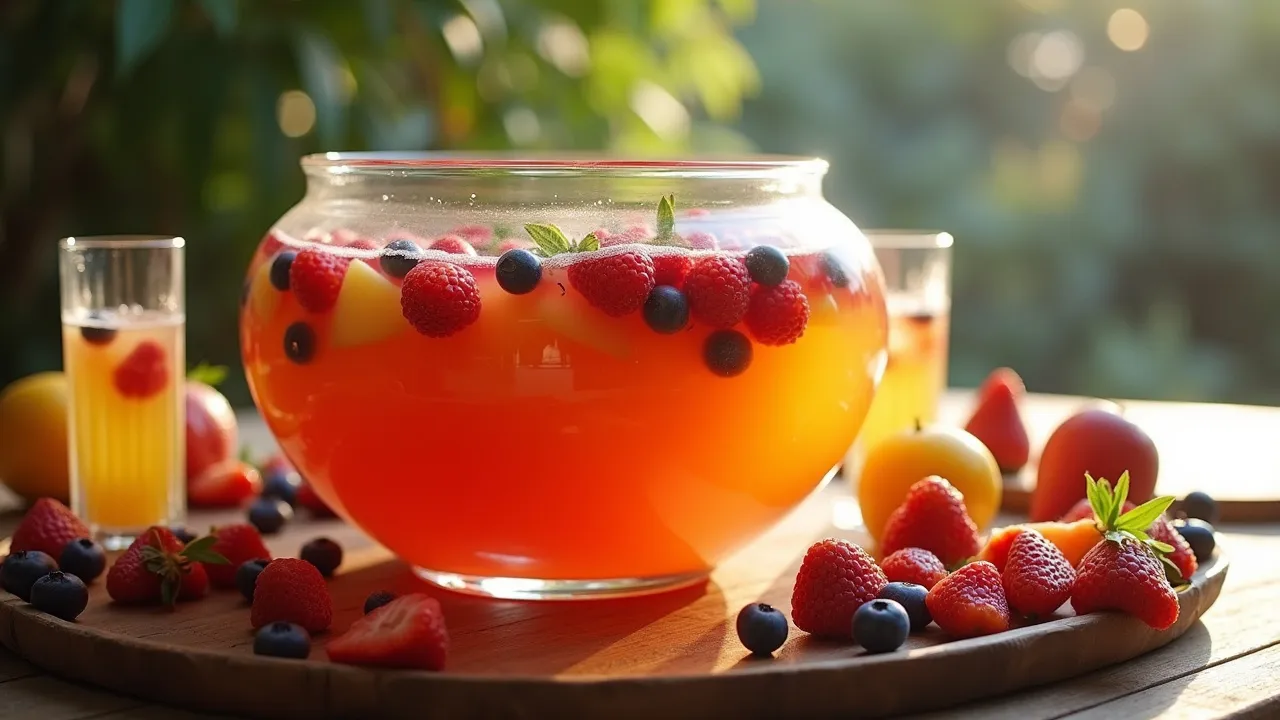
National Punch Day on September 20th honors the timeless beverage that has been a staple of social gatherings for centuries. Discover its rich history and how to celebrate with flavorful punch recipes.
The Historical Origins & Evolutionary Journey
National Punch Day honors a beverage that has been enjoyed for centuries, evolving from a traditional Indian drink to a global social staple. The word 'punch' is derived from the Sanskrit word pancha, meaning five, referring to the five original ingredients: alcohol, sugar, lemon, water, and tea or spices. This section explores the rich history and cultural significance of punch through the ages.
The Foundational Catalyst
Punch originated in India around the 17th century, where it was created by British sailors and East India Company traders who adapted local drinking customs. The basic recipe combined arrack (a fermented palm or rice spirit) with citrus juice, sugar, spices, and water. This mixture was both refreshing and preserved well on long sea voyages. By the early 1600s, punch had spread to England and other European countries, becoming a popular drink among the aristocracy and in taverns.
The Legislative/Official Adoption
While 'National Punch Day' is not a government-decreed holiday, it was officially recognized by the National Day Calendar in 2018 to celebrate the cultural and historical significance of punch. The date September 20th was chosen to coincide with the peak of harvest season for many fruits used in punch recipes, as well as to provide a festive occasion before the autumn transition.
Modern Global Legacy
Today, punch is enjoyed worldwide in countless variations. From the fruit-laden punches of the Caribbean to the spiced wassails of Europe, each culture has added its own twist. In the United States, punch became a cornerstone of social events, from church socials to Super Bowl parties. The modern mixology movement has revived classic punches while inventing new ones, ensuring that this ancient beverage remains relevant.
How to Celebrate National Punch Day
National Punch Day is an occasion to gather with friends, family, or colleagues and enjoy a shared beverage. Here are definitive ways to celebrate, from home parties to corporate events, with tips for different cultures.
Host a Punch Party
- Choose your punch style: Decide between alcoholic (e.g., rum-based) or non-alcoholic (e.g., fruit punch). Consider a signature punch that reflects the season.
- Prepare a large batch: Use a clear glass punch bowl to show off the colorful ingredients. Garnish with fresh fruit slices, mint, or edible flowers.
- Set up a self-serve station: Provide glasses, ladles, and ice. Offer additional mixers or spirits for guests to customize their drink.
- Pair with snacks: Serve light appetizers like cheese platters, chips, or tropical fruits that complement the punch flavors.
Try Classic Recipes
- Fish House Punch: A historic American recipe using rum, brandy, peach brandy, lemon juice, and sugar.
- Sangria: Spanish red wine punch with chopped fruit and a splash of brandy.
- Planter's Punch: A Jamaican classic made with rum, lime, sugar, and bitters.
- Non-alcoholic Fruit Punch: Combine orange, pineapple, and cranberry juices with grenadine and sparkling water.
Corporate and Social Gatherings
Encourage workplace celebrations by organizing a punch-tasting event. Schools can incorporate punch-making into lessons about history or chemistry. In regions like the UK, wassail (a hot mulled punch) is traditional during winter festivals, but on September 20th, a cold fruit punch is more appropriate. For a global touch, invite guests to bring versions from their own culture.
The Art of Punch Making
Creating the perfect punch requires balancing flavors, textures, and presentation. This section delves into the techniques and ingredients that separate a mediocre punch from a memorable one.
Key Ingredients and Ratios
The classic formula relies on the 'five' elements: sour (citrus), sweet (sugar), strong (spirit), weak (water/tea), and spice (seasonings). A general guideline is to use one part sour, two parts sweet, three parts strong, and four parts weak. Experimentation is encouraged, but maintaining balance is critical.
Tools of the Trade
A large punch bowl with a lid helps keep the drink cool. A block of ice melts slower than cubes, preventing dilution. Use fresh juices rather than concentrates for brighter flavors. For carbonation, add sparkling water or soda just before serving.
Presentation Tips
- Use edible flowers or fruit slices as floaters.
- Create an ice ring with berries frozen inside for a stunning centerpiece.
- Serve in clear cups so guests can appreciate the color.
- Label the punch with its name and alcohol content if applicable.
Global Punch Traditions
Punch has traveled the world and adapted to local tastes. This section explores unique punch traditions from different cultures.
Caribbean Punch
In the Caribbean, rum punch is a staple. The unofficial recipe: 'One of sour, two of sweet, three of strong, four of weak'—lime, sugar, rum, and water or juice. Often garnished with freshly grated nutmeg.
Latin American Sangria
Sangria, originally from Spain, is a punch made with red wine, chopped fruit, a sweetener, and a small amount of brandy. In Latin America, it's a popular party drink served in large pitchers.
Indian Panchamrit
In India, a non-alcoholic sacred drink called panchamrit uses five ingredients: milk, yogurt, ghee, honey, and sugar. It's different from the alcoholic punch but shares the concept of five components.
European Wassail
Wassail is a hot, mulled cider punch from England, traditionally drunk during Twelfth Night. Spiced with cinnamon, cloves, and ginger, it’s often served with floating pieces of toast.
African Ginger Punch
In parts of West Africa, a non-alcoholic punch is made from ginger, lemon, and sugar, sometimes with pineapple. It’s served chilled and known for its spicy kick.
Punch Through the Ages
The history of punch is filled with fascinating anecdotes and recipes. This timeline highlights key moments in punch evolution.
17th Century: Birth of Punch
British sailors in India invented punch using local arrack. The first recorded recipe appears in 1638 in an English publication, describing a mix of spirits, citrus, sugar, and spices.
18th Century: Punch in Europe
Punch houses became popular in London and Paris. Specialized silver punch bowls were crafted for the elite. In America, George Washington was known to enjoy a punch called 'Fish House Punch' at the Schuylkill Fishing Company.
19th Century: Punch Bowls and Socials
Punch became central to American social life, from church gatherings to political rallies. The invention of the cocktail shaker began to replace punch bowls, but punches remained popular at large events.
20th Century: Commercialization
Fruit punch concentrates (like Kool-Aid and Hawaiian Punch) made punch accessible to every household. It became synonymous with children's parties and school events.
21st Century: Craft Revival
Mixologists revived classic punches with fresh ingredients. Bars now offer punch bowls for sharing, and home cooks experiment with global recipes.
Modern Punch Culture
Today, punch is more popular than ever, driven by the craft cocktail movement and a desire for shareable drinks. This section examines contemporary trends and the future of punch.
Punch as a Cocktail Experience
Modern bars often feature punch bowls designed for groups, emphasizing communal drinking. Ingredients include artisanal syrups, fresh herbs, and high-quality spirits. Smoke-infused punches and clarified punches (using milk or agar-agar) are trendy.
Non-Alcoholic Punch
The rise of mindful drinking has boosted interest in complex non-alcoholic punches. Using shrubs (vinegar syrups), kombucha, or tea bases, these punches offer depth without alcohol.
Social Media Aesthetics
Visual appeal is key. Punch bowls with dry ice, vibrant colors, and elaborate garnishes dominate Instagram and TikTok. Hashtags like #punchbowlparty encourage sharing.
Sustainability
Bartenders emphasize using up seasonal fruits and reducing waste. Leftover fruit from punch can be used in jams or desserts.
Historical Timeline
First recorded punch recipe appears in an English publication describing a blend of arrack, citrus juice, sugar, and spices, documenting the drink's Indian origins.
Punch becomes immensely popular in Europe and America, with dedicated punch houses and ornate silver punch bowls becoming status symbols among the aristocracy.
Fish House Punch is created at the Schuylkill Fishing Company in Pennsylvania, becoming one of America's most famous historic punch recipes.
Fruit punch concentrate is commercialized, making punch widely accessible for home parties and school events. Brands like Kool-Aid and Hawaiian Punch emerge.
National Punch Day is officially registered by the National Day Calendar to be celebrated annually on September 20th, recognizing the cultural significance of punch.
Craft cocktail bars revive traditional punch recipes with fresh ingredients, while non-alcoholic punch variants gain popularity amid the wellness trend.