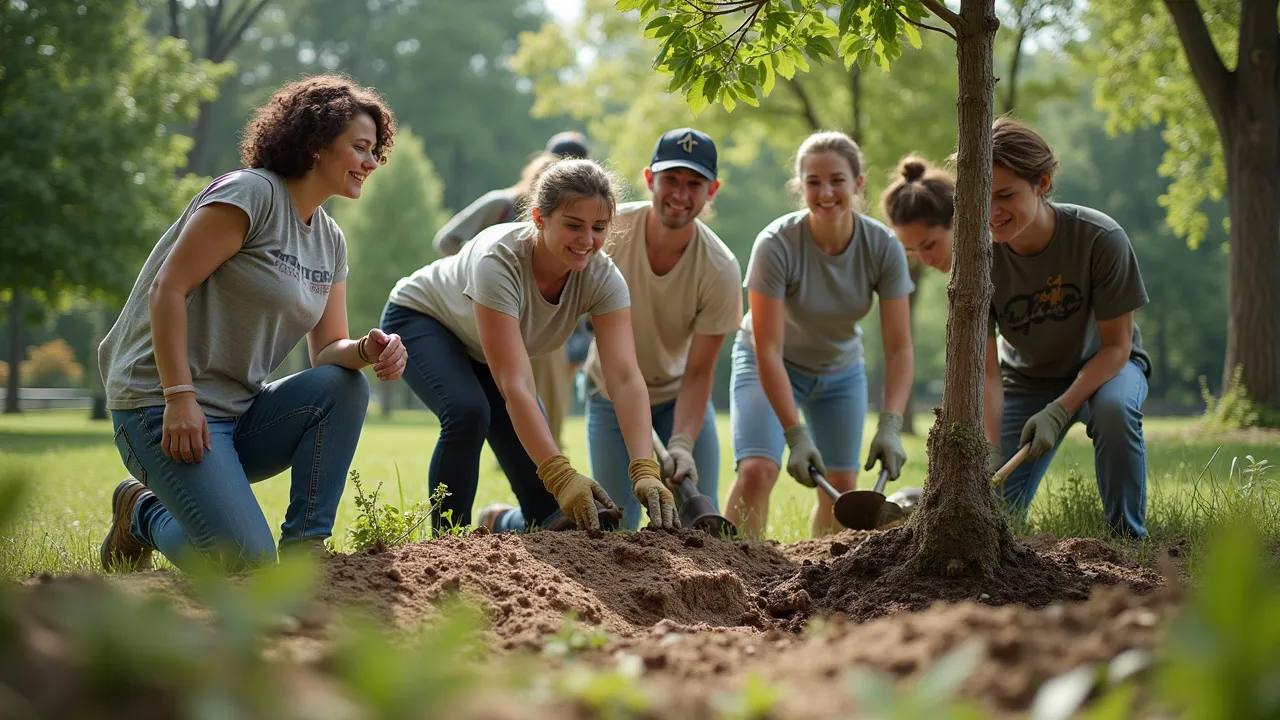
National Public Lands Day, observed on the fourth Saturday of September, is the nation's largest single-day volunteer effort for public lands, promoting conservation and community stewardship since 1994.
The Historical Origins & Evolutionary Journey
National Public Lands Day (NPLD) stands as a testament to the collective will to preserve America's natural and cultural heritage. Its roots trace back to a pivotal moment in environmental activism and federal policy evolution.
The Foundational Catalyst
In the early 1990s, concerns about the condition of public lands—national parks, forests, wildlife refuges, and urban green spaces—gained national attention. Budget constraints left many sites understaffed and overgrown. The National Environmental Education Foundation (NEEF), established by Congress in 1990, recognized an opportunity: channel public enthusiasm into hands-on conservation. The idea of a dedicated day for volunteering on public lands emerged from NEEF's partnerships with federal land management agencies, including the National Park Service, U.S. Forest Service, and Bureau of Land Management.
The Legislative & Official Adoption
In 1994, NEEF officially launched the first National Public Lands Day with a modest yet impactful set of volunteer projects. While not a federal holiday, the event received strong endorsements from agencies and non-profits. Over the years, NPLD secured official recognition through proclamations and expanded partnerships. In 2010, the U.S. Congress passed a resolution designating the fourth Saturday of September as National Public Lands Day, though the tradition had been well established already. Key milestones include:
- 1994: First NPLD with 700 volunteers at 10 sites nationwide.
- 2000: Participation grows to over 50,000 volunteers at more than 500 sites.
- 2010: Congressional resolution formalizes the date.
- 2020: Virtual engagement options introduced during the pandemic.
Modern Global Legacy
While NPLD remains fundamentally American, its influence has inspired similar volunteer days in other countries. Canada's Parks Day (third Saturday in July) and Australia's National Tree Day (last Sunday in July) share the spirit of public land stewardship. NPLD now consistently mobilizes over 200,000 volunteers annually, clearing trails, planting trees, removing invasive species, and restoring habitats. The day has evolved from a single-day event to a year-round call to action, with many organizations hosting 'Week of Service' activities leading up to the fourth Saturday.
How to Celebrate National Public Lands Day
Celebrating NPLD goes beyond a simple hike—it means active participation in stewardship. Below are actionable strategies for individuals, schools, and organizations to honor public lands.
For Individuals & Families
- Find a Volunteer Event: Use the NEEF NPLD map or partner websites (e.g., neefusa.org) to locate projects near you. Activities include trail repair, litter cleanup, tree planting, and habitat restoration.
- Visit a Public Land for Free: Many federal sites waive entrance fees on NPLD. Check the park's website for fee-free day details.
- Document and Share: Take before-and-after photos, share on social media with #NPLD, and tag @NEEFusa to inspire others.
For Schools & Youth Groups
- Organize a field trip to a local national park or forest. Contact park rangers in advance for educational programs.
- Host a campus cleanup of school grounds or nearby green spaces. Incorporate lessons on ecology and conservation.
- Encourage art projects that celebrate public lands, such as nature photography contests or mural painting.
For Businesses & Corporate Teams
- Launch a team volunteer day at a public land site. Many parks have group projects suited for employee engagement.
- Sponsor a site-specific restoration project—for example, a company can adopt a trail or a section of beach.
- Match employee donations to conservation non-profits or grant paid time off for volunteering on NPLD.
Global Celebrations (Regional Adaptations)
While NPLD is U.S.-centric, its principles are universal. In Canada, the equivalent Parks Day (third Saturday in July) involves free admission and volunteer stewardship. In the United Kingdom, National Parks Week (late July) features conservation activities. Australia's National Tree Day (last Sunday in July) focuses on planting native trees. In these regions, participants can adapt the NPLD model: gather a group, contact the managing authority, and carry out a cleanup or restoration project tailored to local ecosystems.
Global Impact and Community Stewardship
The impact of NPLD extends far beyond a single day. It builds a culture of community stewardship that strengthens the bond between people and their public lands. In the U.S. alone, NPLD volunteers have contributed over $20 million in labor value annually, according to NEEF estimates. The day also fosters environmental education, as many projects include learning components about native species, soil conservation, and water quality.
International Resonances
Countries with similar public land systems have adopted the NPLD model. In South Africa, National Arbor Week (first week of September) includes tree planting on public lands. Japan's Green Week (April 29 to May 5) encourages visits to national parks and volunteer cleanups. These events, while not identical, share the core NPLD mission: engage citizens in preserving shared natural treasures.
Economic and Social Benefits
- Cost Savings: Volunteer labor reduces maintenance backlogs on public lands, allowing agencies to redirect funds to other critical needs.
- Increased Usage: Free entry days attract new visitors, many of whom become regular supporters of public lands.
- Mental Health: Outdoor volunteering reduces stress and improves well-being; NPLD makes these benefits accessible to diverse populations.
Environmental Benefits of NPLD Volunteer Projects
Every NPLD project directly enhances environmental health. Common activities yield measurable ecological gains.
Habitat Restoration
- Tree Planting: Absorbs CO2, prevents erosion, and provides wildlife habitat. Over 1 million trees have been planted through NPLD since 1994.
- Invasive Species Removal: Non-native plants choke out local flora; volunteers pull ivy, buckthorn, and other invasives, restoring biodiversity.
- Stream Cleanup: Removing trash and debris from waterways protects aquatic life and improves water quality.
Trail Maintenance
Well-maintained trails reduce habitat fragmentation and prevent soil erosion. Volunteers clear brush, repair water bars, and build steps, making trails safer for hikers and less damaging to surrounding ecosystems.
Climate Resilience
Projects like wetland restoration and native planting boost the ability of public lands to withstand climate impacts—extreme heat, flooding, and wildfire. NPLD thus contributes to the broader climate adaptation strategy.
The Rise of Volunteerism and Public Engagement
NPLD is a microcosm of the broader trend in volunteer tourism (voluntourism) and civic engagement. Over the past three decades, public participation in land stewardship has surged, driven by environmental awareness and social media.
Demographics of NPLD Volunteers
- Age: Diverse, with a growing youth presence through school groups and scout troops.
- Geography: Urban, suburban, and rural communities all participate; many volunteers travel to sites outside their home towns.
- Motivations: A 2022 survey by NEEF found that 'giving back to nature' and 'spending time with family' were top reasons.
Technology and Mobilization
Social media platforms like Instagram and Facebook have amplified NPLD reach. Hashtags like #OptOutside (REI's campaign) and #FindYourPark (NPS) feed into NPLD enthusiasm. Digital tools enable real-time sign-ups and project tracking, making it easier for people to find and commit to events.
Corporate Partnerships
Major corporations like The North Face, REI, and Disney often match volunteer hours or sponsor NPLD projects. These partnerships inject resources and credibility, turning NPLD into a mainstream cultural event.
Corporate Involvement and Sustainable Business Practices
Businesses play a crucial role in NPLD's success. Corporate involvement ranges from financial sponsorship to employee volunteer teams. This section explores how companies leverage NPLD for Corporate Social Responsibility (CSR) and sustainability goals.
Case Studies
- REI: Closes its stores on NPLD to encourage employees and customers to volunteer outdoors. REI also provides grants to partner organizations.
- Patagonia: Supports grassroots conservation groups; employees frequently lead NPLD projects.
- Bank of America: Offers paid time off for volunteering and sponsors large-scale restoration projects in national parks.
Benefits for Businesses
- Employee Engagement: Team volunteering boosts morale and teamwork.
- Brand Reputation: Associating with land conservation signals environmental responsibility.
- Tax Advantages: Donations to public lands can be tax-deductible; sometimes volunteer labor qualifies for deductions as well.
How to Start a Corporate NPLD Program
1. Contact local land management agencies or NEEF for partner opportunities.
2. Set a company-wide volunteer goal (e.g., 500 hours).
3. Promote the event internally, offer time off, and provide branded gear (t-shirts, hats).
4. Measure impact through photos, waste collected, or trees planted.
The Future of National Public Lands Day
Looking ahead, NPLD is poised to expand in scale and scope. Here are emerging trends and predictions.
Digital Integration
Virtual volunteer activities—such as citizen science projects via iNaturalist or remote trash data collection—will complement in-person events. A hybrid model may allow people to contribute from anywhere.
Youth Engagement
Programs like Every Kid Outdoors (which gives fourth graders free access to public lands) will likely integrate with NPLD, inspiring the next generation of stewards.
Climate-Focused Projects
As climate change intensifies, NPLD projects will increasingly target carbon sequestration (e.g., reforestation), fire prevention (fuel reduction), and coastal resilience (mangrove restoration).
Policy Support
Legislation such as the Great American Outdoors Act (2020) provides funding for deferred maintenance on public lands, complementing volunteer efforts. Continued federal backing will solidify NPLD's role.
Global Replication
NEEF and international partners are developing toolkits for other nations to launch their own public lands days. A 'World Public Lands Day' could emerge, uniting global volunteers around a shared mission.
Historical Timeline
Congress establishes the National Environmental Education Foundation (NEEF) to foster environmental learning and action.
First National Public Lands Day is held with 700 volunteers at 10 sites across the United States.
Participation surpasses 50,000 volunteers at over 500 sites; federal agencies formally partner with NEEF.
U.S. Congress passes a resolution designating the fourth Saturday of September as National Public Lands Day.
NPLD expands to include urban parks and waters, with over 200,000 volunteers and 2,100 sites.
Due to COVID-19, NEEF promotes virtual stewardship opportunities; many sites host 'no-contact' volunteer projects.
NPLD reaches record participation: 250,000 volunteers, contributing an estimated $25 million in labor value.