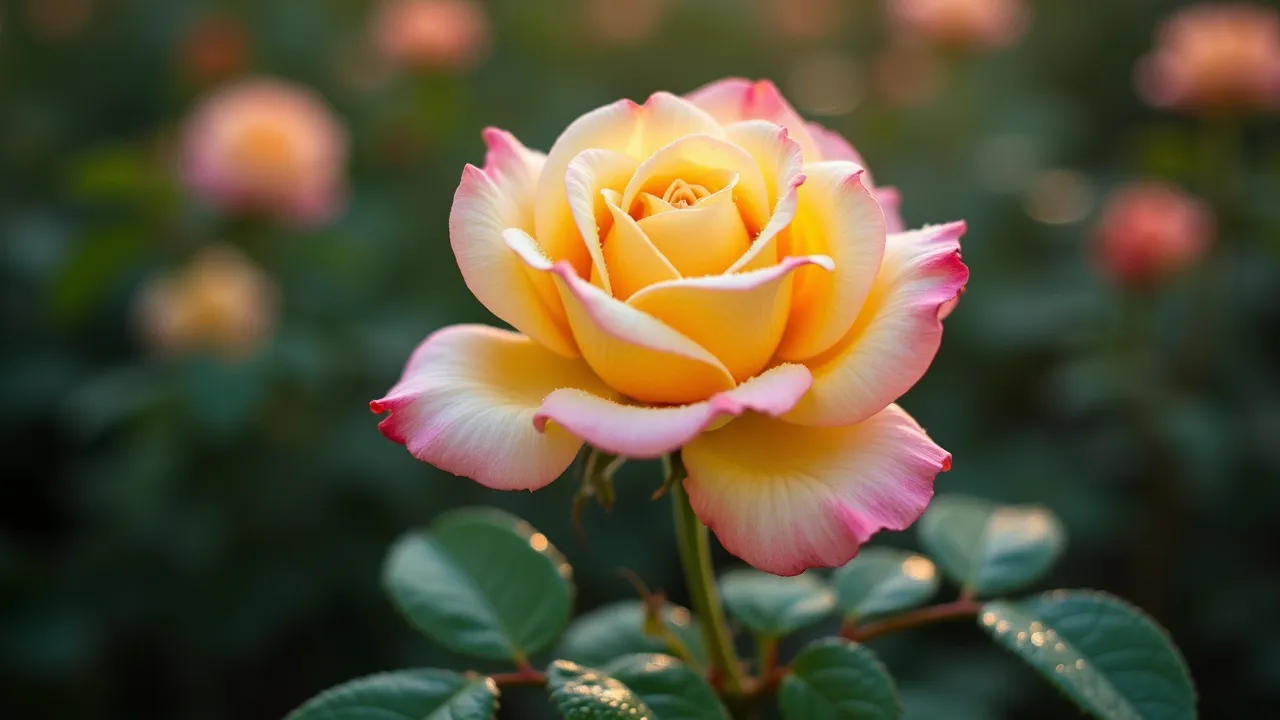
National Peace Rose Day on April 29th honors the iconic 'Peace' rose, introduced in 1945 as a symbol of hope after WWII. Celebrated by gardeners and peace advocates worldwide.
The Historical Origins & Evolutionary Journey
National Peace Rose Day, observed annually on April 29th, commemorates the introduction of the Rosa 'Peace' rose, one of the most famous and widely grown roses in history. The date marks the official launch of this variety at the Pacific Rose Society Show in Pasadena, California, on April 29, 1945.
The Foundational Catalyst
The story begins in the late 1930s in the south of France, where rose hybridizer Francis Meilland carefully cross-bred a seedling from a 'Margaret McGredy' rose with pollen from a 'R. foetida' hybrid. By 1939, he had produced a promising new rose with large, high-centered blooms in a unique blend of yellow and pink. To protect it from the impending war, Meilland sent cuttings to friends in Italy, Germany, and the United States. In the U.S., the rose was registered as 'Madame A. Meilland' but later renamed 'Peace' to symbolize the end of World War II.
The Legislative/Official Adoption
The Peace rose was officially introduced to the world on April 29, 1945, at the Pacific Rose Society Show. That same day, Berlin fell, and the war in Europe was effectively over. The rose was awarded the All-America Rose Selections (AARS) award in 1946 and has since been recognized as the world's favorite rose. In 1999, the American Rose Society established National Peace Rose Day as an annual observance on April 29, with the support of peace organizations and gardening clubs worldwide.
Modern Global Legacy
Today, the Peace rose remains a symbol of hope and tranquility. It is the official flower of several peace initiatives and is planted in war memorials and UN peacekeeping bases. The observance has grown to include educational programs, garden tours, and community planting events. The Peace Rose is also a popular choice for commemorative gardens and is often used in diplomatic ceremonies.
How to Celebrate National Peace Rose Day
National Peace Rose Day offers numerous opportunities for individuals, schools, and organizations to participate. Below is a comprehensive guide to celebrating this day meaningfully.
Individual and Family Activities
- Plant a Peace Rose: Visit a local nursery and purchase a Peace rose bush. Plant it in your garden as a living symbol of peace. Follow proper planting instructions: dig a hole twice as wide as the root ball, amend soil with compost, and water thoroughly.
- Create Peace Rose Art: Sketch, paint, or photograph Peace roses. Share your artwork on social media with the hashtag #NationalPeaceRoseDay.
- Write a Peace Message: Attach a handwritten note about peace to a Peace rose bloom and give it to a neighbor or community member.
School and Educational Programs
- History Lesson: Teach students about the history of the Peace rose and its connection to the end of WWII. Use the timeline provided in this article.
- Gardening Project: Start a school rose garden featuring Peace roses. Involve students in planting, care, and documentation.
- Peace Poetry Contest: Host a poetry competition where students write poems about peace and roses.
Organizational and Community Events
- Community Rose Garden Visit: Organize a group outing to a public rose garden. Many botanical gardens offer special tours on this day.
- Peace Rose Exchange: Encourage members to bring Peace rose cuttings or potted plants to swap.
- Fundraiser for Peace: Sell Peace rose bouquets to raise funds for peace-oriented charities.
Around the world, celebrations vary. In the United States, the American Rose Society coordinates events. In France, the Meilland family estate opens its gardens. In Japan, Peace roses are planted in Hiroshima Peace Memorial Park.
The Symbolism of the Peace Rose
The Peace rose is more than a beautiful flower; it carries profound symbolic weight. Its creamy yellow petals edged with pink represent a blend of warmth and gentleness. The rose’s journey from wartime Europe to global recognition mirrors the universal desire for reconciliation.
Colors and Meaning
Yellow traditionally symbolizes friendship and joy, while pink conveys gratitude and admiration. Together, they create a message of harmonious relationships. The large, full bloom suggests abundance and generosity of spirit.
Historical Symbolism
Naming the rose 'Peace' on the day Berlin fell was a deliberate act. It became a floral emblem of the end of hostilities and a hopeful future. The Peace rose was later used at the founding of the United Nations and continues to be featured at diplomatic events.
Cultural Impact
In literature and art, the Peace rose appears as a motif of resilience. It is often included in peace gardens as a central feature. The rose’s ability to thrive in diverse climates parallels the idea of peace transcending borders.
Cultivation and Care Tips for the Peace Rose
Growing a Peace rose requires attention to detail but is rewarding. Here are expert tips to ensure a healthy, blooming bush.
Planting
- Location: Choose a spot with at least six hours of direct sunlight daily. Ensure good air circulation.
- Soil: Well-drained, loamy soil with pH 6.0-6.5. Amending with organic matter like compost is recommended.
- Spacing: Allow 3-5 feet between bushes to accommodate mature size.
Watering and Feeding
- Water deeply once a week, more often in hot weather. Avoid wetting foliage to prevent disease.
- Fertilize in early spring and after each bloom cycle with a balanced rose fertilizer (10-10-10).
Pruning and Winter Protection
Prune in late winter or early spring, removing dead wood and shaping the bush. Cut canes to an outward-facing bud. In cold climates (USDA zones 5 and below), mound soil or mulch around the base for winter insulation.
Common issues include black spot and aphids. Use neem oil or insecticidal soap as organic controls. The Peace rose is known for its vigor and disease resistance when grown in optimal conditions.
Global Impact and Peace Initiatives
The Peace rose has been a catalyst for international peace projects. Its story transcends horticulture into diplomacy and community building.
Peace Rose Gardens Worldwide
Dedicated Peace rose gardens exist in over 30 countries. Notable examples include the Peace Rose Garden at the United Nations Headquarters in New York, the Japan Peace Rose Garden in Hiroshima, and the Jardin de la Paix in Paris. These gardens serve as living memorials and spaces for reflection.
Peace Education Programs
Organizations like the World Peace Rose Garden (WPRG) use the Peace rose to teach conflict resolution. School children plant Peace roses and learn about nonviolence. In 2015, the WPRG launched a global program linking schools across continents through shared rose gardens.
Diplomatic Gifts
Heads of state often present Peace rose bushes as gifts during state visits. In 2023, the U.S. First Lady planted a Peace rose at the Embassy of Ukraine as a symbol of solidarity. The rose has also been taken into space, with seeds flown on the Space Shuttle Discovery to promote global unity.
The Future of National Peace Rose Day
As environmental and social challenges grow, National Peace Rose Day holds increasing relevance. Future directions include digital engagement, sustainability, and inclusivity.
Digital Celebrations
Virtual rose gardens and augmented reality experiences allow global participation. Social media campaigns encourage sharing Peace rose stories. Live-streamed events from famous gardens reach audiences unable to attend in person.
Sustainability and Climate Resilience
Rose breeders are developing Peace rose hybrids that tolerate heat and drought, ensuring its legacy in a changing climate. Organic gardening practices are promoted on April 29th to reduce chemical use.
Expanding Inclusivity
Efforts are underway to make the celebration accessible to underserved communities. Plant-a-thon events provide free Peace rose bushes to urban areas, schools, and community centers. Multilingual educational materials are being developed to reach diverse populations.
The continued growth of National Peace Rose Day depends on grassroots involvement and institutional support. By honoring the past and innovating for the future, this observance will remain a cherished tradition for generations.
Historical Timeline
Francis Meilland begins cross-breeding roses in his family nursery in Lyon, France, creating the seedling that would become the Peace rose.
As World War II begins, Meilland sends cuttings of the new rose to friends in Italy, Germany, and the United States for safekeeping.
April 29: The Peace rose is officially introduced at the Pacific Rose Society Show in Pasadena, California, on the same day Berlin falls. It is named 'Peace' to symbolize the end of the war.
The Peace rose wins the All-America Rose Selections (AARS) award, cementing its popularity.
The American Rose Society establishes National Peace Rose Day, celebrated annually on April 29th.
The United Nations Peace Rose Garden is dedicated at the UN Headquarters in New York, featuring Peace roses from each member state.
The World Peace Rose Garden initiative launches a global school program, connecting students through Peace rose gardens.
The U.S. First Lady presents a Peace rose to the Ukrainian Embassy, reaffirming the flower's role as a diplomatic symbol of peace.