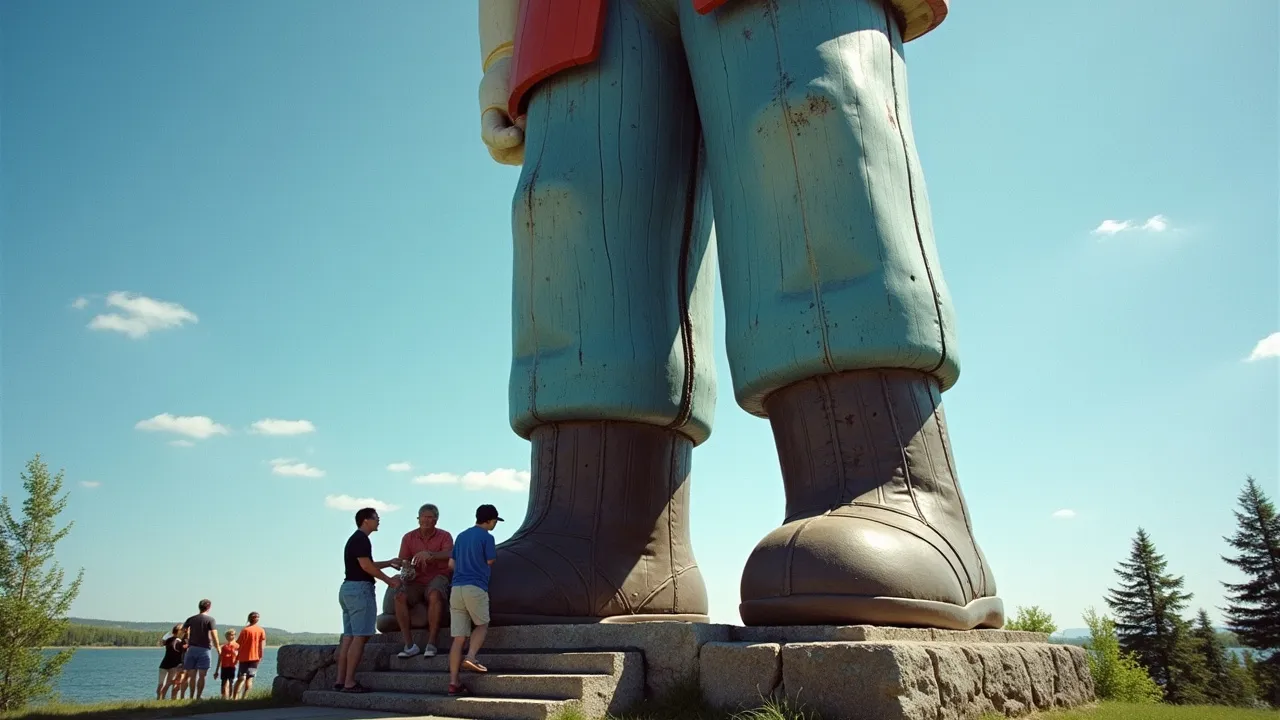
National Paul Bunyan Day on June 28th celebrates the legendary giant lumberjack of American folklore. This day honors tall tales and timber heritage with festivals, statue visits, and storytelling.
The Historical Origins & Evolutionary Journey
National Paul Bunyan Day, observed annually on June 28th, pays homage to one of America's most enduring folk heroes: Paul Bunyan, the giant lumberjack of the Northwoods. This day is a celebration of the tall tale tradition that flourished in the logging camps of the 19th century, blending fact, fiction, and the rugged spirit of the American frontier. The origins of Paul Bunyan stories are deeply rooted in the oral traditions of French-Canadian and American lumberjacks, who spun tales of a colossal woodsman with superhuman strength and a giant blue ox named Babe.
The Foundational Catalyst
The earliest known printed reference to Paul Bunyan appeared in a 1914 advertising pamphlet by the Red River Lumber Company, written by journalist William Laughead. Laughead's stories were designed to promote the company's products, but they resonated so deeply with the public that they sparked a national fascination. The tales grew exponentially, with lumberjacks adding their own embellishments: Paul Bunyan could chop down entire forests with a single swing of his axe, and Babe's footprints created the Great Lakes. By the 1920s, Paul Bunyan had become a symbol of the boundless resourcefulness and strength of the American worker.
The Legislative/Official Adoption
Unlike many official holidays, National Paul Bunyan Day was not established by a government proclamation but rather emerged organically from community celebrations, particularly in states like Minnesota, Wisconsin, Michigan, and Oregon, where logging history runs deep. The first recorded community festival dedicated to Paul Bunyan took place in the 1950s in Bemidji, Minnesota, home to the famous 18-foot-tall Paul Bunyan statue erected in 1937. As the day gained popularity through local chambers of commerce and tourism boards, June 28th became the de facto date, coinciding with summer tourist seasons and allowing families to participate in outdoor events.
Modern Global Legacy
Today, National Paul Bunyan Day is celebrated not only in the United States but also in parts of Canada, where the lumberjack legend is equally revered. The day has evolved into a platform for promoting forestry education, environmental stewardship, and regional heritage. Statues of Paul Bunyan and Babe dot the landscape from California to Maine, each city claiming a piece of the folklore. The day also serves as a reminder of the importance of sustainable logging practices and the cultural significance of tall tales in shaping national identity.
How to Celebrate National Paul Bunyan Day
Celebrating National Paul Bunyan Day offers a chance to connect with American folklore, explore the great outdoors, and honor the legacy of the lumber industry. Whether you're an individual, a family, or an organization, there are countless ways to immerse yourself in the tall tale tradition. Here are some effective strategies:
For Individuals and Families
- Visit a Paul Bunyan Statue: Travel to iconic statues like the one in Bemidji, Minnesota, or the giant in Klamath, California. Take a selfie and share with the hashtag #NationalPaulBunyanDay.
- Read Tall Tales: Gather classic Paul Bunyan stories by James Cloyd Bowman or other authors. Organize a storytelling session around a campfire.
- Cook Lumberjack Food: Prepare hearty meals like flapjacks, baked beans, and stews that lumberjacks historically ate. Try a "Paul Bunyan-sized" pancake breakfast.
For Schools and Educational Groups
- History Lessons: Teach students about the real history of logging in the 1800s and how folktales emerged. Create a timeline of Paul Bunyan's evolution.
- Art Projects: Have students draw or paint their own interpretations of Paul Bunyan or Babe. Use recycled materials to build miniature rafts or cabins.
- Outdoor Learning: Conduct a nature walk to identify trees that were commonly logged (e.g., white pine, Douglas fir). Discuss sustainable forestry.
For Organizations and Communities
- Host a Festival: Coordinate a Paul Bunyan Days event with a parade, chainsaw carving contests, and a pancake-eating competition. Partner with local lumber mills.
- Fundraising: Organize a tree-planting drive in honor of Paul Bunyan, with proceeds going to reforestation efforts. Sell Paul Bunyan-themed merchandise.
- Social Media Campaign: Launch a social media challenge asking participants to share their "biggest" accomplishment of the day using #PaulBunyanChallenge.
Cultural Impact and Media Representation
Paul Bunyan has transcended folklore to become a staple of American popular culture. From animated films to advertising mascots, the giant lumberjack is instantly recognizable. The most famous depiction is probably the Disney animated short Paul Bunyan (1958), which introduced the character to a generation of children. In advertising, Paul Bunyan has been used to sell everything from lumber to breakfast cereal. The figure also appears in literature, including the works of Carl Sandburg, who referenced the legend in his poetry. Statues and roadside attractions continue to draw tourists, contributing to local economies and preserving the lore. The cultural impact is so profound that even today, the term "Paul Bunyan" is used colloquially to denote something of enormous scale or strength.
Economic Significance and Tourism
The celebration of National Paul Bunyan Day bolsters tourism in rural towns that rely on heritage travel. Communities like Bemidji, Minnesota, and Bangor, Maine, see increased visitation during late June. The economic impact extends beyond statue visits: local hotels, restaurants, and shops benefit from themed events. For example, the Paul Bunyan Days festival in Brainerd, Minnesota, attracts over 10,000 attendees annually, generating significant revenue. Additionally, the day promotes awareness of the forestry industry, which remains a vital sector in many regions. Logging museums often offer free admission on June 28th, educating the public about sustainable practices and the historical importance of timber.
Modern Observance and Digital Engagement
In the digital age, National Paul Bunyan Day has found new life on social media platforms. Hashtags like #PaulBunyanDay and #TallTaleTuesday trend annually, with users sharing photos, stories, and trivia. Influencers in the outdoor and camping niches often create content celebrating the day. Parks and recreation departments host virtual tours of Paul Bunyan-related landmarks. The day also sees increased interest in audiobooks and podcasts about American folklore. This digital engagement ensures that the legend remains relevant for younger generations, who may not have grown up with the tales in print. The U.S. Forest Service occasionally participates by tweeting about forest conservation in the spirit of Paul Bunyan.
Legal and Environmental Considerations
While National Paul Bunyan Day is a lighthearted observance, it also raises important discussions about environmental stewardship. The logging industry has a complex history, and the day can be used to highlight modern sustainable forestry practices. Many celebrations now include tree-planting activities and educational booths about conservation. Some environmental groups have co-opted the day to promote responsible consumption of wood products. On the legal side, trademarking Paul Bunyan imagery has been a point of contention; several cities have attempted to claim proprietary rights over the character, leading to disputes. However, the figure remains largely in the public domain, allowing for widespread use in celebrations.
Historical Timeline
Journalist William Laughead writes the first known commercial Paul Bunyan story for the Red River Lumber Company, popularizing the character.
The first large Paul Bunyan statue is erected in Bemidji, Minnesota, becoming a major tourist attraction.
Communities in Minnesota and Michigan begin organizing annual Paul Bunyan festivals, laying the groundwork for National Paul Bunyan Day.
Disney releases the animated short 'Paul Bunyan,' introducing the character to a global audience.
The day gains recognition through national day calendars; June 28th becomes the accepted date.
Social media platforms see a surge in #PaulBunyanDay posts, with participants sharing photos and stories.
Virtual celebrations increase due to the COVID-19 pandemic, including online storytelling events and virtual statue tours.