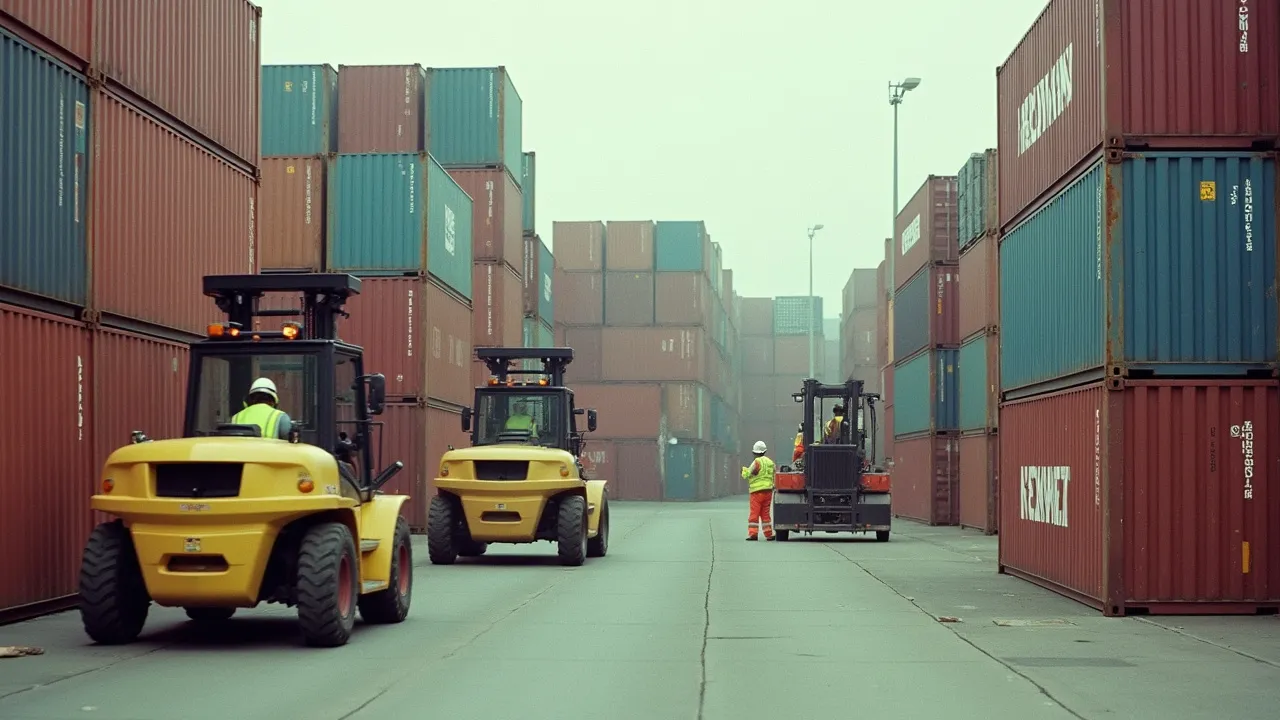
National Logistics Day, observed annually on June 28th, celebrates the vital role of logistics and supply chain professionals in moving goods worldwide. It highlights the industry's economic impact and technological advances.
The Historical Origins & Evolutionary Journey
National Logistics Day, observed annually on June 28th, honors the backbone of global commerce: the logistics and supply chain industry. This day was formally established through a resolution in the U.S. Senate in 2021, recognizing the essential contributions of logistics professionals, especially during the COVID-19 pandemic. However, the roots of logistics stretch back to ancient civilizations.
The Foundational Catalyst
Logistics as a concept dates back to military operations, where the efficient movement of troops and supplies was critical. The term itself originates from the Greek word 'logistikos', meaning skilled in calculating. Over centuries, logistics evolved from simple trade routes to complex global networks. The Industrial Revolution, with its railroads and steamships, marked a turning point, enabling mass transport of goods.
Legislative/Official Adoption
The modern push for a dedicated day began in 2020 when supply chain disruptions highlighted the industry's value. In 2021, the U.S. Senate unanimously passed a resolution designating June 28 as National Logistics Day. This date was chosen to coincide with the end of the fiscal year for many logistics companies and to recognize the summer peak season. The day was officially signed into recognition by the President.
Modern Global Legacy
Today, National Logistics Day is observed not only in the United States but also by multinational corporations and logistics hubs worldwide. It serves as a platform to educate the public on supply chain intricacies, promote careers in logistics, and showcase innovations like automation and AI. The day emphasizes the industry's adaptability and resilience.
How to Celebrate National Logistics Day
National Logistics Day offers opportunities for everyone—from individuals to large corporations—to engage with and appreciate the supply chain. Below are comprehensive celebration strategies across different contexts.
For Individuals
- Educate Yourself: Read about how products travel from factory to doorstep. Watch documentaries like 'The Supply Chain' or explore online courses.
- Support Local Businesses: Visit local warehouses or distribution centers on open house events. Thank delivery drivers and logistics workers you encounter.
- Reduce Consumption: Understand the environmental impact of shipping. Opt for slower delivery options to reduce the carbon footprint.
For Organizations
- Employee Appreciation Events: Host lunches or award ceremonies for warehouse staff, drivers, and planners. Share success stories internally.
- Community Outreach: Partner with schools to offer tours of logistics facilities. Sponsor a logistics-themed essay contest or career fair.
- Public Awareness Campaigns: Use social media to highlight key statistics (e.g., 'Logistics accounts for 8% of U.S. GDP'). Share photos with hashtag #NationalLogisticsDay.
Global Traditions
In the United States, the day is marked by industry conferences and webinars. In Europe, the European Logistics Association promotes similar initiatives. In Asia, countries like Japan and China hold logistics exhibitions showcasing robotics and AI. Some companies offer discounts on shipping or donate to logistics-related charities.
Economic Impact of Logistics
The logistics industry is a powerhouse of the global economy. In the United States alone, it employs over 1.6 million workers and contributes nearly $1.6 trillion to the GDP annually. This sector encompasses transportation (trucking, rail, air, maritime), warehousing, and inventory management.
Key Statistics
- Global Market Size: The global logistics market was valued at $8.4 trillion in 2023 and is projected to exceed $12 trillion by 2030.
- Employment: Over 40 million people worldwide work in logistics-related fields.
- Trade Facilitation: Logistics enables 90% of global trade by volume, mostly through shipping containers.
Impact on Daily Life
Without logistics, shelves would be empty, hospitals would lack medicines, and e-commerce would halt. The COVID-19 crisis underscored this dependence, as bottlenecks led to shortages of everything from toilet paper to semiconductors.
Technological Innovations in Logistics
Logistics has undergone a digital transformation in the 21st century. Technologies like artificial intelligence, blockchain, and the Internet of Things (IoT) are reshaping supply chains.
Key Innovations
- Autonomous Vehicles: Self-driving trucks and drones are being tested for last-mile delivery. Companies like TuSimple and UPS are leading the charge.
- Blockchain: Enhances transparency and traceability in supply chains, reducing fraud and errors.
- Warehouse Robotics: Amazon's Kiva robots automate picking and packing, increasing efficiency by 20%.
- Predictive Analytics: AI forecasts demand and optimizes routes, saving fuel and time.
Challenges
Despite advancements, cybersecurity threats and high implementation costs remain barriers. The industry must also address workforce training to adapt to new tools.
Environmental Sustainability in Logistics
Logistics has a significant environmental footprint, accounting for approximately 8% of global carbon emissions. However, the industry is pivoting toward greener practices.
Green Initiatives
- Electric Vehicles: Major fleets are electrifying delivery vans and trucks, such as Amazon's Rivian and UPS's electric fleet.
- Alternative Fuels: LNG, hydrogen, and biofuels are being used for long-haul shipping.
- Route Optimization: AI reduces mileage and fuel consumption by planning efficient routes.
Circular Economy
Logistics also plays a role in reducing waste through reverse logistics—recycling and reusing materials. Companies like IKEA are designing packaging for easy return and reuse.
Global Logistics Systems and Trade Routes
Logistics networks span the globe, connecting producers and consumers across continents. Key trade routes include the Pacific Rim, the Suez Canal, and transcontinental railways.
Major Hubs
- Port of Shanghai: The world's busiest container port, handling over 47 million TEUs annually.
- Port of Rotterdam: Europe's largest port, a gateway to the continent.
- Memphis International Airport: The busiest cargo airport, home to FedEx's global hub.
Challenges
Geopolitical tensions, natural disasters, and pandemics can disrupt these networks. The 2021 Suez Canal blockage cost an estimated $9.6 billion per day in trade.
Career Opportunities in Logistics
Logistics offers diverse career paths, from entry-level to executive positions. The industry is expected to grow 5% over the next decade, faster than average.
Common Roles
- Supply Chain Manager: Oversees procurement, inventory, and distribution.
- Logistics Analyst: Uses data to improve efficiency.
- Warehouse Supervisor: Manages staff and operations.
- Delivery Driver: Essential for last-mile delivery.
Skills Needed
Employers value analytical skills, technological proficiency, and adaptability. Certifications like APICS CSCP or CLTD can boost prospects.
How to Get Started
- Earn a degree in supply chain management or a related field.
- Gain experience through internships at logistics firms.
- Network at industry events like National Logistics Day webinars.
Historical Timeline
Malcolm McLean introduces the modern shipping container, revolutionizing cargo transport and global trade.
United Parcel Service (UPS) launches its nationwide air express service, beginning overnight delivery.
The term 'supply chain management' gains popularity as firms integrate logistics with corporate strategy.
E-commerce boom leads to exponential growth in parcel delivery, with Amazon's rise reshaping logistics.
The Panama Canal expansion is completed, doubling capacity and altering global shipping routes.
U.S. Senate passes resolution designating June 28 as National Logistics Day, first official celebration occurs.
Autonomous trucking companies begin commercial freight operations in several U.S. states.