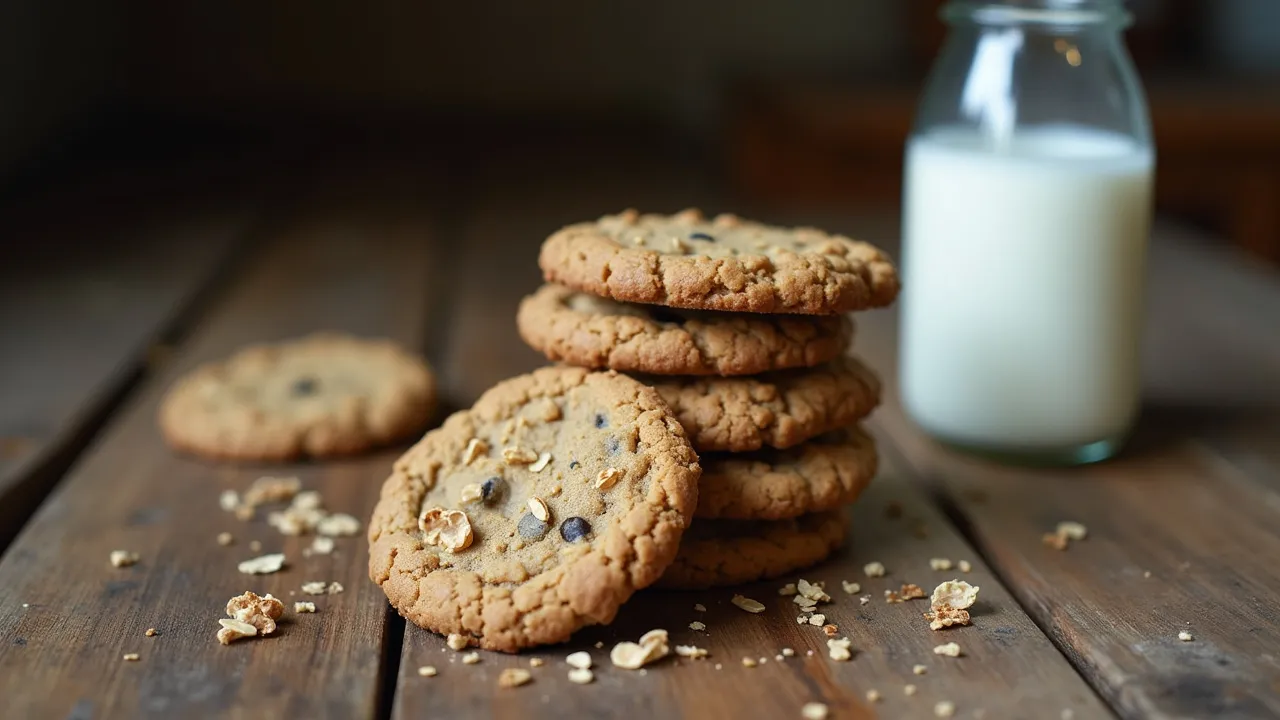
National Oatmeal Cookie Day is observed annually on April 30th in the United States, celebrating the hearty, comforting cookie made with oats. This day honors a classic treat loved for its chewy texture and wholesome ingredients.
The Historical Origins & Evolutionary Journey
National Oatmeal Cookie Day, observed each year on April 30th, pays homage to a beloved confection whose roots stretch back centuries. While the exact origin of the oatmeal cookie is hazy, the story of oats themselves is ancient. Oats (Avena sativa) were first domesticated in the Bronze Age and later became a staple for Scottish and Irish peasants. The modern oatmeal cookie emerged in the late 1800s, coinciding with the rise of commercial baking and the popularity of rolled oats.
The Foundational Catalyst: Oats in Baking
In 1896, the first known printed oatmeal cookie recipe appeared in the Boston Cooking School Cook Book by Fannie Merritt Farmer. Her recipe called for "two cups of rolled oats, one cup of sugar, one-half cup of butter, two eggs, one teaspoon of baking powder, and a pinch of salt." This simple formula revolutionized home baking, offering a hearty, nutritious alternative to refined-flour cookies. By the early 20th century, oatmeal cookies became a staple in American households, especially during the Great Depression when oats were affordable and filling.
The Legislative/Official Adoption: A Food Holiday Emerges
While National Oatmeal Cookie Day has no formal congressional designation, it gained recognition through food marketing and consumer enthusiasm. The Quaker Oats Company, a major producer of rolled oats, inadvertently popularized the day by promoting oatmeal cookie recipes in the 1980s. Food holidays were becoming a cultural phenomenon, and April 30th was chosen—likely because it falls between Easter and Mother’s Day, a period devoid of major food celebrations. The date also aligns with spring baking season when oats are a comforting yet lighter ingredient.
Modern Global Legacy
Today, National Oatmeal Cookie Day is celebrated across North America and increasingly worldwide. The cookie has evolved into countless variations: chocolate chip, raisin, nut-studded, and even gluten-free or vegan adaptations. Social media amplifies the celebration, with bakers sharing their creations using #NationalOatmealCookieDay. The day also serves as a reminder of the health benefits of oats—rich in fiber, protein, and essential minerals—positioning the oatmeal cookie as a guilt-free indulgence.
How to Celebrate National Oatmeal Cookie Day
Celebrating this delicious day can be as simple or elaborate as you wish. From baking at home to community cookie swaps, here are definitive ways to honor the oatmeal cookie on April 30th.
Individual Celebration Strategies
- Bake a Classic Batch: Try the original Fannie Farmer recipe or a modernized version with oats, brown sugar, and warm spices like cinnamon and nutmeg.
- Experiment with Variations: Add chocolate chips, dried cranberries, chopped walnuts, or even a drizzle of caramel. For health-conscious bakers, use whole-wheat flour or reduce sugar.
- Host a Virtual Cookie Swap: Organize a video call with friends or family to share recipes and taste-test each other’s creations.
- Visit a Local Bakery: Support small businesses by purchasing oatmeal cookies from a nearby bakery or coffee shop.
School & Organization Activities
- Classroom Baking Project: Teachers can incorporate math (measuring ingredients) and science (chemistry of baking) while making oatmeal cookies.
- Cookie Fundraiser: Sell oatmeal cookies to raise money for school programs or local charities.
- Community Cookie Drop: Deliver homemade oatmeal cookies to neighbors, nursing homes, or fire stations as a gesture of kindness.
Corporate & Social Rituals
Companies can celebrate by offering oatmeal cookies in break rooms or hosting a "bake-off" contest. Social media challenges like "most creative oatmeal cookie" can engage followers. Use the hashtag #NationalOatmealCookieDay to join the global conversation.
Health & Nutritional Impact of Oatmeal Cookies
Oatmeal cookies occupy a unique niche in the dessert world: they are often perceived as healthier than other cookies. This perception is grounded in the nutritional profile of oats.
Key Nutritional Benefits
- Fiber-Rich: Oats contain beta-glucan, a soluble fiber that supports heart health by lowering LDL cholesterol.
- Protein Content: A serving of oats provides about 5 grams of protein, contributing to satiety and muscle maintenance.
- Vitamins and Minerals: Oats are a good source of manganese, phosphorus, magnesium, and B vitamins.
Calorie and Sugar Considerations
Despite these benefits, oatmeal cookies often contain added sugars and butter. A typical large oatmeal cookie from a bakery may have 200-300 calories and 15-20 grams of sugar. Healthier versions can be made by reducing sugar, using applesauce or mashed banana as a sweetener, and incorporating nuts or seeds for added nutrients.
Dietary Adaptations
- Gluten-Free: Use certified gluten-free oats and almond flour instead of wheat flour.
- Vegan: Substitute flax eggs (1 tbsp flaxseed meal + 3 tbsp water) and coconut oil or vegan butter.
- Low-Sugar: Replace sugar with stevia or monk fruit sweetener.
National Oatmeal Cookie Day encourages mindful indulgence—enjoying a treat that also delivers genuine nutritional value.
Iconic Variations & Regional Twists
Oatmeal cookies have spawned countless variations across cultures and kitchens. Here’s a look at some of the most beloved adaptations worldwide.
Classic American Styles
- Oatmeal Raisin: The most traditional version, often featuring plump raisins and a hint of cinnamon.
- Oatmeal Chocolate Chip: A modern favorite that swaps raisins for chocolate chips, creating a sweeter, richer cookie.
- Oatmeal Scotchies: Made with butterscotch chips, popularized by Nestlé Toll House recipes.
International Adaptations
- United Kingdom: Flapjacks—dense, baked oat bars often studded with dried fruit or chocolate—are a close cousin to the American oatmeal cookie.
- Scotland: Oatcakes are savory, thin crackers made from oats, sometimes sweetened for dessert versions.
- India: Oatmeal cookies are often spiced with cardamom and saffron, reflecting local flavors, and may use ghee instead of butter.
Gourmet & Artisan Trends
In recent years, bakeries have elevated oatmeal cookies with premium ingredients like mascarpone, espresso powder, or dark chocolate chunks. The Milk Bar chain in New York offers a "Cornflake Chocolate Chip Marshmallow Cookie" that incorporates crushed cornflakes (a nod to oats) for extra crunch. National Oatmeal Cookie Day is the perfect excuse to explore these creative renditions.
Economic & Industry Impact
The oatmeal cookie is more than a comfort food—it’s a significant driver in the U.S. baked goods industry. According to a 2023 report by Mintel, cookies account for roughly 20% of all packaged baked goods sales, and oatmeal varieties hold a steady 15% market share within that category.
Key Industry Data
- Annual Sales: Oatmeal cookies generate over $1.5 billion in retail sales annually in the U.S. alone.
- Top Brands: Pepperidge Farm (Soft-Baked Oatmeal), Nabisco (Oatmeal Creme Pies), and Quaker (Oatmeal Cookies mixes).
- Seasonal Peaks: Sales spike in April around National Oatmeal Cookie Day, as well as during the holiday season.
Small Business & Bakery Impact
Local bakeries often report a 20-30% increase in foot traffic on April 30th. Many offer special promotions, like "buy one dozen, get three free oatmeal cookies". The day also inspires limited-edition flavors, such as maple-pecan oatmeal or lavender-honey oatmeal, which can become permanent menu items.
National Oatmeal Cookie Day thus serves as an economic catalyst, benefiting from strong consumer nostalgia and a growing demand for "better-for-you" treats.
Environmental & Ethical Considerations
While the oatmeal cookie is a relatively humble food, its production raises important environmental and ethical questions—especially around oat farming and supply chains.
Sustainable Oat Farming
Oats are generally considered an environmentally friendly crop. They require less water than almonds or rice, and they improve soil health by reducing erosion and suppressing weeds. However, conventional oat farming often uses synthetic fertilizers and pesticides. Organic oats, though more expensive, have a lower ecological footprint.
Fair Trade & Labor Practices
Most oats are grown in North America (Canada, U.S.) and Europe, where labor laws are robust. However, ingredients like chocolate, raisins, and nuts may come from regions with questionable labor practices. On National Oatmeal Cookie Day, conscientious bakers can choose Fair Trade certified chocolate and sustainably sourced nuts.
Reducing Food Waste
Oatmeal cookies have a relatively long shelf life compared to perishable desserts, helping reduce food waste. Moreover, repurposing leftover oatmeal or rolled oats into cookies is an excellent way to use pantry staples. The day encourages mindful consumption: bake what you need, share the rest.
By celebrating with ethically sourced ingredients and minimal waste, National Oatmeal Cookie Day can align with broader sustainability goals.
Fun Facts & Trivia
Cookie Monster’s Favorite? While known for devouring everything, Cookie Monster has a soft spot for oatmeal cookies in some episodes.
Largest Oatmeal Cookie: In 2003, the town of Taber, Alberta, Canada baked a 10,000-pound oatmeal cookie, setting a world record.
Oats in Space: Oatmeal cookies were part of the menu on several NASA space shuttle missions as a shelf-stable treat.
Quaker Oats & the Quaker Man: The Quaker Oats logo, introduced in 1877, is one of the oldest continuously used trademarks in the U.S. The company has long promoted oatmeal cookies in its advertising.
Oatmeal vs. Oatmeal Cookie: The commercial success of the oatmeal cookie actually boosted oat consumption in the 20th century, as people bought rolled oats specifically for baking.
Historical Timeline
First known oatmeal cookie recipe published by Fannie Merritt Farmer in the <em>Boston Cooking School Cook Book</em>.
Oatmeal cookies become a Depression-era staple due to low cost and filling nutrition.
Quaker Oats Company begins featuring oatmeal cookie recipes on its packaging, boosting home baking.
National Oatmeal Cookie Day is unofficially promoted by food marketers, fixed on April 30th.
World's largest oatmeal cookie baked in Taber, Alberta, Canada—weighing over 10,000 pounds.
Oatmeal cookies included in NASA's menu for astronauts on the International Space Station.
Social media trends for National Oatmeal Cookie Day spike due to pandemic baking; #NationalOatmealCookieDay trends on Twitter.