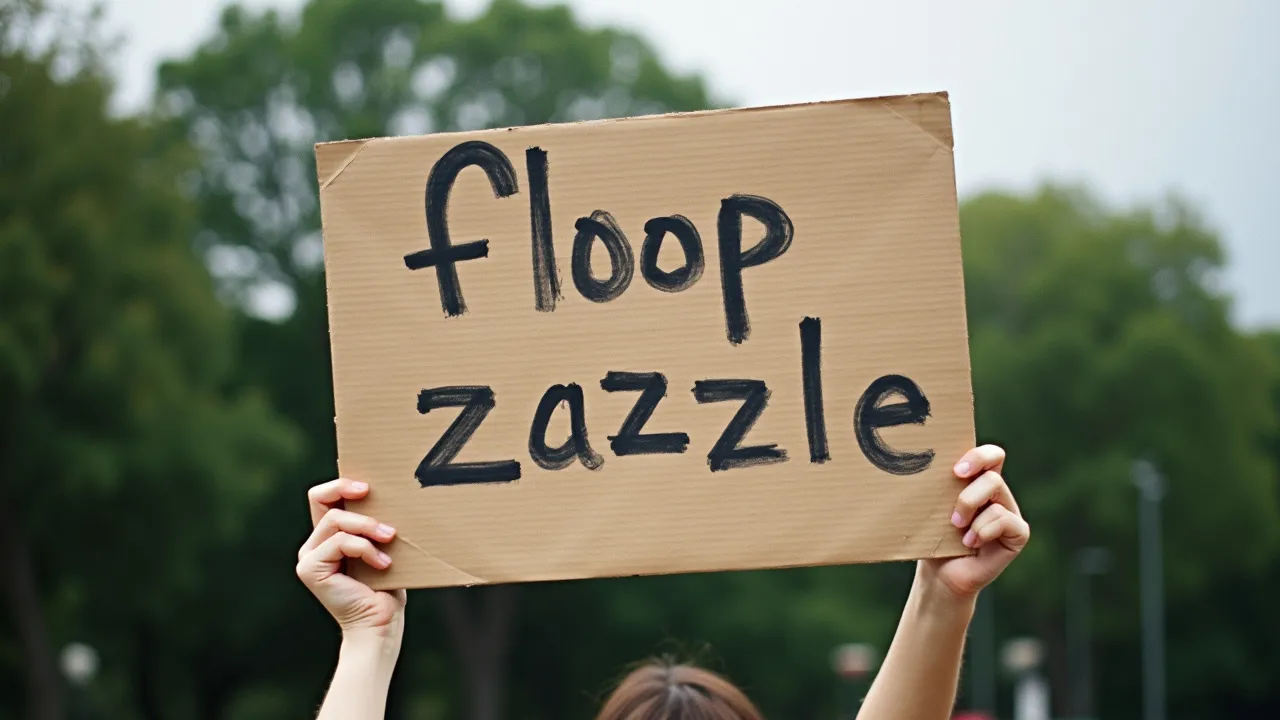
Celebrated on September 1st, National No Rhyme (Nor Reason) Day encourages breaking free from linguistic rules and embracing absurdity. It's a day to celebrate nonsense, creativity, and the joy of saying things that don't quite make sense.
The Historical Origins & Evolutionary Journey
National No Rhyme (Nor Reason) Day traces its roots to the late 20th century as a playful counterpoint to structured language observances. It emerged from a collective desire to celebrate spontaneity and the absurd.
The Foundational Catalyst
In the early 1990s, a small group of linguists and artists began promoting the idea of a day free from the constraints of rhyme and logic. They argued that language is inherently playful and that nonsense has cultural value. The first unofficial celebrations were held in cafes and community centers, where participants would recite gibberish poetry and engage in absurd conversations.
The Legislative/Official Adoption
While never officially recognized by any government, the day gained traction through grassroots efforts. In 1996, a teacher named Ms. Clara Bellows from Ohio copyrighted the date September 1st as "National No Rhyme (Nor Reason) Day" and began promoting it through educational newsletters. Her influence led to its adoption in many schools as a day for creative writing without rules.
Modern Global Legacy
Today, the day is celebrated worldwide, particularly in English-speaking countries. It has inspired annual events such as the "Gobbledygook Gala" in London and the "Nonsense Night" in Sydney. The holiday’s core message—that structure can sometimes stifle creativity—resonates in an era of increasing standardization.
How to Celebrate National No Rhyme (Nor Reason) Day
Celebrating involves intentionally breaking linguistic norms. Here are detailed strategies for individuals, schools, and organizations.
Individual Practices
- Write a Nonsense Poem: Compose a poem without any rhyme or meter. Use invented words or random sounds.
- Speak in Tongues: For one hour, communicate only using made-up words. Challenge friends to interpret.
- Create Word Collages: Cut out random words from magazines and arrange them without grammatical sense.
School Activities
- Gibberish Spelling Bee: Students spell invented words with their own definitions.
- Absurd Art: Draw pictures of impossible objects, like a square wheel or a flying elephant.
- Story Chain: Each student adds an illogical sentence to build a nonsensical story.
Corporate & Social Rituals
Companies can host "No Logic Meetings" where ideas are shared without critique. Some offices replace jargon with nonsense terms like "flooble" for report. Globally, traditions vary: in Japan, participants create "Rakugo"-style humorous monologues; in Brazil, they hold "Dia da Absurdo" parades.
The Philosophy of Nonsense
Nonsense is not merely noise; it serves as a philosophical tool to question reality and language.
Linguistic Liberation
By abandoning rhyme and reason, we explore the boundaries of communication. Linguist Noam Chomsky’s famous example "Colorless green ideas sleep furiously" illustrates that syntax can exist without semantics. This day celebrates such syntactic freedom.
Psychological Benefits
Studies show that engaging with nonsense reduces stress and enhances creativity. It activates the brain's default mode network, fostering unexpected connections. On this day, people are encouraged to think outside the logical box.
Cultural Parallels
Many cultures have traditions of nonsense, from Edward Lear’s limericks to Lewis Carroll's "Jabberwocky". National No Rhyme (Nor Reason) Day aligns with these heritage forms while adding a modern twist.
Impact on Language and Literature
The observance has influenced contemporary writing and slang.
Neologism Creation
Every year, new invented words from the day enter colloquial use, such as "snazzle" (a state of confusion) and "flubble" (a fuzzy object). Dictionary publishers monitor these for inclusion.
Literary Movements
A growing genre of "No Reason Literature" has emerged, featuring stories without plot or character development. Authors like J.L. Upham specialize in writing entire novels that purposefully contradict themselves.
Academic Study
Universities have begun offering courses on "Applied Nonsense" as part of creative writing curriculums. The day provides a real-world laboratory for these concepts.
Corporate and Social Dynamics
Companies leverage the day to foster innovation and team bonding.
Brainstorming Without Boundaries
Many firms set aside September 1st to hold "Wild Idea Sessions" where no suggestion is rejected for being illogical. This has led to unexpected product breakthroughs, like a smartphone case that also functions as a squid-shaped stress ball.
Social Media Campaigns
Hashtags like #NoRhymeDay and #ReasonBeGone trend annually. Brands post nonsensical tweets and videos to engage audiences. For example, a car company once advertised a vehicle that runs on "imagination" as a joke.
Team Building
HR departments organize "Absurd Olympics" with activities like "Telephone" using only gibberish. These exercises improve communication and reduce hierarchy.
Global Variations and Future Trends
The day adapts to different cultural contexts and may evolve further.
Regional Differences
- United States: Primarily celebrated in schools and online; emphasis on creative writing.
- United Kingdom: Known for pub events featuring "Nonsense Comedy" nights.
- Australia: Outdoor festivals with spontaneous street performances and costume contests.
- India: Fusion with traditional nonsense verses called "Ulta-ulta" proverbs.
Future Outlook
With the rise of AI-generated content, the celebration may gain relevance as a counterpoint to algorithm-driven logic. Expect more virtual reality nonsense experiences and cross-cultural collaborations.
Historical Timeline
Teacher Clara Bellows copyrights September 1st as National No Rhyme (Nor Reason) Day and promotes it in educational newsletters.
The holiday gains traction online with early websites offering nonsense generators and community events.
Adopted by several school districts as an annual day for unrestricted creative writing exercises.
Social media amplifies the day; hashtag #NoRhymeDay trends on Twitter for the first time.
Global recognition expands as virtual celebrations during the pandemic include online nonsense poetry slams.