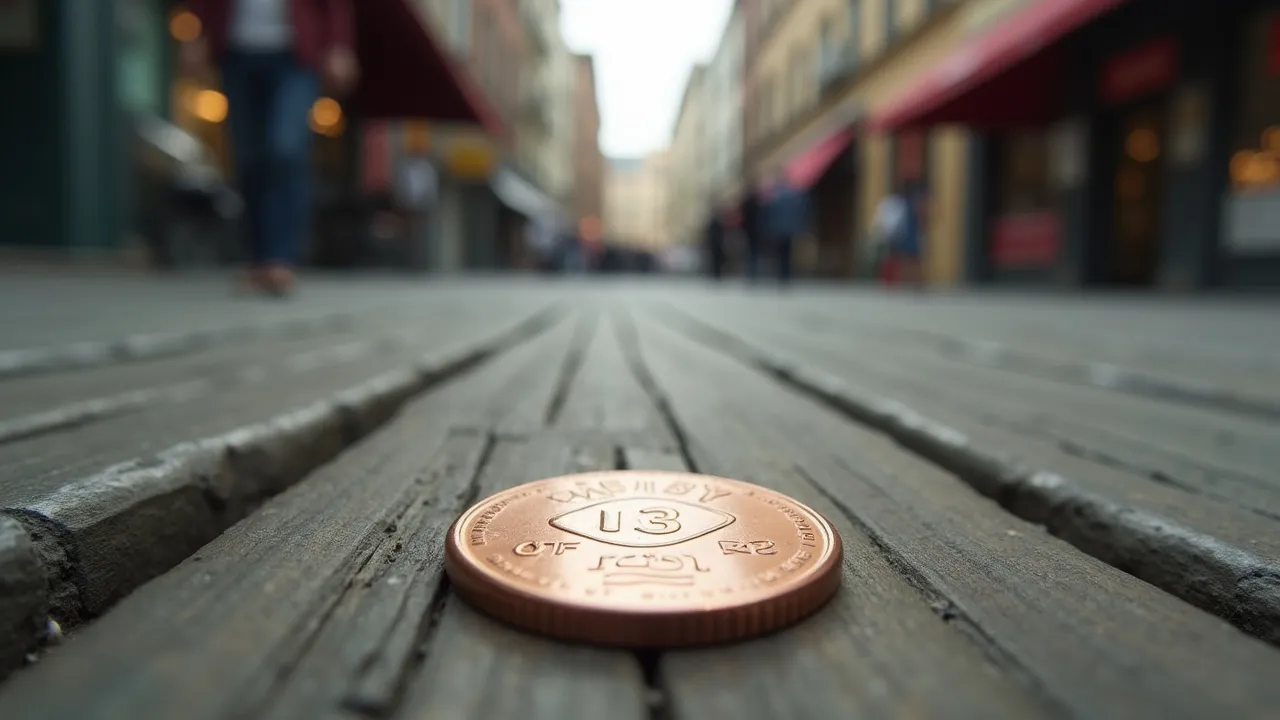
National Lucky Penny Day, observed on May 23rd, celebrates the superstition and joy of finding a penny. Discover the history, global traditions, and ways to honor this charming folk belief.
The Historical Origins & Evolutionary Journey
National Lucky Penny Day, celebrated on May 23rd, is a lighthearted yet culturally rich observance that honors the superstition of finding a penny and keeping it for good luck. While the exact origins of this day remain obscure, its roots intertwine with centuries-old beliefs about coins, luck, and the symbolism of copper.
The Foundational Catalyst: Ancient Superstitions
The belief that finding a coin brings good fortune dates back to ancient civilizations. In Roman times, coins were often placed in temples as offerings to gods, and finding one was seen as a divine blessing. During the Middle Ages, people believed that metal, especially copper, possessed protective properties against evil spirits. The phrase "find a penny, pick it up, and all day long you'll have good luck" became popular in early 20th century America, partly reinforced by the 1902 children's song 'Penny, Penny' and later by a 1940s Lucky Strike cigarette campaign that used the rhyme.
However, the specific designation of May 23rd as National Lucky Penny Day appears to be a modern invention, likely originating in the early 2000s as part of a broader trend of creating whimsical "national days" with no official congressional designation. It was popularized by online calendars, greeting card companies, and social media influencers who embraced the joy of superstitious traditions.
The Legislative/Official Adoption
Unlike federally recognized holidays, National Lucky Penny Day has no formal government backing. It is a grassroots observance driven by everyday people, small businesses, and internet communities. The U.S. Mint has never officially endorsed it, but coin collectors and numismatists often use the day to promote the hobby of penny collecting. The day gained traction through websites like NationalDayCalendar.com and DaysoftheYear.com, which catalog thousands of such unofficial holidays.
Modern Global Legacy
Today, National Lucky Penny Day is celebrated in various ways across the globe. In the United States, it is common to see penny-themed crafts, charitable acts involving pennies (like donating spare change), and social media challenges where people share photos of found pennies. In the United Kingdom, a similar tradition exists around finding a "lucky penny" but is often associated with the British phrase "see a penny, pick it up, and all the day you'll have good luck." However, the formal day is predominantly American. The superstition varies: some believe pennies found heads-up are luckier than tails-up, and others think giving a penny to someone else transfers the luck.
Critics argue that celebrating a penny is outdated in an increasingly cashless society, but proponents see it as a nostalgic reminder of simpler times and a way to practice mindfulness by noticing small, unexpected finds.
How to Celebrate National Lucky Penny Day
Celebrating National Lucky Penny Day is easy, fun, and accessible to all ages. Whether you're a superstitious soul or a skeptic, the day offers opportunities for charity, creativity, and connection. Below are actionable strategies for individuals, schools, businesses, and communities worldwide.
For Individuals
- Go on a penny hunt: Take a walk in a park, parking lot, or sidewalk and actively look for pennies. Keep a jar to collect them throughout the day.
- Start a lucky penny journal: Document where you found each penny and what happened that day. Over time, you may notice patterns or feel grateful for small serendipities.
- Spread the luck: Tape a penny to a card or leave one on a coworker's desk with a note saying "for good luck."
- Make a penny craft: Create jewelry, mosaic art, or keychains using pennies. Old copper pennies can be cleaned with vinegar and salt for a shiny finish.
For Schools and Educators
- Penny math lessons: Use pennies to teach counting, sorting by year, or basic probability (heads vs. tails).
- History project: Have students research the history of the penny, the Lincoln Memorial design, or the debate over abolishing the one-cent coin.
- Charity drive: Organize a penny collection to donate to a local food bank or animal shelter. Many charities have coin counters.
For Businesses and Organizations
- Create a penny promotion: Offer a discount for customers who bring in a penny, or donate a penny for every purchase.
- Office game: Place pennies in random spots around the office with "good luck" tags. Encourage employees to find them and share stories.
- Support numismatics: Host a coin-collecting workshop or invite a local appraiser to evaluate rare pennies.
Unique Traditions Around the World
While National Lucky Penny Day is primarily American, similar superstitions exist globally:
- United Kingdom: Finding a penny is lucky, but some believe it's bad luck to pick up a penny that's tails-side up without turning it over first.
- Ireland: A penny found on the road is often thrown over the shoulder to ward off fairies.
- India: Coins are considered auspicious and are often tied in red cloth and kept in wallets or lockers for prosperity.
- Japan: Finding any coin is considered a gift from the gods, but pennies (1-cent) are not in circulation; instead, the 5-yen coin is considered lucky.
Ultimately, the best way to celebrate is to embrace the spirit of serendipity and gratitude for small blessings.
The Cultural Significance of Luck and Superstition
Superstitions like the lucky penny serve as cultural touchstones that connect us to our collective past. They provide a sense of control in an unpredictable world and offer comfort through ritual. National Lucky Penny Day taps into this deep-seated human need for hope and optimism.
The Psychology of Finding a Penny
Psychologists suggest that finding a penny triggers a small dopamine release, the same neurotransmitter associated with reward and pleasure. The act of spotting something shiny on the ground activates our brain's reward system, even if the monetary value is negligible. This is why people often feel a momentary rush of happiness when they find a penny.
Cultural Variations in Coin Superstitions
Different cultures attach varying meanings to coins:
- Heads vs. Tails: In many Western traditions, finding a penny heads-up (with Lincoln's face showing) is considered luckier than tails-up. Some believe you should flip a tails-up penny over before picking it up.
- Color of the coin: Copper coins are historically associated with good luck due to their warm color, which resembles the sun. Silver coins are sometimes considered neutral or lucky for wealth.
- Donating found coins: To avoid “taking away luck,” some people donate found pennies to charity, believing that sharing the luck multiplies it.
National Lucky Penny Day thus becomes a celebration of these shared, often irrational, yet charming beliefs that unite people across generations.
The Penny Through History: From Colonial Times to Modern Debate
The penny, or one-cent coin, has a storied history in the United States. First minted in 1793, the penny originally was 100% copper. Over time, its composition changed to include zinc and copper plating due to rising metal costs. The Lincoln penny, introduced in 1909 to commemorate Abraham Lincoln's 100th birthday, is the longest-running coin design in U.S. history.
Key Historical Milestones
- 1793: First U.S. penny (large cent) minted.
- 1857: Small cent introduced, replacing the large cent.
- 1909: Lincoln cent debuts, designed by Victor David Brenner.
- 1943: Steel pennies minted due to copper shortage during WWII (steel cents are rare and valuable today).
- 1982: Composition changed from 95% copper to copper-plated zinc due to rising copper prices.
- 2023: The penny costs about 2.7 cents to produce, fueling ongoing debates about its elimination.
National Lucky Penny Day highlights the emotional value of the penny beyond its purchasing power. For many, a penny is a tangible link to history and a symbol of thrift.
Charitable and Social Impact of Penny Drives
Despite its low value, the penny collectively holds significant charitable potential. Penny drives, where people donate spare change, have funded everything from children's hospitals to disaster relief. National Lucky Penny Day amplifies these efforts by encouraging people to gather pennies for a cause.
Notable Penny Fundraising Campaigns
- Pennies for Patients: A program by the Leukemia & Lymphoma Society that has raised millions of dollars through school penny drives.
- Penny Wars: A competitive fundraising game where classes compete to collect the most pennies.
- UNICEF Trick-or-Treat for Change: Children collect pennies (and other coins) for UNICEF during Halloween.
These initiatives demonstrate that even the smallest denomination can accumulate into substantial aid when united by purpose. National Lucky Penny Day serves as a reminder to look for spare change and redirect it toward good.
Environmental and Economic Implications of the Penny
The penny is at the center of a long-standing debate about its relevance in modern economies. Many argue that the penny costs more to produce than it's worth, leading to a loss for taxpayers. Others defend its symbolic value and necessity for certain transactions.
The Case for Eliminating the Penny
- Production cost: In 2023, it cost 2.72 cents to make a penny, resulting in a loss of $0.0172 per coin.
- Environmental impact: Mining zinc and copper has environmental costs, and pennies are often discarded rather than recycled.
- Transaction inefficiency: Pennies slow down cash transactions and accumulate in jars, unused.
The Case for Keeping the Penny
- Charitable benefits: Penny drives rely on the coin's ubiquity.
- Historical significance: The penny is part of American heritage, with iconic designs.
- Psychological effect: Elimination could lead to rounding up prices, hurting consumers.
National Lucky Penny Day can be a platform to educate people about these debates while celebrating the coin's positive attributes.
Collecting Pennies: A Hobby for Enthusiasts
Numismatics, the study and collection of coins, includes a passionate subset focused on pennies. Many collectors search for rare errors, key dates, and high-grade specimens. National Lucky Penny Day is a perfect excuse to start or expand a penny collection.
Rare and Valuable Pennies
- 1943 Bronze Penny: Accidentally minted in bronze instead of steel; only a handful exist, valued over $100,000.
- 1909-S VDB: A Lincoln cent with designer's initials on the reverse, highly sought after.
- 1955 Double Die: A doubling error on the obverse makes this penny worth thousands.
- Wheat pennies (1909-1958): Older pennies with wheat stalks on the reverse are generally collectible.
Enthusiasts often use the day to attend coin shows, trade with other collectors, or teach beginners how to start a collection. Even a casual search through pocket change can yield interesting finds, such as a 1982 copper penny (which is heavier than the later zinc ones).
Historical Timeline
First U.S. penny (large cent) minted, made of pure copper.
Lincoln cent introduced to commemorate Abraham Lincoln's 100th birthday, featuring his profile by Victor D. Brenner.
Steel pennies minted due to copper shortage during World War II; a few copper planchets were struck accidentally, becoming extremely rare.
Double die error on Lincoln cent occurs, creating a valuable collectible.
Penny composition changed from 95% copper to copper-plated zinc, reducing production cost but sparking collector interest in pre-1982 copper pennies.
National Lucky Penny Day likely created as an unofficial observance, gaining traction on online calendar sites and social media.
U.S. Mint reports cost of producing a penny at 2.72 cents, reigniting debate about eliminating the coin.