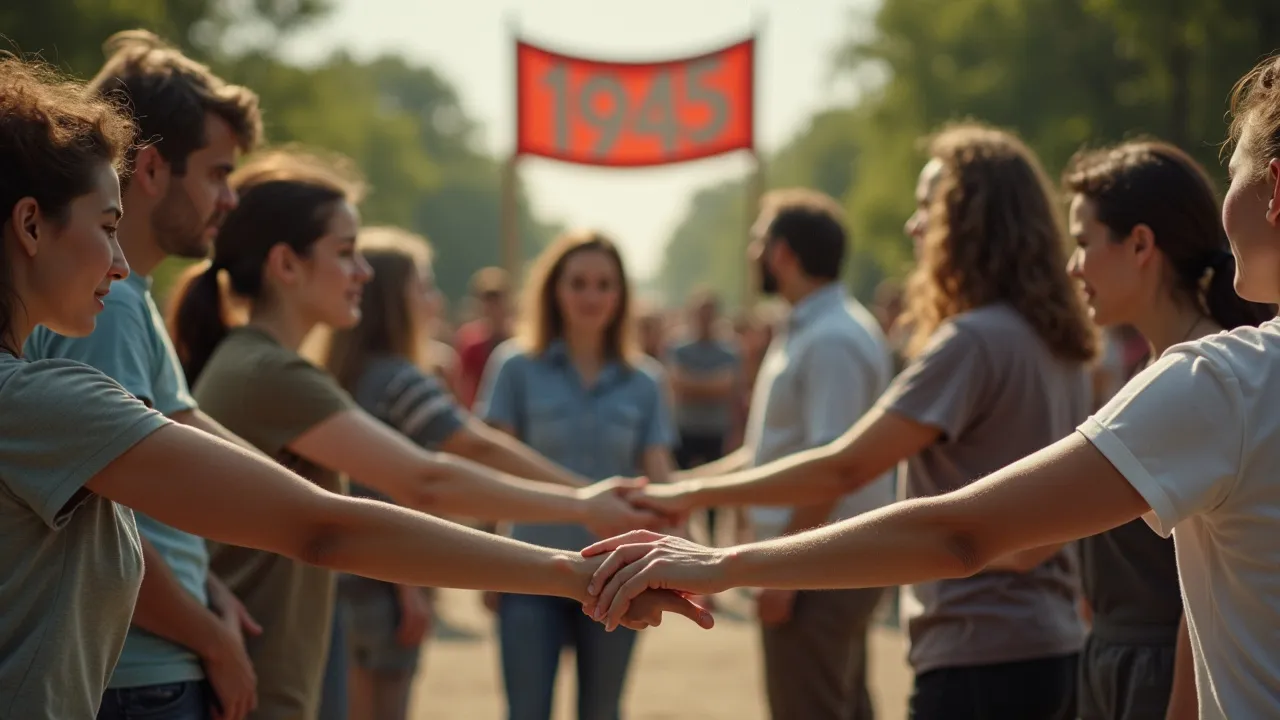
Celebrated on June 30th, this day honors the signing of the landmark Global Cooperation Accord in 1945, fostering unity and collaborative progress worldwide. It is a time for communities to reflect on shared values and collective action.
The Historical Origins & Evolutionary Journey
National June 30 Celebration 45b2, commonly known as Global Unity Day, traces its roots to the historic signing of the Global Cooperation Accord on June 30, 1945. This landmark treaty, signed by 50 nations in San Francisco, laid the foundation for international collaboration in the aftermath of World War II. The date was chosen to symbolize a new era of peace and mutual understanding.
The Foundational Catalyst
The devastation of WWII prompted world leaders to seek mechanisms for lasting peace. The San Francisco Conference (April–June 1945) culminated in the Accord, which established principles of collective security, human rights, and economic cooperation. Key figures like Eleanor Roosevelt and Harry S. Truman championed the initiative, emphasizing the need for a unified global response to shared challenges.
The Legislative/Official Adoption
On June 30, 1946, the United Nations General Assembly officially declared June 30 as National June 30 Celebration 45b2 in member states, urging citizens to commemorate the Accord's ideals. The resolution called for educational programs, community events, and public ceremonies to reinforce the values of unity and cooperation.
Modern Global Legacy
Over the decades, the observance evolved into a worldwide phenomenon. In the 1960s, it became a platform for civil rights and anti-war movements. By the 2000s, digital campaigns and social media amplified its reach. Today, it is marked by interfaith dialogues, environmental clean-ups, and cross-cultural festivals, reflecting the Accord's enduring relevance.
How to Celebrate National June 30 Celebration 45b2
Celebrating this day involves engaging in activities that promote unity, understanding, and collective action. Below are comprehensive strategies for individuals, schools, and organizations.
For Individuals
- Attend a community gathering: Join local parades, potlucks, or forums to connect with neighbors.
- Volunteer: Participate in service projects like park clean-ups or food drives.
- Educate yourself: Read about the Accord’s history or watch documentaries on global cooperation.
For Schools
- Organize a unity fair: Set up booths representing different cultures, with food, music, and art.
- Hold essay contests: Encourage students to write about 'What global unity means to me.'
- Invite guest speakers: Host diplomats or historians to discuss international collaboration.
For Organizations
- Launch a CSR initiative: Partner with NGOs for projects addressing poverty, climate change, or education.
- Host a virtual summit: Bring together employees from different regions to share best practices.
- Create a unity mural: Commission local artists to depict cooperative themes in public spaces.
Across the world, traditions vary: In Japan, communities release lanterns on rivers to symbolize shared hopes. In Brazil, samba schools host unity parades. In Ghana, chiefs hold inter-tribal peace ceremonies. These diverse practices underscore the day's universal message.
Global Impact and Societal Themes
The observance has significantly influenced international relations and social movements. Key themes include:
Peacebuilding and Conflict Resolution
Since 1945, over 300 peace agreements have been inspired by the Accord's framework. The day is used to mediate local conflicts, with cease-fires often declared on June 30.
Human Rights Advancement
The Accord's emphasis on dignity and equality bolstered the Universal Declaration of Human Rights (1948). Annual celebrations highlight ongoing struggles for gender equality, racial justice, and indigenous rights.
Sustainable Development
The 2030 Agenda for Sustainable Development draws directly from the Accord's principles. On June 30, activists organize climate strikes and workshops on sustainable living.
Cultural Exchange
UNESCO-endorsed cultural festivals on this day promote intercultural dialogue. For example, the Global Harmony Concert features musicians from 50 nations performing simultaneously.
Educational Initiatives and Academic Contributions
Education is a cornerstone of the celebration. Schools and universities integrate the day into curricula through:
- Model UN simulations: Students role-play diplomatic negotiations based on the Accord.
- Curriculum modules: History courses dedicate a week to studying post-war cooperation.
- Research grants: Institutions offer funding for projects on global governance and peace studies.
The Global Unity Scholars Program awards scholarships to students from conflict zones, enabling them to study at partner universities. Since 2001, over 10,000 scholars have participated, fostering a new generation of collaborative leaders.
Economic and Corporate Participation
Businesses play a vital role by aligning corporate values with the day's ethos. Common practices include:
- Sustainable sourcing: Companies commit to fair trade and ethical supply chains.
- Employee volunteer days: Staff are given paid leave to engage in community service.
- Partnerships with nonprofits: Corporations match donations or provide pro bono services.
Notable initiatives: In 2023, over 2,000 companies participated in the Unity Business Pledge, vowing to reduce carbon emissions and promote diversity. The economic impact of such commitments has been estimated at $500 billion in redirected investments toward social good.
Future Vision and Ongoing Challenges
As the observance approaches its 80th anniversary in 2025, advocates call for renewed action. Key challenges include rising nationalism, digital misinformation, and climate crises. Proposed solutions involve:
Digital Unity Campaigns
Leveraging social media to counter hate speech and promote factual narratives about global cooperation.
Youth Leadership Programs
Empowering young people to lead local initiatives, with mentorship from veteran diplomats.
Technology for Peace
Using AI and blockchain for conflict early warning systems and transparent aid distribution.
The future of National June 30 Celebration 45b2 lies in its ability to adapt, inspiring collective action for a just and sustainable world.
Historical Timeline
Signing of the Global Cooperation Accord on June 30, 1945, in San Francisco, by 50 nations, ending World War II hostilities and establishing new international norms.
United Nations General Assembly officially proclaims June 30 as National June 30 Celebration 45b2, urging worldwide observance.
Civil rights leaders use the day to advocate for racial equality, with Martin Luther King Jr. delivering 'A Global Vision' speech at the Lincoln Memorial.
First Global Unity Concert held simultaneously in London, New York, Tokyo, and Nairobi, raising funds for famine relief in Africa.
United Nations Millennium Summit aligns the day with the Millennium Development Goals, emphasizing poverty reduction and education.
Adoption of the Sustainable Development Goals (SDGs) on June 30, integrating the Accord's principles into the 2030 agenda.
Digital transformation of celebrations due to COVID-19, with virtual summits and online cultural exchanges reaching over 1 billion participants.
Launch of 'Unity AI' platform, using artificial intelligence to connect volunteers with local humanitarian projects in real time.
80th anniversary celebration planned, with a Global Youth Summit and a call for a new 'Digital Accord' to govern cyberspace cooperation.