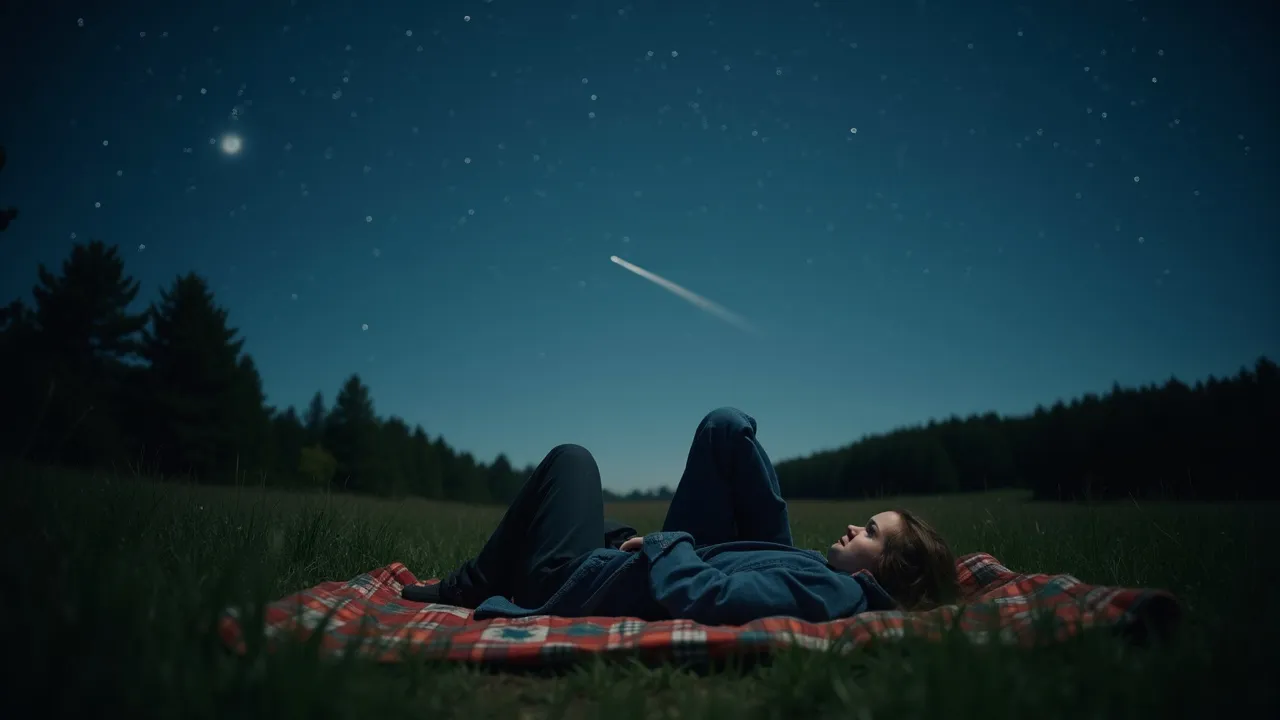
Observed on June 30th, National Meteor Watch Day encourages everyone to look up and enjoy the spectacle of meteors streaking across the night sky. Perfect for stargazers and astronomy enthusiasts.
The Historical Origins & Evolutionary Journey
National Meteor Watch Day is observed annually on June 30th, a date chosen to coincide with the peak of the June Bootids meteor shower. The day was established to promote public interest in astronomy and meteor observation. While the exact origin remains informal, the American Meteor Society (AMS) played a pivotal role in popularizing this observance in the mid-1990s as part of broader efforts to engage amateur astronomers.
The Foundational Catalyst
The June Bootids meteor shower was first recognized in the early 20th century, originating from the debris of comet 7P/Pons-Winnecke. Historically, the shower has produced variable rates, with notable outbursts in 1916, 1921, and 1927. The desire to coordinate public watch events led to the designation of June 30th as a national day for meteor watching. The AMS encouraged local astronomy clubs to host events, fostering a tradition of community skywatching.
The Legislative/Official Adoption
Unlike federal holidays, National Meteor Watch Day was never legislatively adopted by the U.S. government. Instead, it gained recognition through grassroots campaigns and astronomical societies. By the early 2000s, it was listed on many unofficial holiday calendars, and NASA began promoting it as a citizen science opportunity. The day's flexibility allowed it to be celebrated even when the June Bootids are weak, as other meteor showers (like the Delta Aquariids) are also active around that time.
Modern Global Legacy
Today, National Meteor Watch Day extends beyond the United States, with astronomy enthusiasts worldwide participating. Social media and live streaming have transformed the day into a global event. Observatories and planetariums often host special programs, and the day serves as an entry point for newcomers to astronomy. The underlying mission remains: to inspire wonder about the cosmos and encourage regular sky observation.
How to Celebrate National Meteor Watch Day
Celebrating National Meteor Watch Day is simple: find a dark sky, look up, and be patient. Here are actionable strategies for individuals, schools, and organizations across the globe.
Individual and Family Activities
- Find a Dark Location: Escape city lights by visiting a local park, rural area, or designated dark-sky preserve. Use light pollution maps to identify spots with minimal artificial light.
- Check Weather and Meteor Forecasts: Clear skies are essential. Monitor weather apps and meteor shower predictions from the AMS or timeanddate.com.
- Pack Essentials: Bring a reclining chair or blanket, warm clothing, snacks, and red-filtered flashlight to preserve night vision.
- Use the Naked Eye: Binoculars or telescopes limit your field of view. Lie back and scan the sky for streaks.
- Record Observations: Note the time, brightness, and color of meteors. Submit data to the AMS for scientific use.
School and Community Events
- Host a Star Party: Invite local astronomers to set up telescopes for deep-sky objects between meteor watches.
- Citizen Science Projects: Encourage participants to report fireballs via the AMS Fireball Report form.
- Educational Workshops: Teach about meteoroid origins, the difference between meteors, meteorites, and comets, and the role of meteor showers in planetary science.
Global Celebrations by Region
In North America, the June Bootids peak around June 30, but rates are often low (1-5 per hour). Observers in Europe and Asia may favor the Delta Aquariids (late July) but still mark June 30 as a symbolic start. In the Southern Hemisphere, winter nights offer crisp views of the Milky Way, and astronomy clubs organize public watch events despite colder weather. Online platforms like YouTube and Twitch host live meteor watch streams, allowing participation from light-polluted cities.
The Science of Meteors: What You're Watching
Meteors, often called shooting stars, are streaks of light caused by small particles entering Earth's atmosphere at high speeds. Understanding the science enhances the observance.
Meteoroid Origins
Most meteoroids are fragments from comets or asteroids. Comet debris, like the June Bootids from comet 7P/Pons-Winnecke, creates annual showers when Earth passes through the debris stream. Larger fragments can produce bright fireballs.
Atmospheric Entry
Particles typically enter at speeds of 10-70 km/s. Friction with air molecules heats the particle, causing it to vaporize and ionize the surrounding air, creating a glowing trail. Most meteors burn up at altitudes of 80-120 km.
Meteor Showers vs. Sporadic Meteors
Showers radiate from a specific point in the sky (radiant) due to Earth's orbital motion. Sporadic meteors appear randomly from all directions. During a typical night, observers see 5-10 sporadic meteors per hour; showers add more.
Key Meteor Showers Near June 30
- June Bootids: Active June 22-July 2, peak June 30. Unpredictable, sometimes zero.
- Delta Aquariids: Active July 12-August 23, peak late July.
- Perseids: Active July 17-August 24, peak August 12-13.
Cultural and Historical Significance of Meteor Watching
Throughout history, meteors have inspired awe, superstition, and scientific curiosity.
Ancient Interpretations
Many cultures viewed meteors as omens. In ancient China, meteor showers were believed to foretell change of dynasty. Native American tribes saw them as spirits or messages. The Perseid shower was associated with the martyrdom of Saint Lawrence in Christian tradition.
Scientific Breakthroughs
The 1803 L'Aigle meteorite fall in France convinced scientists that stones could fall from space. The 1833 Leonid storm revolutionized understanding of shower periodicity. Modern meteor science uses radar and video networks to track debris.
Art and Literature
Meteors appear in works like Shakespeare's "Romeo and Juliet" ("a shooting star") and contemporary poetry. The term "shooting star" is used metaphorically for fleeting beauty or luck. National Meteor Watch Day carries this cultural resonance, connecting natural wonder with human creativity.
Citizen Science and Meteor Observation
Observing meteors isn't just recreational; it contributes to scientific research. The American Meteor Society (AMS) and NASA's Meteoroid Environment Office rely on amateur reports to study meteoroid populations and predict fireball risks.
How to Contribute
- Report Fireballs: If you see a meteor brighter than Venus, report it to the AMS Fireball Report. Include time, duration, color, and direction.
- Count Meteor Rates: Conduct a meteor count using standard methods. Record the number per hour and your limiting magnitude.
- Use Online Platforms: Submit data to the International Meteor Organization (IMO) or NASA's All Sky Fireball Network.
Even casual observations help refine models of meteoroid streams. National Meteor Watch Day is an ideal opportunity to start a lifelong citizen science habit.
Equipment and Preparation for Optimal Viewing
Successful meteor watching requires minimal equipment but careful preparation.
Essential Gear
A comfortable reclining chair or blanket reduces neck strain. Red flashlight preserves night vision. Warm layers and insect repellent are vital. No telescope needed—meteors appear across the sky.
Finding Dark Skies
Use light pollution maps like darksitefinder.com. National parks, rural areas, or beaches with unobstructed horizons are ideal. Check moon phase; a new moon (June 29, 2025) offers best conditions.
Weather and Timing
Best viewing is after midnight when Earth faces the direction of orbital motion. Check cloud cover forecasts. If cloudy, try again the night before or after June 30.
Photography Tips
- Use a DSLR with wide-angle lens, tripod, and cable release.
- Settings: ISO 1600-3200, f/2.8 or wider, 15-30 second exposures.
- Take many shots and stack them to capture meteors.
Historical Timeline
First recorded outburst of the June Bootids meteor shower, observed by European astronomers.
Another notable June Bootids outburst, with hourly rates exceeding 100 meteors.
Third significant outburst of the June Bootids, confirming the shower's periodic nature.
National Meteor Watch Day gains informal recognition through the American Meteor Society and amateur astronomy communities.
First widely promoted celebration of National Meteor Watch Day on June 30th by the American Meteor Society.
NASA and other space agencies begin using the day to promote citizen science and meteor awareness.
Social media campaigns start spreading the observance globally, with live streams from observatories.
National Meteor Watch Day continues to inspire millions, with events in over 50 countries.