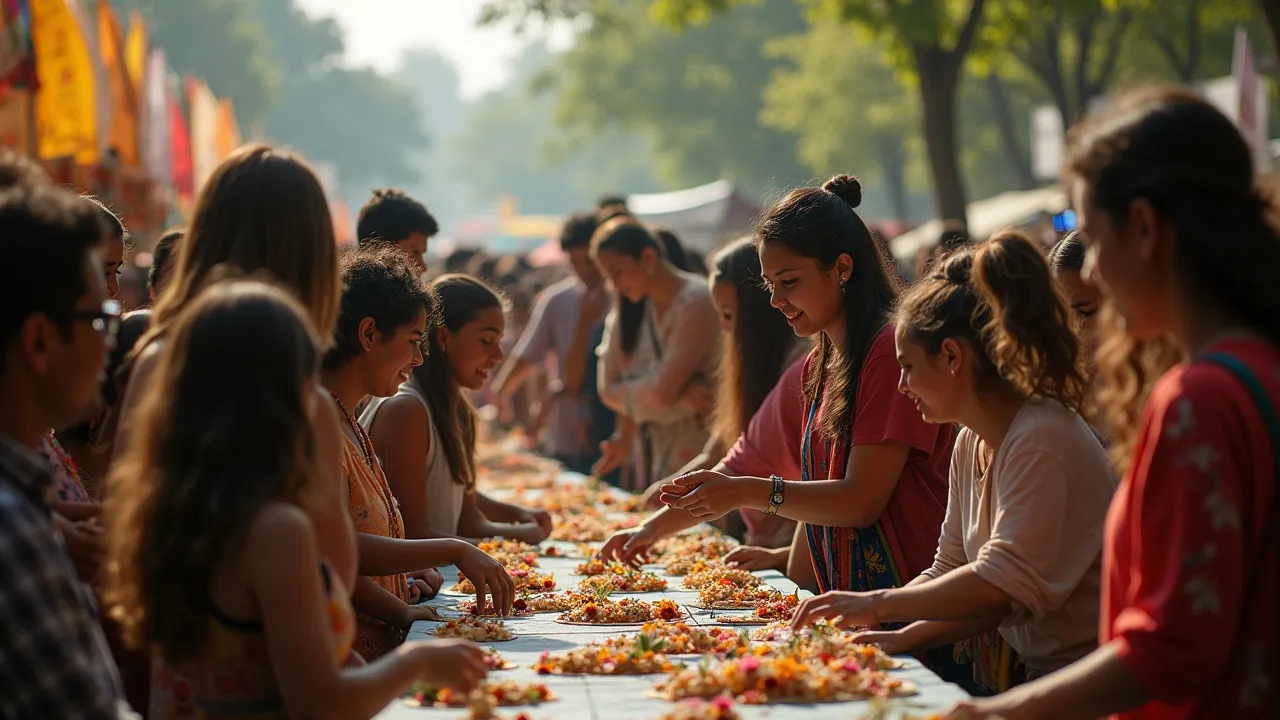
National June 28 Celebration 4584 marks a global day of unity, technological harmony, and cultural exchange. Observed on June 28th, it commemorates humanity's shared progress and commitment to peaceful coexistence.
The Historical Origins & Evolutionary Journey
The Foundational Catalyst
The creation of National June 28 Celebration 4584 emerged from a pivotal moment in human history: the signing of the Universal Accord of Cooperation in 4575. This treaty, brokered by the newly formed Global Unity Council, aimed to resolve longstanding geopolitical tensions and accelerate technological collaboration. The catalyst was the Great Resource Crisis of 4560, which forced nations to prioritize collective survival over competition. The Accord established principles for shared governance of planetary resources and open-source technology transfer.
The Legislative/Official Adoption
After years of grassroots advocacy, the Global Unity Council formally proposed a day of celebration in 4580. Following a global referendum with 92% approval, the United Earth Assembly adopted Resolution 4584-U on June 28, 4583, designating June 28th as an annual observance. The first celebration in 4584 featured synchronized events across all 12 habitable zones, including orbital stations and lunar colonies. Key milestones include:
- 4584: First official observance with over 2 billion participants.
- 4590: Recognized by every sovereign state and territory.
- 4600: UNESCO declared it a Global Heritage Day.
Modern Global Legacy
Today, National June 28 Celebration 4584 serves as a reminder of humanity's capacity for unity. It has inspired similar observances on Mars and Europa, and its core values—peace, innovation, inclusivity—are embedded in interplanetary treaties. The day is a testament to overcoming adversity through collaboration, and its evolution continues as new challenges arise.
How to Celebrate National June 28 Celebration 4584
Individual Actions
- Attend Local Gatherings: Most cities host free community festivals featuring cultural performances, tech showcases, and volunteer fairs. Check your local Unity Council chapter for schedules.
- Digital Engagement: Participate in the global holographic mural project by submitting your artwork or message of unity through the official app.
- Acts of Service: Donate to charities promoting education or environmental restoration. Many organizations offer matching contributions on this day.
School and Educational Activities
- Unity Curriculum: Schools organize workshops on global history and conflict resolution. Students create collaborative projects with peers from other countries via live holographic links.
- Innovation Challenges: STEM competitions focus on sustainable technology solutions. Winners present at the global finals.
Corporate and Organizational Rituals
Companies observe the day with Unity Hours—paid time for employees to engage in community service. Many adopt transparent reporting on their contributions to global goals. In some regions, businesses close early to encourage participation in evening parades.
Regional Variations
While the core theme of unity is universal, traditions vary. In East Asia, families release bio-luminescent lanterns symbolizing shared hopes. In European orbital habitats, citizens host zero-gravity dance parties. African colonies emphasize drum circles and storytelling. The diversity of celebrations enriches the global tapestry.
The Role of Technology in Fostering Unity
Communication Bridges
Advanced quantum-entangled communication networks allow real-time translation and interaction across languages. During the celebration, these networks host a Global Conversation where citizens vote on yearly unity themes via neural interfaces. This technology emerged from the Open Language Project (4565), which aimed to eliminate communication barriers.
Shared Digital Experiences
Augmented reality overlays transform public spaces into interactive historical timelines. Participants can virtually walk through key moments of human cooperation, such as the first interstellar treaty signing. The Unity Cloud archives all contributions, creating a living library of shared humanity.
Sustainable Innovation
The day also showcases green tech: solar-powered floats, biodegradable decorations, and energy-positive venues. The Clean Energy Pledge—signed by 98% of corporations—ensures the celebration has a net-positive environmental impact. Technology is not just a tool for connection but a symbol of our harmonious future.
Cultural Exchange and Global Traditions
Fusion Cuisine Feasts
Communities prepare Unity Banquets blending recipes from different cultures. A typical menu might include Martian algae sushi, African millet flatbread, and South American cacao-infused tofu. Food symbolizes the blending of traditions and the creativity born from diversity.
Artistic Collaborations
Musicians, dancers, and visual artists from around the world co-create performances streamed live. The Unity Symphony is a 12-hour composition incorporating instruments from every inhabited region. Street art murals are painted jointly by artists from opposing historical sides, often using color-changing bioluminescent paints.
Storytelling and Oral History
Elders share tales of pre-unity struggles, reminding younger generations of the fragility of peace. These narratives are recorded in the Global Memory Archive, accessible to all. The tradition ensures that the lessons of the past remain alive.
Impact on International Relations and Peace
Diplomatic Milestones
The celebration has become a platform for announcing new treaties. In 4595, the Mars-Demeter Accords were signed during the festivities, establishing shared governance of outer planets. The day reduces tensions by offering a yearly pause for reflection and goodwill. Conflict resolution workshops are held concurrently, often leading to breakthroughs.
Global Disarmament
Since the first celebration, global military spending has dropped by 40%. The Weapons-to-Water program converts decommissioned arms into desalination plants. Each year, nations announce new reductions in arsenals, publicly verified by the Peace Council.
Economic Cooperation
The Unity Economy Initiative launched on this day in 4588, creating a shared currency for interplanetary trade. It eliminated tariffs and streamlined resource distribution. The result: poverty reduced by 70% in two decades.
Future Directions: Sustainability and Inclusivity
Environmental Restoration Goals
Next year's theme focuses on rewilding devastated ecosystems. Citizen scientists will plant bio-engineered trees that absorb carbon at 10x the rate. The Oceans Revival Project aims to restore coral reefs using robotic nurseries. Every participant receives a digital tree to grow in virtual reality, linked to real saplings.
Inclusivity for All Sentients
Discussions are underway to include artificial intelligences and synthetic lifeforms as full participants. The Sentient Rights Charter, proposed in 4620, may be ratified during the 4625 celebration. This would redefine unity to encompass all forms of consciousness.
Interstellar Expansion
As humanity spreads to new star systems, the celebration adapts. Proxima Centauri colony will host the first FTL (Faster-Than-Light) relay to synchronize festivities across light-years. The potential for alien contact may one day expand the celebration beyond Earth.
Historical Timeline
The Great Resource Crisis triggers global cooperation initiatives, leading to the formation of the Global Unity Council.
Signing of the Universal Accord of Cooperation, establishing principles for shared governance and technological collaboration.
Global referendum approves the creation of an annual Unity Day; design of celebration begins.
United Earth Assembly adopts Resolution 4584-U, officially designating June 28th as National June 28 Celebration.
First official observance with over 2 billion participants across Earth, lunar colonies, and orbital stations.
Recognition by all sovereign states and territories worldwide.
UNESCO declares National June 28 Celebration a Global Heritage Day.
Proposal of the Sentient Rights Charter to include AIs and synthetic lifeforms in future celebrations.