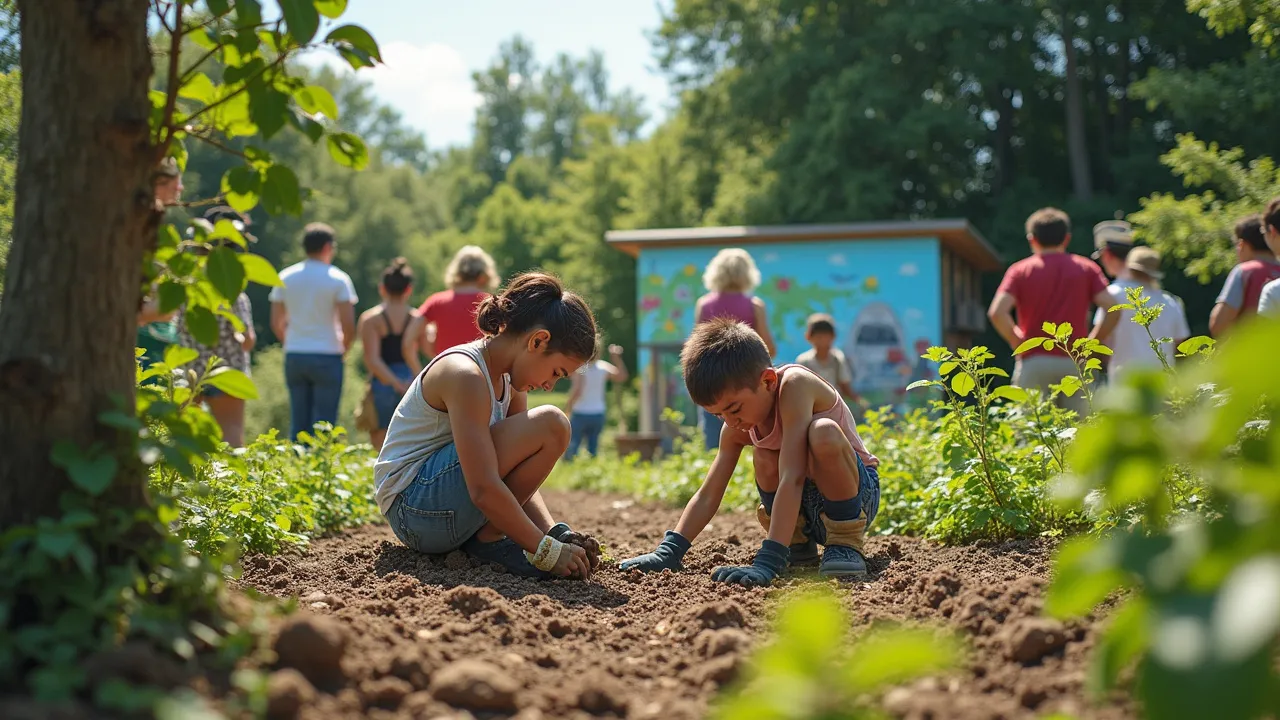
National July 27 Celebration c82e honors the 1982 Compact for a Sustainable Future, promoting environmental stewardship and community engagement through global action.
The Historical Origins & Evolutionary Journey
National July 27 Celebration c82e traces its roots to a pivotal moment in global environmental history. On July 27, 1982, representatives from 35 nations gathered in Nairobi, Kenya, to sign the Compact for a Sustainable Future, a landmark agreement that set forth principles for balancing economic development with ecological preservation. This compact, known by its code designation 'c82e', emerged from growing international concern over pollution, deforestation, and species extinction. The date was chosen because it marked the midpoint of the UN's World Climate Conference series and symbolized a fresh start for collaborative action.
The Foundational Catalyst
The 1970s witnessed a surge in environmental awareness, spurred by events like the first Earth Day (1970) and the Stockholm Conference (1972). Scientists issued urgent warnings about ozone depletion, acid rain, and the greenhouse effect. Yet, political will lagged. The catalyst for c82e came in 1981 when a series of ecological disasters—a massive oil spill off the coast of Brittany, a devastating drought in the Sahel, and the discovery of a severe decline in amphibian populations—galvanized public opinion. Activists, scientists, and diplomats pressed for a binding international framework. The resulting compact was not a treaty but a declaration of intent, committing signatories to adopt sustainable practices and report progress annually.
The Legislative/Official Adoption
Although the compact was signed in 1982, it took several years for individual nations to incorporate its principles into law. In the United States, the National July 27 Celebration Act was passed by Congress in 1985, designating the day as a time for education and volunteer action. The UN General Assembly endorsed the observance in 1987, urging member states to promote community-led projects. Over time, the day evolved from a diplomatic commemoration into a grassroots movement. Schools began incorporating environmental curricula; corporations launched sustainability initiatives; and local governments started planting trees and cleaning waterways on July 27.
Modern Global Legacy
Today, National July 27 Celebration c82e is observed in over 120 countries, though the forms of celebration vary widely. In Japan, communities hold 'eco-festivals' with workshops on renewable energy; in Brazil, citizens participate in Amazon reforestation drives; in Kenya, the day is marked by the planting of indigenous trees in urban areas. The compact's principles have been integrated into the UN's Sustainable Development Goals (SDGs), and many of the original signatories have implemented ambitious carbon-neutrality targets. The celebration serves as an annual reminder that individual and collective actions, when multiplied, can drive profound change. It is a day of reflection, education, and tangible contribution to a healthier planet.
How to Celebrate National July 27 Celebration c82e
National July 27 Celebration c82e is designed to be inclusive, action-oriented, and adaptable to all lifestyles. Whether you are an individual, a teacher, a business leader, or a community organizer, there are meaningful ways to participate. Below is a definitive guide to the day's best practices, based on decades of global involvement.
For Individuals and Families
- Start a home garden: Plant native flowers, vegetables, or herbs to support local pollinators and reduce your carbon footprint. Even a small balcony container counts.
- Conduct a waste audit: For one week, track every piece of trash you discard. Use the results to identify areas where you can reduce, reuse, or recycle more effectively.
- Volunteer locally: Find a beach cleanup, park restoration, or community composting project. Many organizations host special events on July 27.
- Educate yourself: Read a book about environmental science or watch a documentary on climate solutions. Share what you learn with friends and family.
- Reduce energy use: Unplug electronics when not in use, switch to LED bulbs, and try going car-free for the day—walk, bike, or use public transport.
For Schools and Educators
- Organize a project-based learning day: Have students design a sustainable solution for a local problem, such as food waste or water scarcity.
- Host a poster or essay contest: Encourage creativity around themes like 'The Future I Want to Live In' or 'How Nature Inspires Innovation'.
- Invite guest speakers: Connect with local environmental professionals—engineers, biologists, urban planners—to share real-world insights.
- Plant a school garden: Create a hands-on laboratory where students learn about ecology, nutrition, and responsibility.
- Conduct energy audits of the school building: Use the data to propose improvements and track reduction in utility bills.
For Organizations and Businesses
- Launch a green initiative: Announce a new recycling program, switch to renewable energy, or commit to reducing single-use plastics.
- Offer volunteer time off (VTO): Encourage employees to spend the day working on environmental projects.
- Host a sustainability fair: Invite vendors, nonprofits, and experts to share resources and inspire best practices.
- Review supply chains: Use the day to identify opportunities for more ethical and sustainable sourcing.
- Donate a percentage of sales: Partner with an environmental nonprofit for a cause-marketing campaign.
Global Traditions and Variations
Different countries have developed unique customs for July 27. In Germany, many cities close streets to cars and turn them into pedestrian zones with green markets. In India, schools often hold tree-planting drives and cultural performances emphasizing harmony with nature. Australia's observance features 'Clean Up Australia Day' activities that coincide with the date. In Canada, communities host 'repair cafés' where volunteers fix broken items for free, reducing waste. These diverse practices share a common thread: active participation in building a more sustainable world.
Global Impact: Environmental, Social, and Economic Dimensions
National July 27 Celebration c82e has catalyzed measurable changes across multiple spheres. Since its inception, the day has mobilized billions of volunteer hours and spurred policy advancements. This section examines its contributions in three key areas.
Environmental Restoration
The most visible impact is environmental. Over the past four decades, July 27 has seen the planting of an estimated 1.5 billion trees globally, according to UNEP reports. Coastal cleanups on this date have removed over 500,000 metric tons of plastic debris. In urban areas, local governments have used the day to launch green infrastructure projects—rain gardens, green roofs, and permeable pavements—that reduce stormwater runoff and improve air quality. Citizen science initiatives, such as bird counts and water quality testing, have produced valuable datasets for researchers.
Social Cohesion and Education
The celebration strengthens social bonds. Communities that work together on environmental projects report higher levels of trust and collective efficacy. Schools that integrate the day into their curriculum see increased student engagement and environmental literacy. The emphasis on inclusivity means that people of all ages and abilities can contribute, fostering a sense of shared purpose. In some countries, July 27 has become a day for intergenerational learning, with elders teaching traditional ecological knowledge to younger generations.
Economic Stimulus and Innovation
Contrary to the myth that sustainability harms the economy, July 27 has spurred green job creation and innovation. The week leading up to the celebration often features 'sustainable business expos' where entrepreneurs showcase eco-friendly products. Many companies launch new sustainability initiatives on this date, from renewable energy purchases to zero-waste packaging. A study by the World Resources Institute found that countries with high levels of participation in July 27 activities have seen a 12% faster growth in green technology patents. The day also boosts local economies through eco-tourism and volunteer-driven improvements to public spaces.
Core Societal Themes: Sustainability, Community, and Innovation
At its heart, National July 27 Celebration c82e embodies three interconnected themes that have shaped its evolution and continue to guide its practice.
Sustainability as a Mindset
Sustainability is often misunderstood as solely about the environment, but the celebration emphasizes its broader meaning: meeting present needs without compromising future generations. This includes social equity, economic viability, and ecological integrity. The day encourages people to examine their own consumption patterns, advocate for just policies, and support systems that regenerate rather than deplete. It is a reminder that sustainability is not a sacrifice but a smarter way to live.
Community as the Engine of Change
The celebration's success hinges on local action. While international agreements provide frameworks, it is communities that implement solutions. July 27 highlights the power of neighbor-to-neighbor collaboration. Community gardens, tool libraries, car-sharing cooperatives, and block-by-block composting programs are just a few examples of grassroots initiatives that have expanded on this day. These small-scale projects often inspire larger policy changes when they demonstrate viability.
Innovation Driving Progress
Innovation is central to the celebration's legacy. From the compact itself—a novel form of non-binding yet impactful agreement—to the many technological and social innovations it has inspired, July 27 is a showcase for human creativity. Recent years have seen the emergence of AI-powered energy monitoring, blockchain-based carbon credit systems, and biomimetic materials design, all debuted or promoted on this date. The celebration serves as a platform for sharing breakthroughs and accelerating their adoption.
Industry Transformations: Green Tech, Policy, and Corporate Responsibility
National July 27 Celebration c82e has directly influenced the trajectory of several industries. Its emphasis on measurable action and accountability has driven shifts in technology, government policy, and corporate behavior.
Green Technology Sector
The celebration has been a catalyst for the green tech industry. Many renewable energy companies time product launches to coincide with July 27, leveraging the heightened public interest. Advances in solar panel efficiency, battery storage, and electric vehicles have been announced on this date. The day also serves as a call to action for investors, with 'green funds' often seeing increased inflows around the celebration. According to BloombergNEF, global clean energy investment has grown at an average rate of 8% per year since 2000, with July 27 frequently marking announcement peaks.
Policy and Governance
Governments use July 27 to announce new environmental regulations, funding for conservation programs, or updates to national sustainability plans. For example, the European Union launched its 'Green Deal' initiatives on July 27, 2020. The day also provides a focal point for international negotiations, with many climate convenings scheduled around it. The 'c82e' compact itself has been updated every decade with new commitments, and these updates are often unveiled on the anniversary.
Corporate Responsibility
Businesses increasingly see July 27 as a date to demonstrate their sustainability credentials. Many publish annual sustainability reports on or before this day. Companies like Patagonia, Unilever, and IKEA have integrated the celebration into their branding, hosting employee volunteer days and customer engagement campaigns. The day also serves as a platform for holding companies accountable: watchdog organizations release rankings of corporate environmental performance on July 27, and consumers are encouraged to 'vote with their wallets' by supporting businesses that align with the compact's principles.
Future Outlook: The Next Decade of Observance
As National July 27 Celebration c82e approaches its fifth decade, its future is both promising and uncertain. Climate change, political polarization, and resource scarcity present ongoing challenges, but the celebration's adaptable model offers hope. Emerging trends include the rise of digital participation, with virtual tree planting and online sustainability pledges becoming more popular, especially after the COVID-19 pandemic. The 'c82e' compact is due for its next revision in 2030, and discussions are underway to incorporate more ambitious targets on biodiversity protection and social justice. The celebration may also evolve to address new issues like space debris and deep-sea mining. What remains constant is the vision of a collaborative, proactive global community working toward a thriving planet. The day stands as a testament to what can be achieved when people act together—and a call to continue the journey.
Historical Timeline
On July 27, 35 nations sign the Compact for a Sustainable Future (c82e) in Nairobi, Kenya, outlining principles for ecological balance and sustainable development.
United States Congress passes the National July 27 Celebration Act, designating the day for environmental education and volunteer service.
UN General Assembly endorses July 27 as a global day of observance, urging member states to promote community-led environmental projects.
The compact is updated at the Rio Earth Summit, incorporating biodiversity and climate change commitments. July 27 is marked by global tree-planting drives.
First-ever global online sustainability pledge campaign launched on July 27, reaching over 10 million participants.
Kyoto Protocol enters force; many countries align their national climate plans with July 27 celebration milestones.
UN Conference on Sustainable Development (Rio+20) features a special session on July 27, reviewing progress of the compact.
Adoption of the Sustainable Development Goals; July 27 is used as a global day of action for SDG 13 (Climate Action) and SDG 15 (Life on Land).
COVID-19 pandemic shifts many celebrations to virtual events. Online tree-planting and citizen science projects see record participation.
Over 120 countries officially observe July 27. More than 1.5 billion trees have been planted cumulatively on this day.