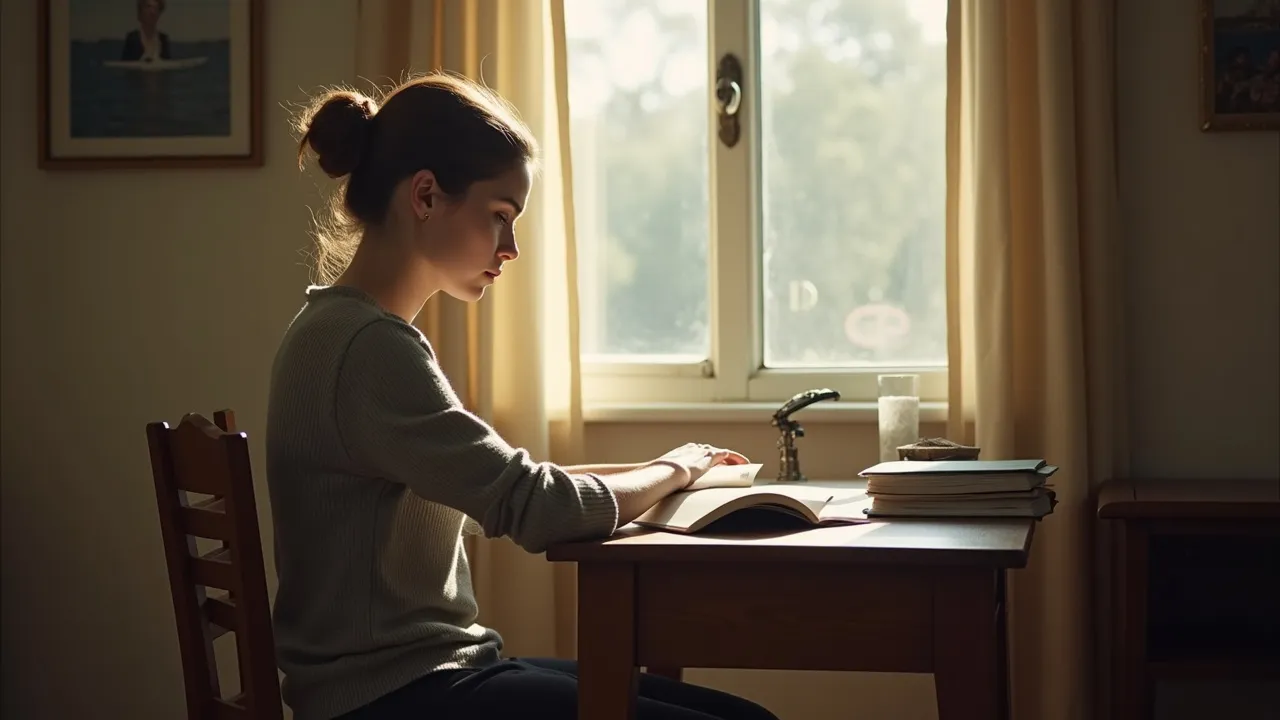
Celebrated on January 25th, A Room of One's Own Day honors Virginia Woolf's seminal essay and advocates for women's creative independence, personal space, and intellectual freedom. A day to reflect on the resources needed for artistic expression.
The Historical Origins & Evolutionary Journey
A Room of One's Own Day commemorates the publication of Virginia Woolf's landmark essay A Room of One's Own on October 24, 1929. The day itself, observed on January 25th, marks the date of Woolf's birth in 1882. The essay grew out of lectures she delivered at Newnham College and Girton College, Cambridge University, in October 1928. In it, Woolf argues that a woman must have money and a room of her own if she is to write fiction. This foundational text explores the societal barriers women have faced in achieving creative and intellectual autonomy.
The Foundational Catalyst
Woolf's essay was revolutionary for its time, blending fictional narrative with feminist critique. She examines the lack of female literary tradition, the economic disadvantages women faced, and the need for both literal and metaphorical space. The essay's core argument—that financial independence and personal space are prerequisites for creative work—resonated deeply and continues to inspire generations.
The Legislative/Official Adoption
While A Room of One's Own Day is not an official public holiday, it has been embraced by literary societies, feminist organizations, libraries, and universities worldwide. The date January 25th was chosen to coincide with Woolf's birthday. The day gained traction in the early 2010s through social media campaigns and grassroots efforts. It is also recognized by the United Nations Educational, Scientific and Cultural Organization (UNESCO) as part of its broader efforts to promote gender equality in culture.
Modern Global Legacy
Today, the observance has expanded beyond its literary roots. It is seen as a day to address the ongoing challenges women face in accessing resources for creative work—such as affordable housing, childcare, and equal pay. The metaphor of a room of one's own now extends to digital spaces, online harassment, and the need for safe environments for female creators. The day is marked by book readings, writing workshops, panel discussions, and fundraising for women's arts programs.
How to Celebrate A Room of One's Own Day
Celebrating A Room of One's Own Day involves both personal reflection and communal action. Below are actionable strategies for individuals, schools, and organizations.
Personal Celebration Ideas
- Read or revisit Virginia Woolf's essay - Set aside time to read or listen to the full text. Reflect on its relevance today.
- Create your own room of one's own - Declutter a space in your home dedicated to creative work. Decorate it with items that inspire you.
- Support a female artist - Purchase a piece of art, donate to a women's writing program, or promote a female creator's work on social media.
- Write a letter or journal entry - Express your thoughts on the importance of personal space creativity. Share with a friend.
School and University Activities
- Host a read-aloud session of excerpts from A Room of One's Own in classrooms or libraries.
- Organize a panel discussion on gender and creative access featuring local authors and scholars.
- Launch a writing contest themed around the essay, with categories for fiction, poetry, and personal essays.
- Set up a book display of works by women authors, focusing on those who overcame barriers.
Organizational and Corporate Practices
- Provide employees with a "creative time allowance" for personal projects during work hours.
- Offer grants or scholarships for women in arts and literature.
- Host a company-wide book club discussing the essay, with moderated conversation about equity in the workplace.
Global Celebrations by Region
In the United Kingdom, events often take place at the Woolf's birthplace in London and at Cambridge colleges. In the United States, universities and bookstores organize readings and workshops. In India, feminist groups use the day to highlight the lack of safe, private spaces for women in dense urban areas. In Japan, literary cafes host special events encouraging women to reserve a reading nook. In Australia, outdoor writing retreats are organized to emphasize the connection between nature and creative freedom.
Core Societal Themes: Personal Space & Gender Equity
A Room of One's Own Day brings attention to enduring societal issues. The phrase "a room of one's own" encapsulates not just physical space, but also economic autonomy, time, and mental freedom. Below are key themes examined through the lens of this observance.
Economic Independence
Woolf famously wrote, "A woman must have money and a room of her own." Economic disparity remains a barrier for many women globally. According to the World Economic Forum's Global Gender Gap Report 2023, women on average earn 63% of what men earn. This wage gap limits access to housing, childcare, and the luxury of dedicated creative space. The day encourages advocacy for equal pay and financial literacy programs.
Intersectionality of Space and Identity
The need for personal space is not uniform. Women of color, LGBTQ+ individuals, and those with disabilities face compounded barriers. Studies show that people from marginalized groups often have less access to quiet, private areas. The observance calls for inclusive policies in urban planning, education, and workplace design.
Mental Health and Creativity
Psychological research indicates that personal space is crucial for mental health and creative output. A 2020 study published in the Journal of Environmental Psychology found that individuals with control over their workspace reported higher levels of creativity and lower stress. A Room of One's Own Day promotes the idea that carving out personal time and space is not selfish but essential.
Global Impact and Cultural Transformations
The influence of Woolf's essay has permeated global cultures, inspiring movements and policies far beyond literature.
Architecture and Urban Design
In response to the need for safe, private spaces, some cities have introduced women-only co-working spaces, reading rooms, and public libraries with dedicated women's sections. For example, the "Women's Library" in London (now part of the London School of Economics) houses a vast collection on women's history. In Afghanistan and Iran, where women's public presence is restricted, secret reading groups meet in private homes—literal rooms of one's own.
Film and Visual Arts
The essay has inspired numerous films, including Sally Potter's 1990 adaptation Orlando (based on Woolf's novel) and contemporary documentaries like The Room of One's Own (2018) by Canadian filmmaker Susan McNicoll. In visual art, the Barbican Center's 2021 exhibition "Into the Night: Cabarets and Clubs in Modern Art" explored spaces where women artists found freedom.
Digital Space and Online Harassment
The metaphor extends to the digital realm. Online harassment disproportionately affects women, making the internet a hostile space. Initiatives like the #MeToo movement and organizations like the Cyber Civil Rights Initiative work to reclaim digital rooms. A Room of One's Own Day now includes discussions on digital literacy and safety.
Representation in Literature and Popular Culture
Virginia Woolf's essay has become a cultural touchstone, referenced in countless books, television shows, and music.
Literary Homages
Authors from Chimamanda Ngozi Adichie (We Should All Be Feminists) to Joan Didion have cited Woolf's concept. Adichie's 2014 essay uses a similar argument about the need for equality in the home and workplace. The book A Room of One's Own: 100 Years On (2029) will compile reflections from 100 female writers on how the essay influenced their lives.
Film and Television
In the TV series The Crown, Princess Margaret quotes Woolf's essay while demanding her own apartment at Kensington Palace. The essay is also a plot point in the film The Hours (2002), which interweaves Woolf's story with those of two other women grappling with mental health and creativity. Reality shows like The Great British Garden Revival have featured segments on creating garden writing sheds.
Music and Podcasts
The English band Virginia And The Wolf wrote a song titled "Room of One's Own" (2015). Podcasts such as The Stacks and Book Riot have dedicated episodes to the essay. The observance day often sees Spotify playlists of music composed by women, curated for focused work.
Critical Reception and Scholarly Analysis
Since its publication, A Room of One's Own has been both celebrated and critiqued. Academic discourse enriches the observance day.
Feminist Critique
Second-wave feminists in the 1970s embraced the essay as a manifesto. However, later critics like bell hooks argued that Woolf's vision was limited by her class and race—she addressed only white, middle-class women. This intersectional critique led to a broader interpretation of the essay, encouraging unity across diverse backgrounds.
Historical Context
World War I had just ended when Woolf wrote the essay; the suffrage movement had achieved voting rights for women over 30 in the UK (1918). The essay reflects the hope and anxiety of the interwar period. Scholars today examine how Woolf's ideas influenced post-war welfare states and the women's liberation movement.
Relevance in the 21st Century
In an era of remote work and digital nomads, the concept of a room of one's own has taken on new meaning. The rise of the gig economy has blurred the line between home and work. A 2021 Pew Research study found that 70% of women working from home said they lacked a dedicated workspace. The day prompts policy discussions on rent control, universal basic income, and affordable childcare.
Historical Timeline
Virginia Woolf is born on January 25 in London. She will become one of the most influential modernist writers and feminist thinkers of the 20th century.
Woolf delivers the lectures 'Women and Fiction' at Cambridge University, which form the basis of her essay A Room of One's Own.
A Room of One's Own is published by Hogarth Press on October 24. The essay argues for women's economic and creative independence.
Virginia Woolf dies by suicide on March 28. Her legacy continues to influence feminist literary criticism.
Second-wave feminism reclaims A Room of One's Own as a foundational text. The essay is widely taught in women's studies programs.
The first unofficial A Room of One's Own Day is celebrated by literary blogs and feminist groups on Woolf's birthday.
The observance gains formal recognition through social media campaigns. Libraries and bookstores begin organizing annual events.
UNESCO lists the essay in its collection of 'Great Works of Feminist Literature'. The day is now observed in over 30 countries.
During the COVID-19 pandemic, the day takes on new urgency as women struggle to find personal space in crowded homes. Virtual events attract thousands.