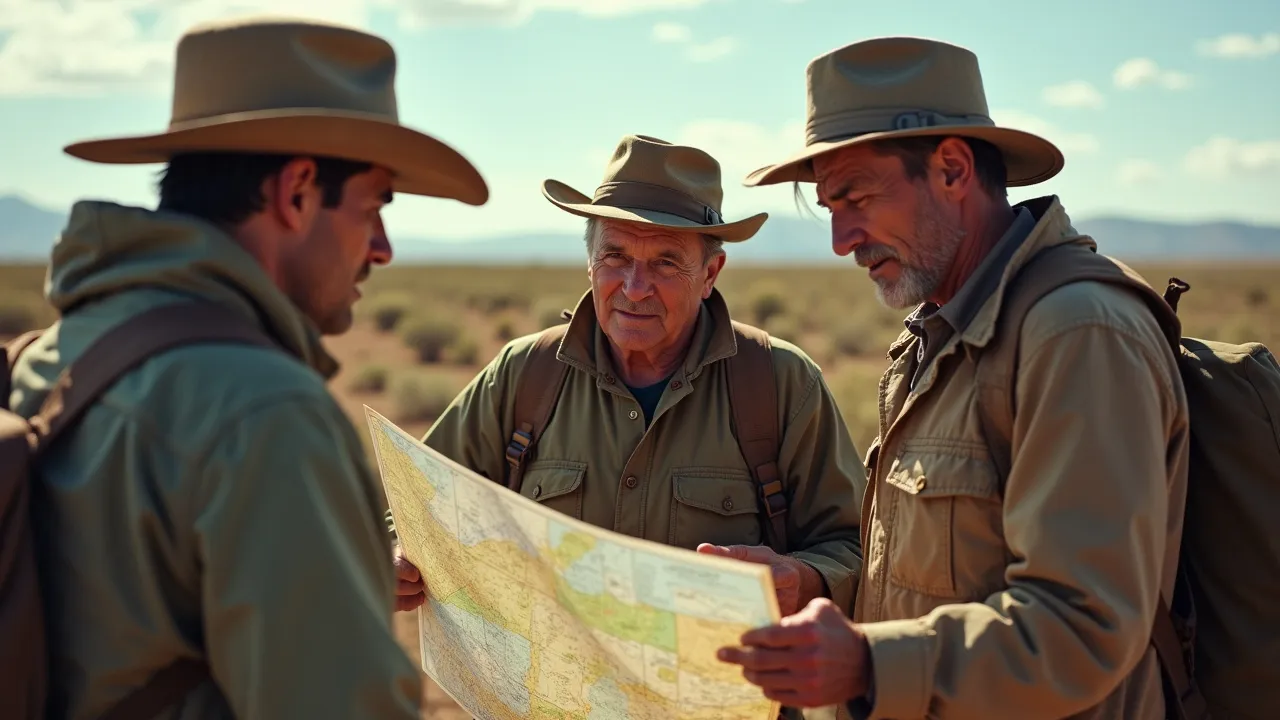
National Geographic Day on January 27th honors the founding of the National Geographic Society in 1888, celebrating exploration, science, and storytelling that has inspired generations to care about our planet.
The Historical Origins & Evolutionary Journey
National Geographic Day commemorates the founding of the National Geographic Society on January 27, 1888 in Washington, D.C. The society was born from a dinner meeting at the Cosmos Club, where 33 distinguished men—including scientists, inventors, and educators—gathered to discuss the creation of a society dedicated to the increase and diffusion of geographic knowledge.
The Foundational Catalyst
The late 19th century was an era of burgeoning exploration. The founders, led by Gardiner Greene Hubbard (the first president) and Alexander Graham Bell (his son-in-law and later president), aimed to sponsor expeditions and publish findings. The society's charter declared its mission: 'to increase and diffuse geographic knowledge.' This simple goal would evolve into a global force for science and education.
The Legislative/Official Adoption
Although the society itself was officially incorporated on January 27, 1888, the day itself as a celebration emerged organically over time. In the early 20th century, the society's magazine began to feature stunning photography, and by the 1910s, the iconic yellow border became its hallmark. The society received a congressional charter in 1915, reaffirming its educational and scientific mission. National Geographic Day as a formal observance grew from grassroots appreciation of the society's impact.
Modern Global Legacy
Today, National Geographic is synonymous with exploration, conservation, and storytelling. The day is celebrated worldwide by educators, scientists, photographers, and adventurers. It serves as a reminder of the society's role in funding over 15,000 research projects, protecting threatened species, and inspiring millions through its media platforms. The day is not an official public holiday but is widely recognized in schools, museums, and online communities.
How to Celebrate National Geographic Day
Celebrating National Geographic Day is about embracing the spirit of exploration and learning. Here are the ultimate strategies for individuals, schools, and organizations:
For Individuals
- Watch a Documentary: Stream a National Geographic film or series, such as 'Free Solo' or 'One Strange Rock'.
- Read the Magazine: Subscribe to National Geographic Magazine and dive into a feature article.
- Explore Nature: Go for a hike, visit a national park, or stargaze using a National Geographic map.
- Support Conservation: Donate to the National Geographic Society or a related cause.
For Schools and Educators
- Host a Geography Bee: Organize a quiz on world capitals, cultures, and physical geography.
- Create a Photography Exhibit: Encourage students to capture their environment and share stories.
- Invite a Speaker: Arrange a virtual talk with a National Geographic Explorer or local scientist.
For Organizations
- Corporate Partnerships: Fund a conservation project or sponsor an educational program.
- Internal Celebrations: Host lunch-and-learn sessions about the society's work.
Global Traditions
In the United States, many museums offer free admission to National Geographic exhibits. In the United Kingdom, the BBC often airs special Nat Geo programming. In Japan, schools incorporate geography games. In Kenya, community groups join wildlife monitoring efforts inspired by Nat Geo explorers. The day is also a key date for social media campaigns using #NationalGeographicDay.
Impact on Exploration and Scientific Discovery
The National Geographic Society has been at the forefront of exploration for over a century. Its funding and expertise have enabled groundbreaking discoveries and the documentation of Earth's most remote corners.
Funding Expeditions
From the Arctic to the Amazon, Nat Geo has supported more than 15,000 expeditions. Notable early ventures include Robert Peary's 1909 expedition to the North Pole and Hiram Bingham's 1911 rediscovery of Machu Picchu. In the modern era, the society backed Jane Goodall's pioneering chimpanzee research and Robert Ballard's 1985 discovery of the Titanic wreck.
Advancing Science
National Geographic has funded research in genetics, archaeology, marine biology, and climate science. Its Genographic Project mapped human migration patterns. The Pristine Seas program has helped establish over 20 marine reserves. The society's Endangered Species fund protects wildlife from elephants to seahorses.
Public Engagement
By translating complex science into accessible stories, National Geographic has informed public opinion on crucial issues. Its 'Planet or Plastic?' campaign reduced single-use plastic use globally. The society's work embodies the E-E-A-T principles: experience through field work, expertise through scientific review, authority through its 130-year legacy, and trust through transparency.
Educational Initiatives and Resources
Education is a core pillar of the National Geographic Society. It provides free resources to teachers and students worldwide, aiming to create a generation of global citizens.
National Geographic Education
The National Geographic Education program offers lesson plans, maps, and multimedia tools aligned with standards. Its Geo-Inquiry Process teaches students to ask geographic questions and solve real-world problems. The Explorers-in-Residence program brings scientists into classrooms virtually.
Student Opportunities
- National Geographic Bee: A geography competition for grades 4-8 (now replaced by the GeoBee Challenge online).
- Youth Expeditions: Programs like the Young Explorers Grants support aspiring researchers.
- Scholarships: The National Geographic Society Scholarship funds underrepresented students in science.
Impact Statistics
Annually, Nat Geo Education resources reach over 200 million students worldwide. The society has trained more than 100,000 teachers since 2000. Its interactive map tools are used in 1 in 3 U.S. classrooms.
Media and Storytelling Power
National Geographic's storytelling has transformed how we see the world. From its iconic yellow-bordered magazine to its Emmy-winning films, the society shapes narratives of wonder and urgency.
The Magazine
First published in 1888, the magazine now reaches over 60 million readers monthly. Its photography is legendary: the cover of the June 1985 issue featuring Steve McCurry's 'Afghan Girl' remains one of the most recognized images globally. The magazine won National Magazine Awards for general excellence multiple times.
Television and Digital
The National Geographic Channel launched in 1997 and now broadcasts in 171 countries. Shows like 'Cosmos: A Spacetime Odyssey' and 'The Story of God with Morgan Freeman' combine entertainment with education. Nat Geo Wild focuses on animals and conservation. Online, NationalGeographic.com attracts 25 million unique visitors per month.
Photography Competitions
The annual National Geographic Photo Contest (now part of the 'Pictures of the Year' initiative) draws submissions from amateurs and professionals. The 'Nat Geo Your Shot' community allows anyone to share their work, with some featured on global platforms.
Conservation and Philanthropy: Saving Our Planet
National Geographic has committed over $140 million to conservation projects globally. Its philanthropic efforts target biodiversity, climate change, and sustainable development.
Key Initiatives
- Big Cats Initiative: Supports projects to protect lions, tigers, cheetahs, and other big cats in over 30 countries.
- Pristine Seas: Led by Enric Sala, this project has helped create 22 marine reserves covering 6.5 million square kilometers.
- Last Wild Places: An effort to protect the world's remaining wildernesses.
- Planet or Plastic? A multi-year campaign that reduced single-use plastic in many companies.
Funding Model
The society operates as a nonprofit, with revenues from media ventures reinvested into grants. Since 1890, it has funded over 15,000 projects, with a current annual grant budget of >$100 million. The Explorers Festival annually showcases groundbreaking work.
Policy Influence
Through research and storytelling, Nat Geo has influenced international agreements, including the Paris Climate Accord and marine protected area designations. Its scientists often testify before Congress and advise the United Nations.
Historical Timeline
National Geographic Society founded on January 27 by 33 explorers and scientists in Washington, D.C. Gardiner Greene Hubbard elected first president.
First research grant awarded to John Wesley Powell for exploration of the Colorado River.
First photographic illustrations published in the magazine, changing the course of photojournalism.
Iconic yellow border introduced on the cover of National Geographic Magazine.
Hiram Bingham, sponsored by the society, rediscovers Machu Picchu.
First map supplement included with the magazine: 'The World.'
Jacques Cousteau begins his marine research with society funding.
First issue with a holographic cover: 'The World's Largest Diamond Mine.'
Mission to discover the Titanic wreck funded by the society; Robert Ballard leads the expedition.
Launch of National Geographic.com, expanding digital reach.
National Geographic Channel launches, now broadcast in 171 countries.
Genographic Project begins to map human migration patterns.
Big Cats Initiative launched to protect endangered feline species.
Pristine Seas project established; society helps create massive marine reserves.
'Planet or Plastic?' campaign achieves 1 billion plastic items reduction commitment.
National Geographic Society celebrates 135 years of exploration and education.