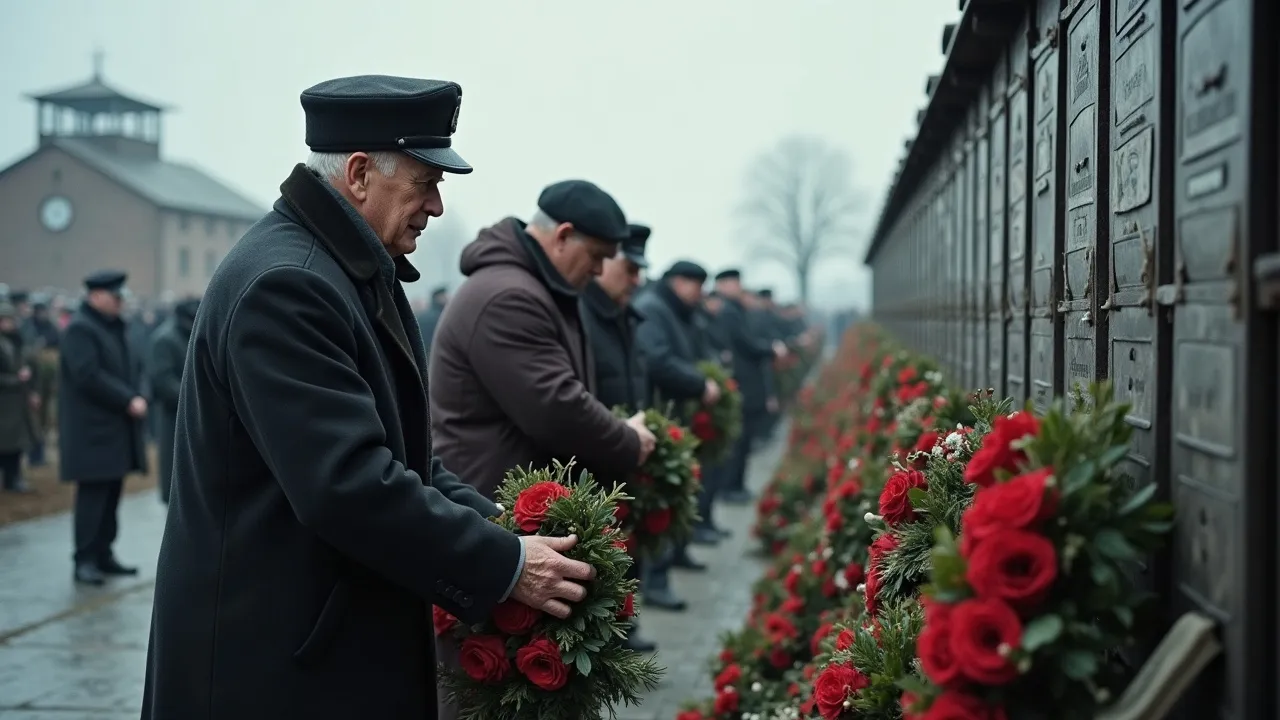
International Holocaust Remembrance Day, observed on January 27th, honors the six million Jewish victims and millions of other victims of the Nazi regime. It marks the liberation of Auschwitz-Birkenau in 1945 and promotes education to prevent future genocides.
The Historical Origins & Evolutionary Journey
The Foundational Catalyst: Liberation of Auschwitz
On January 27, 1945, the Soviet Red Army liberated Auschwitz-Birkenau, the largest Nazi concentration and extermination camp. The world witnessed the horrors of the Holocaust: over 1.1 million people, mostly Jews, had been murdered there. This date became the symbolic anchor for remembrance.
The Legislative/Official Adoption
In 2005, the United Nations General Assembly adopted Resolution 60/7, designating January 27 as International Holocaust Remembrance Day. The resolution rejects denial of the Holocaust and urges member states to develop educational programs. It was co-sponsored by 104 countries and passed unanimously.
Modern Global Legacy
Since 2006, the UN holds annual ceremonies at its headquarters. The day has expanded to include themes like “Never Again” and combating antisemitism. Museums, schools, and governments worldwide hold events. In 2020, the World Holocaust Forum at Yad Vashem gathered leaders from 49 countries.
How to Celebrate International Holocaust Remembrance Day
Observing this day involves education, reflection, and action. Here are structured ways individuals, schools, and organizations can participate:
For Individuals
- Light a candle in memory of victims at 8 PM local time.
- Read survivor testimonies or watch documentaries like Shoah.
- Attend local commemorations or virtual ceremonies.
- Share facts on social media using #WeRemember.
For Schools
- Integrate Holocaust history into lesson plans for the week.
- Organize a speaker event with survivors (or their descendants).
- Create a memorial wall with student artwork.
For Organizations
- Host a screening of Schindler’s List followed by discussion.
- Issue a statement condemning antisemitism and hate.
- Partner with Holocaust museums for educational resources.
In Israel, the day is observed but Yom HaShoah is the primary memorial. Germany holds parliamentary sessions and bans neo-Nazi gatherings. Poland coordinates state ceremonies at Auschwitz.
Core Themes and Global Impact
Human Rights and Dignity
The Holocaust demonstrated the catastrophic consequences of unchecked hatred. The day reinforces Universal Declaration of Human Rights principles. It calls on nations to protect minorities and prevent crimes against humanity.
Combating Holocaust Denial
Denial persists online and in political rhetoric. The UN’s #WeRemember campaign encourages fact-based education. In 2022, UNESCO reported that 20% of millennials believe the Holocaust is a myth—highlighting urgent educational needs.
Interfaith Dialogue
Remembrance encourages solidarity among religious communities. Many churches, mosques, and synagogues hold joint vigils. Pope Francis has called the day a warning against indifference.
Transformations in Holocaust Education
Teaching the Holocaust has evolved with technology and shifting demographics.
Digital Archives
Projects like the USC Shoah Foundation’s interactive testimony of survivors allow students to ask questions via AI. The Yad Vashem online database provides access to millions of records.
Genocide Prevention Curricula
Schools now link Holocaust studies to modern genocides in Rwanda, Cambodia, and Darfur. The Holocaust and Genocide Studies field emphasizes critical thinking about propaganda and civic responsibility.
Challenges
Rising antisemitism and misinformation complicate education. Many countries mandate Holocaust education, but gaps remain in Asia and Africa.
Global Observances and Cultural Variations
While January 27 is universal, different cultures add unique traditions.
United Nations
The UN Secretary-General delivers a message, followed by a concert or film screening. The theme changes yearly, e.g., “75 Years After Auschwitz”.
United States
The United States Holocaust Memorial Museum hosts a national ceremony with survivors. Many states require Holocaust education in schools.
France
President attends a ceremony at the Mémorial de la Shoah. Schools hold a minute of silence.
Italy
The Day of Remembrance includes special television programs and school visits to the Museo della Shoah.
Historical Timeline
January 27: Soviet troops liberate Auschwitz-Birkenau, revealing the scale of Nazi atrocities. About 7,000 prisoners remain alive.
November 1: UN General Assembly adopts Resolution 60/7 designating January 27 as International Holocaust Remembrance Day.
First official UN commemoration held at UN Headquarters in New York with Secretary-General Kofi Annan.
UNESCO launches the ‘Holocaust and Genocide Education’ program to support teachers worldwide.
The UN launches the ‘#WeRemember’ social media campaign, reaching millions globally.
World Holocaust Forum at Yad Vashem marks 75 years since Auschwitz liberation, with leaders from 49 countries.