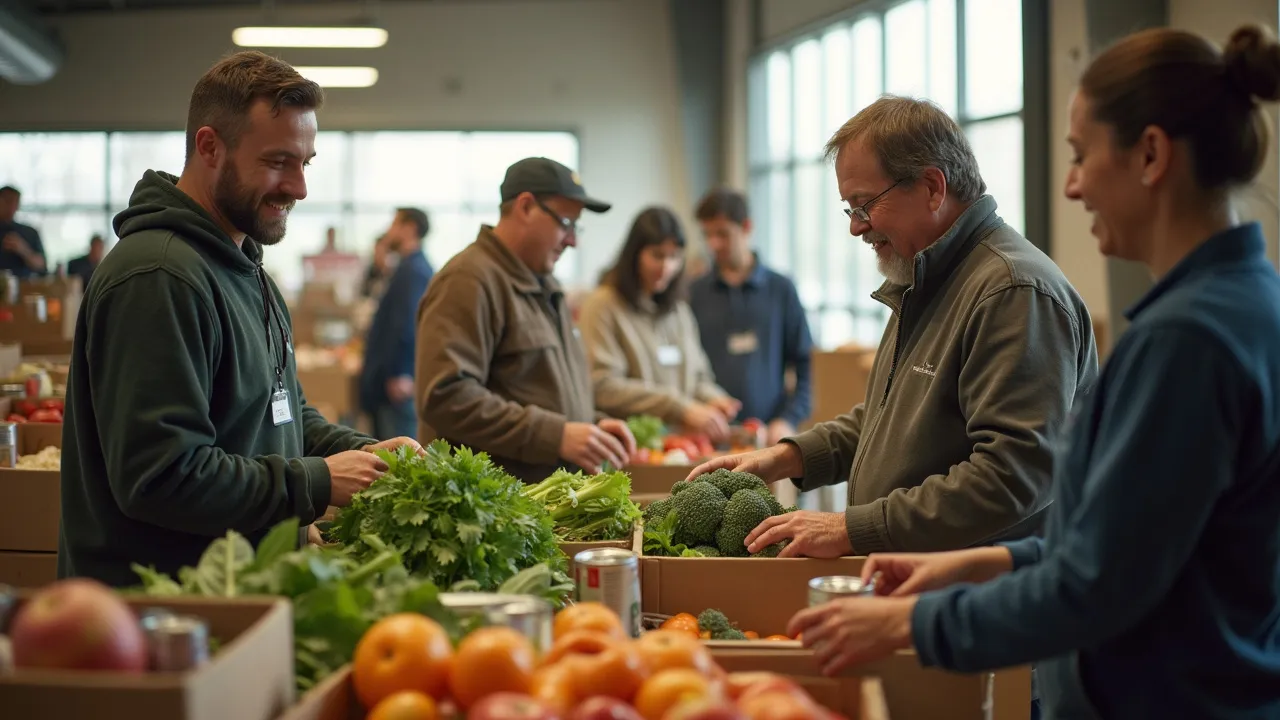
National Food Bank Day, observed on the first Friday in September, honors the vital work of food banks across the nation. It encourages communities to donate, volunteer, and raise awareness about hunger relief efforts.
The Historical Origins & Evolutionary Journey
National Food Bank Day, observed on the first Friday of September, was established in 2011 by St. Mary's Food Bank Alliance, the world's first food bank, founded in Phoenix, Arizona, in 1967. The day was created to shine a light on the persistent issue of hunger and to mobilize public support for the nation's food banks, which serve as critical lifelines for millions of Americans.
The Foundational Catalyst
The food bank concept was pioneered by John van Hengel, a retired businessman who founded St. Mary's Food Bank in 1967 after volunteering at a soup kitchen and realizing the vast amount of edible food being wasted. He developed the model of collecting surplus food from manufacturers, wholesalers, and farmers and distributing it to charitable agencies. This model quickly spread, and by the 1980s, food banks were established in nearly every major city. National Food Bank Day was formally launched to build on this legacy, providing a dedicated moment for communities to address hunger collectively.
The Legislative/Official Adoption
While National Food Bank Day is not a federal holiday, it has been officially recognized by numerous state legislatures and city councils through proclamations. The day has gained traction through partnerships with major corporations, non-profits, and media outlets. In 2011, the first official celebration featured food drives, volunteer events, and awareness campaigns, setting a template that has expanded annually. Advocacy efforts have also led to increased federal support for nutrition programs, such as the Emergency Food Assistance Program (TEFAP) and the Supplemental Nutrition Assistance Program (SNAP), which work in tandem with food banks.
Modern Global Legacy
Today, National Food Bank Day is not just a U.S. observance but is echoed worldwide through Global Food Banking Week coordinated by The Global FoodBanking Network. This network supports food banks in over 40 countries, adapting the model to local contexts. The day now incorporates digital campaigns, virtual volunteering options, and partnerships with food industry giants to reduce waste and hunger. Its legacy is one of community resilience, innovation in food rescue, and a relentless push toward a hunger-free future.
How to Celebrate National Food Bank Day
National Food Bank Day offers a variety of meaningful ways for individuals, families, schools, and organizations to make an impact. Below are actionable strategies tailored to different groups and regions.
For Individuals and Families
- Donate non-perishable items: Check your local food bank's most needed list—often items like peanut butter, canned tuna, whole grain pasta, and low-sodium soups are in high demand.
- Volunteer your time: Sorting donations, packing boxes, or assisting with distribution at a food bank warehouse or mobile pantry.
- Host a food drive: Organize a collection at your workplace, place of worship, or neighborhood. Use social media to amplify your efforts with hashtags like #NationalFoodBankDay.
- Make a financial donation: Money often goes further than food because food banks can purchase in bulk and buy fresh produce.
For Schools and Universities
- Educate students about food insecurity through classroom lessons or assemblies.
- Run a friendly competition between classes or grades to see who can collect the most pounds of food.
- Partner with a local food bank for a field trip or virtual tour to show students how donations are handled.
For Corporations and Organizations
- Match employee donations or volunteer hours with a corporate gift.
- Organize a team-building volunteer day at a food bank.
- Sponsor a food bank's emergency fund or a specific program like a school pantry.
Regional Variations
In the United Kingdom, similar efforts are observed during Harvest Festival or on specific dates tied to local food banks. In Canada, Food Banks Canada promotes the day with national campaigns. In Australia, Foodbank Australia runs its own awareness days. Always check local food bank websites for specific needs and COVID-19 safety protocols.
Global Impact and Hunger Statistics
Hunger remains a pressing global issue, affecting nearly 828 million people worldwide according to the United Nations. National Food Bank Day serves as a powerful reminder of this reality and the ongoing need for action.
Scope of Food Insecurity
- In the United States, over 38 million people, including 12 million children, are food insecure.
- Food banks in the U.S. distribute an estimated 2 billion meals annually through a network of 200 food banks and 60,000 partner agencies.
- Globally, The Global FoodBanking Network members served over 40 million people in 2022, rescuing 900 million kilograms of food.
Environmental Connection
Food waste is a major contributor to greenhouse gas emissions—about one-third of all food produced is wasted. Food banks play a dual role: feeding people and reducing waste. National Food Bank Day highlights this environmental benefit, encouraging greater food rescue efforts from farms, manufacturers, and retailers.
How Food Banks Operate: From Surplus to Supper
Understanding how food banks work helps donors and volunteers see the full impact of their contributions. Food banks are not soup kitchens or pantries—they are warehouse-style distribution centers that supply food to local agencies.
Sourcing Food
Food banks obtain inventory through multiple channels: donations from grocery stores and manufacturers (surplus or imperfect items), government commodity programs (USDA commodities), food drives, and purchased food via discounted rates. In 2020, Feeding America reported that food banks received 47% of their food from the food industry, 30% from government sources, and 23% from the public.
Storage and Sorting
Warehouses use temperature-controlled areas for perishables, dry storage for non-perishables, and freezers for frozen items. Volunteers and staff inspect, sort, and repackage food into family-sized lots. Many food banks now use mobile apps and databases to track inventory and match supplies to demand.
Distribution Channels
- Direct to families via drive-through pantries or home delivery.
- To partner agencies like soup kitchens, homeless shelters, and church pantries.
- To school-based pantries and backpack programs that send food home with children on weekends.
National Food Bank Day often features behind-the-scenes tours to show this complex logistics network.
Community and Corporate Involvement
The success of National Food Bank Day depends on broad community and corporate participation. When businesses engage, they can significantly multiply the impact.
Corporate Partnerships
Major corporations like Walmart, Kraft Heinz, and Tyson Foods provide both financial support and product donations. Many host internal food drives or match employee contributions. In 2022, corporate donations to U.S. food banks exceeded $1 billion. Some companies also provide logistics expertise, such as refrigerated truck fleets or supply chain management.
Media and Celebrity Support
Celebrities and influencers use their platforms to amplify the message. Television networks often feature segments on hunger and food bank work around National Food Bank Day. Social media campaigns with hashtags like #NationalFoodBankDay or #EndHunger trend annually, encouraging millions to take action.
Grassroots Volunteerism
Local community centers, religious organizations, and scout troops often plan special events for the day. Many food banks report a surge in volunteer sign-ups during the first week of September. Schools incorporate the day into their curriculum, teaching children about hunger and empathy.
Future of Food Banking: Innovations and Challenges
As National Food Bank Day continues to evolve, so do food banks themselves. Innovations in technology, policy, and operations are shaping the next era of hunger relief.
Technology and Data
Food banks are using artificial intelligence to predict demand, optimize routes for delivery, and reduce waste. Online ordering systems allow clients to choose their own food, increasing dignity. Blockchain is being explored to track food donations from source to recipient, ensuring transparency. National Food Bank Day 2025 will spotlight these tech-driven solutions.
Policy Advocacy
Food banks are increasingly involved in advocacy for anti-hunger legislation. The day is used to lobby for increased funding for SNAP, school meals, and summer feeding programs. In many states, food bank directors meet with legislators on or around National Food Bank Day to share data and stories.
Challenges
Rising food prices, supply chain disruptions, and staffing shortages present ongoing hurdles. Climate change threatens crop yields, making food sourcing unpredictable. Yet the spirit of National Food Bank Day reminds us that collective action—donations, volunteering, and advocacy—can overcome these challenges. The goal remains a hunger-free world by 2030, as outlined by the UN Sustainable Development Goals.
Historical Timeline
St. Mary's Food Bank, the world's first food bank, is founded in Phoenix, Arizona, by John van Hengel.
The Second Harvest National Food Bank Network (now Feeding America) is established, connecting food banks across the U.S.
The Global FoodBanking Network is founded to support food banks in countries outside the U.S.
St. Mary's Food Bank Alliance establishes National Food Bank Day on the first Friday in September.
The United Nations sets Sustainable Development Goal 2: Zero Hunger, which includes food bank support.
During the COVID-19 pandemic, food banks experience a 50% increase in demand, highlighting their critical role.
National Food Bank Day sees record participation, with over 200 million pounds of food donated across the U.S.