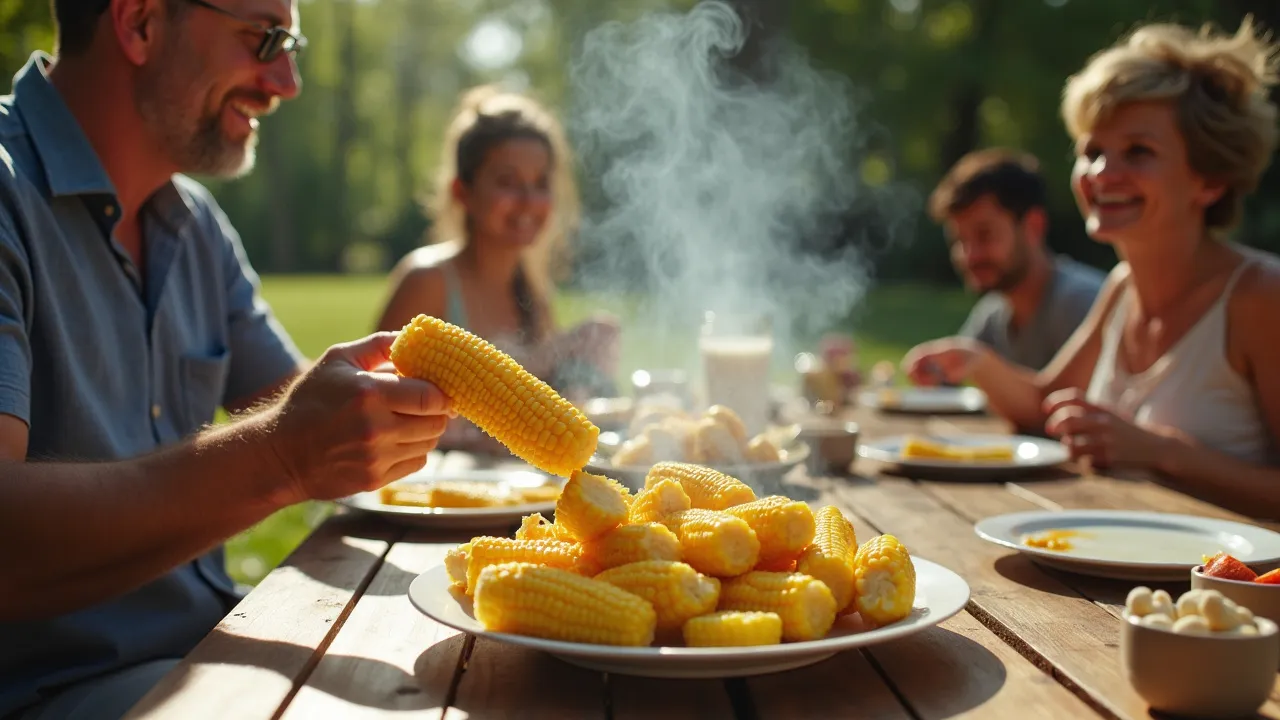
National Corn on the Cob Day, observed annually on June 11th, celebrates America's favorite summer side dish. This day honors the sweet, buttery ears of corn enjoyed at barbecues, fairs, and family gatherings across the country.
The Historical Origins & Evolutionary Journey
National Corn on the Cob Day, celebrated annually on June 11th, has deep roots in agricultural history and American culinary tradition. While the exact origin of this observance remains unclear, it likely emerged from a combination of harvest celebrations and the rise of summer food festivals in the early 20th century. Corn itself has been cultivated in the Americas for over 7,000 years, but the specific practice of eating it directly off the cob became widespread only after the development of sweet corn varieties in the 18th and 19th centuries.
The Foundational Catalyst
The story of corn on the cob begins with Indigenous peoples who first domesticated maize in Mesoamerica. They roasted or boiled ears and ate them fresh—a tradition European settlers adopted and adapted. By the 1800s, sweet corn hybrids became popular in the United States, making the cob a staple at summer meals. The invention of the corn husking machine in the 1840s and the later introduction of refrigeration allowed corn to be shipped and stored, increasing its accessibility. The Great Depression era saw corn on the cob as an affordable, filling food, further cementing its place in American culture.
The Legislative/Official Adoption
Unlike some food holidays created by proclamation, National Corn on the Cob Day appears to have grown organically. Food calendar compilations from the 1960s and 1970s list it as a unofficial observance, often tied to the start of sweet corn season in the Midwest. The day gained traction through state fairs, agricultural extension services, and butter companies promoting grilling season. In the 1980s, national food holidays became popularized by greeting card companies and media, and June 11th became widely accepted through repeated listing in almanacs and online food calendars.
Modern Global Legacy
Today, corn on the cob is enjoyed worldwide, with variations in toppings and cooking methods. In the United States, the day is marked with backyard grilling, corn boils, and community events. Mexico offers elote (corn on the cob with mayonnaise, cheese, chili). In South America, they use butter and salt. Asia has sweet corn street food. National Corn on the Cob Day now transcends its American roots, encouraging global appreciation for this versatile vegetable.
How to Celebrate National Corn on the Cob Day
Celebrating National Corn on the Cob Day is a delicious opportunity to enjoy fresh sweet corn in its most authentic form. Whether you prefer classic buttered ears or adventurous global flavors, there are many ways to honor June 11th. Below are actionable strategies for individuals, families, schools, and organizations.
For Individuals & Families
- Host a Corn Boil: Invite friends over for a backyard feast. Boil or grill fresh ears and set up a topping bar with butter, salt, pepper, herbs, chili powder, lime, cheese, and mayonnaise.
- Try World Styles: Make Mexican elote, Indian masala corn, or Japanese shoyu butter corn. Experiment with international recipes to appreciate cultural diversity.
- Visit a Corn Maze or Farm: Many farms offer corn-themed activities in June. Pick your own corn or take a tour to see how it grows.
For Schools & Educational Groups
- Teach Corn History: Create a lesson plan covering the domestication of maize by Indigenous peoples, the evolution of sweet corn, and its economic importance.
- Cooking Demonstration: Show students how to safely husk and cook corn on the cob. Discuss nutrition—corn provides fiber, B vitamins, and antioxidants.
- Art Projects: Use corn husks to make dolls or create paintings of corn fields. This integrates creativity with agricultural awareness.
For Organizations & Businesses
- Company Potluck: Encourage employees to bring corn-based dishes. Offer prizes for the most creative topping or best recipe.
- Support Local Farmers: Partner with a nearby farm to supply corn for a community event. Donate a portion of proceeds to food banks.
- Social Media Campaign: Use hashtags like #NationalCornOnTheCobDay to share recipes, facts, and photos. Engage followers with polls on favorite toppings.
No matter how you celebrate, the core spirit of the day is gratitude for this bountiful crop and the joy of sharing a simple, delicious food.
Nutritional Benefits & Health Considerations
Corn on the cob is not only tasty but also offers various health benefits. One medium ear of sweet corn provides about 90 calories, 3 grams of protein, and 2 grams of fiber. It is a good source of B vitamins (thiamin, niacin), vitamin C, magnesium, and potassium. The yellow kernels contain lutein and zeaxanthin, antioxidants that support eye health. However, preparation methods affect nutritional quality.
Healthier Preparation Tips
- Boiling or Grilling: These methods require minimal added fats. Avoid overcooking to preserve water-soluble vitamins.
- Butter in Moderation: Use grass-fed butter or olive oil to add healthy fats. Alternatively, try seasoning with herbs and spices instead of heavy sauces.
- Watch the Sodium: Many commercial toppings are high in salt. Opt for low-sodium seasonings or fresh lime juice.
For those with dietary concerns, corn is naturally gluten-free and can be part of a balanced diet. However, it is a source of carbohydrates, so individuals managing blood sugar should consume in moderation. Overall, corn on the cob is a wholesome treat when eaten as part of a varied diet.
Cultural Significance Across the Globe
While National Corn on the Cob Day is primarily observed in the United States, corn on the cob itself is a global phenomenon. Each culture has developed unique traditions around preparing and eating whole ears of corn.
North America
In the US and Canada, corn on the cob is synonymous with summer barbecues, state fairs, and Fourth of July celebrations. It is often slathered with butter, salt, and pepper. In Mexico, elote is street food: grilled corn coated in mayonnaise, crumbled cotija cheese, chili powder, and lime juice. In Central America, similar versions are popular.
South America
In Argentina and Uruguay, choclo (large-kernel corn) is served with butter and salt, often at asados (barbecues). Peruvians enjoy cancha (toasted corn) but also eat fresh corn on the cob with cheese.
Asia
In China, boiled corn on the cob is a common street snack, often sold by vendors on trains and streets. In India, corn is seasoned with spices like chaat masala and lemon juice. Japan offers yaki tomorokoshi (grilled corn with soy sauce and butter). Korea has grilled corn brushed with gochujang butter.
Africa
In many African countries, roasted or boiled maize on the cob is eaten as a filling snack. In South Africa, mielie pap is made from ground corn, but whole ears are also enjoyed with butter.
This global appreciation underscores corn's role as a staple food that transcends borders.
Varieties of Corn for the Cob
Not all corn is created equal when it comes to eating on the cob. The best candidates are sweet corn varieties, which have high sugar content and tender kernels. Below are the main types and what sets them apart.
Sweet Corn Types
- Standard (su) varieties: Traditional sweet corn that loses sweetness soon after harvest. Best eaten fresh.
- Supersweet (sh2) varieties: Higher sugar content, stays sweet longer. Common in grocery stores.
- Sugar-enhanced (se) varieties: Balanced sweetness and texture; a hybrid between standard and supersweet.
- Bicolor and Rainbow: Corn with mixed kernel colors—white, yellow, and even purple or red. Adds visual appeal.
Heirloom and Specialty Corn
Heirloom varieties like 'Golden Bantam' or 'Country Gentleman' offer unique flavor profiles. Some people also enjoy ornamental corn (like Indian corn) but those are usually dried and not eaten fresh. For the best corn on the cob experience, choose ears with bright green husks, moist silk, and plump kernels.
Cooking Methods & Tips for Perfect Corn on the Cob
There are multiple ways to cook corn on the cob, each yielding different textures and flavors. Here is a guide to the most popular methods.
Boiling
Bring a large pot of water to a boil. Add husked ears and cook for 4-7 minutes (depending on freshness). Remove and serve immediately with butter. For extra flavor, add a tablespoon of sugar to the water (but do not add salt, as it can toughen the kernels).
Grilling
Grilling adds a smoky char. Husk ears or leave them in soaked husks. Grill over medium heat, turning occasionally, for 10-15 minutes. Brush with butter or olive oil before grilling. Some prefer to parboil first to ensure tenderness.
Roasting
Preheat oven to 400°F. Place husked ears on a baking sheet, brush with butter, and roast for 20-25 minutes, turning halfway. Alternatively, roast in the husk—it steams the kernels.
Microwaving
For speed, microwave husked ears in a damp paper towel for 3-4 minutes per ear. Quick and easy, though texture may be less crisp.
Steaming
Use a steamer basket over boiling water. Steam 4-6 minutes. Preserves moisture and nutrients well.
No matter the method, serve corn hot with your favorite toppings. For the best results, eat immediately after cooking.
Economic Impact & U.S. Corn Industry
Corn is the largest crop in the United States by volume, but only a small fraction is eaten as sweet corn. The majority is field corn used for animal feed, ethanol, and processed foods. Nevertheless, sweet corn holds significant economic value, especially in states like Florida, California, Georgia, and Washington.
Sweet Corn Production
According to the USDA, the United States produces over 10 million tons of sweet corn annually, with a farm-gate value exceeding $1 billion. The peak season runs from May to September, aligning with National Corn on the Cob Day. Many farmers’ markets and u-pick operations rely on sweet corn sales during summer months.
Market Trends
In recent years, demand for organic and locally grown sweet corn has risen. The day encourages consumers to support local agriculture and reduce food miles. Additionally, the rise of plant-based diets has kept corn on the cob popular as a whole-food option. Processors also freeze sweet corn for year-round availability, extending the economic impact beyond summer.
Historical Timeline
Maize is first domesticated from teosinte in southern Mexico, eventually spreading throughout the Americas.
Christopher Columbus brings corn back to Europe, introducing the crop to the Old World.
The invention of the corn husking machine accelerates processing, making corn more accessible for on-the-cob consumption.
The first hybrid sweet corn varieties are developed, improving flavor and sweetness.
During the Great Depression, corn on the cob becomes a popular affordable meal across the United States.
National Corn on the Cob Day begins appearing on food holiday lists, likely promoted by agricultural boards and food media.
The day gains widespread recognition through almanacs and food magazines, solidifying June 11th as the official date.
Social media and food blogs amplify celebrations, with users sharing recipes and global variations like elote.
During the COVID-19 pandemic, home cooks embrace corn on the cob as a simple, comforting summer dish, renewing interest in the day.