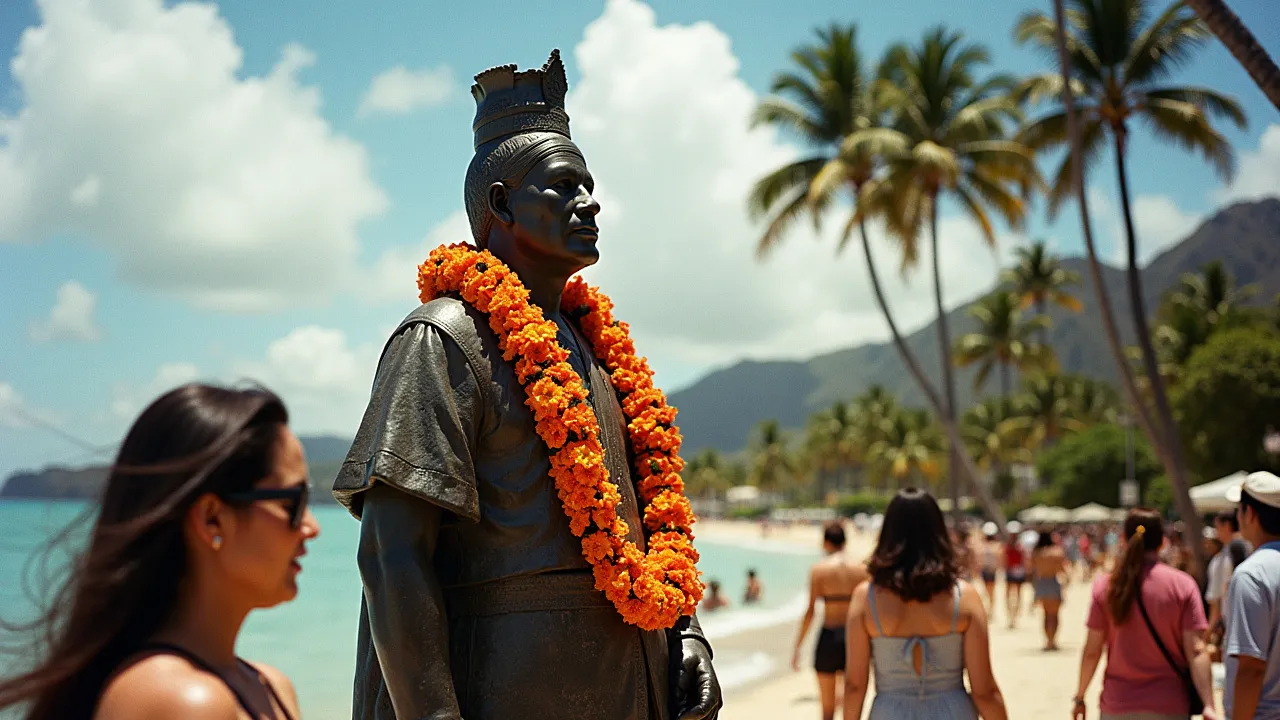
King Kamehameha Day, observed on June 11th, honors the founder of the Kingdom of Hawaii. The holiday features parades, lei draping ceremonies, and cultural events celebrating Hawaiian heritage and unity.
The Historical Origins & Evolutionary Journey
King Kamehameha Day (June 11th) is a state holiday in Hawaii that commemorates the achievements of Kamehameha the Great, the ruler who unified the Hawaiian Islands in 1810. The holiday was first proclaimed by King Kamehameha V in 1871 to honor his grandfather, and it has evolved from a royal observance to a statewide celebration of Hawaiian culture.
The Foundational Catalyst
Kamehameha I, born around 1758 (traditionally on a night marked by Halley's Comet), rose from a minor chief to conquer and unite the warring islands of Hawaii. His military campaigns, supported by Western advisors and weapons, culminated in the Battle of Nu'uanu in 1795 and the peaceful cession of Kauai in 1810. His reign established a single kingdom that lasted until the overthrow of the monarchy in 1893.
The Legislative/Official Adoption
King Kamehameha V signed a proclamation on December 22, 1871, designating June 11th as a national holiday to honor his grandfather. The date was chosen because it coincided with the king's own birthday month and the summer solstice period. After Hawaii became a U.S. state in 1959, the holiday was codified as a state observance under Hawaii Revised Statutes §8-1. In 2019, the state legislature affirmed its status as a day of cultural pride.
Modern Global Legacy
Today, the holiday is celebrated not only in Hawaii but also by the Hawaiian diaspora worldwide. Events include the annual Lei Draping Ceremony at the Kamehameha Statue in Honolulu, a floral parade, hula performances, and educational programs. The holiday has become a symbol of Hawaiian resilience and cultural renaissance, with growing participation from non-Hawaiians.
How to Celebrate King Kamehameha Day
Whether you're in Hawaii or elsewhere, there are meaningful ways to honor King Kamehameha's legacy. The key is to engage with Hawaiian culture respectfully and authentically.
For Individuals and Families
- Attend a local Lei Draping Ceremony at a statue of Kamehameha (e.g., in Honolulu, Hilo, or Kapaau).
- Make or purchase a fresh floral lei and offer it at a statue or altar as a symbolic gesture of respect.
- Learn a traditional hula or chant (oli) about Kamehameha. Many community groups offer free workshops on June 11th.
- Read books by Hawaiian authors, such as Shoal of Time by Gavan Daws, to deepen your understanding of the history.
For Schools and Organizations
- Host a cultural fair with stations for lei-making, poi pounding, and Hawaiian language lessons.
- Invite a kumu (teacher) to speak about the importance of Kamehameha's unification and its impact on modern Hawaii.
- Organize a volunteer beach cleanup as a way to embody the Hawaiian value of mālama 'āina (care for the land).
Corporate and Social Rituals
- Offer employees a paid day off to participate in community events, as many Hawaii-based companies do.
- Decorate office spaces with native Hawaiian plants like plumeria and ti leaves.
- Sponsor a float in the annual King Kamehameha Parade in Honolulu, which features floral displays and hālau hula.
Internationally, Hawaiian clubs in Japan, California, and Europe organize smaller-scale versions of these activities. The key is to celebrate with humility and a focus on cultural education.
Cultural Themes and Symbolism
King Kamehameha Day is rich with symbolic elements that reflect Hawaiian values.
Lei Giving and Aloha
The tradition of draping statues with leis — often long ones that stretch several feet — represents the spirit of aloha (love, compassion, and mutual regard). Each lei is a physical manifestation of respect. The lei itself is made from native flowers like 'ilima, plumeria, and tuberose, each with its own symbolic meaning.
Unification and Peace
Kamehameha's primary achievement was ending centuries of inter-island warfare. The holiday celebrates the peace he established, which allowed Hawaiian culture to flourish. Parades often feature peace flags and banners with the motto "Ua Mau ke Ea o ka 'Āina i ka Pono" (The life of the land is perpetuated in righteousness).
Royal Legacy
The Kamehameha Statue in front of Ali'iolani Hale in Honolulu is a central icon. It was originally lost at sea in 1880, then recovered and erected in 1883. The statue's gilded spear and cape signify the king's divine authority. Many Hawaiians view the holiday as a reminder of the sovereignty that was lost after the overthrow.
Global Impact and Diaspora Celebrations
King Kamehameha Day extends beyond Hawaii's shores, celebrated by Hawaiian communities worldwide.
Continental United States
Major Hawaiian populations in California, Nevada, and Washington hold annual luaus and lei-making workshops. In Las Vegas, the Hawaiian community often hosts a parade on the Strip. These events help preserve cultural identity for those far from home.
Japan
Due to historical ties and tourism, Japanese Hawaiian clubs participate in the festivities. In Yokohama, a small statue of Kamehameha is adorned with leis on June 11th. The day is also used to promote Hawaiian tourism and cultural exchange.
Europe and Oceania
In the UK, the Royal Hawaiian Society organizes a memorial service at Westminster Abbey, where a plaque honors King Kamehameha. In New Zealand, Māori and Hawaiian groups exchange protocols, acknowledging shared Polynesian roots.
These global celebrations emphasize the theme of unity across oceans, a fitting tribute to a king who brought islands together.
Economic and Tourism Significance
King Kamehameha Day serves as a major economic driver for Hawaii's tourism industry.
Boost to Local Businesses
The parade and related events draw over 100,000 spectators annually, filling hotels and restaurants. Florists report a surge in lei orders, with some leis costing hundreds of dollars. Artisans selling traditional crafts see a significant increase in sales.
Cultural Tourism
The holiday promotes cultural tourism, attracting visitors who want an authentic experience. Many tour operators offer special packages that include hula lessons, historical tours of Iolani Palace, and visits to the Kamehameha Statue.
Preservation Funding
A portion of the holiday's revenue supports the preservation of Hawaiian language and culture through state grants. Nonprofits like the Kamehameha Schools use the day to raise funds for educational programs.
By celebrating the past, the holiday helps secure the future of Hawaiian traditions.
Controversies and Contemporary Debates
Although largely celebratory, King Kamehameha Day is not without debate among historians and activists.
Critique of Kamehameha's Methods
Some scholars argue that Kamehameha's unification was achieved through violent conquest, including the use of Western cannons that killed many Hawaiian warriors. This has led to calls for a more nuanced portrayal, especially in educational settings.
Colonial Overtones
Because the holiday was created by a monarch who later engaged with Western powers, some Native Hawaiian activists feel it glosses over the subsequent colonization. They advocate for a day of reflection on sovereignty, separate from the state-sponsored celebration.
Reconciliation Efforts
In response, many modern observances include discussions on Hawaiian rights and the overthrow. Some events feature speakers who address the need for reconciliation between the Hawaiian Kingdom and the U.S. government.
These conversations enrich the holiday by making it a living dialogue about history and identity.
Historical Timeline
Traditional birth year of Kamehameha I, marked by the appearance of Halley's Comet. He was born in Kohala on the island of Hawaii.
Kamehameha I defeats the Oahu army at the Battle of Nu'uanu, securing control over Maui, Molokai, and Oahu.
Kauai's king, Kaumuali'i, peacefully cedes his island to Kamehameha, completing the unification of the Hawaiian Islands.
King Kamehameha V issues a proclamation designating June 11th as a national holiday to honor his grandfather, Kamehameha I.
The first official King Kamehameha Day is celebrated with religious services, feasts, and games.
The famous gilded Kamehameha statue in downtown Honolulu is finally erected after being lost at sea and then recovered from the Falkland Islands.
Hawaii becomes the 50th U.S. state; King Kamehameha Day is recognized as a state holiday.
The Hawaii State Legislature passes a resolution reaffirming the holiday as a day to celebrate Hawaiian culture and history, with increased emphasis on educational programs.