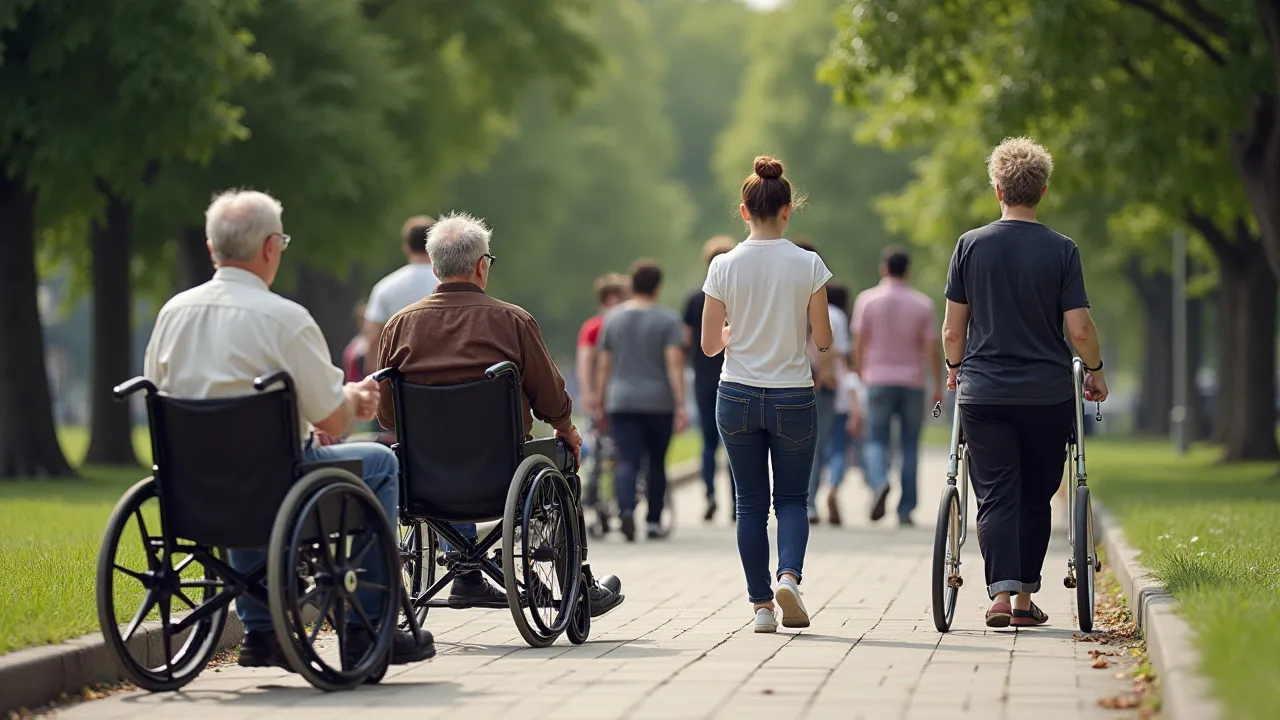
Observed annually on May 7th, National Barrier Awareness Day highlights the physical, social, and attitudinal obstacles faced by people with disabilities. It encourages reflection, education, and action to build a more inclusive world.
The Historical Origins & Evolutionary Journey
National Barrier Awareness Day was established to draw attention to the myriad obstacles—physical, social, and attitudinal—that prevent people with disabilities from fully participating in society. The day originated through the efforts of the Paralyzed Veterans of America (PVA), an organization founded in 1946 to serve veterans with spinal cord injuries. Recognizing that barriers extended well beyond battlefield wounds, the PVA spearheaded a national campaign that led to the first observance on May 7, 1989.
The Foundational Catalyst
In the 1980s, disability rights activism was gaining momentum. The landmark Americans with Disabilities Act (ADA) was still four years away from passage. The PVA, together with other advocacy groups, wanted to create a day of awareness that would mobilize public opinion and legislative support. They chose May 7th to coincide with the anniversary of a key protest or policy milestone, though the exact date also served as a clear marker before summer.
Legislative & Official Adoption
While National Barrier Awareness Day is not a federal public holiday, it was officially recognized through Presidential Proclamation 5982 by President George H.W. Bush on May 5, 1989, two days before the first observance. The proclamation called upon Americans to "remove the barriers that prevent persons with disabilities from enjoying full and equal access to society." Since then, the day has been observed annually with community events, educational programs, and advocacy actions.
Modern Global Legacy
Today, the observance has expanded beyond the United States. Disability organizations worldwide use May 7th as a rallying point to highlight issues ranging from inaccessible public transport to digital exclusion. The day now also encompasses attitudinal barriers—the prejudice and stereotypes that often prove more formidable than physical ones. The evolution reflects a broader shift from a medical model of disability to a social and human rights model.
How to Celebrate National Barrier Awareness Day
This day offers a powerful opportunity for individuals, schools, businesses, and communities to take meaningful action. Below are structured ways to observe and promote barrier awareness.
For Individuals
- Educate yourself: Read about the social model of disability and listen to disabled voices.
- Conduct an audit: Walk through your home or neighborhood noting obstacles—steps without ramps, narrow doorways, lack of braille signage.
- Support disabled-owned businesses: Use social media to promote them with the hashtag #BarrierAwarenessDay.
- Host a conversation: Invite friends over for a respectful discussion about inclusion.
For Schools & Educational Institutions
- Classroom activities: Have students simulate navigating a room in a wheelchair or with a blindfold, then discuss insights.
- Guest speakers: Invite disability advocates or local veterans from the PVA to share experiences.
- Curriculum integration: Incorporate barrier awareness into social studies, history, and civics lessons.
For Businesses & Organizations
- Accessibility audit: Review your physical and digital spaces for compliance with ADA or UNCRPD standards.
- Policy review: Check hiring practices, accommodation policies, and customer service training.
- Public pledge: Announce a specific barrier-removal goal for the coming year.
Regional Celebrations
While May 7th is the primary date, some countries link barrier awareness to their own disability rights milestones. For example:
- United Kingdom: The UK Disability History Month (November-December) includes barrier focus, but May 7th is increasingly recognized by British disability groups.
- Australia: The International Day of People with Disability (December 3) is prominent, but National Barrier Awareness Day is observed by Australian PVA counterparts on May 7th.
- India: The Rights of Persons with Disabilities Act (2016) anniversary (April 27) sometimes overlaps, but Indian NGOs have adopted May 7th for barrier awareness campaigns.
Types of Barriers: Physical, Social, and Attitudinal
Understanding the different categories of barriers is essential to effectively addressing them. National Barrier Awareness Day shines a light on all three.
Physical Barriers
These are the most visible: stairs without ramps, narrow doorways, inaccessible restrooms, lack of elevators, and inaccessible transportation. Even minor obstacles like high door thresholds or heavy doors can exclude. The Americans with Disabilities Act (ADA) and similar laws worldwide mandate removal of these barriers in new construction, but existing buildings often remain noncompliant.
Social & Systemic Barriers
These include discriminatory policies, lack of inclusive education, inaccessible healthcare, and employment discrimination. For instance, many workplaces still fail to provide reasonable accommodations, and insurance may not cover necessary assistive technologies. Social barriers also encompass communication barriers, such as lack of sign language interpreters or materials in braille or plain language.
Attitudinal Barriers
Perhaps the most pervasive, these are stereotypes, prejudices, and assumptions. For example, assuming a person using a wheelchair cannot speak for themselves, or that someone with a cognitive disability cannot work effectively. National Barrier Awareness Day actively promotes the "Nothing About Us Without Us" principle, emphasizing that disabled people must be included in decisions affecting their lives.
The Economic Case for Removing Barriers
Barrier removal is not only a moral imperative but an economic one. According to a 2020 study by the International Labour Organization (ILO), excluding people with disabilities costs countries between 3% and 7% of GDP. Conversely, inclusive economies benefit from a larger talent pool, increased consumer spending, and innovation.
- Workforce participation: When barriers are removed, people with disabilities can contribute their skills. The global disability employment gap remains significant—less than 40% of disabled adults are employed compared to over 70% of non-disabled adults.
- Consumer market: The global disability market (disabled people plus friends/family) is estimated at over $1.9 trillion annually in discretionary spending.
- Innovation: Accessible design benefits everyone. Features like curb cuts, automatic doors, and voice assistants were originally created for disabled users but are now widely used.
National Barrier Awareness Day encourages businesses to see accessibility as an investment, not a cost. The RoI of Accessibility is measurable through increased customer base, improved employee retention, and reduced legal risk.
Digital Barriers and the Web Accessibility Movement
In the 21st century, digital barriers are as critical as physical ones. The Web Content Accessibility Guidelines (WCAG) provide a global standard for digital inclusion. Yet, a majority of websites remain inaccessible to people using screen readers, switch devices, or those with cognitive disabilities.
Common Digital Barriers
- Missing alt text on images
- Poor color contrast
- Non‑keyboard‑navigable interfaces
- Auto‑playing videos without captions
- Complex language and jargon
Legislation Driving Change
In the US, ADA Title III has been interpreted to apply to websites, leading to a surge in lawsuits. In the EU, the European Accessibility Act requires many digital products and services to be accessible by 2025. National Barrier Awareness Day serves as a reminder for organizations to audit their digital presence and adopt inclusive design principles.
The Universal Design philosophy urges developers to create products that are usable by the widest possible audience without need for adaptation. This proactive approach reduces the need for retrofitting and benefits all users.
How Policy Changes Have Reduced Barriers
Over the decades, landmark policies have systematically dismantled obstacles. National Barrier Awareness Day provides an opportunity to celebrate progress and push for further reforms.
Key US Legislation
- Architectural Barriers Act (1968) – Required federally funded buildings to be accessible.
- Rehabilitation Act, Section 504 (1973) – Prohibited discrimination against individuals with disabilities in programs receiving federal funds.
- Americans with Disabilities Act (1990) – Broad prohibition of discrimination in employment, public services, public accommodations, and telecommunications.
- ADA Amendments Act (2008) – Expanded the definition of disability to provide broader coverage.
Global Frameworks
- United Nations Convention on the Rights of Persons with Disabilities (UNCRPD, 2006) – Ratified by 186 countries, it establishes a comprehensive human rights framework.
- Marrakesh Treaty (2013) – Facilitates access to published works for visually impaired persons.
Despite these advances, implementation gaps remain. Many countries have weak enforcement mechanisms, and budget constraints slow progress. National Barrier Awareness Day highlights the need for continuous advocacy and accountability.
Community Action: Grassroots Movements and Everyday Allies
While legislation sets the floor, grassroots efforts lift the ceiling. National Barrier Awareness Day has always been a day for local action. Community groups organize barrier walks, where participants navigate a neighborhood identifying obstacles and mapping solutions. Others hold accessibility hackathons to develop low‑cost assistive technologies.
The day also emphasizes the role of allies—people without disabilities who actively support inclusion. Allies can:
- Speak up when they witness discriminatory language or inaccessible practices.
- Share resources on social media using hashtags like #BarrierFreeFuture.
- Volunteer with organizations such as the National Federation of the Blind, Disabled Rights Action Committee, or local independent living centers.
National Barrier Awareness Day reminds us that removing barriers is not a one‑day task but a continuous commitment to human dignity and equal opportunity.
Historical Timeline
Paralyzed Veterans of America (PVA) founded to serve veterans with spinal cord injuries, later becoming the driving force behind National Barrier Awareness Day.
Architectural Barriers Act signed into law in the United States, requiring federally funded buildings to be accessible.
Section 504 of the Rehabilitation Act prohibits discrimination against individuals with disabilities in programs receiving federal funds.
PVA begins campaigning for a national day to highlight barriers faced by people with disabilities.
President George H.W. Bush signs Presidential Proclamation 5982, officially establishing National Barrier Awareness Day to be observed annually on May 7.
Americans with Disabilities Act (ADA) signed into law, a landmark civil rights legislation prohibiting disability discrimination.
United Nations Convention on the Rights of Persons with Disabilities (UNCRPD) adopted, promoting barrier‑free societies globally.
ADA Standards for Accessible Design updated, strengthening requirements for physical accessibility.
National Barrier Awareness Day gains widespread social media traction under #BarrierAwarenessDay, with global digital events.
Observance continues to expand into digital accessibility, with calls for inclusive AI and technology design.