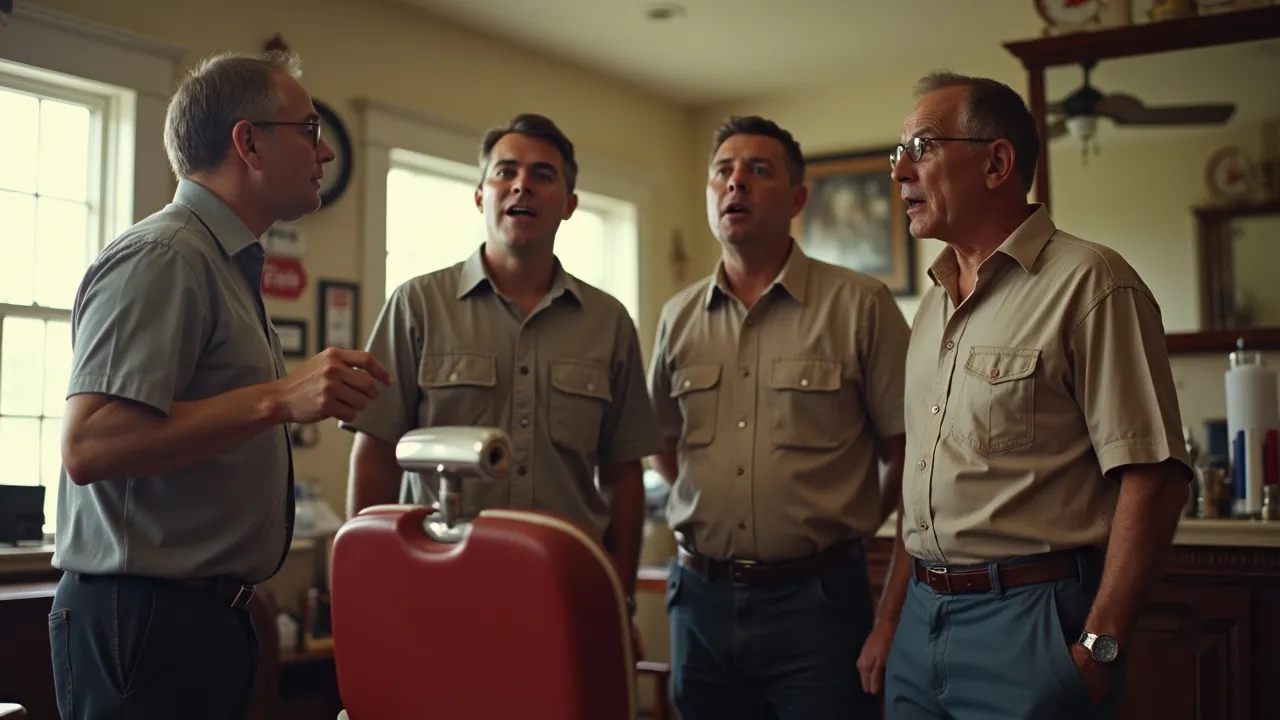
National Barbershop Music Day, observed on July 13th, celebrates the unique four-part harmony style of barbershop music. Established by the Barbershop Harmony Society, it honors the tradition of a cappella singing and encourages participation in this beloved American art form.
The Historical Origins & Evolutionary Journey
National Barbershop Music Day celebrates the uniquely American vocal art form of barbershop harmony, characterized by its four-part a cappella singing style—tenor, lead, baritone, and bass—that creates overtone-rich chords. The observance was officially established by the Barbershop Harmony Society (BHS) in 2002, with the date July 13th chosen to coincide with the society's annual international convention and contest.
The Foundational Catalyst
The roots of barbershop music trace back to the late 19th century, when African American men would gather in barbershops, social hubs where they improvised harmonies, often using a ringing, close-harmony style. This oral tradition spread across the United States, blending with popular minstrel and vaudeville tunes. In 1938, the Society for the Preservation and Encouragement of Barber Shop Quartet Singing in America (SPEBSQSA) was founded in Tulsa, Oklahoma, by Owen C. Cash and Rupert I. Hall. The organization aimed to revive and codify the style, which had declined due to the rise of jazz and radio.
The Legislative/Official Adoption
In 2002, the Barbershop Harmony Society (renamed in 2004) worked with lawmakers to designate July 13th as National Barbershop Music Day. The date was already significant as a focal point for the society's annual convention, which draws thousands of singers. While not a federal holiday, the day has been recognized by numerous state and local proclamations, encouraging communities to hold sing-alongs, concerts, and educational events.
Modern Global Legacy
Today, barbershop music thrives internationally, with organizations like the British Association of Barbershop Singers (BABS), Sweet Adelines International (for women), and the Harmony Sweepstakes. The style has evolved to include contemporary songs, yet remains rooted in its traditional four-part harmony. National Barbershop Music Day amplifies this legacy by promoting public performance, youth education, and the joy of group singing.
How to Celebrate National Barbershop Music Day
Whether you are a seasoned barbershopper or a curious newcomer, National Barbershop Music Day offers countless ways to participate. The key is to immerse yourself in the rich harmonies and community spirit of this art form.
Individual Activities
- Listen to classic quartets: Stream recordings by legends like The Buffalo Bills, The Dapper Dans, or The Gas House Gang.
- Attend a local chorus rehearsal: Most BHS chapters welcome visitors; find one near you via the Barbershop Harmony Society website.
- Learn a part: Use online resources or apps to practice tenor, lead, baritone, or bass lines from public-domain barbershop tags.
Group and Community Celebrations
- Organize a barbershop sing-along at a senior center, library, or park.
- Host a quartet contest among friends or coworkers—no experience required!
- Coordinate with local schools to include barbershop music in music classes for the day.
Corporate and Organizational Ideas
- Sponsor a lunchtime concert where an employee quartet performs.
- Donate to barbershop education programs or youth outreach initiatives.
- Share a social media campaign using hashtags like #BarbershopMusicDay and #SingHarmony.
Global Traditions
In the United Kingdom, BABS chapters host open-house events. In Australia, the Australasian Barbershop Council encourages flash mobs in public spaces. Sweet Adelines International often holds regional competitions on or near the date. In Sweden, the Barbershop Sweden Association arranges outdoor gigs. These variations highlight how the day unites enthusiasts worldwide.
The Cultural Significance of Barbershop Harmony
Barbershop music is more than a nostalgic pastime; it is a vibrant cultural force that fosters community, mental well-being, and cross-generational connection. The art form's emphasis on blending voices rather than individual virtuosity promotes teamwork and empathy.
Social Bonds
Quartets and choruses often describe themselves as 'families.' Regular rehearsals and performances build strong social networks, combating loneliness and isolation. Many participants report that barbershop singing reduces stress and boosts mood, thanks to the release of endorphins during group singing.
Educational Value
Barbershop arrangements teach ear training, sight-reading, and vocal technique. Youth programs like the BHS's Young Singers Foundation support school choruses and provide scholarships. The tradition also preserves early American popular songs, keeping historical repertoire alive.
Inclusivity and Diversity
While historically male-dominated, modern barbershop is inclusive: Sweet Adelines International has over 1,200 quartets and choruses worldwide, and mixed-gender groups are rising. The LGBTQ+ community has also embraced barbershop, with many proudly inclusive choruses.
The Barbershop Harmony Society’s Role
Founded as SPEBSQSA in 1938, the Barbershop Harmony Society (BHS) is the primary custodian of the barbershop tradition. With over 10,000 members in North America and affiliations worldwide, the society sets standards for contest judging, publishes educational materials, and organizes the annual International Convention where the day is celebrated.
Key Initiatives
- Harmony University: A week-long summer camp for directors, singers, and arrangers.
- Music Publications: The society licenses over 10,000 arrangements and produces learning tracks.
- Youth Outreach: The Young Singers Foundation awards grants to school programs.
The BHS also maintains the Barbershop Harmony Society Museum, documenting the art form's history through artifacts, recordings, and memorabilia.
Barbershop Music in Popular Media
Barbershop music has permeated popular culture, from vaudeville to Disney. Notable appearances include the Marx Brothers' The Big Store (1941), where they performed a barbershop sequence, and the film Music Man (1962) featuring 'Lida Rose.' In recent decades, the animated series The Simpsons has featured the Be Sharps quartet, and the movie Pitch Perfect (2012) included barbershop inspired arrangements.
Famous Quartets
- The Buffalo Bills – Four-time SPEBSQSA champions, known for their role in Music Man.
- The Dapper Dans – The official Disneyland quartet, performing since 1951.
- The Gas House Gang – Influential quartet known for comedic routines.
The day provides an opportunity to rediscover these iconic performances and introduce them to new audiences.
Challenges and the Future of Barbershop
While barbershop music enjoys a dedicated following, it faces challenges in attracting younger members and staying relevant in an era of digital music. The median age of BHS members is over 60, spurring efforts to modernize the repertoire and outreach.
Innovations
- Contemporary arrangements: Groups now sing pop songs (e.g., by Queen, Adele) in barbershop style.
- Technology: Virtual rehearsals and online contests grew during the pandemic, expanding access.
- Social Media: Viral videos of barbershop flash mobs and tags attract new fans.
National Barbershop Music Day serves as a rallying point to showcase these evolutions, ensuring the art form thrives for generations to come.
Historical Timeline
Barbershop harmony emerges as African American men in barbershops improvise four-part close harmonies, often singing popular songs of the day.
The Society for the Preservation and Encouragement of Barber Shop Quartet Singing in America (SPEBSQSA) is founded in Tulsa, Oklahoma, by Owen C. Cash and Rupert I. Hall.
The Marx Brothers feature a barbershop quartet in their film 'The Big Store,' raising the style's profile.
The first international convention of SPEBSQSA is held in St. Louis, Missouri, establishing annual contests.
The Buffalo Bills win their first of four SPEBSQSA championships; they later appear in Broadway's 'The Music Man.'
Sweet Adelines International, the women's barbershop organization, holds its first international convention. It now has over 20,000 members.
National Barbershop Music Day is first observed on July 13th, established by the Barbershop Harmony Society (formerly SPEBSQSA).
SPEBSQSA officially changes its name to the Barbershop Harmony Society (BHS) for broader appeal.
The BHS creates Harmony University, an intensive educational program for barbershop singing and leadership.
Due to the COVID-19 pandemic, the International Convention is held virtually, reaching a global audience and inspiring new digital outreach efforts.