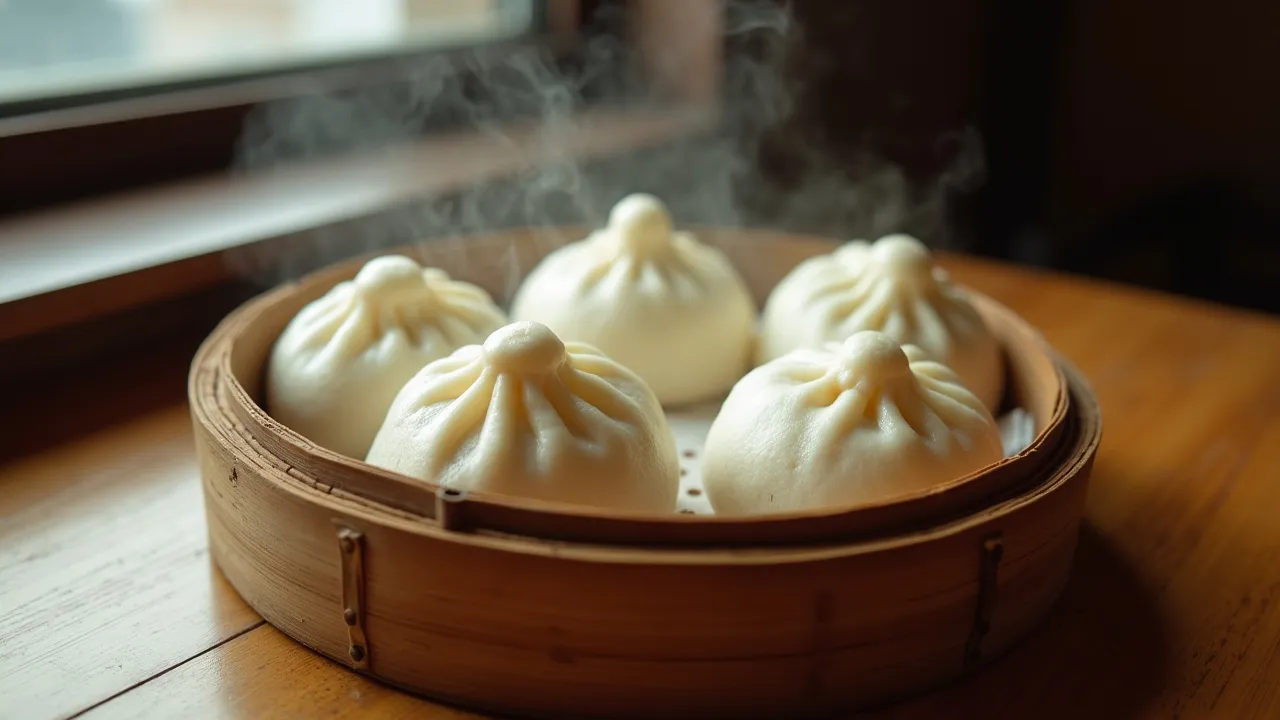
Celebrate National Bao Day on August 22nd, honoring the beloved Chinese steamed bun. Discover its rich history, diverse fillings, and global popularity.
The Historical Origins & Evolutionary Journey
National Bao Day, observed annually on August 22nd, honors one of China's most iconic culinary creations: the baozi, or simply bao — a steamed, filled bun that has evolved over millennia from a simple dough pocket into a global street-food sensation. The day was established by a coalition of food bloggers and Asian cuisine enthusiasts in 2018 to celebrate the cultural significance and versatility of bao. Its date, August 22nd, was chosen to coincide with the peak of summer's harvest when fresh ingredients for fillings are abundant.
The Foundational Catalyst: Origins of Bao
The earliest ancestors of bao date back to the Western Jin Dynasty (265–316 CE), where soldiers wrapped fillings in dough and steamed them over campfires. However, the modern bao is traditionally attributed to the military strategist Zhuge Liang during the Three Kingdoms period (220–280 CE). Legend says he invented mantou (plain steamed buns) to replace human sacrifices at river crossings. Over centuries, fillings of meat, vegetables, and sweet pastes were added, creating baozi.
The Legislative/Official Adoption
Unlike official state holidays, National Bao Day emerged organically in the digital age. In 2018, a group of food influencers on Instagram and Twitter launched a campaign using #NationalBaoDay, choosing August 22nd for its proximity to the end of summer harvests. The day gained traction when major food media outlets like Food & Wine and Saveur featured recipes and history pieces. By 2020, it was recognized in several food calendars and celebrated in Asian communities worldwide.
Modern Global Legacy
Today, bao has transcended its Chinese origins. From shengjianbao (pan-fried) in Shanghai to char siu bao in Cantonese dim sum, each region boasts unique variations. National Bao Day now highlights this diversity, encouraging home cooks and professional chefs to experiment with fusion fillings like Korean BBQ, tikka masala, or s'mores. Food trucks and pop-ups often offer special menus, and social media buzzes with bao-making tutorials and challenges.
How to Celebrate National Bao Day
Celebrating National Bao Day is all about embracing the art of bao-making and sharing. Whether you are a novice or a seasoned chef, there are countless ways to participate. Below are structured guides for different celebrants:
For Individuals & Home Cooks
- Master the Dough: Start with a simple yeast dough (flour, water, yeast, sugar, oil). Knead until smooth, then let rise for 1 hour.
- Pick Your Fillings: Classic options include char siu pork, ground pork with ginger and scallions, or vegetable medley. For dessert, try red bean paste or custard.
- Assemble & Steam: Roll dough into circles, add filling, pleat edges to seal. Steam over boiling water for 10–15 minutes.
- Share the Joy: Post photos with #NationalBaoDay and host a bao-tasting party with friends.
For Schools & Educational Institutions
- Cultural Workshop: Invite a local chef to demonstrate bao-making, discussing the history and regional variations.
- Art Integration: Have students draw or paint bao buns, exploring the symbolism of sharing food.
- Writing Project: Assign short essays on the role of steamed buns in Chinese cuisine or a fictional story about a bao journey.
For Restaurants & Food Businesses
- Special Menu: Offer a limited-time bao flight with flavors from different Chinese provinces.
- Social Media Campaign: Run a contest for the best homemade bao photo, with a prize for the winner.
- Charity Partnership: Donate a portion of bao sales to food security programs, tying in the theme of sharing.
Global Celebration Variations
- China: Traditional families gather to make baozi filled with pork and cabbage, often served during festivals.
- United States: Fusion bao trend — Korean fried chicken bao or bao tacos are popular at food trucks.
- Japan: Nikuman (steamed pork buns) are enjoyed as a convenience store snack; homemade versions are less common.
- Singapore: Bao is a staple in dim sum brunch, with delicate pleats and savory fillings.
Culinary Significance and Nutritional Profile
Bao is not just a delicious food; it represents a balanced meal in a portable form. The steamed cooking method preserves moisture without added fats, making it healthier than fried alternatives. A typical pork bao contains about 250 calories, with protein from the meat and carbohydrates from the dough. For a healthier twist, whole wheat dough and lean fillings like chicken or tofu can be used.
Key Ingredients and Their Roles
- Flour: Usually all-purpose or bread flour for gluten development; some recipes use cake flour for a softer texture.
- Yeast: Active dry or instant yeast provides the fluffy texture.
- Fat: A small amount of oil or shortening tenderizes the dough.
- Sugar: Feeds the yeast and adds slight sweetness.
Nutritional Benefits
Bao can be a good source of protein and fiber when filled with vegetables or legumes. Steaming reduces the formation of advanced glycation end-products (AGEs) compared to frying. However, baos can be high in sodium due to soy sauce and seasonings, so moderation is key. For those with gluten sensitivities, rice flour or gluten-free blends can substitute, though the texture will vary.
Regional Variations and Global Adaptations
The beauty of bao lies in its adaptability. Across China, regional differences are pronounced:
- Northern China: Large, thick-skinned bao filled with lamb or beef, often pan-fried (shengjianbao).
- Sichuan: Spicy fillings with chili oil and Sichuan peppercorns.
- Cantonese: Delicate, fluffy char siu bao (barbecue pork) — a dim sum classic.
- Shanghai: Xiaolongbao (soup dumplings) are a smaller, wrapped cousin; often confused with bao but distinct in technique.
Internationally, bao has inspired countless fusions:
- Korean-Mexican: Bulgogi bao with kimchi slaw.
- Indian: Butter chicken bao.
- Italian: Caprese bao with mozzarella, tomato, and basil.
- Dessert Bao: Nutella and banana, or matcha red bean.
Economic and Cultural Impact
Bao has become a significant player in the global food economy. In China, the bao industry is worth billions of dollars, with chains like Bingz and Dao Xiao Mian expanding overseas. In the US, bao-focused restaurants and food trucks have multiplied, especially in cities like New York, San Francisco, and Los Angeles. The trend has also spurred growth in frozen bao sales, with major retailers carrying brands like Wei-Chuan and MìLà.
Culturally, bao represents community and sharing. It is a staple at family gatherings and street markets. National Bao Day amplifies this by encouraging cross-cultural exchange. The day has been used to raise funds for food banks and support local farmers, aligning with themes of sustainability and generosity.
How to Make Perfect Bao at Home
Creating restaurant-quality bao at home is achievable with practice. Follow this step-by-step guide:
Ingredients for Dough (makes 12 baos)
- 3 cups all-purpose flour
- 1 tablespoon sugar
- 1 teaspoon active dry yeast
- 1 cup warm water (110°F)
- 1 tablespoon vegetable oil
- 1/2 teaspoon salt
Steps
- Activate Yeast: Mix warm water and sugar, sprinkle yeast on top, let sit 5-10 minutes until frothy.
- Make Dough: Combine flour and salt in a bowl, add yeast mixture and oil. Knead 10-12 minutes until smooth. Cover and let rise 1 hour until doubled.
- Prepare Filling: While dough rises, prepare your preferred filling (e.g., 1 lb ground pork, 2 tbsp soy sauce, 1 tbsp ginger, 2 chopped scallions).
- Shape Baos: Punch down dough, divide into 12 pieces. Roll each into a circle (3-inch diameter), place 1-2 tablespoons filling in center, pleat edges to seal.
- Steam: Place baos on parchment squares in steamer basket. Cover and let rest 15 minutes. Steam over boiling water for 12 minutes. Do not open lid during steaming.
- Serve: Enjoy immediately with soy sauce, vinegar, or chili oil.
Historical Timeline
Legend of Zhuge Liang's mantou: Military strategist creates steamed buns to substitute for human sacrifices, marking the conceptual origin of bao.
Western Jin Dynasty: Earliest records of steamed filled buns (baozi) consumed by soldiers and peasants.
Tang Dynasty: Bao becomes a popular street food in Chang'an, with fillings like mutton and dates.
Yuan Dynasty: Mongol influence introduces lamb fillings, and bao spreads along the Silk Road.
Ming Dynasty: Dim sum culture emerges in Cantonese teahouses; char siu bao becomes a signature item.
Chinese diaspora brings bao to Southeast Asia, the Americas, and Europe, leading to local adaptations.
First National Bao Day celebrated on August 22nd, initiated by social media food influencers and supported by culinary organizations.
National Bao Day gains official recognition in food holiday calendars; major outlets feature bao recipes and history.
Bao industry reaches $15 billion globally; National Bao Day marked by events in New York, London, and Shanghai.