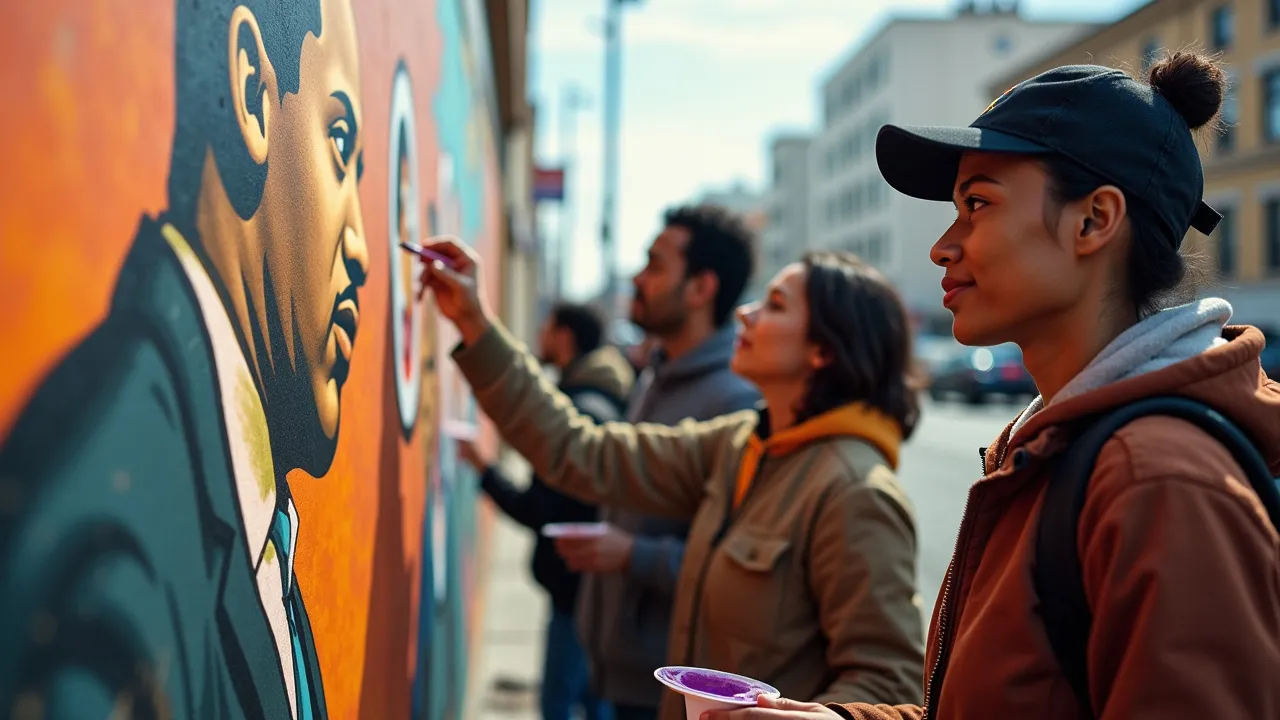
Martin Luther King Jr. Day, observed on the third Monday of January, honors the legacy of the civil rights leader. It is a federal holiday dedicated to service and reflection on racial equality.
Historical Origins & Evolutionary Journey
Martin Luther King Jr. Day is a United States federal holiday marking the birthday of Dr. Martin Luther King Jr. It is observed on the third Monday of January each year, which is close to his actual birthday on January 15. The holiday was the result of a long campaign by activists, lawmakers, and citizens who saw the importance of honoring a man who fought for justice through nonviolent resistance.
The Foundational Catalyst
The push for a national holiday began shortly after King's assassination on April 4, 1968. Within days, Representative John Conyers introduced legislation to create a federal holiday, but it faced significant opposition. For years, the bill stalled in Congress. However, public support grew, fueled by grassroots efforts, including a petition drive that collected six million signatures. Musician Stevie Wonder released the single "Happy Birthday" in 1980 to rally support, and Coretta Scott King tirelessly lobbied lawmakers.
The Legislative Adoption
The bill finally passed in 1983, signed into law by President Ronald Reagan. The first official observance was on January 20, 1986. Initially, some states resisted celebrating the holiday, but by 2000, all 50 states officially recognized it. The holiday was initially met with controversy, with some arguing it was too costly or that King did not deserve such an honor. Over time, it became a day of reflection and service.
Modern Global Legacy
Today, Martin Luther King Jr. Day is not only a U.S. holiday but also celebrated in various forms worldwide. It has inspired similar observances in countries like Canada and Japan. The holiday is marked by community service, educational events, and marches. In 1994, Congress designated the holiday as a national day of service, encouraging Americans to volunteer in their communities. This aspect has grown significantly, with millions participating in service projects each year.
How to Celebrate Martin Luther King Jr. Day
Celebrating Martin Luther King Jr. Day goes beyond just a day off from work or school. It is a time to honor King's legacy through service and education. Here are actionable ways individuals, schools, and organizations can observe the day meaningfully.
Individual Actions
- Volunteer: Participate in a community service project. The official MLK Day of Service website lists opportunities nationwide.
- Educate Yourself: Read King's speeches, especially the "I Have a Dream" and "Letter from Birmingham Jail." Watch documentaries about the civil rights movement.
- Attend Events: Many cities host parades, lectures, and interfaith services. Check local listings.
School and Classroom Ideas
- Service Projects: Organize a school-wide food or clothing drive. Older students can tutor younger ones.
- Creative Assignments: Have students write essays or create art reflecting King's themes of justice and equality.
- Guest Speakers: Invite local activists or historians to speak about the civil rights movement.
Organizational Celebrations
- Corporate Volunteer Day: Encourage employees to take paid time off to volunteer.
- Diversity Workshops: Host workshops on inclusion and equity.
- Community Partnerships: Partner with local nonprofits to amplify impact.
Internationally, observances vary. In Canada, some provinces mark Martin Luther King Jr. Day alongside their own heritage events. In the Netherlands, a special lecture series is held. These traditions emphasize King's universal message of peace.
Core Themes of the Civil Rights Movement
Martin Luther King Jr. Day is deeply rooted in the core themes of the civil rights movement. Understanding these themes helps contextualize the holiday's significance.
Nonviolent Resistance
King was heavily influenced by Mahatma Gandhi's philosophy of nonviolence. He advocated for peaceful protests, sit-ins, and marches to challenge segregation and injustice. The success of the Montgomery Bus Boycott (1955-1956) demonstrated the power of nonviolent collective action.
Racial Equality
The fight for racial equality was central to King's work. From the desegregation of schools (Brown v. Board of Education) to the Voting Rights Act of 1965, King pushed for legal and social changes that would guarantee equal rights for African Americans.
Economic Justice
Later in his life, King focused on economic inequality through the Poor People's Campaign. He argued that true freedom required economic empowerment, advocating for jobs and fair wages for all.
Global Impact of Martin Luther King Jr.
Martin Luther King Jr.'s influence extends far beyond the United States. His message of nonviolent resistance has inspired movements worldwide.
South Africa
Nelson Mandela and the anti-apartheid movement drew heavily from King's teachings. Mandela often cited King as a major influence.
India
King's visit to India in 1959 deepened his commitment to nonviolence. His legacy is honored there through educational programs and memorials.
Europe and Asia
King's writings have been translated into dozens of languages. In countries like Germany and Japan, his speeches are studied in schools, and annual events commemorate his birthday.
Modern Observances and Traditions
Today, Martin Luther King Jr. Day is marked by a variety of traditions that evolve each year.
The National Day of Service
Since 1994, the holiday has been designated as a day of service. The Corporation for National and Community Service coordinates thousands of projects. In 2023, over 1 million volunteers participated.
Parades and Marches
Major cities like Atlanta, Washington D.C., and Los Angeles hold parades. Many include marching bands, floats, and community groups. The King Center in Atlanta hosts a commemorative service.
Educational Events
Museums and libraries offer special exhibits. The Smithsonian's National Museum of African American History and Culture holds lectures and film screenings.
Controversies and Criticisms
Despite widespread acceptance, Martin Luther King Jr. Day has faced controversies.
Resistance to Adoption
Some states initially refused to recognize the holiday, combining it with other observances (e.g., Lee-Jackson Day in Virginia). Legal battles continued until 2000 when South Carolina became the last state to make it a paid holiday for state employees.
Commercialization
Critics argue that the holiday has become too commercialized, with retailers offering "MLK Day sales." This detracts from the day's intended purpose of reflection and service.
Selective Remembering
Some activists feel that King's more radical views (e.g., his opposition to the Vietnam War and his focus on economic justice) are often downplayed in public commemorations, sanitizing his legacy.
Historical Timeline
Rosa Parks is arrested, sparking the Montgomery Bus Boycott. Martin Luther King Jr. emerges as a leader of the boycott.
King delivers his 'I Have a Dream' speech during the March on Washington for Jobs and Freedom.
King wins the Nobel Peace Prize for his nonviolent struggle against racial inequality.
King is assassinated on April 4 in Memphis, Tennessee. Rep. John Conyers introduces legislation for a federal holiday.
President Ronald Reagan signs the bill into law, establishing Martin Luther King Jr. Day as a federal holiday.
First official observance of Martin Luther King Jr. Day on January 20.
Congress passes the King Holiday and Service Act, designating the day as a national day of service.
South Carolina becomes the last state to recognize MLK Day as a paid state holiday.