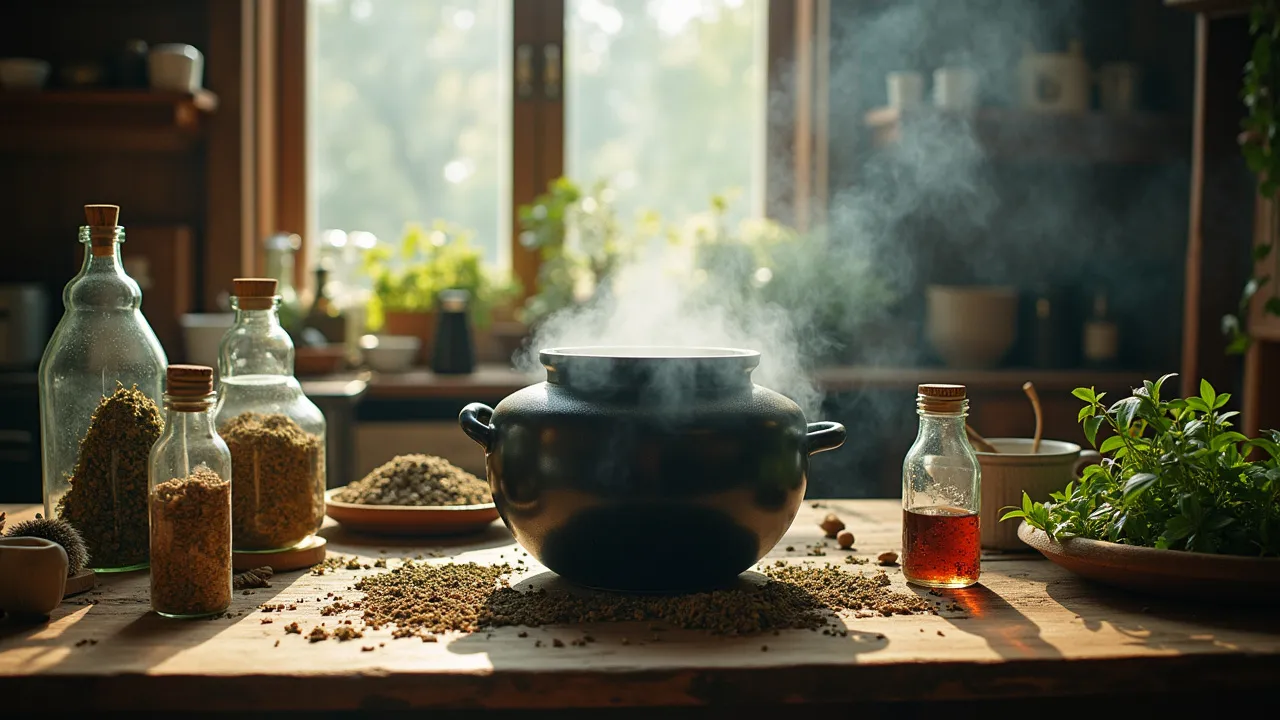
Celebrate Brew a Potion Day on January 19th by exploring the art and science of potion-making. From ancient alchemy to modern cocktails, discover traditions and recipes that blend creativity and chemistry.
The Historical Origins & Evolutionary Journey
Brew a Potion Day, observed annually on January 19th, was founded in 2015 by Dr. Alistair Brimstone, a professor of historical chemistry at the University of Oxford. Dr. Brimstone aimed to bridge the gap between ancient alchemical practices and modern scientific curiosity, encouraging people to explore the transformative power of mixing ingredients.
The Foundational Catalyst
The idea originated during a lecture on medieval pharmacology when Brimstone noticed students' fascination with the concept of potions. He proposed a day dedicated to hands-on experimentation, blending folklore with empirical science. The first celebration involved a small group of students brewing herbal remedies and symbolic elixirs.
The Legislative/Official Adoption
In 2016, the observance gained official recognition from the International Society for the History of Alchemy (ISHA). Subsequent years saw adoption by schools, museums, and hobbyist groups worldwide. By 2018, Brew a Potion Day was listed in Chase's Calendar of Events, solidifying its place as a quirky yet educational holiday.
Modern Global Legacy
Today, the day is celebrated across 40+ countries, with events ranging from chemistry demonstrations in classrooms to cocktail crafting competitions in bars. It has evolved to encompass not only historical potions but also modern interpretations like herbal teas, essential oil blends, and even fictional potions from popular culture.
How to Celebrate Brew a Potion Day
Whether you're a seasoned alchemist or a curious novice, Brew a Potion Day offers endless possibilities for creative and educational activities. Below are structured guides for individuals, schools, and organizations.
For Individuals and Families
- Research Historical Potions: Explore ancient recipes like theriac (a medieval antidote) or love potions from folklore. Use reliable sources to understand their ingredients and purposes.
- Create a Herbal Infusion: Steep herbs like chamomile, lavender, or peppermint in hot water to make a soothing tea. Add honey or lemon for flavor.
- Mix a Mocktail Elixir: Combine fruit juices, sparkling water, and edible glitter for a visually stunning, alcohol-free potion.
- Document Your Recipe: Write down your ingredients, measurements, and observations in a potion journal. Note any chemical reactions or changes in color and aroma.
For Schools and Educational Groups
- Host a Potion Science Fair: Set up stations where students can perform simple experiments, such as creating pH indicators from red cabbage or making slime as a 'potion of viscosity'.
- Historical Reenactments: Dress up as medieval apothecaries or alchemists and demonstrate mortar-and-pestle grinding. Discuss the role of potions in ancient medicine.
- Critical Thinking Workshop: Analyze historical potion recipes and separate fact from superstition. Discuss how modern pharmacology evolved from these early attempts.
For Organizations and Corporate Teams
- Team-Building Potion Challenge: Divide teams and give each a mystery ingredient list. Teams must brew a potion based on ancient texts and present its 'magical' properties.
- Charity Elixir Sale: Craft non-alcoholic potions (e.g., themed mocktails) and sell them to raise funds for STEM education.
- Guest Lecture Series: Invite historians or chemists to speak about the intersection of alchemy and modern science.
Remember to prioritize safety: clearly label ingredients, avoid toxic substances, and supervise children. Celebrate responsibly and share your creations on social media using #BrewAPotionDay.
Cultural Variations & Regional Traditions
Brew a Potion Day is primarily observed on January 19th globally, but some regions have adapted unique customs that reflect their historical and cultural relationship with potion-making.
Europe: Alchemical Roots
In Germany and Switzerland, the day often includes visits to alchemy museums and workshops on creating 'philosopher's stone' simulations using chemical reactions. In the UK, many pubs offer special 'potion pints'—herbal-infused beers.
Asia: Herbal and Medicinal Potions
In China and Japan, the focus shifts to traditional medicine. Participants brew herbal concoctions based on Traditional Chinese Medicine (TCM) principles, such as ginger tea for digestion or ginseng for energy. Temples may host tea ceremonies.
North America: Pop Culture and Fantasy
In the US and Canada, the day is heavily influenced by fantasy literature and films. Themed parties feature potions from Harry Potter (e.g., Polyjuice mocktails) or Dungeons & Dragons. Science centers organize 'potion labs' where kids can make bubbling concoctions with dry ice.
Latin America: Ritual and Folklore
In Mexico and Peru, the day blends indigenous traditions with colonial influences. Participants prepare 'aguas frescas' (fruit-infused waters) and herbal remedies like mate de coca. Some incorporate spiritual elements, such as blessings from curanderos.
Despite these variations, the core spirit of experimentation and learning remains universal.
The Science Behind Potion-Making
Potion-making is rooted in chemistry, biology, and pharmacology. Understanding the science enhances appreciation for both historical and modern brews.
Chemical Reactions in Potions
- Color Changes: Anthocyanins in red cabbage act as pH indicators, turning red in acids and green in bases. Potions like 'color-changing elixirs' exploit this.
- Bubbling and Fizz: Reactions between baking soda (base) and vinegar (acid) produce carbon dioxide. Many 'magic potions' use this for effervescence.
- Emulsions: Mixing oil and water with an emulsifier (e.g., egg yolk) creates creamy potions, used in medieval cosmetics and modern lotions.
Pharmacology and Herbalism
Many traditional potions contained active compounds that had real medicinal effects. Willow bark (salicin) is a precursor to aspirin. Foxglove (digitalis) is used in heart medication. Brew a Potion Day encourages responsible exploration of these natural remedies.
Safety and Ethics
Modern celebrations emphasize safety: use only food-grade or cosmetic-grade ingredients, label everything clearly, and never ingest unknown substances. Teach participants to distinguish between edible and toxic plants.
By linking ancient practices to modern science, the day promotes critical thinking and scientific literacy.
Impact on Education and Community Engagement
Brew a Potion Day has become a valuable tool for informal science education and community building.
STEM Education Outreach
Schools use the day to make chemistry fun and accessible. Hands-on activities like making 'lava lamps' (oil, water, food coloring, Alka-Seltzer) teach density and chemical reactions. Surveys show increased student interest in chemistry after participation.
Community Bonding
Local libraries and community centers host potion-making workshops that bring together people of all ages. These events often include storytelling about historical potions, fostering intergenerational connections.
Economic Boost for Small Businesses
Brew a Potion Day benefits local apothecaries, herb shops, and cocktail bars. Many offer special kits or discounts, driving sales and promoting artisanal products.
Global Participation
Social media amplifies the day's reach, with thousands of posts showcasing creative potions. Hashtags like #PotionDay and #AlchemyAtHome trend on January 19th, inspiring a worldwide community of amateur alchemists.
Future Directions & Evolving Traditions
As Brew a Potion Day grows, it continues to evolve with technology and societal trends.
Digital Potion-Making
Virtual reality (VR) and augmented reality (AR) apps now allow users to simulate potion-making in digital environments. Some museums offer AR scavenger hunts that blend historical recipes with interactive elements.
Sustainability and Ethical Sourcing
Recent celebrations emphasize using locally sourced, sustainable ingredients. Participants are encouraged to forage responsibly or grow their own herbs.
Interfaith and Multicultural Dialogues
The day has been adopted by interfaith groups to explore the role of ritual drinks (like sacramental wine or herbal teas) in spirituality. This promotes understanding across cultures.
Expansion of Official Recognition
Efforts are underway to have Brew a Potion Day recognized by UNESCO as a day of intangible cultural heritage, highlighting its role in preserving traditional knowledge.
With each passing year, the day strengthens its position as a celebration of human curiosity and the enduring magic of mixing ingredients.
Historical Timeline
Dr. Alistair Brimstone proposes Brew a Potion Day at the University of Oxford. First informal celebration held on January 19 with a small group of students.
International Society for the History of Alchemy (ISHA) officially endorses the day. Schools in the UK and US begin participating.
First public event at the Oxford Museum of the History of Science, featuring a potion-making workshop and alchemy demonstration.
Brew a Potion Day listed in Chase's Calendar of Events. Celebrations spread to 15 countries including Canada, Australia, and Germany.
Social media campaign #BrewAPotionDay trends on Twitter. Over 10,000 posts shared globally. Cocktail bars begin offering special potion-themed menus.
Virtual celebrations emerge due to pandemic. Online tutorials and DIY kits distributed. The day reaches 30 countries.
First Potion Day grants awarded to schools for STEM outreach. UNESCO committee expresses interest in the day's cultural value.
Celebration in 40+ countries. AR app 'Potion Lab' launched, allowing users to mix virtual ingredients. Environmental focus introduced with 'green potions' made from recycled materials.
Dr. Brimstone retires but remains honorary chair. ISHA launches official educational curriculum for potion-making in history and science classes.