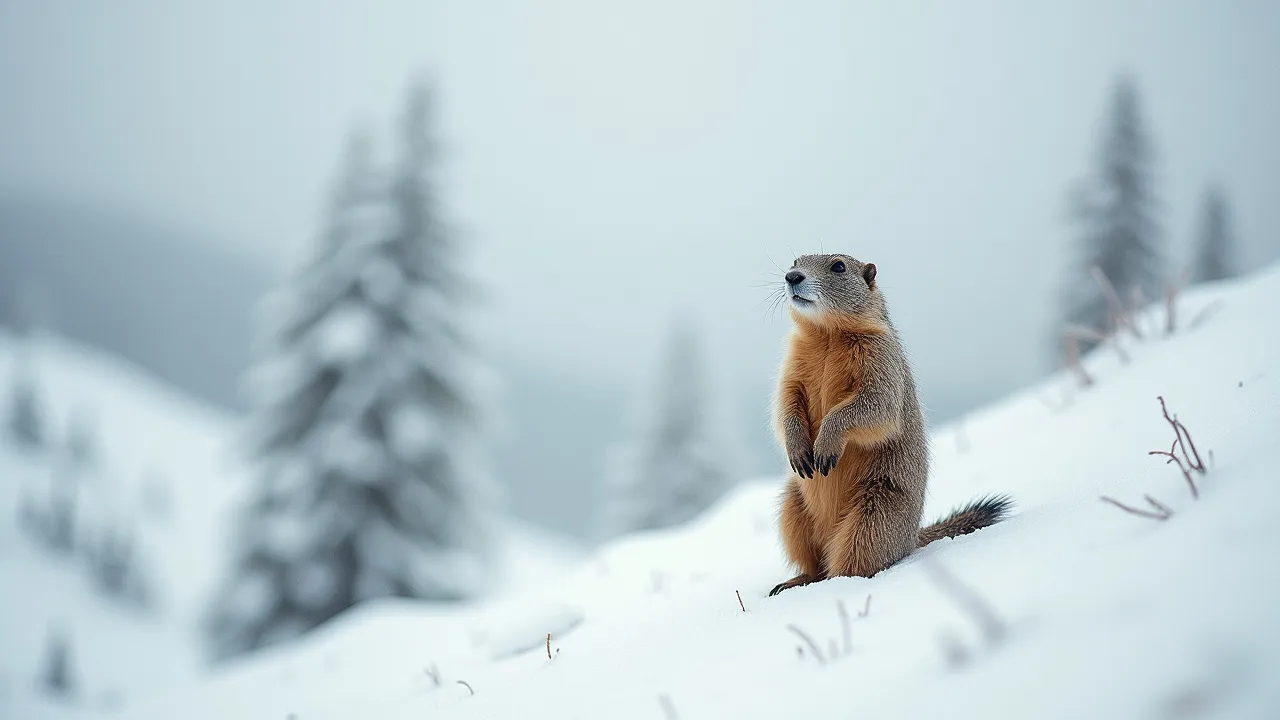
Marmot Day, celebrated on February 2nd in Alaska, honors marmots as a local alternative to Groundhog Day. It combines wildlife appreciation, winter folklore, and community events.
The Historical Origins & Evolutionary Journey
The Foundational Catalyst
Marmot Day traces its roots to the traditional Groundhog Day, a Pennsylvania Dutch superstition that if a groundhog emerges from its burrow on February 2nd and sees its shadow, winter will continue; if not, spring will arrive early. This folk tradition was formalized at Punxsutawney, Pennsylvania in 1887. However, Alaska has no native groundhogs, but is home to the hoary marmot and the Alaska marmot. In 2009, seeking a more locally relevant observance, the Alaska Legislature passed House Bill 21, officially designating February 2nd as Marmot Day.
The Legislative/Official Adoption
Governor Sarah Palin signed the bill into law on April 1, 2009, making Alaska the first state to officially replace Groundhog Day with a marmot-centric holiday. The law encourages Alaskans to observe the day with appropriate ceremonies and activities that "promote awareness of the marmot and its natural history." The holiday was intentionally placed on the same date as Groundhog Day to offer a regional alternative while preserving the winter-prediction tradition.
Modern Global Legacy
While Marmot Day remains mainly observed in Alaska, its spirit has spread. Wildlife conservation groups have adopted the day to highlight marmot habitats and climate change impacts on alpine ecosystems. In parts of Canada and Europe, where marmots (like the alpine marmot) are native, February 2nd has seen growing informal celebrations blending folklore with environmental education.
How to Celebrate Marmot Day
Interactive Celebrations for Individuals
Marmot Day can be celebrated by engaging with local wildlife and nature. Here are recommended activities:
- Marmot Watching: Visit known marmot colonies in parks or mountains. Bring binoculars and maintain a respectful distance.
- Shadow Prediction Game: Similar to Groundhog Day, observe a marmot's behavior at dawn. If it appears to see its shadow, "predict" more winter.
- Create Marmot Crafts: Make marmot masks, draw or paint marmot scenes, especially for children.
School and Community Programs
Schools can integrate Marmot Day into lessons on Alaska's wildlife, hibernation, and winter ecology. Suggested activities include:
- Science Lesson: Study marmot physiology and hibernation patterns.
- Art Contest: Host a marmot-themed drawing competition.
- Storytelling Hour: Read Alaskan folktales or books about marmots.
Corporate and Organizational Participation
Businesses can show support by offering discounts on nature outings or hosting lunchtime talks. Wildlife nonprofits can use the day for fundraising campaigns aimed at protecting marmot habitats.
Cultural Significance and Folklore
Marmots in Native Alaskan Traditions
Indigenous peoples of Alaska, such as the Dena'ina and Koyukon, have long incorporated marmots into their oral traditions. Marmots are often depicted as clever creatures that outsmart predators. Their fur has been used in traditional clothing and crafts. Marmot Day provides a platform to honor these cultural connections.
Comparison with Groundhog Day
While Groundhog Day is rooted in Pennsylvania Dutch folklore, Marmot Day adapts the same concept to Alaskan wildlife. The marmot, unlike the groundhog, lives in mountainous regions and hibernates for up to nine months. This ecological difference underscores the unique relationship Alaskans have with their environment.
Ecological and Environmental Relevance
Marmots are keystone species in alpine ecosystems. Their burrowing aerates soil and creates habitats for other animals. Marmot Day is an opportunity to discuss climate change impacts: warming temperatures have altered hibernation cycles and forced marmots to higher elevations. Conservationists use the day to encourage citizen science projects, such as reporting marmot sightings and monitoring snowpack changes.
Marmot Day in Popular Media and Tourism
Since its inception, Marmot Day has been covered by local Alaskan news outlets and occasionally national media. Travel guides often list it as a quirky Alaskan holiday. In 2011, the Anchorage Museum hosted a family-friendly "Marmot Day" event featuring live marmots and educational stations. Tourism boards have promoted the day to attract winter visitors looking for a unique cultural experience.
Future Outlook and Global Adaptations
As environmental awareness grows, Marmot Day has the potential to expand beyond Alaska. Some Canadian provinces (Yukon, British Columbia) have informally adopted similar observances. Switzerland, home to the alpine marmot, has shown interest in a "Marmot Day" to boost ecotourism. Organizers hope to standardize the day with an international focus on marmot conservation and winter ecology.
Historical Timeline
First official Groundhog Day celebration at Gobbler's Knob, Punxsutawney, Pennsylvania, establishing the February 2nd tradition.
Alaska State Representative Bob Lynn introduces House Bill 21 to create Marmot Day as an alternative to Groundhog Day.
Governor Sarah Palin signs HB 21 into law, officially establishing February 2nd as Marmot Day in Alaska.
First official Marmot Day celebrations occur across Alaska, including events in Anchorage and Fairbanks featuring marmot education programs.
The Alaska Department of Fish and Game releases educational resources for schools to observe Marmot Day.
Non-profit organizations begin using Marmot Day for fundraising drives for marmot habitat conservation in Denali National Park.
Social media campaigns under #MarmotDay gain traction, with global participation sharing marmot photos and facts.
Several Canadian wildlife groups coordinate 'Marmot Day' events in Yukon and British Columbia, using the date to promote awareness of the Vancouver Island marmot (endangered species).