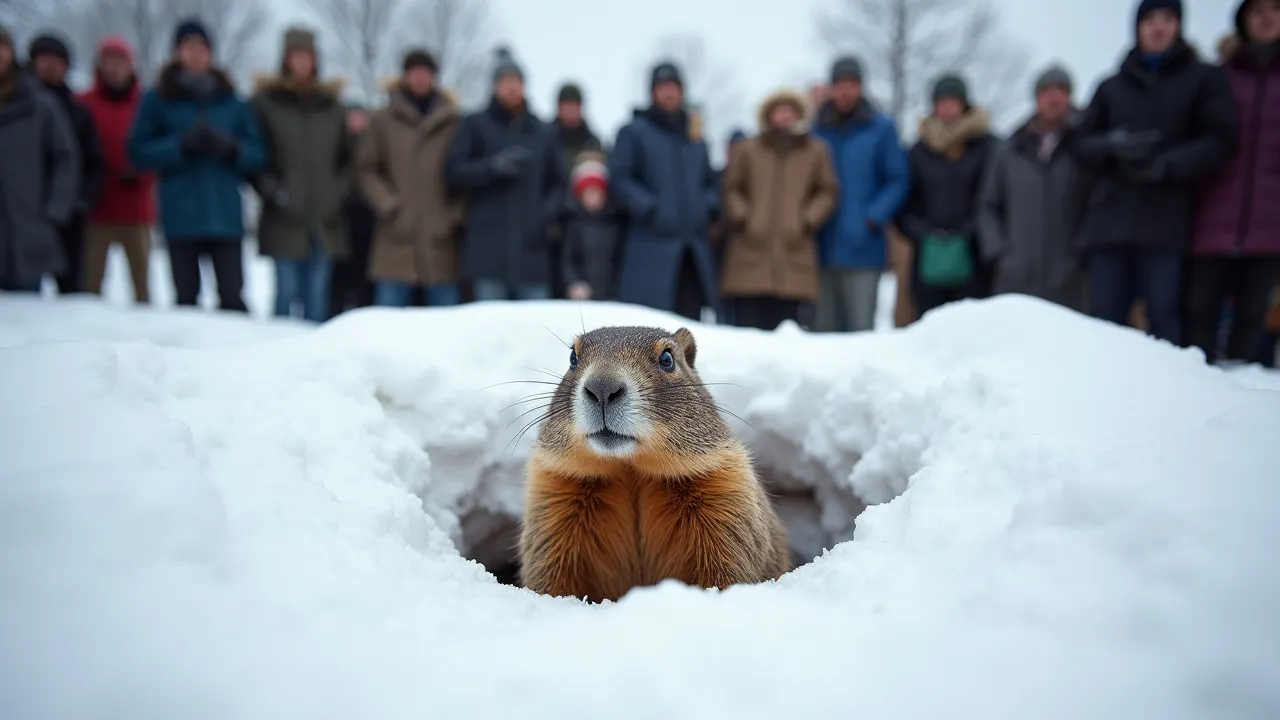
On February 2nd, Punxsutawney Phil emerges to predict the weather. Discover the history, traditions, and cultural impact of this unique American holiday steeped in folklore and community spirit.
The Historical Origins & Evolutionary Journey
Groundhog Day, observed annually on February 2nd, has roots that stretch back centuries to ancient European weather lore. The tradition combines Christian Candlemas with pagan seasonal festivals, and was brought to North America by German settlers known as the Pennsylvania Dutch.
The Foundational Catalyst
The earliest known mention of a groundhog predicting the weather comes from an 1841 diary entry by storekeeper James Morris of Morgantown, Pennsylvania. He recorded that German settlers often looked for the groundhog's shadow on Candlemas Day. The tradition likely evolved from the German custom of using a badger or hedgehog as a weather prognosticator. In the Old World, Candlemas (February 2nd) marked the midpoint between the winter solstice and the spring equinox, and clear skies on that day supposedly meant a longer winter.
The Official Adoption
The first official Groundhog Day celebration in Punxsutawney, Pennsylvania, took place on February 2, 1887. A group of local businessmen and groundhog hunters, known as the Punxsutawney Groundhog Club, declared that a groundhog named Punxsutawney Phil would be the official weather prognosticator. They gathered at Gobbler's Knob, a hill outside town, and Phil's prediction was recorded. The event gained national attention in the early 20th century, and by the 1960s it was a media phenomenon.
Modern Global Legacy
Today, the Punxsutawney celebration draws tens of thousands of visitors annually, and the Inner Circle (the club's top members) claim to speak "Groundhogese" to interpret Phil's predictions. The holiday has spread to other countries, including Canada (with Wiarton Willie) and the United Kingdom (with a hedgehog, though rarely). The 1993 film Groundhog Day starring Bill Murray cemented the day in popular culture, making it synonymous with living the same day over again.
How to Celebrate Groundhog Day
Celebrating Groundhog Day can range from attending the main event in Punxsutawney to hosting your own backyard ritual. Here is a definitive guide for individuals, families, and organizations worldwide.
For Individuals and Families
- Attend a Local Event: Many towns across the U.S. and Canada host groundhog celebrations. Check community calendars for appearances by local rodents.
- Watch Live Streams: The Punxsutawney Groundhog Club offers a live broadcast from Gobbler's Knob starting at 6 a.m. EST on February 2nd.
- Create Your Own Shadow Search: If you have a pet (especially a guinea pig or hamster), take it outside at dawn. Observe its reaction and make a playful prediction.
For Schools and Educators
- Lesson Plans: Teach the origins of Candlemas, hibernation, and weather folklore. Use a groundhog puppet for dramatic predictions.
- Shadow Experiments: Have students trace shadows at different times of day and discuss how the sun's position changes.
- Art Projects: Make groundhog masks or write poems about whether winter will end soon.
For Organizations and Corporate Groups
Host a themed breakfast or brunch with groundhog-shaped pancakes. Organize a "shadow contest" where employees guess whether Phil will see his shadow. Use the day as a fun morale booster with prizes for the best predictions. Many businesses also tie Groundhog Day to spring product launches.
International Variations
In Canada, Wiarton Willie (an albino groundhog) makes his prediction in Ontario. In Nova Scotia, Shubenacadie Sam takes the stage. In Germany, the tradition uses a badger, and in parts of France, a marmot is the prognosticator. Some cultures use a bear's emergence from hibernation as a sign.
Cultural Impact & Media Phenomenon
Groundhog Day has transcended its folkloric roots to become a significant cultural touchstone. The 1993 film Groundhog Day directed by Harold Ramis and starring Bill Murray is the most famous depiction. Its plot—a weatherman trapped in a time loop—turned the holiday into a metaphor for monotony, redemption, and self-improvement. The phrase "Groundhog Day" now appears in everyday language to describe any repetitive situation.
Television and Merchandise
Network news programs often broadcast live from Punxsutawney, and the event features weathermen in top hats. Merchandise includes stuffed groundhogs, T-shirts, and postcards. The Inner Circle's groundhog suit are iconic.
Criticism and Accuracy
Punxsutawney Phil's predictions have been debunked by statisticians as no better than chance (around 39% accuracy). Yet the event persists as a charming winter tradition rather than a serious scientific forecast. This highlights the human desire for seasonal rituals and communal storytelling.
The Science of Hibernation & Shadow Lore
Groundhogs (Marmota monax) are true hibernators. They typically emerge from burrows in early February to begin mating season. The "shadow" belief likely stems from observing whether the day is sunny (shadow visible) or cloudy (no shadow). A sunny day on February 2nd was thought to mean the groundhog would be frightened back into its burrow, predicting six more weeks of winter.
Biological Reality
In reality, groundhogs do not predict weather; their emergence is driven by temperature, day length, and reproductive cycles. The tradition, however, persists because it provides a lighthearted focal point during the dreary winter months.
Winter Solstice to Spring Equinox: February 2nd falls exactly halfway, making it a natural marker in many cultures.
Astrological Significance: In some systems, this date aligns with the midpoint of winter.
Groundhog Day Around the World
While Groundhog Day is quintessentially American, similar weather-prognostication traditions exist globally. Many are tied to Candlemas, a Christian feast day on February 2nd that commemorates the presentation of Jesus at the Temple. Old weather lore says: "If Candlemas be fair and bright, winter will have another flight; if Candlemas brings clouds and rain, winter will not come again."
Regional Variations
- United States: Punxsutawney Phil (PA), Buckeye Chuck (OH), General Beauregard Lee (GA), and others.
- Canada: Wiarton Willie (Ontario), Shubenacadie Sam (Nova Scotia), and Balzac Billy (Alberta).
- Germany: The badger (Dachs) is the traditional animal, but in some regions a hedgehog is used.
- United Kingdom: A hedgehog officially predicts the weather at a small ceremony in the Cotswolds.
- France: The marmot (marmotte) is celebrated in the Alpine region.
Each celebration adds local flavor but shares the core idea: an animal's behavior on February 2nd foretells the remaining winter severity.
Economic Impact & Tourism
The Groundhog Day celebration in Punxsutawney has significant economic impact. The event draws over 30,000 visitors annually, filling hotels, restaurants, and shops. The Punxsutawney Groundhog Club estimates millions of dollars in media exposure. Merchandise sales, food concessions, and special events generate substantial revenue for this small town of about 6,000 residents.
Broader Economic Ripple
Other towns with their own prognosticators also see tourism spikes. The holiday has become a marketing tool for businesses: retailers offer Groundhog Day sales, and social media campaigns leverage the topic for engagement. The concept of a "Groundhog Day" time loop has even been used in advertising to promote products that break monotony.
Historical Timeline
Earliest known written reference to Groundhog Day in an American diary by James Morris of Morgantown, Pennsylvania.
First official Groundhog Day celebration in Punxsutawney, Pennsylvania; Punxsutawney Phil becomes the official weather prognosticator.
The Punxsutawney Groundhog Club forms the Inner Circle, who wear top hats and claim to speak Groundhogese.
Release of the film 'Groundhog Day' starring Bill Murray, turning the holiday into a global pop culture phenomenon.
Canada's Wiarton Willie makes international headlines after a tragic death, leading to the adoption of a new groundhog.
Groundhog Day events expand across North America, with live webcasts and social media coverage.
Punxsutawney Phil predicts an early spring, but a blizzard hits the Northeast shortly after, sparking humor about his accuracy.
The tradition continues, with over 30,000 attendees at Gobbler's Knob, and the event streamed globally online.