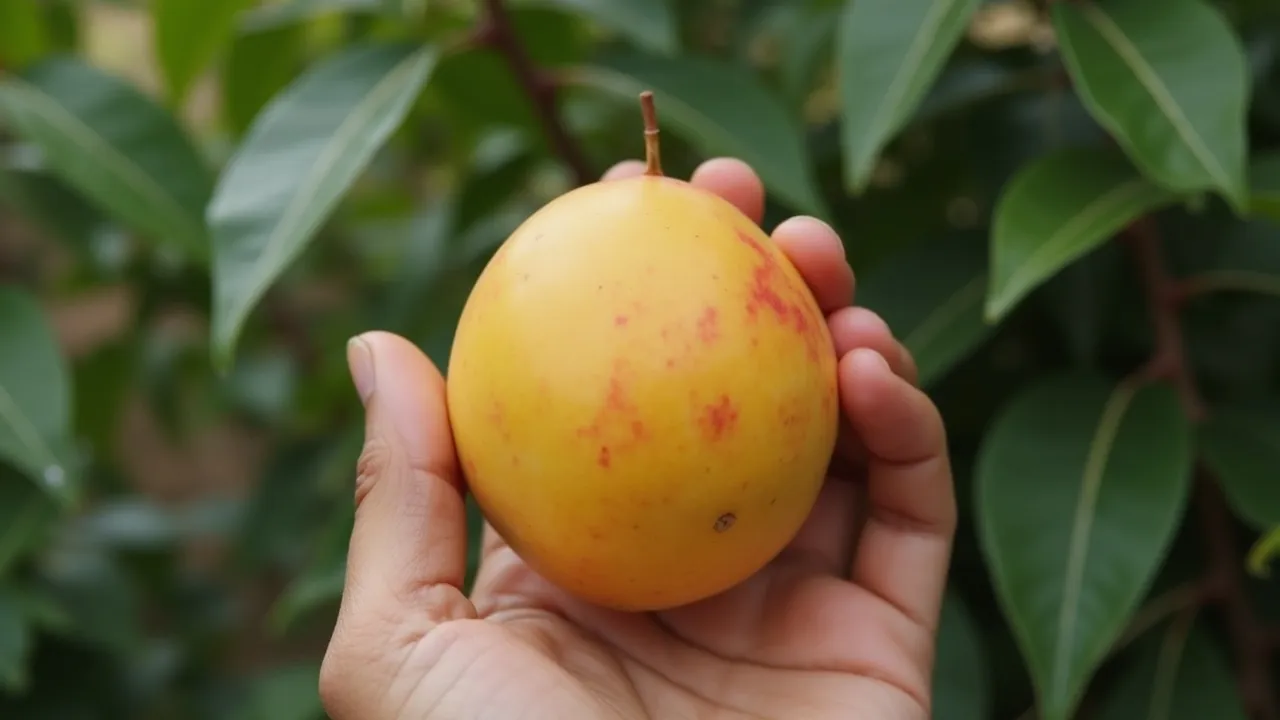
Celebrate the king of fruits on July 22nd! Discover the rich history, nutritional benefits, and global traditions of mangoes. From ancient origins to modern festivities, learn how to enjoy and honor this beloved tropical fruit.
The Historical Origins & Evolutionary Journey
Mango Day, observed annually on July 22nd, is a tribute to one of the world's most cherished fruits. The mango (Mangifera indica) has a storied past that spans millennia, deep cultural roots, and a modern global presence that fuels economies and delights palates.
Ancient Origins in South Asia
The mango's journey begins in the tropical forests of South Asia, particularly in present-day India, Myanmar, and Bangladesh. Archaeological evidence suggests that mango cultivation dates back over 4,000 years, with the fruit deeply embedded in Hindu mythology, Buddhist traditions, and ancient texts. The mango appears in the ancient epic Ramayana and the Mahabharata, symbolizing love, prosperity, and fertility. By the 4th century BCE, the Greek historian Megasthenes noted the mango in his writings, and Buddhist monks carried the fruit to Southeast Asia.
Spread Across the Globe
Portuguese explorers introduced mangoes to Africa and Brazil in the 16th century, while Spanish galleons carried them to the Philippines and Central America. By the 18th century, mangoes reached the Caribbean, and in the 19th century, they were introduced to Florida and California in the United States. The fruit's adaptability led to the development of hundreds of varieties, each with unique flavor profiles, textures, and colors. Today, mangoes are grown in over 100 countries, with India as the top producer, followed by China, Thailand, and Indonesia.
Official Recognition as National Mango Day
The establishment of a dedicated day for mangoes is relatively recent. In the United States, the National Mango Board, an agricultural promotion group, spearheaded the creation of National Mango Day on July 22 to celebrate the fruit's peak season and promote its consumption. The first official celebration occurred in 2017, and the date quickly gained traction through social media campaigns, recipe contests, and community events. While primarily a US observance, mango enthusiasts worldwide have adopted July 22 as a day to honor the fruit.
How to Celebrate Mango Day
Mango Day offers endless opportunities for individuals, families, schools, and organizations to revel in the fruit's glory. Below are structured guides for celebrating authentically and joyously.
For Individuals & Families
- Mango Tasting Party: Gather several varieties (e.g., Ataulfo, Kent, Haden, Tommy Atkins) and conduct a blind taste test. Pair with notes on sweetness, fiber content, and acidity.
- Cook a Mango Feast: Prepare a full menu featuring mango in every course: mango lassi (starter), mango salsa (appetizer), mango chicken curry (main), mango sticky rice (dessert), and mango margarita (drink).
- DIY Mango Skincare: Use mango pulp, honey, and yogurt to create face masks or body scrubs. Mangoes are rich in vitamins A and C, promoting healthy skin.
- Plant a Mango Seed: Grow your own mango tree from a seed. While it takes years to fruit, the process is educational and rewarding.
For Schools & Educational Institutions
- Mango Geography Lesson: Map the global journey of mangoes, highlighting producing countries and trade routes.
- Mango Art Contest: Encourage students to create paintings, sculptures, or digital art inspired by mangoes.
- Nutrition Workshop: Discuss the health benefits of mangoes, including vitamin C, fiber, and antioxidants. Include a smoothie-making demonstration.
For Businesses & Organizations
- Office Potluck: Host a mango-themed potluck where employees bring dishes featuring mangoes. Award prizes for creativity.
- Social Media Campaign: Launch a hashtag like #MangoDay2024, encouraging followers to share photos of mango recipes or mango trees. Offer discounts on mango products.
- Charity Drive: Partner with local food banks to donate fresh mangoes. Mangoes are perishable, so coordinate logistics carefully.
Global Traditions
While July 22 is the US official date, mango festivals occur year-round in mango-growing regions:
- India: The International Mango Festival in Delhi (July) showcases over 1,000 varieties, with cultural performances and tastings.
- Thailand: The Mango & Sticky Rice Festival in Bangkok (April) celebrates the iconic dessert.
- Philippines: The Guimaras Mango Festival (May) honors the island's sweet mangoes with street dancing and food fairs.
- Brazil: The Mango Festival in Petrolina (November) highlights the fruit's economic importance.
Nutritional Profile and Health Benefits
Mangoes are not only delicious but also packed with nutrients that support overall health. A single cup of mango (165g) provides:
- Vitamin C: 67% of the daily value (DV) - boosts immunity and collagen production.
- Vitamin A: 10% DV - essential for vision and skin health.
- Folate: 18% DV - important for cell division and DNA synthesis.
- Fiber: 3g - aids digestion and promotes satiety.
- Copper: 20% DV - supports red blood cell formation.
Health Benefits
- Digestive Health: Mangoes contain digestive enzymes like amylases that break down complex carbs. The fiber helps prevent constipation.
- Immune Support: High levels of beta-carotene and vitamin C strengthen the immune system.
- Eye Health: The antioxidants lutein and zeaxanthin protect the eyes from blue light damage and age-related macular degeneration.
- Heart Health: Magnesium, potassium, and mangiferin (a polyphenol) help lower blood pressure and reduce inflammation.
- Skin & Hair: Vitamin C aids collagen production, while vitamin A supports sebum production for healthy hair.
Despite their natural sugar content, mangoes have a low glycemic index (51) and can be included in a balanced diet. However, individuals with diabetes should monitor portion sizes.
Culinary Uses Around the World
Mangoes are incredibly versatile in the kitchen, lending themselves to both sweet and savory dishes across cultures. Here are some iconic preparations:
Asia
- India: Aamras (mango pulp), mango lassi (yogurt drink), mango pickle (achaar), and mango kulfi (ice cream). Raw mango is used in chutneys and curries.
- Thailand: Mango sticky rice (khao niew mamuang) with coconut milk, green mango salad (som tum mamuang), and mango with chili salt.
- Philippines: Dried mangoes, mango float (dessert with graham crackers and cream), and mango juice.
Latin America
- Mexico: Mango with chili and lime (mango con chile y limón), mango salsa, and mango paletas (popsicles).
- Brazil: Mango smoothies (vitamina de manga) and mango mousse.
Africa & Middle East
- Nigeria: Mango juice and dried mango snacks.
- South Africa: Mango atchar (spicy pickle) and mango chutney.
- Iran: Mango with orange blossoms and rosewater.
Western Innovations
- United States: Mango BBQ sauce, mango salsa, mango sorbet, and mango-infused cocktails.
- Europe: Mango in fruit salads and desserts like mango panna cotta.
The fruit's ability to pair with spicy, sour, and sweet ingredients makes it a global culinary star.
Economic Impact of Mango Cultivation
Mangoes are a significant economic driver in many developing countries. According to the Food and Agriculture Organization (FAO), global mango production exceeded 55 million metric tons in 2022, with India accounting for roughly 40% of the total. The industry provides livelihoods for millions of small-scale farmers, pickers, packers, and exporters.
Major Producers
- India: Over 20 million tons annually, with major varieties like Alphonso, Kesar, and Dasheri.
- China: ~4 million tons, mainly for domestic consumption.
- Thailand: ~3.5 million tons, focusing on export of Nam Doc Mai and mango sticky rice.
- Indonesia & Pakistan: Each produces ~2-3 million tons.
- Mexico: ~2 million tons, strong exports to the US and Canada.
Export Markets
The United States is the largest importer of mangoes, followed by the European Union and China. Mangoes are now available year-round due to global trade, with peak seasons varying by country. The industry faces challenges including climate change (affecting flowering), pests (like fruit flies), and post-harvest losses (up to 40% in some regions). Innovations in cold storage and ripening technology are helping reduce waste.
Social Impact
Mango cultivation empowers women in rural areas, who often handle sorting, processing, and marketing. Fair trade certifications and organic farming initiatives are growing, providing better wages and environmental sustainability.
Fun Facts and Varieties
Mangoes are full of surprises. Here are fascinating facts and a look at the incredible diversity of mango varieties.
Fun Facts
- National fruit: Mango is the national fruit of India, Pakistan, and the Philippines, and the national tree of Bangladesh.
- Weight: The heaviest mango ever recorded weighed 3.4 kg (7.5 lbs), grown in the Philippines in 2016.
- Relative: Mangoes are related to cashews and pistachios (family Anacardiaceae).
- Ripening: Mangoes produce ethylene gas naturally, which triggers ripening. Placing them in a paper bag speeds the process.
- Seed: The mango seed is not edible raw; it must be processed to remove toxins.
Notable Varieties
Over 1,000 mango varieties exist worldwide. Here are some popular ones:
- Alphonso (India): Golden-yellow, rich, creamy, and sweet. Often called the "king of mangoes." Season: April-June.
- Ataulfo (Mexico): Small, yellow, buttery, and fiberless. Also known as "honey mango." Season: March-July.
- Kent (USA): Large, green-yellow with red blush, sweet and juicy. Season: June-August.
- Tommy Atkins (USA): Widely available, red-green skin, firm flesh, mild flavor. Season: May-September.
- Nam Doc Mai (Thailand): Elongated, golden, very sweet, and fiberless. Ideal for sticky rice.
- Kesar (India): Saffron-colored, sweet and aromatic, often used in ice cream.
Each variety offers a unique taste experience, making mango exploration a lifelong journey.
Historical Timeline
Greek historian Megasthenes writes about mango cultivation in India, indicating well-established orchards.
Portuguese explorers introduce mangoes to Brazil and Africa, beginning the fruit's global spread.
Spanish missionaries bring mangoes to the Philippines and Mexico, establishing tropical fruit trade routes.
Mango seeds arrive in Florida, USA, but fail to thrive due to cold.
Successful mango cultivation in Florida after introduction of improved varieties from the Caribbean.
Development of polyembryonic mango varieties leads to wider adaptation in subtropical regions.
The 'Tommy Atkins' mango variety is discovered in Florida, becoming a commercial staple.
India remains the top producer, but China and Mexico emerge as major exporters.
The National Mango Board establishes July 22 as National Mango Day in the United States, promoting the fruit through campaigns.
Mango Day goes global with social media trends, recipe contests, and virtual events reaching millions.