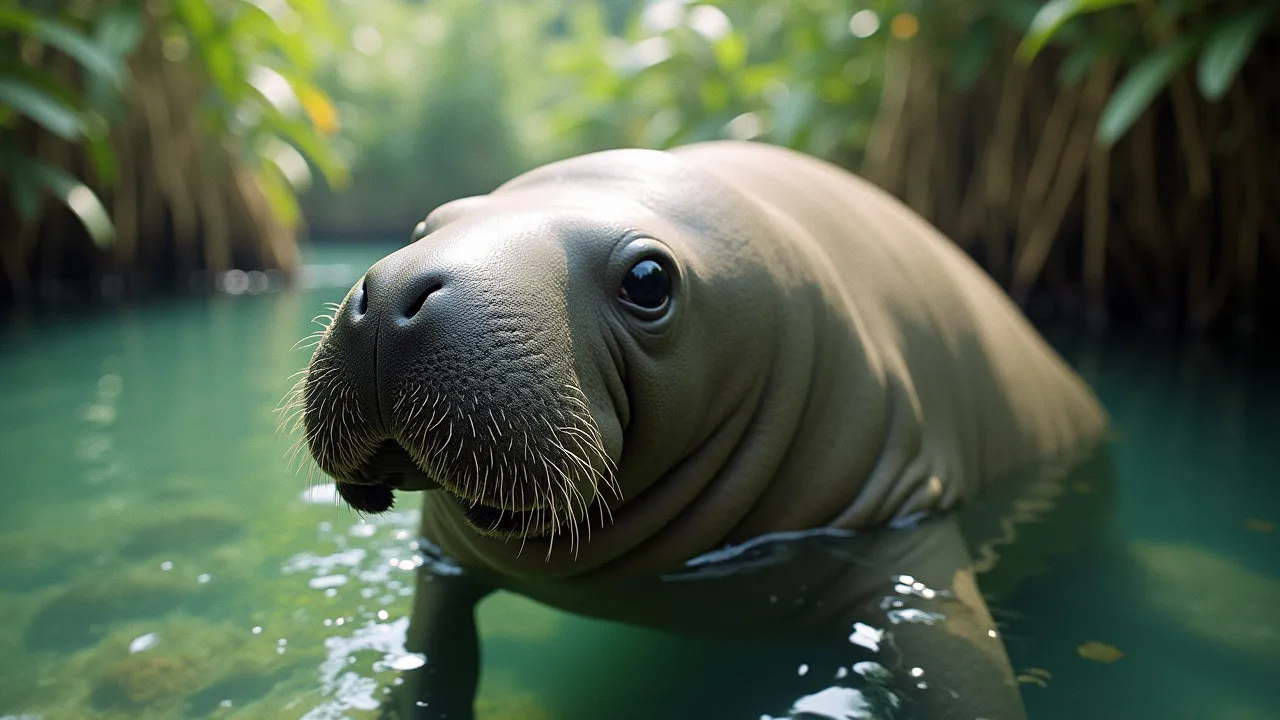
Manatee Appreciation Day, observed on the last Wednesday of March, honors these gentle marine mammals and raises awareness about their conservation. Founded by the Save the Manatee Club, the day encourages education, habitat protection, and responsible boating.
The Historical Origins & Evolutionary Journey
Manatee Appreciation Day began as a grassroots effort to spotlight the plight of Florida’s beloved sea cows. The day is celebrated annually on the last Wednesday of March, a time when manatees gather in warm Florida springs after winter. Its roots trace back to the early 1980s, a period when manatee populations were plummeting due to boat collisions, habitat loss, and cold stress.
The Foundational Catalyst
In 1981, singer Jimmy Buffett and Florida Governor Bob Graham co-founded the Save the Manatee Club (SMC) after witnessing the alarming decline of manatees. The club launched public awareness campaigns and lobbied for protective legislation. The inaugural Manatee Appreciation Day was held in 1982 at Crystal River, Florida, with educational booths, boat parades, and manatee-themed art contests. The event aimed to flip the narrative from ‘endangered species’ to ‘cherished neighbor’.
The Legislative/Official Adoption
By 1986, Florida’s state legislature officially recognized the last Wednesday of March as Manatee Appreciation Day. This designation helped coordinate statewide efforts, including localized celebrations in Manatee County (ironically named after the creature) and along the Gulf Coast. Federal agencies like the U.S. Fish and Wildlife Service began using the day to announce grant funding for manatee research.
Modern Global Legacy
Today, the observance has expanded beyond Florida. Zoos, aquariums, and marine conservation groups worldwide participate, though the core remains in the southeastern United States. Social media campaigns like #ManateeAppreciationDay and live feeds from Blue Spring State Park engage millions. The day now emphasizes climate change impacts, since manatees’ warm-water refuges are shrinking.
How to Celebrate Manatee Appreciation Day
Whether you live near manatee habitats or miles away, meaningful participation is possible. The key is combining education, advocacy, and direct action. Below are the most effective ways to honor these gentle giants.
For Individuals & Families
- Visit a Manatee Refuge: Crystal River, Blue Spring, or Three Sisters Springs offer guided snorkel tours (with strict no-touch rules). Check local conditions beforehand.
- Adopt a Manatee: Symbolic adoptions through the Save the Manatee Club fund rescue and rehabilitation. Kits include photos and certificates.
- Watch Documentaries: Films like The Manatee: Gentle Giant or PBS Nature episodes deepen understanding.
For Schools & Community Groups
- Art Contests: Organize manatee drawing or essay competitions. Use the hashtag #ManateeArt for visibility.
- Classroom Outreach: Invite a ranger from a local wildlife refuge to give a talk. Many offer virtual programs.
- Manatee Cleanup: Lead a shoreline litter pickup to reduce plastic that can entangle manatees.
For Businesses & Organizations
- Sponsor a Rescue: Donate to facilities like SeaWorld’s rescue team or the Lowry Park Zoo.
- Smart Boating Pledge: Promote slow-speed zones and manatee-safe propeller designs among employees and customers.
- Social Media Takeover: Feature manatee facts and rescue stories on company channels.
Global Variations
While the U.S. focuses on boat speed zones and spring habitats, other countries observe differently: In Brazil, the Amazonian manatee is celebrated with river cleanups and indigenous storytelling; in Puerto Rico, community festivals include manatee-shaped cakes and boat parades; in Australia (non-native but active through zoos), schools host ‘Manatee Mornings’ with VR experiences.
Manatee Biology & Natural History
Manatees belong to the order Sirenia, sharing ancestors with elephants and hyraxes. Three species exist: the West Indian manatee (found in Florida and the Caribbean), the Amazonian manatee (freshwater only), and the West African manatee (coastal rivers).
Physical Adaptations
- Lungs: Horizontally divided to aid buoyancy control. A manatee can hold its breath for up to 20 minutes when resting, but typically surfaces every 3–5 minutes.
- Teeth: Continuously replaced from the back of the jaw, a process called “‘marching molars,” which compensates for chewing abrasive aquatic plants.
- Toenails: Scaly, blunt toenails on flippers, a leftover of terrestrial ancestors.
Reproduction & Lifespan
Females give birth to a single calf every 2–5 years after a 13-month gestation. Calves stay with their mother for up to two years, learning migration routes and feeding grounds. In the wild, manatees can live over 60 years, but mortality from human causes reduces average lifespan to 15–25 years.
Cognitive Abilities
Manatees have strong long-term memory and can distinguish between different boat engine sounds. They use a combination of acoustic calls (squeaks and chirps) and tactile signals to communicate, especially between mother and calf.
Major Threats to Manatee Populations
Despite protections, manatees face grave dangers. The U.S. Fish and Wildlife Service changed their status from “endangered” to “threatened” in 2017, but challenges persist.
Human-Caused Threats
Boat Strikes: The leading cause of unnatural death. Propellers cut deep wounds; many manatees wear visible scar patterns from collisions. Slow-speed zones reduce fatalities but are often ignored.
Habitat Loss: Coastal development eliminates seagrass beds, the manatee’s primary food. Runoff causes algae blooms that block sunlight, killing seagrass.
Entanglement: Fishing line, crab traps, and plastic waste entangle flippers and bodies, leading to amputation or drowning.
Natural & Environmental Threats
Cold Stress: Manatees cannot survive in water below 68°F (20°C). Unusually harsh winters cause mass die-offs; in 2010, over 700 manatees died in Florida due to prolonged cold.
Red Tide: Harmful algal blooms (Karenia brevis) produce neurotoxins that paralyze manatees. In 2021, a severe red tide killed at least 110 manatees.
Starvation from Seagrass Loss: The Indian River Lagoon has lost over 90% of its seagrass, leading to an “unusual mortality event” declared in 2021. Supplemental feeding programs have been initiated.
Manatees in Culture & Symbolism
Manatees have inspired human imagination for centuries. Indigenous Taino people of the Caribbean depicted manatee motifs in pottery and petroglyphs. Early Spanish explorers misidentified them as mermaids, a myth famously perpetuated by Christopher Columbus in his 1493 journal: “‘They were not as beautiful as they are painted.”
Modern Cultural Impact
- State Symbols: Florida named the manatee its official state marine mammal in 1975. Manatee County, Florida, and the city of Manatee, Arkansas, bear the name.
- Literature & Media: Books like Manatee Blue by Josephine Humphrey and children’s series The Adventures of Madison the Manatee popularize conservation themes.
- Eponyms: The name “manatee” derives from the Ta├¡no word manat├¡, meaning “with breasts in the middle.”
In Costa Rica, manatees are called vaca marina (sea cow) and feature in folklore as gentle guides for lost fishermen. In West Africa, the Dugong (a close relative) is a totem animal for some coastal tribes.
Global Conservation Efforts & Policy
International cooperation is vital because manatees migrate across borders and face similar threats everywhere.
United States Protections
- Marine Mammal Protection Act (1972): Prohibits “take” (harass, hunt, capture) of marine mammals. Violations can result in fines up to $20,000.
- Endangered Species Act (1973): Listed as endangered until 2017; now threatened but still protected under the ESA.
- Manatee Sanctuary Act (1978): Florida law establishing speed zones, refuges, and no-entry areas during winter.
International Measures
- CITES Appendix I: Ban on international trade of manatee parts.
- CMS (Convention on Migratory Species): West African manatee is listed on Appendix I and II.
- Regional Agreements: The Amazonian Manatee Conservation Plan involves Brazil, Colombia, Peru, and Ecuador, focusing on poaching reduction and habitat restoration.
Success Stories
In Florida, manatee populations grew from around 1,000 in 1991 to over 6,000 by 2019, thanks to speed zones and spring protection. The Amazonian manatee has stabilized in Mamirauá Reserve (Brazil) through community-based monitoring. However, recent starvation events show that gains are fragile.
How to Support Manatee Rescue & Rehabilitation
Every year, scores of manatees are rescued from entanglements, boat strikes, or cold stress. Rehabilitation facilities across Florida work around the clock.
Major Rescue Centers
- SeaWorld Orlando: One of the largest manatee rehabilitation facilities, with a dedicated hospital and critical care unit.
- Lowry Park Zoo (ZooTampa): Houses the David A. Straz Jr. Manatee Hospital, treating about 30 manatees annually.
- Mote Marine Laboratory: Focuses on red tide exposure and holds a non-releasable manatee for education.
How to Help
- Donate Directly: Financial support pays for medical supplies, fish (for supplemental feeding), and transport.
- Volunteer: Many centers need help with facility maintenance, administrative tasks, or educational tours.
- Report Injured Manatees: Call the FWC Wildlife Alert hotline (1-888-404-FWCC) if you see a manatee with a propeller wound, entangled, or appearing sick.
During the 2021–2022 starvation event, an unprecedented effort allowed supplemental feeding of lettuce to starving manatees at a warm-water discharge site: over 202,000 pounds of lettuce were distributed. This emergency intervention saved hundreds of lives.
Historical Timeline
Christopher Columbus reports sightings of 'mermaids' (manatees) during his expedition to the Caribbean, writing they were 'not half as beautiful as painted.'
Florida designates the manatee as the official state marine mammal, raising local awareness.
Jimmy Buffett and Governor Bob Graham co-found the Save the Manatee Club to advocate for manatee protection.
First Manatee Appreciation Day held at Crystal River, Florida, on the last Wednesday of March.
Florida legislature officially recognizes the last Wednesday of March as Manatee Appreciation Day.
First statewide manatee census counts approximately 1,267 individuals in Florida.
Manatee speed zones become mandatory in all Florida counties with manatee habitats, following a surge in boat-strike deaths.
The Amazonian manatee is listed under CITES Appendix I, banning international trade.
U.S. Fish and Wildlife Service reclassifies manatees from 'endangered' to 'threatened,' sparking debate about conservation effectiveness.
Unusual mortality event declared on Florida's east coast due to starvation from seagrass loss; over 1,000 manatees die.
Emergency supplemental feeding program launches; nearly 202,000 pounds of lettuce provided to starving manatees at a power plant discharge site.