The Feast of the Annunciation on March 25th celebrates the angel Gabriel's announcement to Mary that she would conceive Jesus. It is observed by Christians worldwide with liturgical services, processions, and cultural traditions.
The Historical Origins & Evolutionary Journey
The Feast of the Annunciation commemorates the pivotal moment when the Archangel Gabriel appeared to the Virgin Mary in Nazareth to announce that she would conceive and bear the Son of God, Jesus Christ. This event, recorded in the Gospel of Luke (1:26-38), is the foundation of the Christian doctrine of the Incarnation. The date of March 25th was established because it falls exactly nine months before December 25th, the traditional celebration of Jesus' birth, and also aligns with ancient Jewish traditions of calculating the spring equinox.
The Foundational Catalyst
The earliest evidence of a dedicated feast for the Annunciation dates to the 4th century. The Council of Ephesus in 431 AD, which affirmed Mary as Theotokos (God-bearer), significantly boosted Marian devotion and the feast's prominence. By the 7th century, the feast was widely celebrated in both the Eastern and Western churches, though under different names and with varying emphases. In the East, it is known as Evangelismos (Good News) and is often celebrated with a Divine Liturgy. In the West, it became a solemnity in the Roman Rite.The Legislative/Official Adoption
Throughout the Middle Ages, the Annunciation was a major feast, often marking the beginning of the civil and liturgical year in various regions. Popes and councils reinforced its importance. The Feast of the Annunciation was one of the four Marian feasts mandated by the Council of Trent. It remained a holy day of obligation for Catholics until the 18th century, and in many countries it is still observed as such.Modern Global Legacy
Today, the Feast of the Annunciation is celebrated by Roman Catholics, Eastern Orthodox, Anglicans, Lutherans, and many other Christian denominations. Its liturgical color is white or gold, symbolizing joy and purity. In some countries, the day is also associated with secular traditions, such as the celebration of Mother's Day in parts of the Arab world or the Feast of the Annunciation as a public holiday in Lebanon, Greece, and Italy (though often transferred to the following Monday or Sunday if it falls during Lent).How to Celebrate Feast of the Annunciation
The Feast of the Annunciation is observed through a combination of liturgical worship, private devotion, and cultural customs. Below are detailed practices for individuals, families, and communities worldwide.
Liturgical Celebrations
Attend Mass or Divine Liturgy: Most Christian denominations hold special services. The Gospel reading is Luke 1:26-38, and the homily focuses on Mary's fiat ('Be it done unto me according to thy word').
Recite the Angelus: This traditional prayer commemorating the Annunciation is often recited at noon.
Sing hymns: Traditional hymns like 'Ave Maria' (Hail Mary) or 'The Angel Gabriel from Heaven Came' are sung.
Family and Personal Devotions
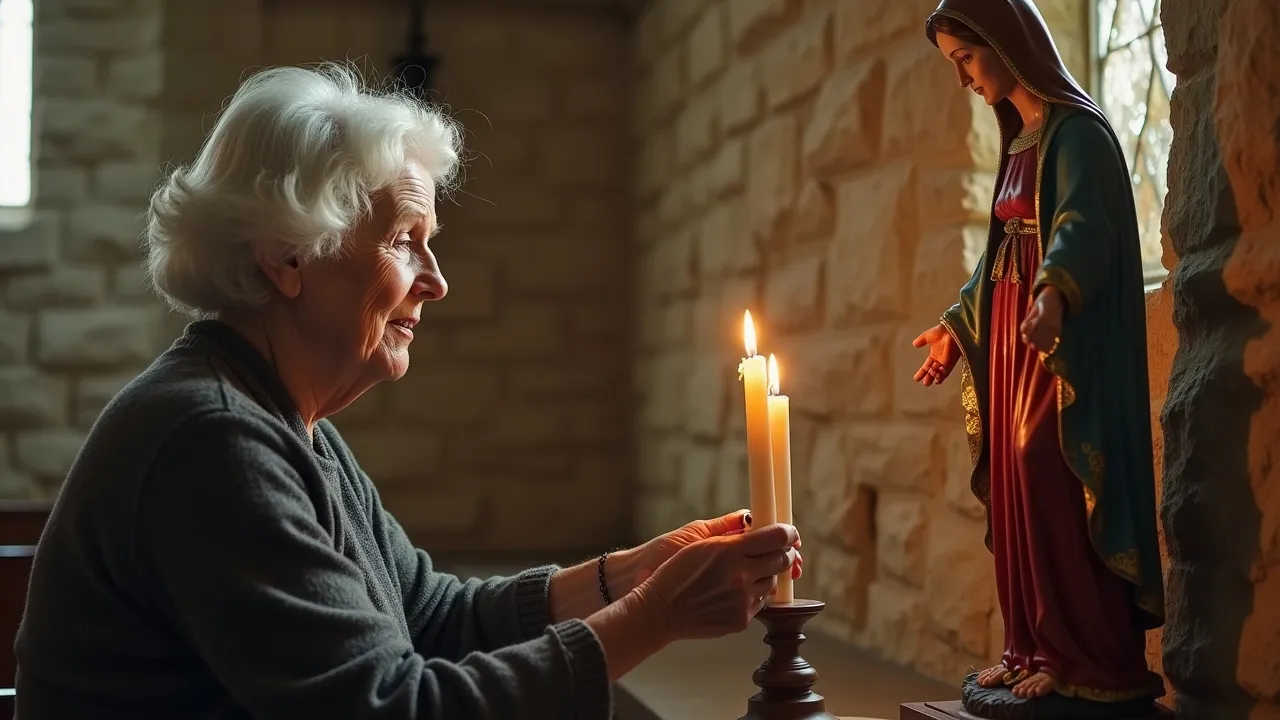
Light a candle before an icon or statue of the Annunciation.
Read the biblical account from Luke and reflect on Mary's willingness.
Pray the Rosary, focusing on the Joyful Mysteries, especially the first mystery.
Cultural Traditions Around the World
Greece and Cyprus: The feast is a major public holiday (Evangelismos). People attend church and enjoy festive meals. In some islands, there are processions with icons.
Italy: In many towns, the day is marked with processions and markets. In Florence, the feast is celebrated with the 'Festa della Rificolona' (paper lanterns).
Lebanon: A national holiday. Maronite communities hold special liturgies and often release doves as a symbol of peace.
Ethiopia: The Ethiopian Orthodox Church celebrates the Annunciation (Dengel) with fasting and prayer, and it sometimes coincides with the start of the Ethiopian New Year.
Ireland: Traditionally, people would plant potatoes on this day due to the lore that the soil is blessed.
For Schools and Organizations
Educational activities: Hold lessons on the history and theology of the Annunciation. Role-play the biblical scene.
Charity drives: Emulate Mary's humility by organizing food or clothing donations.
Cultural exhibitions: Display art depicting the Annunciation from various cultures (e.g., Fra Angelico, Leonardo da Vinci, Orthodox icons).
Theological Significance & Core Themes
The Feast of the Annunciation is theologically rich, centering on the Incarnation — God becoming man. The event demonstrates Mary's free cooperation with God's plan, embodying perfect faith and obedience. Key themes include:
The Incarnation
God's entry into human history through the conception of Jesus by the Holy Spirit in Mary's womb. This affirms the belief that Jesus is fully God and fully human.Mary's Fiat
Her words, 'Behold, I am the handmaid of the Lord; let it be to me according to your word,' highlight human free will responding to divine grace. Mary is seen as a model of discipleship.The Role of the Holy Spirit
The Spirit overshadows Mary, showing the active presence of the third person of the Trinity in salvation history.Fulfillment of Prophecy
The Annunciation fulfills Isaiah 7:14: 'Therefore the Lord himself will give you a sign: The virgin will conceive and give birth to a son, and will call him Immanuel.'Global Impact & Cultural Influence
The Feast of the Annunciation has profoundly shaped Christian art, music, and literature for centuries. Its depiction in painting has been a cornerstone of Renaissance art, with masterpieces by Fra Angelico, Botticelli, Leonardo da Vinci, and Caravaggio. Each artist interpreted the scene uniquely, from the intimate dialogue between Gabriel and Mary to the symbolic use of lilies (purity) and the enclosed garden (Mary's virginity).
Music and Hymnody
Countless composers have set the Annunciation text to music, from Gregorian chant (e.g., the introit 'Vultum tuum') to modern hymns. The 'Angelus' prayer has been set by many classical composers. In Eastern Orthodox tradition, hymns like 'Today the Firstfruits of Our Salvation' are sung.Literature
The Annunciation appears in works like Dante's 'Paradiso' and medieval mystery plays. In modern times, poets like Rainer Maria Rilke have written poems on the subject.Secular Observances
In some countries, the feast is tied to Mother's Day (e.g., in many Arab nations) or the beginning of spring. In Italy, 'Festa della Rificolona' features children carrying paper lanterns to symbolize the light of faith.Ecumenical and Interfaith Dimensions
The Feast of the Annunciation holds significance beyond Catholicism and Orthodoxy. Anglicans and Lutherans celebrate it as a principal feast, sometimes with the same traditional liturgy. Protestants generally commemorate it as a lesser festival, focusing on the scriptural event rather than Marian devotion. The feast also appears in the liturgical calendars of some Oriental Orthodox churches (e.g., Coptic, Ethiopian).
In an interfaith context, the Annunciation is recognized in the Quran (Sura 3:45-51 and Sura 19:16-21), where the angel announces to Mary the birth of Jesus, a revered prophet in Islam. This shared story offers a point of dialogue between Christians and Muslims, as both honor Mary's piety and the miraculous birth.
Modern Observance and Challenges
In modern times, the Feast of the Annunciation faces challenges, especially when it falls during Lent or Holy Week. Canon law allows the celebration to be transferred to Monday after the Second Sunday of Easter if it coincides with Palm Sunday, Holy Week, or Easter Week. In Eastern churches, the feast is never transferred even if it falls on Good Friday — a rare exception that underscores its importance.
Secularization has reduced public observance in some traditionally Christian countries, but the feast remains a holy day of obligation for Catholics in nations like Italy, Spain, and Greece. The rise of Marian devotion movements (e.g., World Apostolate of Fatima) have kept the feast vibrant, with special events and novenas.
Artistic Depictions Through the Ages
The Annunciation has been a favorite subject in Christian art, evolving stylistically from early Christian and Byzantine icons to Renaissance frescoes and modern interpretations.
Early Christian & Byzantine
Iconographic representations often show Mary spinning thread (symbolizing the weaving of Christ's flesh) or with a blue veil. The angel is depicted with wings and a staff. Notable examples include the mosaic in Santa Maria Maggiore (5th century).Renaissance
Artists like Fra Angelico (Cell 3 of San Marco) emphasize humility and grace. Leonardo da Vinci's Annunciation (c. 1472) uses perspective to draw the viewer into the garden. Botticelli's version (Cestello Annunciation) is known for its movement and emotion.Baroque
Caravaggio's 1608 Annunciation uses dramatic chiaroscuro, with the angel appearing suddenly to Mary in a dark interior, emphasizing the divine intrusion into human life.Modern
Contemporary artists like Salvador Dalí (Corpus Hypercubus) and David Hockney have offered surreal and symbolic takes, while many Eastern Orthodox communities continue to produce icons following traditional canons.Historical Timeline
Earliest known celebrations of the Feast of the Annunciation appear in liturgical calendars, likely in Jerusalem and Constantinople, with March 25th as the fixed date.
The Council of Ephesus affirms Mary as Theotokos, elevating the feast's theological importance and promoting its spread.
The feast is widely adopted in both Eastern and Western churches, with the Roman Rite incorporating it into the Liturgical Year.
The Quinisext Council (Trullo) formally recognizes the Annunciation as a major feast in the Byzantine tradition, mandating its celebration without transfer except for Easter.
The Franciscan Order introduces the Angelus prayer, which becomes a popular daily devotion commemorating the Annunciation at 6:00 AM, Noon, and 6:00 PM.
Pope Sixtus IV officially adds the Feast of the Annunciation to the Roman Missal as a double feast (later solemnity).
The feast is removed from the list of holy days of obligation for the universal Church by Pope Benedict XIV, though it remains obligatory in some regions.
Pope Pius IX elevates the feast to a double of the first class with a common octave.
After the Second Vatican Council, the feast is ranked as a solemnity in the Roman Rite (the highest rank).
The Maronite Catholic Church adopts a new liturgical calendar that emphasizes the Annunciation as a major feast.