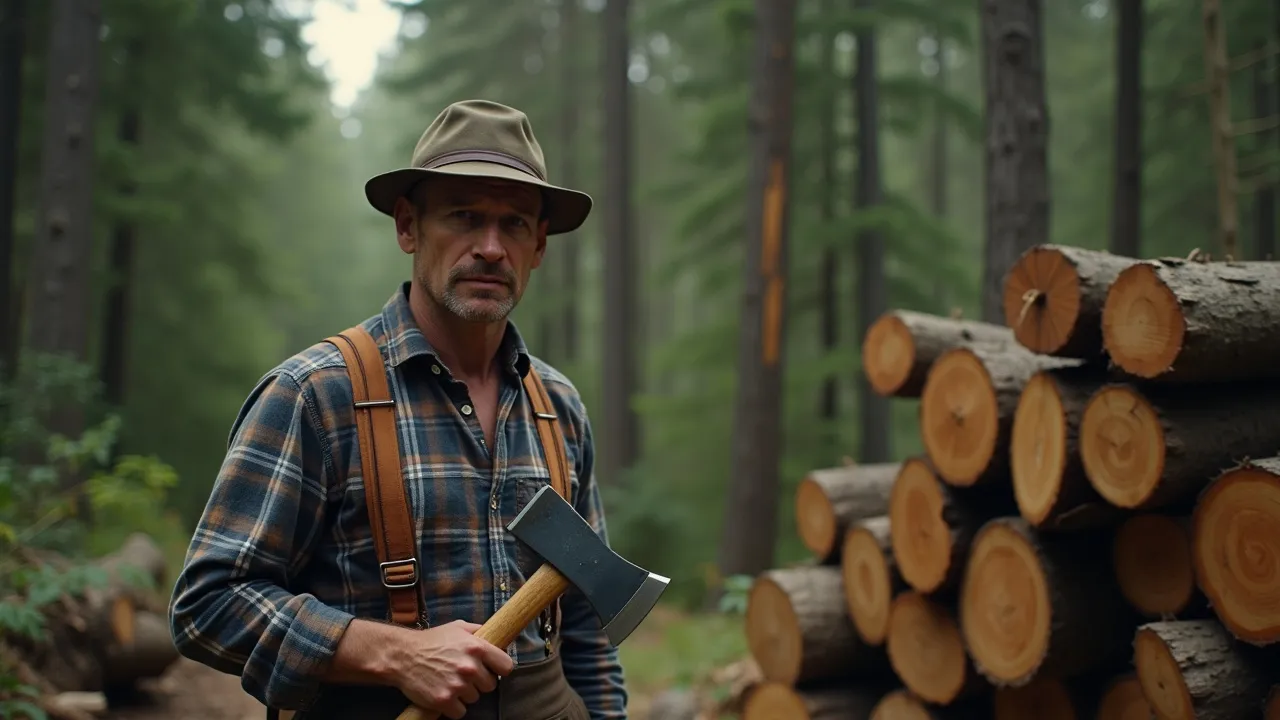
Lumberjack Day, observed on September 26th, honors the logging industry and the iconic lumberjack. Originating from a humorous radio segment, it has grown into a global celebration of forestry, woodcraft, and lumberjack sports like log rolling and axe throwing.
The Historical Origins & Evolutionary Journey
Lumberjack Day began as a lighthearted concept on a syndicated radio show in the early 2000s. The host, known as "Dave the Lumberjack," encouraged listeners to celebrate the rugged lifestyle and contributions of lumberjacks. Over time, it evolved into a recognized observance, blending humor with genuine appreciation for forestry workers.
The Foundational Catalyst
The idea was sparked during a segment where Dave impersonated a lumberjack, joking about the lack of a holiday for loggers. The audience response was overwhelming, leading to an annual celebration on September 26th. The date was chosen arbitrarily but stuck due to its proximity to fall, a peak season for logging activities in many regions.
Legislative/Official Adoption
While never officially proclaimed by any government, Lumberjack Day gained grassroots traction through social media and forestry organizations. In 2010, the U.S. Forest Service informally recognized the day by promoting fire safety and sustainable logging practices. Today, it is celebrated in logging communities across North America, Scandinavia, and parts of Europe.
Modern Global Legacy
The day now serves as a platform for raising awareness about sustainable forestry, the history of the timber industry, and the preservation of lumberjack sports. It has also become a pop-culture phenomenon, inspiring events like lumberjack shows, flannel fashion, and even the creation of forestry-themed video games.
How to Celebrate Lumberjack Day
Celebrating Lumberjack Day can range from fun activities to educational events. Below are practical ways individuals, schools, and organizations can participate.
For Individuals and Families
- Dress like a lumberjack: Wear plaid shirts, jeans, suspenders, and a beanie.
- Try lumberjack sports: Visit a local axe throwing range or log rolling competition.
- Cook a hearty meal: Prepare classic lumberjack fare like pancakes, bacon, and beans.
- Read about forestry: Pick up a book on logging history or watch documentaries like 'American Loggers'.
For Schools and Educators
- Organize a 'Lumberjack Day' fair with activities such as tree identification, woodworking workshops, and a mini log rolling pool.
- Host a guest speaker: Invite a local forester or logger to talk about sustainable practices.
- Encourage creative writing: Have students write poems or stories about lumberjacks.
For Organizations and Communities
Companies can host team-building events like lumberjack competitions (sawing, axe throwing, timber climbing).
Communities can hold parades with floats decorated as logging equipment, or organize a charity lumberjack show to support firefighter funds.
Global Impact and Regional Variations
While September 26th is the primary date in North America, other regions observe similar holidays on different days. In Sweden, for example, 'Skogsarbetarens dag' (Forest Worker's Day) is celebrated in early October, focusing on Nordic logging traditions. In Canada, some provinces mark 'Loggers' Day' in July to coincide with summer logging festivals.
Despite date differences, common themes include respecting forest ecosystems, honoring the physical labor of loggers, and preserving traditional skills. International cooperation on sustainable forestry has also been highlighted during cross-border celebrations.
The Culture of Lumberjack Sports and Traditions
Lumberjack sports, such as axe throwing, log rolling, and speed climbing, are central to the holiday. These events originated from competitive logging camps in the 19th century and have since become professional attractions. The Stihl Timbersports Series is a global competition that showcases the pinnacle of lumberjack athleticism.
Traditional lumberjack attire—flannel shirts, suspenders, and work boots—has become iconic, symbolizing hard work and resilience. The holiday also celebrates folklore, like the legend of Paul Bunyan and Babe the Blue Ox, reinforcing the mythological stature of lumberjacks.
Economic & Environmental Significance of the Logging Industry
The logging industry provides raw materials for construction, paper, and renewable energy. It also plays a vital role in forest management, preventing wildfires through controlled thinning. Lumberjack Day highlights the economic contribution of forestry workers while advocating for sustainable practices.
Modern logging emphasizes reforestation and low-impact techniques. Organizations like the Forest Stewardship Council (FSC) promote responsible logging. The holiday thus serves as a bridge between industry and environmental stewardship.
Future of Lumberjack Day
As digital media grows, Lumberjack Day has a potential to expand its reach globally. Virtual events, like live-streamed axe throwing championships, allow remote participation. There is also a growing movement to incorporate Indigenous forestry knowledge. With increasing focus on renewable resources, the holiday will likely continue to evolve, respecting both tradition and innovation.
Historical Timeline
First Lumberjack Day celebrated on September 26th, originated by a radio show host named Dave.
U.S. Forest Service informally recognizes Lumberjack Day, promoting fire safety and sustainable logging.
The first official Lumberjack Day festival is held in Hayward, Wisconsin, featuring log rolling and axe throwing competitions.
Lumberjack Day gains international attention with events in Canada, Sweden, and Finland.
Virtual Lumberjack Day celebrations emerge due to the COVID-19 pandemic, including online axe throwing tutorials.