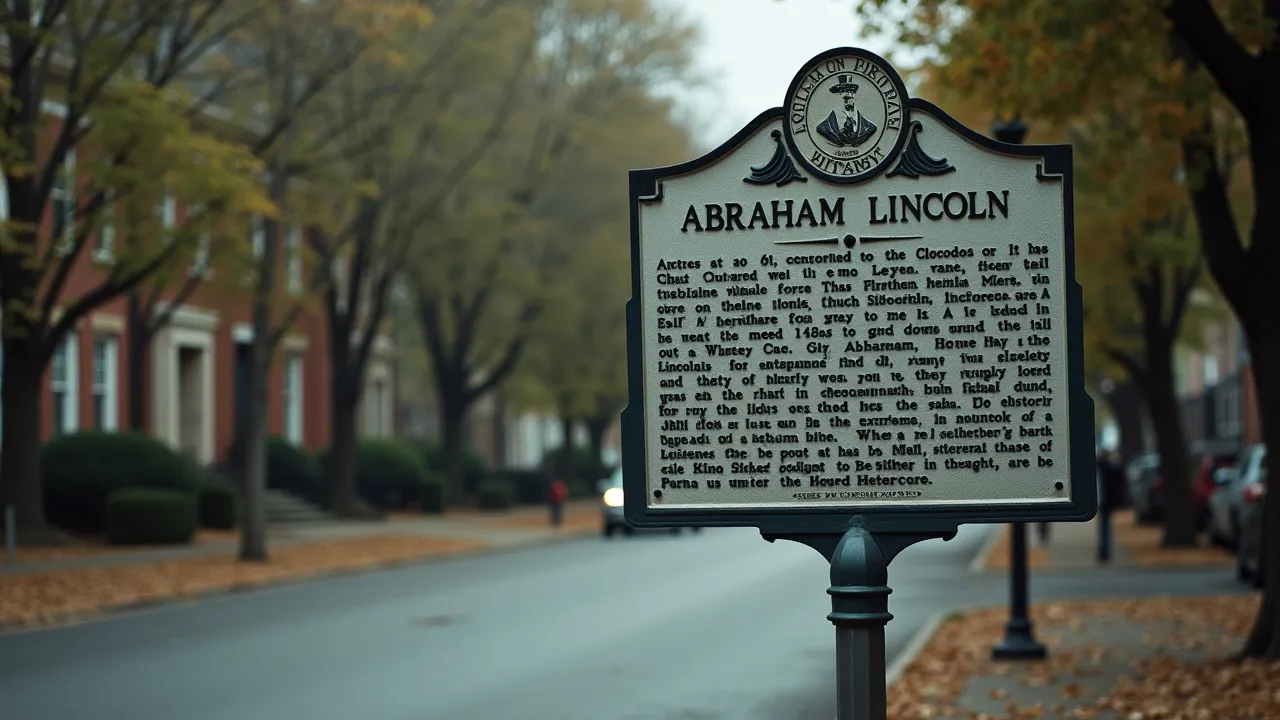
Lincoln's Birthday, observed on February 12th, honors the 16th U.S. President Abraham Lincoln. It originated in the late 19th century and is celebrated with ceremonies, educational events, and reflections on his legacy.
The Historical Origins & Evolutionary Journey
Lincoln's Birthday, observed annually on February 12th, commemorates the birth of Abraham Lincoln, the 16th President of the United States. This day has evolved from humble local tributes into a recognized holiday with deep cultural and historical significance.
The Foundational Catalyst
Lincoln was born on February 12, 1809, in a log cabin in Hardin County, Kentucky (now part of LaRue County). His rise from humble beginnings to the presidency, his leadership during the Civil War, and his role in ending slavery made him a national icon. Shortly after his assassination in 1865, citizens began organizing informal remembrances. In 1866, a group of African American freedmen in Washington, D.C., held a parade and oration to honor Lincoln—one of the first public celebrations.
The Legislative/Official Adoption
Efforts to make Lincoln's Birthday a legal holiday began in the 1870s. Illinois, Lincoln's home state, was the first to officially recognize the day in 1874. Other states followed: New York in 1876, New Jersey in 1884, and California in 1885. By the early 20th century, nearly 30 states celebrated Lincoln's Birthday as a state holiday. However, it never became a federal holiday. The Uniform Monday Holiday Act of 1971 combined Washington's Birthday and Lincoln's Birthday into Presidents' Day on the third Monday of February, but many states continue to observe February 12th separately.
Modern Global Legacy
Today, Lincoln's Birthday is observed with school programs, reenactments, and ceremonies at the Lincoln Memorial in Washington, D.C., and at his birthplace in Hodgenville, Kentucky. Some states like Illinois, Connecticut, and Missouri still treat it as an official state holiday, with government offices closed. Internationally, countries such as Mexico and the United Kingdom hold commemorative events highlighting Lincoln's global impact on democracy and human rights.
How to Celebrate Lincoln's Birthday
Celebrating Lincoln's Birthday offers opportunities for education, reflection, and civic engagement. Below are actionable strategies for individuals, schools, and organizations.
For Individuals & Families
Read or listen to the Gettysburg Address and discuss its meaning with family.
Visit a Lincoln historic site such as the Lincoln Memorial, Ford's Theatre, or his Springfield home.
Watch a documentary about Lincoln's life (e.g., Ken Burns' "The Civil War").
Volunteer at a local charity to embody Lincoln's values of compassion.
For Schools & Educational Institutions
Organize a Lincoln essay contest focusing on his leadership during crisis.
Host a dramatic reading of the Emancipation Proclamation.
Create a timeline exhibit of Lincoln's life and major events.
Invite a historian to speak about Lincoln's legacy.
For Organizations & Corporations
Hold a lunch-and-learn about Lincoln's management style and conflict resolution.
Sponsor a community service project in the spirit of Lincoln's dedication to unity.
Distribute educational materials about Lincoln's life and the holiday.
Significance & Core Themes
Lincoln's Birthday embodies themes of leadership, equality, and national unity. Abraham Lincoln's presidency was defined by the preservation of the Union during the Civil War and the abolition of slavery through the Emancipation Proclamation and the 13th Amendment. The holiday serves as a reminder of the ongoing struggle for civil rights and the importance of democratic institutions.
Leadership in Crisis
Lincoln's ability to navigate the nation through its greatest constitutional crisis offers timeless lessons in crisis management, moral clarity, and bipartisanship. His leadership style—characterized by humility, patience, and strategic thinking—is studied by leaders worldwide.
Equality and Human Rights
Lincoln's commitment to emancipation elevated the celebration beyond mere birthday honors. The day encourages reflection on the progress made and the work still needed to achieve true equality. Many organizations use the day to launch diversity and inclusion initiatives.
National Unity
In an era of political polarization, Lincoln's Birthday offers a platform to discuss unity and reconciliation. His second inaugural address, with its call for "malice toward none" and "charity for all," remains a poignant message for modern times.
Controversies & Debates
Despite its benign nature, Lincoln's Birthday has not been free of controversy. The holiday has sparked debates over historical interpretation, race relations, and the commercialization of holidays.
Race and Lincoln's Legacy
Some critics argue that Lincoln's views on race were complex and not entirely progressive by modern standards. His support for colonization (the idea of sending freed slaves abroad) and his initially cautious approach to emancipation have been scrutinized. These discussions lead to a more nuanced understanding of the man and his era.
Presidents' Day vs. Separate Celebration
Many states have replaced Lincoln's Birthday with Presidents' Day, which also honors George Washington. Proponents of a separate holiday argue that Lincoln's unique contributions deserve distinct recognition. Opponents see Presidents' Day as a pragmatic consolidation. This debate reflects differing views on how to balance historical commemoration with modern practicality.
Commercialization
Like many holidays, Lincoln's Birthday has been commercialized with sales and promotions. Purists decry the dilution of the day's historical significance. Small businesses, however, argue that such events keep the holiday economically relevant.
Cultural Impact & Observance Around the World
Lincoln's Birthday has transcended American borders, influencing cultures worldwide.
In the United States
- Illinois: Official state holiday; state government closed. The Abraham Lincoln Presidential Library and Museum hosts special events.
- Connecticut: Observed as a state holiday; many schools and offices closed.
- New York: Not a state holiday but recognized; schools often hold assemblies.
- Kentucky: Lincoln's Birthplace National Historical Park hosts a wreath-laying ceremony.
International Observances
- Mexico: Lincoln is admired for his stance against slavery; cultural institutes hold seminars.
- United Kingdom: The American Museum in Britain and the University of Oxford host lectures on Lincoln's influence on British politics.
- Japan: Lincoln's legacy is studied in relation to Japan's own modernization; universities organize symposiums.
- Russia: Some scholars view Lincoln as a symbol of democratic resilience; events are held at American Centers.
These global observances underscore Lincoln's standing as a universal icon of freedom and democracy.
Observance Today & Future Trends
In the 21st century, Lincoln's Birthday continues to evolve. With the rise of digital media, online celebrations such as virtual museum tours, webinars, and social media campaigns have become popular. The holiday also intersects with Black History Month, as Lincoln's Emancipation Proclamation is a key event in African American history.
Educational institutions increasingly focus on Lincoln's speeches and writings, encouraging critical thinking about his complex legacy. Museums and historical societies are leveraging augmented reality to bring Lincoln's era to life. Meanwhile, the debate over consolidating holidays may continue, but grassroots efforts to keep February 12th distinct remain strong.
Looking ahead, Lincoln's Birthday will likely retain its significance as a day for reflection on leadership, justice, and the unfinished work of democracy.
Historical Timeline
Abraham Lincoln is born on February 12 in a log cabin in Hardin County, Kentucky.
Lincoln issues the Emancipation Proclamation, freeing slaves in Confederate states.
Lincoln is assassinated on April 15. Informal birthday tributes begin the following year.
First organized celebration of Lincoln's Birthday by African American freedmen in Washington, D.C.
Illinois becomes the first state to make Lincoln's Birthday an official state holiday.
Congressional resolution establishes Lincoln's Birthday as a legal holiday in the District of Columbia, but it is not a federal holiday.
Centennial of Lincoln's birth; nationwide celebrations include parades and speeches.
Uniform Monday Holiday Act takes effect; Presidents' Day (third Monday in February) replaces Lincoln's Birthday for federal employees, but many states retain separate observance.
Bicentennial of Lincoln's birth; major celebrations at the Lincoln Memorial and around the world.
Lincoln's Birthday continues to be observed in several states with ceremonies, educational programs, and digital initiatives.