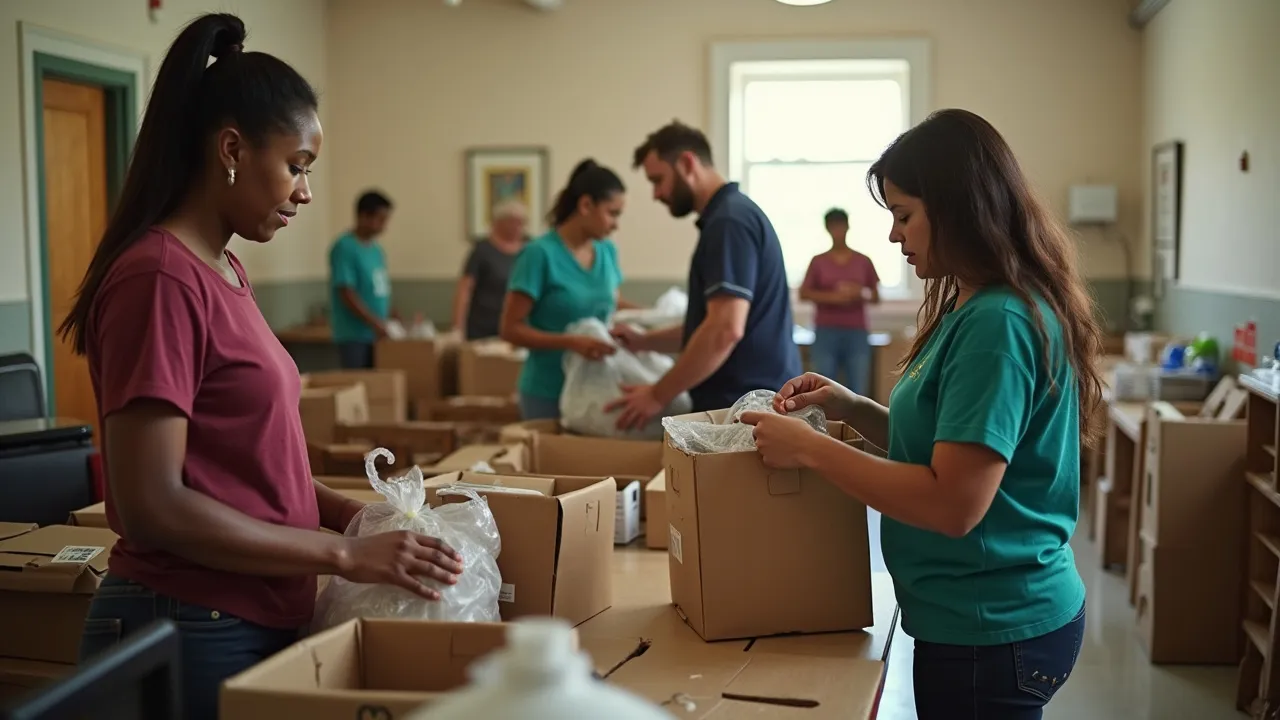
Giving Hearts Day is an annual charitable giving event held on the second Thursday of February, uniting communities to support local nonprofits. Donations are amplified by matching funds, maximizing impact for charities across North Dakota and Minnesota.
The Historical Origins & Evolutionary Journey of Giving Hearts Day
Giving Hearts Day (GHD) was established in 2008 by the Dakota Medical Foundation (DMF) as a 24-hour online giving marathon to support charities in North Dakota and Minnesota. The event was inspired by the growing trend of community-based giving days, aiming to leverage collective generosity and matching funds to maximize impact.
The Foundational Catalyst
The idea for GHD emerged from DMF's desire to address the fundraising challenges faced by small and medium-sized nonprofits, which often lacked resources for large-scale campaigns. By creating a single day of focused giving, DMF provided a platform where every donation could be amplified through a matching pool funded by corporate sponsors and foundations. The first event in 2008 raised $2.1 million for 181 charities, far exceeding expectations.
Expansion and Innovation
Over the years, GHD evolved to include features such as real-time donation tracking, leaderboards, and social media integration. The matching pool grew, incentivizing donors to give early. By 2015, the event had raised over $10 million annually, and participation expanded beyond the initial tri-state area to include partners across the Upper Midwest.
Modern Legacy and National Influence
Today, GHD serves as a model for community giving days nationally. Its success has inspired similar events in other regions, such as GiveMN and Minnesota's Give to the Max Day. The event's emphasis on transparency and donor choice has built lasting trust, with charities required to report how funds are used.
How to Celebrate Giving Hearts Day
Participating in Giving Hearts Day is simple and impactful. Below are actionable strategies for individuals, schools, and organizations to maximize their contribution.
For Individuals
Plan your donation early: Visit the official GHD website to browse participating charities and decide where to give.
Donate during matching hours: Many gifts are matched dollar-for-dollar, so donating early in the day amplifies your impact.
Share on social media: Use #GivingHeartsDay to encourage friends and family to join.
Volunteer your time: Some nonprofits host in-person events or need help with administrative tasks on GHD.
For Schools and Youth Groups
Organize a donation drive: Collect small contributions from students and pool them together.
Host a fundraiser: Bake sales or car washes can raise money to donate on GHD.
Educate about philanthropy: Use GHD as a teachable moment about community giving.
For Businesses
Match employee donations: Offer to double or triple employee contributions.
Sponsor the matching pool: Contribute to the central fund to amplify all gifts.
Engage customers: Donate a portion of sales on that day to a chosen charity.
The Impact of Giving Hearts Day on Local Communities
Since its inception, Giving Hearts Day has channeled over $200 million to thousands of charitable organizations. The impact is felt across health, education, human services, and the arts.
Strengthening Nonprofit Capacity
Many small nonprofits report that GHD donations constitute a significant portion of their annual budget. This stability allows them to plan long-term projects and expand services. For example, a local food pantry in Fargo used GHD funds to acquire a refrigerated truck, enabling fresh food distribution.
Fostering a Culture of Giving
GHD transforms philanthropy into a community event. Donors often gather at watch parties to track progress. Schools incorporate it into curricula, teaching children the value of generosity. Over time, this cultivates a lasting habit of charitable giving.
Economic Ripple Effect
Money donated largely stays local, funding services that directly improve quality of life. This reduces strain on public resources and stimulates local economies as nonprofits hire staff and purchase supplies.
How Matching Gifts Work on Giving Hearts Day
One of the most attractive features of Giving Hearts Day is the matching gift pool. Here’s how it works:
The Matching Pool
Corporate sponsors and foundations contribute to a central fund, which is used to match individual donations on a pro-rata basis. For example, if the pool is $500,000 and total donations reach $5 million, each dollar is effectively matched by 10 cents. Some sponsors also offer dollar-for-dollar matches for specific causes or time windows.
Donor Amplification
Donors are encouraged to give early when matching percentages are highest. The GHD website shows real-time how much of the matching pool remains, creating urgency. Nonprofits actively promote matching opportunities to motivate their supporters.
Tax Benefits
Donations to qualified 501(c)(3) organizations are tax-deductible, and the matching funds do not affect the donor’s deductible amount. Donors receive receipts for their contributions.
Giving Hearts Day Across the United States
While Giving Hearts Day originated in North Dakota, it has inspired similar initiatives nationwide. However, the core event remains focused on the Upper Midwest.
Regional Variants
- GiveMN's Give to the Max Day: Held in November, this is a statewide giving day for Minnesota.
- Iowa's #GivingTuesdayNow: Aligned with global Giving Tuesday, but with state-specific matching pools.
- Colorado Gives Day: A similar 24-hour event in Colorado, started in 2010.
Unique Features of GHD
Unlike some state-wide days, GHD emphasizes a single-day, high-intensity campaign with a large matching pool. It also requires all participating charities to be vetted by DMF, ensuring donor confidence. This model has been studied by other communities seeking to replicate its success.
The Future of Charitable Giving Days
As digital fundraising evolves, giving days like GHD are adapting to new technologies and donor preferences.
Integration with Cryptocurrency and NFTs
Some platforms now accept crypto donations, and tokenized fundraising events are emerging. GHD might explore these avenues to reach younger, tech-savvy donors.
Mobile App and Gamification
Dedicated apps with push notifications and live leaderboards can increase engagement. Gamification elements like badges for early donations or referral contests could further boost participation.
Sustainability and Long-Term Engagement
To avoid 'charity fatigue', organizers are focusing on storytelling and impact reporting. Charities that demonstrate measurable outcomes are more likely to retain donors beyond a single day. GHD plans to expand its donor stewardship resources.
Historical Timeline
First Giving Hearts Day held on February 14, raising $2.1 million for 181 charities in North Dakota and Minnesota.
Event raises $5 million milestone; matching pool expanded with corporate sponsors.
Annual donations exceed $10 million; participation reaches 300+ charities.
10th anniversary; total funds raised since inception surpass $100 million.
GHD moves to fully virtual due to COVID-19; raises $18 million despite economic downturn.
Record year with $25 million raised; over 500 charities participate.