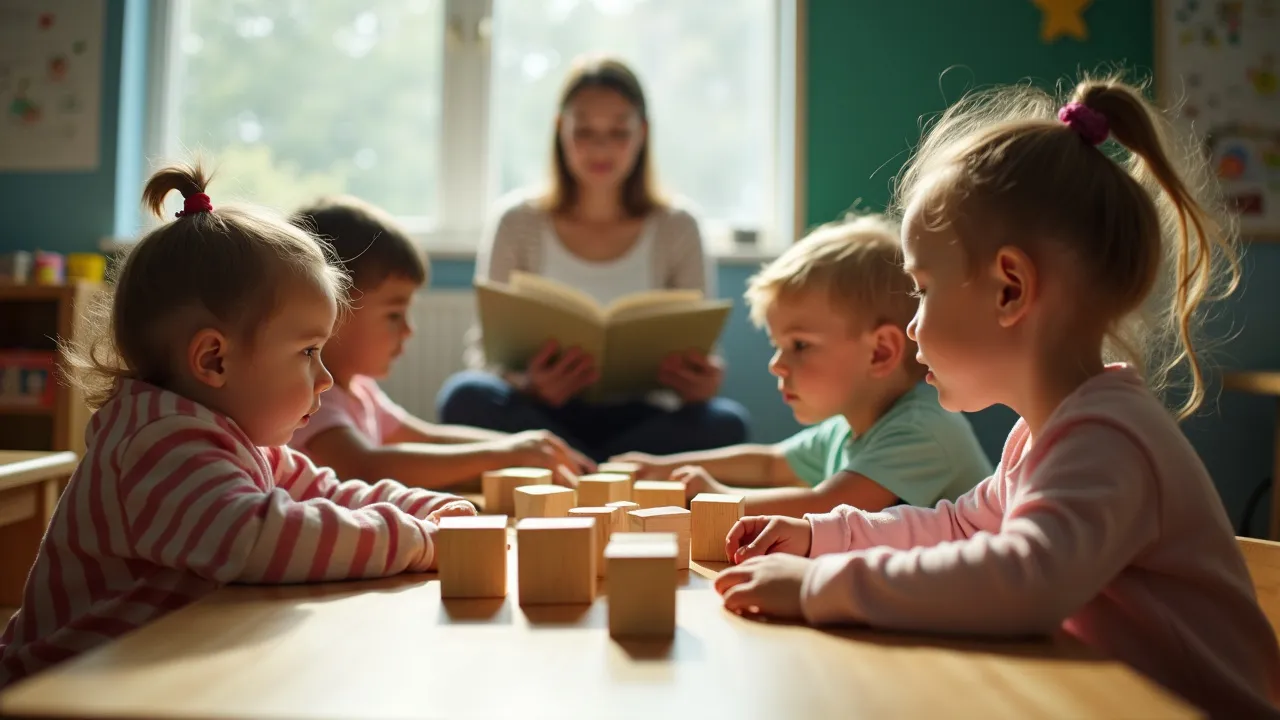
Kindergarten Day, observed on April 21st, honors Friedrich Fröbel's birthday and the founding of the first kindergarten. It celebrates the importance of early childhood education and play-based learning.
The Historical Origins & Evolutionary Journey
Kindergarten Day, observed on April 21st, marks the birthday of Friedrich Fröbel, the German educator who founded the first kindergarten in 1837. This day serves as a global tribute to the transformative power of early childhood education.
The Foundational Catalyst
Friedrich Fröbel (1782–1852) was deeply influenced by the educational philosophies of Johann Heinrich Pestalozzi and the naturalist ideas of his time. He believed that young children learn best through play, self-activity, and connection with nature. In 1837, he opened the first kindergarten in Bad Blankenburg, Germany, calling it a "child's garden." Fröbel designed a series of educational toys known as "Fröbel Gifts" and activities called "Occupations" to foster cognitive, physical, and social development.
The Legislative/Official Adoption
The concept of kindergarten spread rapidly across Europe and America. By the late 19th century, kindergartens became integrated into public school systems in many countries. In the United States, the first kindergarten was established in Watertown, Wisconsin, in 1856 by Margarethe Schurz. However, it was not until the 20th century that kindergarten became a standard part of primary education. April 21st was chosen as Kindergarten Day to honor Fröbel's birth, and it has been recognized officially by various educational organizations and some state governments.
Modern Global Legacy
Today, Kindergarten Day is celebrated in diverse ways across the world. It highlights the critical role of early childhood education in shaping lifelong learning, social skills, and creativity. UNESCO and many national education ministries endorse the day to promote universal access to quality pre-primary education. The day also serves as a reminder of the ongoing need for well-trained kindergarten teachers and developmentally appropriate curricula.
How to Celebrate Kindergarten Day
Kindergarten Day offers a wonderful opportunity to engage children, families, and communities in celebrating early learning. Below are actionable strategies tailored for individuals, schools, and organizations.
Celebration Strategies for Individuals
- Read a classic children's book aloud to a young child, such as The Very Hungry Caterpillar or Goodnight Moon.
- Engage in a Fröbel-inspired play activity using blocks, beads, or geometric shapes.
- Volunteer at a local kindergarten classroom or donate educational supplies.
- Share your kindergarten memories on social media using the hashtag #KindergartenDay.
School and Classroom Activities
- Nature Walk: Take children outdoors to explore plants, insects, and natural materials, echoing Fröbel's emphasis on nature.
- Art Projects: Create a collaborative mural or craft using simple materials like paper, glue, and recycled items.
- Music and Movement: Sing nursery rhymes and play circle games that promote coordination and socialization.
- Thank-You Cards: Have children write or draw thank-you notes for their teachers.
Organizational and Community Events
Libraries, museums, and early childhood centers can host special storytimes, workshops for parents, or open houses. Local governments might issue proclamations recognizing the day. Businesses could offer discounts on children's books or educational toys. In countries like Germany, celebrations often include planting a tree or flower in a garden to symbolize growth and learning.
Country-specific traditions: In the United States, many schools hold a "Kindergarten Week" with daily themes. In Japan, kindergartens may host sports days or cultural performances. In Finland, the day emphasizes outdoor play and child-directed activities.
The Importance of Play-Based Learning
Friedrich Fröbel's core philosophy centered on play as the highest form of learning. Modern research in child development and neuroscience strongly supports this view.
Benefits of Play in Early Childhood
- Cognitive Development: Play stimulates problem-solving, creativity, and language skills.
- Social Skills: Through cooperative play, children learn negotiation, sharing, and empathy.
- Emotional Regulation: Play allows children to express feelings and cope with stress.
- Physical Health: Active play develops gross and fine motor skills.
Types of Play in Kindergarten
Kindergarten classrooms typically incorporate structured and unstructured play. Free play (e.g., block building, sand play) allows children to follow their curiosity. Guided play (e.g., teacher-led games) introduces specific concepts like counting or letter sounds. Fröbel's original "Gifts" included wooden balls, cubes, and cylinders that taught geometry and spatial relationships. Today, these are complemented by digital tools, but the principle remains: learning through active engagement.
Global Impact of Early Childhood Education
Kindergarten and pre-primary education have far-reaching effects on individuals and societies. According to UNESCO, children who attend at least one year of pre-primary education are more likely to succeed in school and have higher earning potential as adults.
Statistics and Trends
- Globally, enrollment in pre-primary education has risen from 33% in 2000 to over 60% in 2023, but disparities remain in low-income countries.
- Investing in early childhood education yields a return of up to 13% per year through improved health, education, and productivity (Heckman equation).
- Countries like Finland and Estonia prioritize play-based kindergarten, consistently ranking high in later educational outcomes.
Societal Benefits
Quality kindergarten programs reduce inequality by providing a strong start for disadvantaged children. They also enable parents, especially mothers, to participate in the workforce. On Kindergarten Day, advocates call for increased public funding and training for early childhood educators.
The Role of Teachers in Kindergarten
Kindergarten teachers are not mere caretakers; they are trained professionals who facilitate foundational learning. Fröbel originally called them "kindergartners" (gardeners of children), emphasizing their role in nurturing growth.
Essential Qualities of a Kindergarten Teacher
- Patience and Empathy: Understanding the diverse needs of young children.
- Creativity: Designing engaging, flexible lessons.
- Observation Skills: Assessing individual progress and adapting instruction.
- Communication: Collaborating with families and specialists.
Training and Challenges
Many countries require a bachelor's degree in early childhood education and state certification. However, the profession often faces low pay and high stress. Kindergarten Day is an opportunity to advocate for better compensation and support for these educators.
Future of Kindergarten Education
As we look ahead, kindergarten is evolving to incorporate new technologies, research, and societal changes.
Emerging Trends
- Digital Integration: Interactive apps and smartboards can enhance learning, but must be balanced with hands-on play.
- Social-Emotional Learning (SEL): Curricula increasingly focus on mindfulness, conflict resolution, and emotional literacy.
- Nature-Based Programs: Forest kindergartens, popular in Scandinavia, are spreading globally, emphasizing outdoor exploration.
- Inclusive Practices: Universal design for learning ensures all children, including those with disabilities, can participate fully.
The core message of Kindergarten Day endures: every child deserves a nurturing environment that honors their natural curiosity and sets the stage for lifelong learning.
Historical Timeline
Friedrich Fröbel opens the first kindergarten in Bad Blankenburg, Germany, establishing the foundation for early childhood education.
Fröbel coins the term 'kindergarten' (children's garden) and publishes his educational principles in 'The Education of Man.'
Friedrich Fröbel dies, but his ideas continue to spread through his followers and the Fröbel movement.
Margarethe Schurz, a German immigrant, founds the first American kindergarten in Watertown, Wisconsin.
The first public school kindergarten in the United States opens in St. Louis, Missouri, under the leadership of Susan Blow.
The National Kindergarten Association is formed in the US to promote universal kindergarten.
Head Start program launches in the United States, providing comprehensive early childhood education for low-income families.
UNESCO's Education for All movement sets goals for expanding early childhood care and education globally.
Many countries recognize April 21st as Kindergarten Day, with virtual and in-person events celebrating Fröbel's legacy.