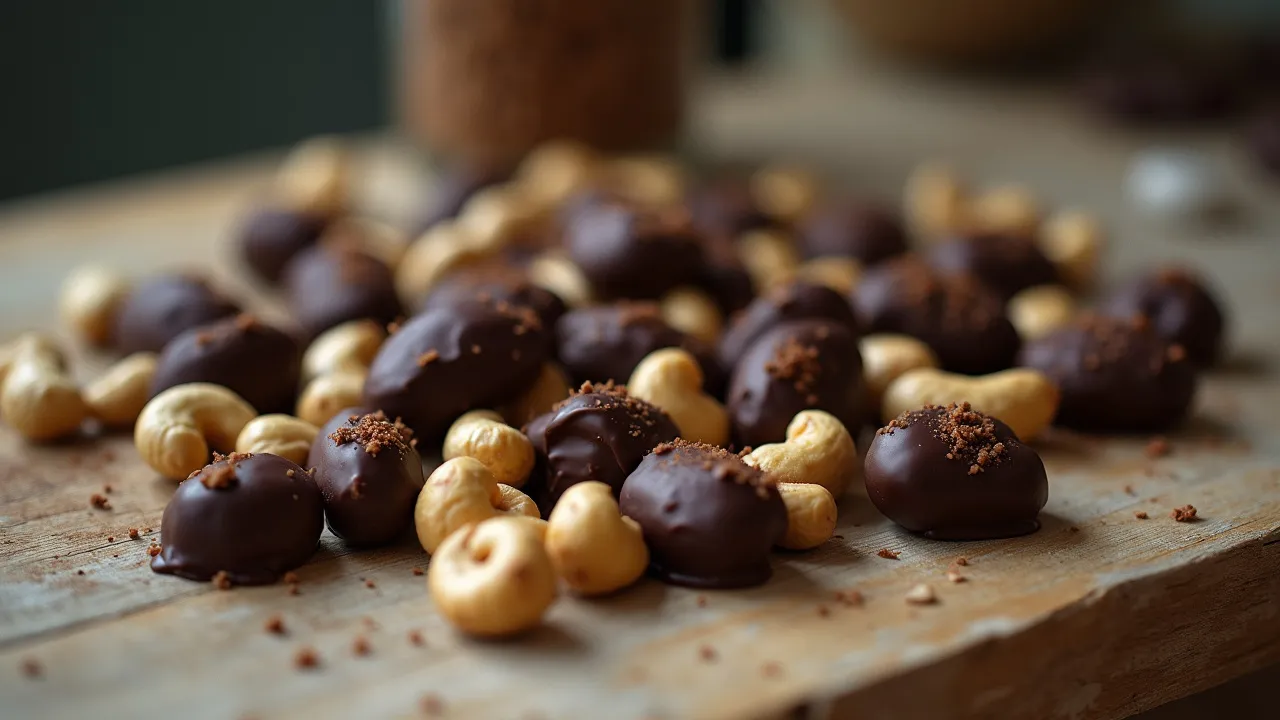
National Chocolate-Covered Cashews Day, observed on April 21st, celebrates the perfect union of crunchy cashews and rich chocolate. Dive into the history, recipes, and global traditions of this beloved confection.
The Historical Origins & Evolutionary Journey
National Chocolate-Covered Cashews Day, observed annually on April 21st, traces its roots to the convergence of two ancient food traditions: the cultivation of cashew nuts in tropical regions and the art of chocolate making in Mesoamerica. While the exact origin of this specific food holiday remains unofficial, its evolution reflects broader trends in confectionery and global trade.
The Foundational Catalyst
Cashews (Anacardium occidentale) originated in Brazil and were spread by Portuguese explorers in the 16th century to Africa and India. The nut's unique kidney shape and creamy texture made it a prized snack. Chocolate, derived from cacao, was consumed by the Aztecs and Mayans as a bitter beverage. The first recorded instance of combining nuts with chocolate appears in 17th-century European chocolate houses, where marzipan and nut pastes were common. However, the specific pairing of whole cashews with milk or dark chocolate gained traction in the early 20th century, particularly after the invention of the chocolate tempering machine in 1879 by Rodolphe Lindt, which allowed for smooth, consistent coatings.
The Legislative/Official Adoption
Unlike federally recognized holidays, National Chocolate-Covered Cashews Day is a 'food holiday' popularized by confectionery companies, food bloggers, and calendar publishers. The day likely emerged in the 1950s as a marketing effort by candy manufacturers like Mars, Nestlé, and smaller artisan chocolatiers to boost sales during the spring season. The choice of April 21st may align with post-Easter candy consumption patterns, offering a new indulgence after Lent. While no official legislation exists, the day has been embraced by the National Confectioners Association and is widely recognized in food media.
Modern Global Legacy
Today, chocolate-covered cashews are a staple in gift boxes, trail mixes, and gourmet shops worldwide. The holiday is celebrated through recipe sharing, taste tests, and charity fundraisers. In India, where cashew cultivation is significant, the day is marked by special discounts. In the United States, artisan chocolatiers compete for the best creative flavors, such as sea salt caramel or chili-spiced versions. The day also highlights the economic importance of cashew farmers in West Africa and Vietnam, the world's largest producers.
How to Celebrate National Chocolate-Covered Cashews Day
Whether you are a home cook, a corporate team, or a school club, marking April 21st can be both delicious and educational. Below are actionable strategies for individuals, organizations, and communities across the globe.
Individual Celebration Ideas
- Make Your Own: Melt high-quality dark or milk chocolate, dip raw or roasted cashews, and let them set on parchment paper. Experiment with toppings like sea salt, cocoa powder, or crushed peppermint.
- Host a Tasting Party: Gather friends and blind-taste varieties from different brands. Score each on crunch, chocolate-to-nut ratio, and creaminess.
- Share on Social Media: Post photos using #ChocolateCoveredCashewsDay and tag your favorite chocolatier. Some brands offer discounts on this day.
School and Classroom Activities
- Science Lesson: Explore the process of tempering chocolate and the role of cocoa butter in creating a glossy finish. Compare conductivity and melting points.
- Geography Class: Trace the supply chain from cashew orchards in Côte d'Ivoire to your local store. Discuss fair trade practices.
- Creative Writing: Ask students to invent a new chocolate-covered cashew flavor and write a persuasive advertisement.
Corporate and Organizational Rituals
- Employee Appreciation: Distribute branded bags of chocolate-covered cashews with thank-you notes.
- Fundraiser: Sell homemade cashew clusters to benefit a local food bank or cashew farming cooperatives.
- Team Building: Organize a 'build your own trail mix' bar featuring chocolate-covered cashews as a key ingredient.
In different countries, traditions vary. In Brazil, the day is celebrated with brigadeiro-style cashew truffles. In Japan, green tea chocolate-covered cashews are popular. In Ghana, the day coincides with cacao harvest festivals.
Health Benefits and Nutritional Profile
Chocolate-covered cashews combine the nutrition of nuts with the antioxidants of cocoa. While they are a treat, they offer several health benefits when consumed in moderation.
Nutritional Breakdown (Per 1 oz or 28g serving)
- Calories: ~160-170
- Protein: 3-4g
- Healthy Fats: 9-12g (mostly monounsaturated and polyunsaturated)
- Fiber: 1-2g
- Carbohydrates: 12-15g (including added sugar)
Key Nutrients
- Copper: Supports immune function and bone health.
- Magnesium: Aids muscle and nerve function, blood sugar regulation.
- Zinc: Important for growth and immunity.
- Flavonoids (from cocoa): May improve heart health by lowering blood pressure and reducing inflammation.
Considerations
Despite benefits, chocolate-covered cashews are calorie-dense and often high in added sugar. Dark chocolate versions (70% cocoa or higher) offer more antioxidants and less sugar. Look for brands that use minimal ingredients and avoid hydrogenated oils. Consuming a handful (about 1 oz) per day can be part of a balanced diet.
Global Variations and Regional Traditions
Chocolate-covered cashews are enjoyed worldwide, but preparation methods and cultural significance vary. The following regional highlights demonstrate the adaptability of this treat.
North America
In the United States, chocolate-covered cashews are a classic in party mixes and gift tins. Favorites include milk chocolate with a dusting of powdered sugar, or dark chocolate with sea salt. Canada favors maple-flavored chocolate cashews, especially in Quebec.
South America
Brazil, the cashew's native home, celebrates with 'castanha de caju' coated in either white or dark chocolate. Often, they are sold at street fairs alongside fresh fruit. In Colombia, a popular version uses arequipe (dulce de leche) flavored chocolate.
Africa
In West Africa, especially Côte d'Ivoire and Ghana, chocolate-covered cashews are a luxury item often given as gifts. Local chocolatiers use single-origin cocoa to create a unique terroir. In South Africa, biltong-flavored chocolate cashews are an innovative twist.
Asia
India, one of the largest cashew producers, offers spicy chocolate cashews with chili or cardamom. Japan infuses matcha green tea into white chocolate for a distinct umami flavor. In China, dark chocolate cashews with goji berries are gaining popularity.
Europe
Belgian chocolatiers produce praline-filled cashew chocolates. In Switzerland, the focus is on high-quality milch chocolate. Germany's 'Nussschokolade' often includes whole cashews.
Oceania
Australia and New Zealand enjoy chocolate-covered cashews with macadamia nut cousins, often in tropical fruit flavors like passionfruit or mango.
The Chocolate-Covered Cashew Industry
The global market for chocolate-covered nuts, including cashews, is a multi-billion-dollar industry. This section explores the economic drivers, supply chain dynamics, and sustainability efforts.
Key Players and Production
Major confectionery companies like Mars, Nestlé, Hershey's, and Ferrero produce mass-market chocolate-covered cashews. Artisanal brands such as See's Candies, Lake Champlain Chocolates, and Hotel Chocolat emphasize premium ingredients. The production process involves roasting cashews (dry or oil), tempering chocolate, enrobing, and cooling. Automation ensures consistency, but hand-dipped varieties command higher prices.
Supply Chain
Cashews are primarily grown in Côte d'Ivoire, India, Vietnam, and Brazil. Raw cashews are shelled and processed in factories before shipping to confectioners. Chocolate sourcing relies heavily on West African cacao from Ghana and Côte d'Ivoire. The industry faces challenges including child labor, price volatility, and climate change. Fair Trade certifications (e.g., Fairtrade International, Rainforest Alliance) are increasingly common.
Sustainability and Innovation
Companies are adopting sustainable practices such as solar-powered processing plants, biodegradable packaging, and direct trade with farmers. Innovations include upcycling cashew apple juice into sweeteners, and using cocoa butter substitutes for lower-cost coatings. The rise of vegan and organic chocolate has led to dairy-free dark chocolate versions with higher cocoa percentages.
Fun Facts and Trivia
To round out your knowledge, here are some delightful tidbits about chocolate-covered cashews and related topics.
Cashews are not actually nuts: They are seeds that grow attached to a cashew apple. The seed is encased in a toxic shell that must be carefully removed.
The world's largest chocolate cashew was made in 2018 by a confectioner in Kerala, India, weighing over 50 kg (110 lbs).
Chocolate-covered cashews are a popular snack on airplanes due to their portability and low mess factor.
In 2023, a startup developed a 'bean-to-bar-to-nut' process where cocoa beans and cashews are roasted together for a blended flavor.
April 21st is also National Tea Day in the UK, making chocolate-covered cashews an ideal pairing with a cuppa.
Cashew butter chocolate truffles are a gourmet trend in recent years.
Historical Timeline
Portuguese explorers carry cashew seeds from Brazil to Africa and India, establishing global cultivation.
Coenraad van Houten invents the cocoa press, making chocolate production more affordable and widespread.
Rodolphe Lindt invents the conching machine, enabling smooth chocolate that evenly coats nuts.
First commercial chocolate-covered nut products appear in the United States, including chocolate-covered cashews.
National Chocolate-Covered Cashews Day begins to be celebrated informally, likely promoted by candy companies.
Cashew production booms in Vietnam, making it a top global exporter and reducing costs.
Fair Trade certifications emerge, improving conditions for cashew and cacao farmers.
Artisan chocolate movement grows, with small-batch chocolate-covered cashews becoming a gourmet item.
April 21st is officially recognized by calendar publishers as National Chocolate-Covered Cashews Day in the U.S.