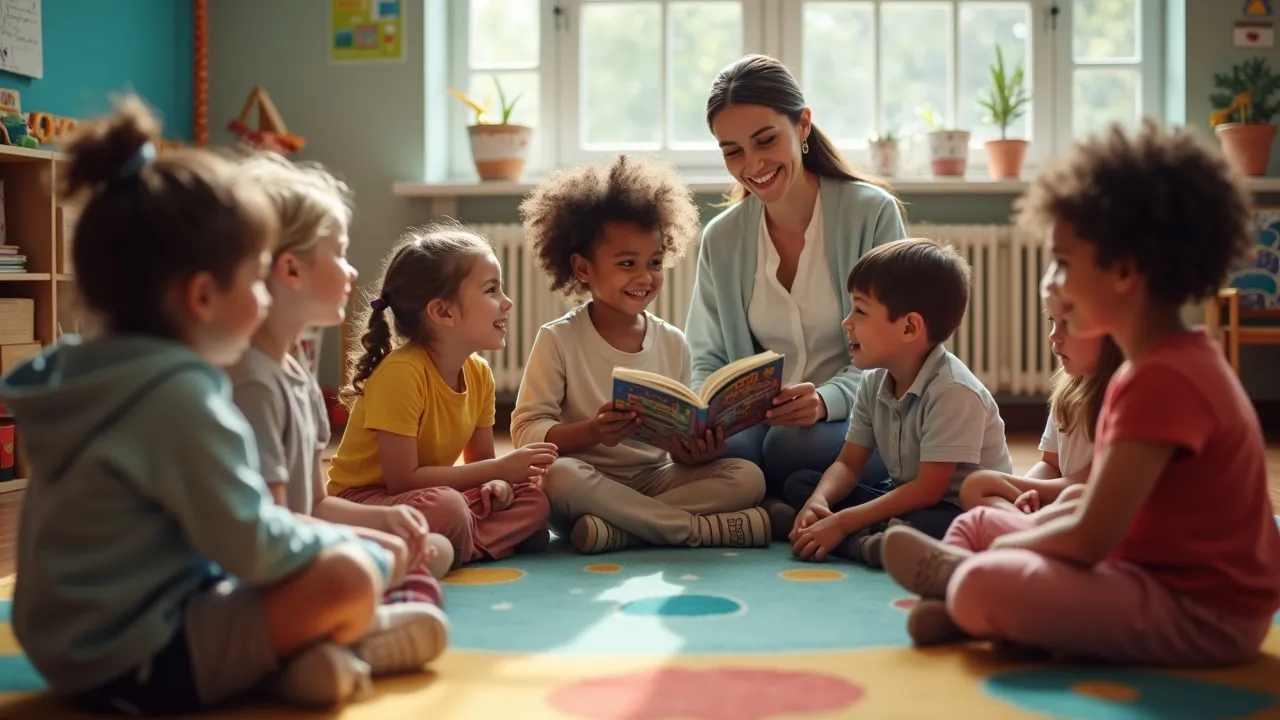
National Kindergarten Day on April 21st honors Friedrich Fröbel, the founder of the first kindergarten, and celebrates the importance of early childhood education. This day acknowledges the foundational role of kindergarten in child development and lifelong learning.
The Historical Origins & Evolutionary Journey
National Kindergarten Day, observed annually on April 21st, commemorates the birthday of Friedrich Fröbel, the German educator who pioneered the concept of kindergarten. Fröbel believed that early childhood education should be rooted in play, creativity, and social interaction, laying the groundwork for modern early learning systems worldwide.
The Foundational Catalyst
Friedrich Fröbel (1782–1852) opened the first kindergarten in Blankenburg, Germany, in 1837, originally calling it a "Play and Activity Institute." He later coined the term "kindergarten" (children's garden). His approach emphasized self-directed play, hands-on learning, and the nurturing of natural curiosity. Fröbel developed a series of educational toys called "gifts" and "occupations" that encouraged children to explore geometric forms, patterns, and physical relationships.
The Legislative/Official Adoption
In the United States, kindergarten gained traction in the mid-19th century, with the first German-language kindergarten established in Wisconsin in 1856. The first public school kindergarten opened in St. Louis in 1873 under the leadership of Susan Blow. However, National Kindergarten Day as a formal observance took shape much later. In 2009, a U.S. Senate resolution designated April 21st as National Kindergarten Day, though the day gained widespread recognition around 2012 through grassroots efforts and early childhood advocacy groups.
Modern Global Legacy
Today, kindergarten is a cornerstone of education systems in countries across the globe. While the United States and Germany celebrate on April 21st, other nations observe related days on different dates—for example, some Latin American countries celebrate Día del Jardín de Infantes on May 28th. The core principles of Fröbel's philosophy—learning through play, respect for the child's agency, and the importance of a nurturing environment—remain central to early childhood education curricula worldwide.
How to Celebrate National Kindergarten Day
National Kindergarten Day offers an opportunity to honor the kindergarten experience and advocate for quality early education. Whether you are a parent, teacher, or community member, here are actionable ways to participate:
For Individuals and Families
- Read a kindergarten-themed book with your child, such as "The Kissing Hand" or "David Goes to School."
- Revisit kindergarten memories by looking through old photos or art projects.
- Donate supplies (crayons, paper, books) to a local kindergarten classroom or library.
For Schools and Educators
- Organize a play-based learning event like a nature walk or building blocks challenge.
- Host a parent presentation on the importance of kindergarten readiness and social emotional skills.
- Share Fröbel's story through classroom activities and simple biography discussions.
For Organizations and Communities
- Advocate for early childhood funding by writing to local policymakers.
- Arrange a kindergarten fair with interactive stations highlighting art, music, and sensory play.
- Partner with museums or libraries for special story times or hands-on exhibits.
Global Celebration Variations
In Germany, Fröbel's birthday is marked by educational seminars and kindergarten open houses. In Japan, which adapted Fröbel's methods in the 1870s, kindergarten festivals often incorporate origami and group games. Many countries use the day to draw attention to the United Nations Sustainable Development Goal 4 (Quality Education) and the need for universal early childhood education.
The Pedagogical Philosophy of Friedrich Fröbel
Fröbel's educational model was revolutionary for its time. He viewed children as active, creative beings who learn best through play and interaction with their environment. His method incorporated three core components:
1. The Gifts and Occupations
Fröbel designed a series of 20 "gifts" (such as yarn balls, wooden blocks, and tiles) and "occupations" (like clay modeling, paper weaving, and beading). These materials allowed children to discover mathematical and spatial relationships while exercising fine motor skills. The gifts progressed from simple to complex, mirroring the child's developmental stages.
2. The Role of the Teacher
Rather than dictating lessons, Fröbel envisioned the teacher as a gentle guide who observes and supports the child's innate drive to explore. This concept later influenced Montessori, Reggio Emilia, and other progressive pedagogies.
3. Emphasis on Nature
Fröbel's kindergarten included gardening, nature walks, and animal care. He believed that direct contact with the natural world fostered wonder, responsibility, and scientific thinking.
Fröbel's ideas spread rapidly through passionate advocates, including Elizabeth Peabody who established the first English-language kindergarten in the United States in 1860. Today, his philosophy underpins many early childhood frameworks, from the HighScope approach to playful learning initiatives.
The Global Impact of Kindergarten Education
Kindergarten has become a near-universal institution, though its implementation varies across cultures. In Nordic countries like Finland, kindergarten (päiväkoti) emphasizes outdoor play and minimal academic pressure, resulting in strong literacy and numeracy outcomes by age seven. In Singapore, kindergarten programs are more structured, focusing on early literacy and math in both English and mother tongue languages.
Key Statistics
- Over 70% of the world's children aged 3-5 are enrolled in some form of early childhood education (UNESCO, 2023).
- In the United States, 85% of children attend kindergarten before first grade, with increasing state funding for full-day programs.
- Investment in pre-primary education yields a return of 7–13% per year through better health, reduced crime, and higher earnings (Heckman, 2016).
Challenges and Inequities
Despite progress, significant gaps remain. Sub-Saharan Africa has an enrollment rate of only 24%. Rural areas in many countries lack trained teachers and appropriate facilities. National Kindergarten Day serves as a reminder to advocate for equitable access to quality early education globally.
The Role of Play in Kindergarten Learning
Play is not a break from learning—it is the primary vehicle for cognitive, social, and emotional development in kindergarten. Research in neuroscience confirms that play fosters executive function skills such as impulse control, working memory, and cognitive flexibility.
Types of Play in Kindergarten
- Free play: Unstructured time for children to choose activities, negotiate roles, and solve problems.
- Guided play: Teacher-selected materials or prompts that channel curiosity toward specific learning goals, like counting or storytelling.
- Outdoor play: Climbing, running, and digging improve gross motor skills and provide sensory stimulation.
Fröbel's original gift of a soft wool ball—the first gift—was designed to engage a baby's senses and later used for games that taught concepts of space and motion. Modern kindergartens integrate play into subjects: building blocks teach engineering, dramatic play teaches empathy, and art teaches visual literacy. National Kindergarten Day is a perfect occasion to re-commit to play-rich curricula.
Contemporary Challenges and Innovations in Early Childhood Education
While kindergarten remains a cherished institution, it faces pressures from academic standardization, screen time, and funding constraints. However, innovative responses are emerging:
Challenge: Academic Push-Down
Some kindergarten classrooms now emphasize worksheets and assessments over play, leading to stress and burnout. Advocates of National Kindergarten Day call for a return to child-centered practices that respect developmental readiness.
Innovation: Outdoor and Nature-Based Kindergartens
Popular in Scandinavia and growing in the U.S., these programs hold class outdoors for most of the day, weather permitting. Studies show improved attention, creativity, and immunity among participants.
Innovation: Technology Integration
Thoughtful use of tablets and interactive apps can support learning when paired with hands-on activities. Tools like ABCmouse and Khan Academy Kids offer adaptive practice, but balance remains key.
Innovation: Trauma-Informed Practices
Recognizing that adverse experiences affect learning, many teachers now incorporate calm-down corners, sensory breaks, and emotionally safe routines. National Kindergarten Day highlights the importance of social-emotional learning as a foundation for academic success.
Historical Timeline
Friedrich Fröbel is born in Oberweißbach, Germany. His early experiences with nature and education will shape his groundbreaking ideas about early childhood learning.
Fröbel opens the first "Play and Activity Institute" in Blankenburg, Germany. Four years later, he renames it "Kindergarten" (children's garden).
Fröbel publishes his book "The Education of Man," outlining his educational philosophy based on play, creativity, and natural development.
The first German-language kindergarten in the United States is established in Watertown, Wisconsin, by Margarethe Schurz, a student of Fröbel's ideas.
Elizabeth Peabody opens the first English-language kindergarten in Boston, Massachusetts, sparking the growth of kindergartens across the United States.
The first public school kindergarten opens in St. Louis, Missouri, under the leadership of Susan Blow, often called the "mother of the American kindergarten."
The International Kindergarten Union (now Association for Childhood Education International) is founded to promote kindergarten standards and teacher training.
The United States Senate passes a resolution designating April 21st as National Kindergarten Day in honor of Friedrich Fröbel's birthday. The day gains official recognition.
National Kindergarten Day receives widespread grassroots support, with schools, museums, and families participating in celebrations and advocacy events.
The COVID-19 pandemic disrupts kindergarten programs worldwide, highlighting the essential role of early childhood education and sparking movements to increase funding and flexibility.
National Kindergarten Day continues to be celebrated with a focus on play-based learning, equity in access, and the legacy of Friedrich Fröbel's vision.