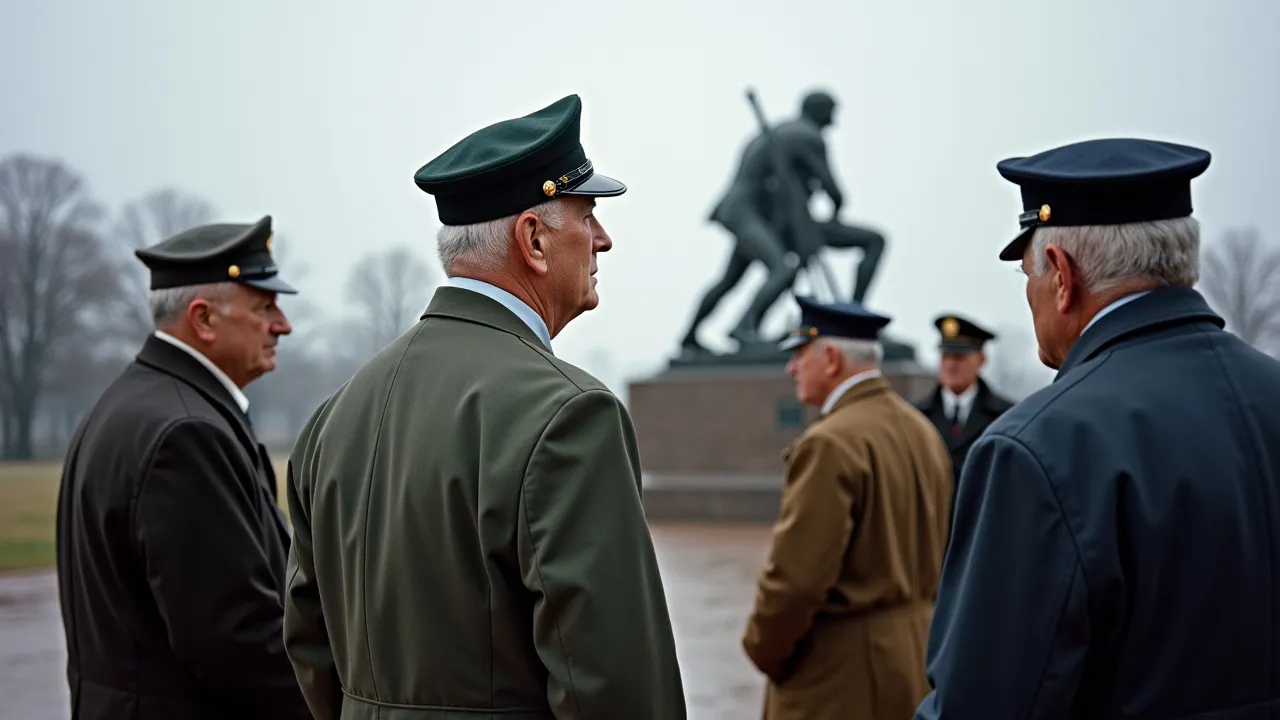
February 19th marks Iwo Jima Day, commemorating the 1945 Battle of Iwo Jima. This day honors the courage and sacrifice of U.S. Marines and military personnel who fought in one of World War II's bloodiest battles.
The Historical Origins & Evolutionary Journey
Iwo Jima Day is observed annually on February 19th to honor the anniversary of the Battle of Iwo Jima (1945), a pivotal and brutal confrontation in the Pacific Theater of World War II. The day is not a federal holiday but a solemn day of remembrance, widely observed by the U.S. Marine Corps, veterans groups, and military history enthusiasts.
The Foundational Catalyst
The Battle of Iwo Jima lasted from February 19 to March 26, 1945. U.S. forces sought to capture the island's two airfields for use as emergency landing strips for B-29 bombers. The Japanese Imperial Army, well-fortified in a network of tunnels and bunkers, put up fierce resistance. The battle resulted in over 26,000 American casualties, including 6,821 dead. The iconic photograph of the raising of the U.S. flag atop Mount Suribachi became a symbol of American perseverance and sacrifice.
The Legislative/Official Adoption
In the years following the war, veterans' organizations, particularly the Marine Corps League, advocated for an official day of recognition. While Congress never passed a law declaring Iwo Jima Day a national holiday, many states, including Texas and Illinois, have issued proclamations designating February 19th as Iwo Jima Day. The U.S. Marine Corps officially recognizes the date through internal directives, and military installations often hold ceremonies.
Modern Global Legacy
Today, Iwo Jima Day serves as a broader symbol of military service and sacrifice. It is commemorated with wreath-laying ceremonies at the Marine Corps War Memorial (Arlington, Virginia), educational programs in schools, and documentary screenings. The day also underscores the enduring bond between the United States and Japan, as both nations now honor the fallen together in ceremonies of reconciliation.
How to Celebrate Iwo Jima Day
Observing Iwo Jima Day is an opportunity to reflect on the cost of freedom and honor the legacy of those who served. Here is a comprehensive guide to celebrating meaningfully:
For Individuals
- Visit a memorial: Attend a ceremony at the Marine Corps War Memorial or a local war monument.
- Read firsthand accounts: Books like Flags of Our Fathers and Iwo Jima: The Dramatic Account of the Epic Battle provide deep insight.
- Watch documentaries: Ken Burns' The War or the documentary Iwo Jima: From Combat to Commemoration.
- Moment of silence: Observe one minute of silence at 9:00 AM local time, the hour the first Marines landed.
For Schools and Educational Groups
- Lesson plans: Integrate the battle into history curricula using primary sources like the flag-raising photograph.
- Guest speakers: Invite veterans or historians to share oral histories.
- Essay contests: Encourage students to write about the meaning of sacrifice.
For Organizations and Corporations
- Internal communications: Send a company-wide email highlighting the day and encouraging donations to veteran charities.
- Sponsor ceremonies: Partner with the Marine Corps League or local VFW posts to host public events.
- Volunteer: Organize a group to clean up a veterans' cemetery or assist at a military museum.
Cross-Cultural Observances: In Japan, Iwo Jima (now officially Iōtō) holds solemn annual ceremonies attended by Japanese and American veterans, focused on reconciliation and peace.
Global Impact and International Recognition
While Iwo Jima Day is primarily observed in the United States, its significance resonates globally. The battle itself involved forces from multiple nations—including Japanese soldiers from various prefectures and American Marines from diverse backgrounds. Over the decades, the observance has evolved into a symbol of transnational reconciliation.
Joint U.S.-Japan Ceremonies
Since the 1990s, American and Japanese veterans have held joint memorial services on Iwo Jima. The Reunion of Honor program, started in 1995 on the 50th anniversary, brings together former enemies in tribute to all fallen. These events emphasize shared humanity and peace.
Global Media Coverage
News outlets worldwide often feature Iwo Jima Day stories, particularly in Pacific Rim countries. Documentaries and films, such as Clint Eastwood's Flags of Our Fathers (2006) and Letters from Iwo Jima (2006), have brought the battle's stories to international audiences, raising awareness of the day.
Educational Impact
Museums in Australia, the United Kingdom, and Japan incorporate Iwo Jima exhibits. The day is used as a teaching moment about the costs of war and the importance of diplomacy.
Key Figures and Medal of Honor Recipients
Iwo Jima Day highlights the extraordinary heroism displayed during the battle. Twenty-seven Medals of Honor were awarded for actions on Iwo Jima—more than any other single engagement in U.S. history. Notable recipients include:
- John Basilone: A legendary Marine already awarded the Medal of Honor for Guadalcanal, he died on Iwo Jima and received the Navy Cross posthumously.
- Hershel 'Woody' Williams: The last surviving Medal of Honor recipient from Iwo Jima, who displayed incredible bravery while clearing Japanese machine-gun positions with a flamethrower. He passed away in 2022.
- Jacklyn H. Lucas: At 17, he threw himself onto two grenades to save his comrades, surviving his wounds and later receiving the Medal of Honor.
Their stories are central to commemorations, often retold in ceremonies and educational materials.
Commemorative Traditions and Symbols
The Marine Corps War Memorial (Iwo Jima Memorial) in Arlington, Virginia, is the most iconic symbol of the day. It depicts the flag-raising on Mount Suribachi. Each year, a solemn ceremony is held there, with wreath-laying, remarks by Marine Corps leaders, and a playing of 'Taps'.
Other Traditions
- Flag flying: Many Americans fly the U.S. flag at half-staff until noon, then full-staff for the remainder of the day.
- Marine Corps Birthday link: Iwo Jima Day is considered a sacred part of Marine Corps heritage, often integrated into the annual Marine Corps Birthday (November 10) celebrations.
- Virtual tributes: Social media campaigns use hashtags like #IwoJimaDay and #HonorTheFallen to share stories and photos.
Symbolic Foods
Some veterans' families prepare 'combat rations' meals or host potlucks with dishes representing the diverse backgrounds of those who served.
Modern Controversies and Reflections
While Iwo Jima Day is overwhelmingly a day of respect, it is not without nuance. In recent years, discussions have emerged about the portrayal of the battle in popular culture and the treatment of Japanese-American soldiers. For instance, the role of Japanese translators and intelligence officers—many of whom were Japanese Americans—has been highlighted.
Debate Over the Flag-Raising Photo
The iconic photo, taken by Joe Rosenthal, was initially thought to be staged. Although it was later confirmed genuine, the controversy raised questions about wartime propaganda. Modern commemorations address this by acknowledging the complexity of war imagery.
Reconciliation Efforts
Some veterans have criticized the 'reunion of honor' events as sanitizing the horrors of war, while others see them as essential for healing. These debates enrich the day's meaning, encouraging critical reflection on history and memory.
Historical Timeline
U.S. Marines land on Iwo Jima, beginning the battle that would last 36 days.
The first U.S. flag is raised on Mount Suribachi; the second flag-raising is photographed by Joe Rosenthal.
Iwo Jima is declared secured. American casualties: 6,821 dead, 19,217 wounded.
First unofficial Iwo Jima Day observances held by Marine Corps units and veterans groups.
The Marine Corps War Memorial is dedicated in Arlington, Virginia, based on the flag-raising photo.
First 'Reunion of Honor' joint U.S.-Japan ceremony on Iwo Jima.
Release of Clint Eastwood's 'Flags of Our Fathers' and 'Letters from Iwo Jima', renewing public interest.
State of Texas officially proclaims February 19 as Iwo Jima Day.