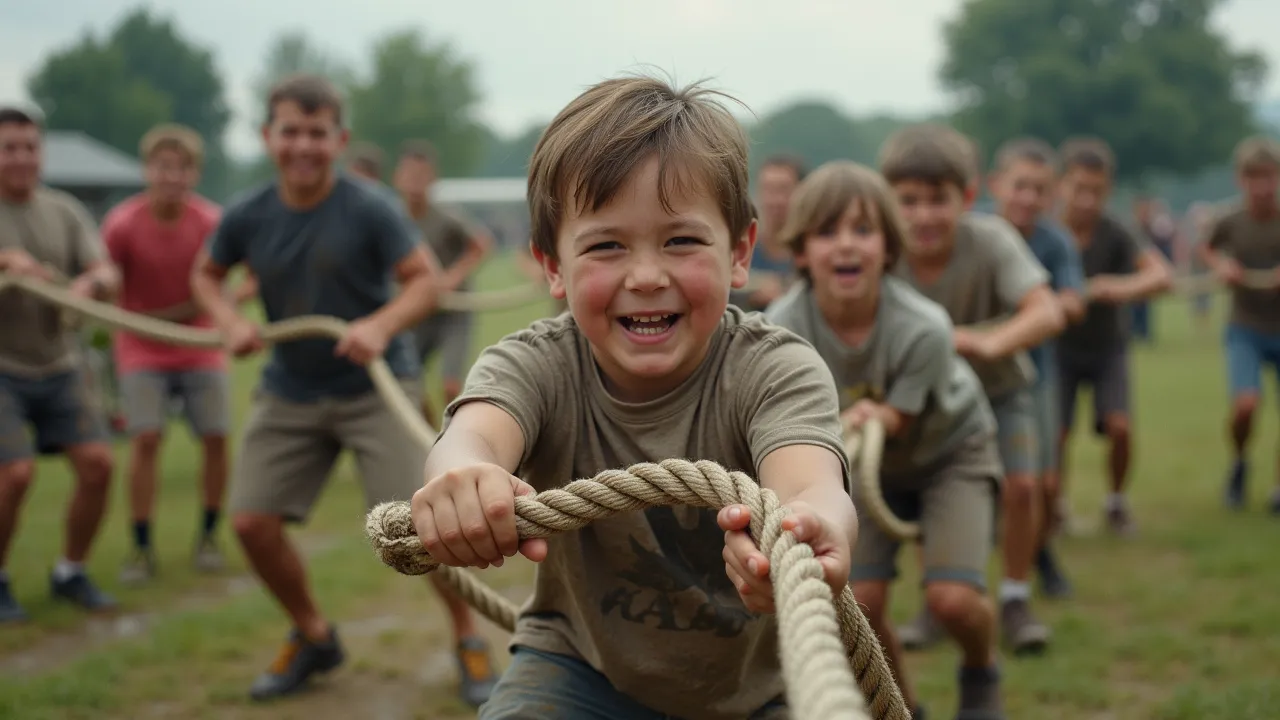
International Tug-of-War Day, observed on February 19th, celebrates the ancient sport of tug-of-war. It highlights teamwork, strength, and unity across cultures, with events ranging from casual community matches to professional competitions.
The Historical Origins & Evolutionary Journey
International Tug-of-War Day, celebrated annually on February 19th, traces its roots to an ancient sport that has been practiced for millennia. The game's simplicity—two teams pulling opposite ends of a rope—belies its deep cultural significance and global appeal. This section explores the foundational catalyst, official adoption, and modern legacy of this observance.
The Foundational Catalyst
Tug-of-war originated in ancient Egypt, Greece, China, and India as a ritual or training exercise. In Egypt, tomb paintings from 2500 BCE depict tug-of-war scenes. The sport was used to build strength and coordination for warriors. During the Middle Ages, tug-of-war was a common village pastime across Europe. The modern rules were standardized in the late 19th century, with the first official club formed in England in 1878. The Tug-of-War International Federation (TWIF) was established in 1960 to govern the sport internationally.
The Legislative/Official Adoption
International Tug-of-War Day was instituted by TWIF in 2013 to promote the sport and its values. The date February 19th was chosen to coincide with the founding anniversary of TWIF's first world championship. The day was endorsed by the International World Games Association (IWGA) as tug-of-war is a recognized sport in the World Games. Resolution for the observance was passed to encourage physical activity, teamwork, and cultural exchange.
Modern Global Legacy
Today, International Tug-of-War Day is celebrated in over 50 countries. Professional competitions follow strict weight classes and surface regulations. The sport has been featured in the World Games and other multi-sport events. Beyond competition, Tug-of-War Day promotes community bonding, youth engagement, and charity events. The day also serves as a platform to advocate for the sport's inclusion in the Olympic Games.
How to Celebrate International Tug-of-War Day
Celebrating International Tug-of-War Day on February 19th can be done in many ways, from small gatherings to large organized events. This guide provides actionable strategies for individuals, schools, and organizations worldwide, incorporating diverse cultural traditions.
For Individuals and Families
- Host a backyard pull: Gather family and friends for informal matches using a sturdy rope. Mark the center with a ribbon.
- Join a community event: Check local parks or recreation centers for organized tug-of-war tournaments.
- Learn the rules: Familiarize yourself with TWIF rules to appreciate the sport's technical aspects.
- Share on social media: Use hashtags like #TugOfWarDay to connect with fellow enthusiasts.
For Schools and Educational Institutions
- Introduce tug-of-war in PE classes as a cooperative team-building activity.
- Organize inter-class tournaments with weight categories to ensure fairness.
- Teach the history of tug-of-war across cultures through classroom lessons.
- Fundraise with a pull-a-thon where participants collect pledges per pull.
For Organizations and Corporations
- Host employee team-building events with mixed teams to foster camaraderie.
- Sponsor local competitions to promote health and wellness.
- Partner with charities to combine tug-of-war matches with fundraising drives.
Regional Traditions
In Japan, tug-of-war festivals like the Okinawa Giant Tug-of-War involve huge ropes hundreds of meters long. In Switzerland, the sport is practiced as Seilziehen with traditional costumes. In India, village tug-of-war is often part of harvest festivals. Understanding these regional variations enriches the celebration.
Global Impact and Societal Themes
International Tug-of-War Day transcends mere sport, touching on themes of unity, perseverance, and cross-cultural dialogue. The day has grown into a global movement that promotes physical fitness, fair play, and social inclusion.
Health and Fitness Advocacy
Tug-of-war is a full-body workout that improves strength, coordination, and cardiovascular endurance. The day encourages sedentary individuals to engage in physical activity. Many events include warm-up sessions led by fitness professionals.
Community Bonding
The sport inherently requires teamwork and communication. Local events on February 19th often become community festivals with food, music, and family activities. These gatherings strengthen social ties and reduce isolation.
Cultural Exchange
International competitions bring together diverse participants. The day highlights the sport's universality, with variations in rules and equipment reflecting local customs. TWIF promotes cultural sensitivity and mutual respect among nations.
The Science of Tug-of-War
Behind the simple act of pulling lies complex physics and biomechanics. Understanding these principles enhances appreciation for the sport.
Physics of the Pull
- Force vectors: The rope's tension depends on the net force exerted by each team. The team that applies greater force in the correct direction wins.
- Friction: Footwear and ground surface are critical. High-friction surfaces increase effective pulling force.
- Center of mass: Lowering the center of mass improves stability. Teams often lean back to increase downward force.
Biomechanics and Training
Proper technique involves using leg drive, core stability, and coordinated timing. Athletes train with resistance bands, squats, and grip-strength exercises. Injuries can occur if technique is poor; warm-ups are essential.
Notable Competitions and Records
International Tug-of-War Day showcases remarkable feats of strength and strategy. Here are some notable events and records.
World Championships
The Tug-of-War World Championships, organized by TWIF, feature multiple weight categories for men, women, and mixed teams. The 2022 championships in Sweden saw teams from 25 countries compete.
Guinness World Records
- Largest tug-of-war: The 2017 event in Belgium had 3,000 participants pulling a 1,000-meter rope.
- Longest duration: A team in the UK pulled continuously for 12 hours in 2019.
- Heaviest rope: A rope weighing 13 tons was used in a Japanese festival.
Famous Venues
Iconic locations like the Royal Albert Hall in London hosted tug-of-war at the 1908 Olympics. The sport was an Olympic event from 1900 to 1920. Today, the World Games feature tug-of-war in venues across the globe.
The Future of Tug-of-War
As International Tug-of-War Day gains popularity, the sport looks toward greater recognition and innovation.
Olympic Aspirations
TWIF actively campaigns for tug-of-war's reinstatement in the Olympic program. The sport's simplicity and global reach make it a strong candidate. In 2023, the International Olympic Committee granted observer status to TWIF.
Technological Advances
Smart ropes with tension sensors and wearable trackers are being developed for training and broadcasting. Virtual reality tug-of-war could engage new audiences.
Grassroots Initiatives
TWIF supports youth programs and school leagues to cultivate future athletes. The day serves as a platform to launch these initiatives, ensuring the sport's longevity.
Historical Timeline
Ancient Egyptian tomb paintings depict tug-of-war scenes, showing the sport's origins as a ritual or training exercise.
The first formal tug-of-war club is established in England, standardizing rules and creating organized competitions.
Tug-of-war is included in the Olympic Games in Paris, featuring teams from multiple countries. It remains in the Olympics until 1920.
The Tug-of-War International Federation (TWIF) is founded to govern the sport globally and promote international competitions.
Tug-of-war is included in the first World Games, a multi-sport event for non-Olympic sports, held in Santa Clara, California.
TWIF establishes International Tug-of-War Day on February 19th to promote the sport and commemorate the founding of the federation's world championships.
The Tug-of-War World Championships in Sweden attract 25 nations, setting a record participation for the event.
The International Olympic Committee grants observer status to TWIF, a step toward potential Olympic inclusion.