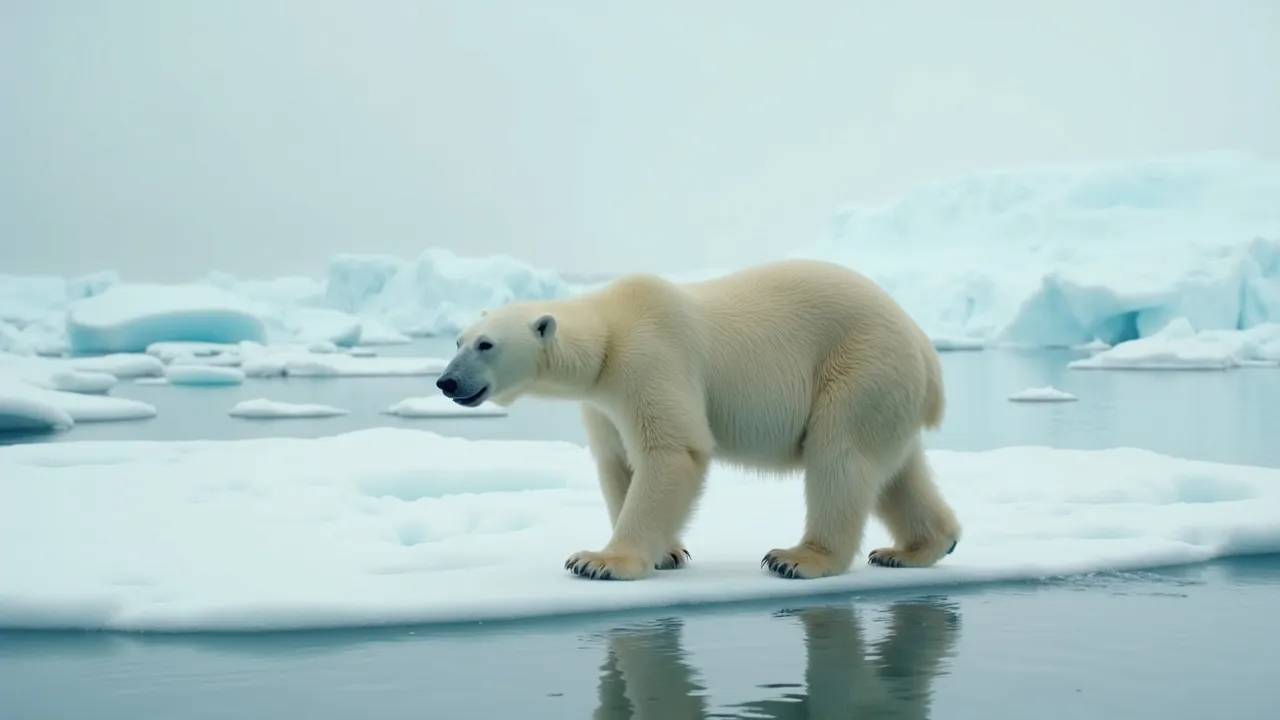
International Polar Bear Day on February 27 raises awareness about polar bear conservation and the threats they face from climate change. Join global efforts to protect Arctic sea ice and ensure the survival of this iconic species.
The Historical Origins & Evolutionary Journey
International Polar Bear Day, observed annually on February 27, was established by Polar Bears International (PBI) to focus attention on the urgent need for polar bear conservation. The date was chosen to coincide with the period when polar bear mothers and cubs are in their dens, making it a critical time for education and action.
The Foundational Catalyst
The initiative emerged from growing scientific evidence linking climate change to the rapid loss of Arctic sea ice, the polar bear's primary hunting ground. Scientists at PBI recognized that public awareness and advocacy were essential to drive policy changes. The first official celebration took place in 2011, mobilizing zoos, schools, and conservation groups worldwide.
The Legislative/Official Adoption
While International Polar Bear Day is not a federally recognized holiday, it has been endorsed by numerous wildlife agencies and conservation organizations. The U.S. Fish and Wildlife Service and the Canadian Wildlife Service actively promote the day through educational campaigns. In 2013, the day gained further prominence when the Polar Bear Specialist Group of the IUCN began coordinating global events.
Modern Global Legacy
Today, the observance extends beyond a single day. Social media campaigns, fundraising drives for research, and community events throughout February contribute to a sustained conversation. The day has also influenced corporate pledges to reduce carbon footprints and government commitments to protect Arctic ecosystems.
How to Celebrate International Polar Bear Day
International Polar Bear Day offers countless ways for individuals, schools, and organizations to make a difference. Below are proven strategies categorized by impact area.
For Individuals
- Reduce your carbon footprint: Commit to one action like switching to LED bulbs, driving less, or eating a plant-based meal for the day.
- Donate to conservation: Support organizations like Polar Bears International or the World Wildlife Fund's polar bear program.
- Educate yourself and others: Watch documentaries such as 'Polar Bear: A Journey to the Edge of Extinction' and share facts on social media using #PolarBearDay.
For Schools
- Host a polar bear-themed science fair: Encourage students to research climate change, Arctic ecology, and conservation solutions.
- Organize a fundraiser: Sell polar bear crafts or hold a bake sale with proceeds going to adoption programs.
- Invite a guest speaker: Arrange a virtual talk with a polar bear researcher or zoo educator.
For Organizations
- Launch a green initiative: Announce a company-wide commitment to reduce energy use by 10% in the coming year.
- Sponsor a den detection program: Partner with researchers to fund drone surveys that locate polar bear dens in the wild.
- Create a matching gift campaign: Double employee donations to polar bear charities during February.
Regional Variations
In Canada, many schools hold 'Polar Bear Walks' where students walk laps to symbolize the long journeys bears make. In Norway, conservation groups host ice sculpture exhibitions. In the United States, zoos often offer free admission to children wearing polar bear costumes.
Conservation Status and Threats
Polar bears are classified as Vulnerable on the IUCN Red List, with an estimated 22,000–31,000 individuals remaining in the wild. The primary threat is the loss of sea ice due to climate change, which reduces access to their main prey: seals.
Climate Change Impacts
Arctic sea ice has declined by approximately 13% per decade since the start of satellite records. Longer ice-free periods force polar bears to fast for extended time, leading to declining body condition and lower cub survival rates. Models predict that if greenhouse gas emissions continue at current rates, polar bears could face near-extinction by 2100.
Other Threats
- Pollution: Persistent organic pollutants accumulate in the food chain, affecting reproduction and immune systems.
- Oil and gas development: Increased industrial activity in the Arctic leads to habitat disturbance and risk of spills.
- Human-wildlife conflict: As sea ice retreats, bears venture into communities in search of food, leading to lethal removals.
International Polar Bear Day highlights these threats and promotes science-based solutions, such as marine protected areas and stricter emission targets.
The Critical Role of Arctic Sea Ice
Sea ice is the foundation of the polar bear's entire existence. It serves as a platform for hunting seals, a travel corridor between denning areas, and a refuge from predators. Without sufficient ice, polar bears cannot access their primary food source.
Seasonal Ice Dynamics
Polar bears rely on two types of ice: annual ice that forms each winter and multi-year ice that persists through summer. Multi-year ice is thicker and more stable, but it is rapidly disappearing. The loss of multi-year ice forces bears to depend on thinner annual ice, which breaks up earlier in spring.
Denning Habitat
Pregnant females build maternity dens on land or on stable pack ice. The timing of ice breakup affects their ability to reach denning sites; early breakup can strand mothers and cubs on land with limited food resources. Studies show that in some regions, denning success has declined by up to 30%.
Conservation strategies focus on preserving critical sea ice habitats through global climate agreements. International Polar Bear Day serves as a call to action for nations to meet their Paris Agreement commitments and limit global warming to 1.5°C.
Polar Bear Behavior and Adaptation
Polar bears are marvels of evolution, perfectly adapted to the harsh Arctic environment. Understanding their biology enhances appreciation and urgency for conservation.
Physical Adaptations
- Insulation: A thick layer of blubber (up to 11 cm) and dense fur provide warmth even at -40°C.
- Camouflage: Their fur appears white but is actually transparent; each hair scatters light to blend with snow.
- Exceptional swimmers: They can swim dozens of kilometers at a stretch using large, slightly webbed paws.
Hunting Strategies
Polar bears are ambush predators. They use two main techniques: still-hunting (waiting beside a seal's breathing hole for hours) and stalking (approaching basking seals on ice). Their sense of smell is extraordinary, able to detect a seal's lair under 1 meter of snow.
Reproduction
Mating occurs in April–May, but implantation is delayed until fall. Cubs are born in mid-winter (December–January) inside snowy dens, weighing only 500–700 grams. They emerge in March–April and stay with their mother for 2.5 years.
Global Partnerships and Conservation Initiatives
International Polar Bear Day unites a diverse network of organizations, governments, and researchers dedicated to polar bear conservation. Key players include:
Polar Bears International (PBI)
Founded in 1992, PBI leads research on polar bear ecology and climate change. Their 'Bear Tracker' program uses satellite collars to monitor bear movements and teaches the public about sea ice use.
IUCN Polar Bear Specialist Group
This network of scientists from the five polar bear range states (Canada, Greenland, Norway, Russia, United States) assesses population status and provides policy recommendations. They organize international meetings every 3–4 years.
WWF's Arctic Programme
The World Wildlife Fund works with local communities to reduce human-bear conflict, supports anti-poaching patrols, and advocates for marine protected areas in the Arctic.
U.S. Marine Mammal Protection Act & Endangered Species Act
In the United States, polar bears are listed as threatened under the ESA (2008) and receive protection under the MMPA. The 'Polar Bear Conservation Management Plan' (2016) outlines strategies to reduce threats.
International Polar Bear Day provides a platform for these groups to launch joint campaigns, share research findings, and mobilize public support for legislation like the 'Arctic Environmental Protection Act'.
How Climate Change Affects Polar Bear Populations
The link between polar bear decline and climate change is robust. As the planet warms, Arctic sea ice forms later in autumn and breaks up earlier in spring, directly reducing the feeding season for bears.
Population Decline in Key Regions
The Southern Beaufort Sea population has declined by 40% between 2001 and 2010, and the Western Hudson Bay population decreased by 30% from 1987 to 2011. Subpopulations in areas with less ice are showing lower cub survival rates and reduced average body weight.
Physiological Stress
Longer fasting periods lead to malnutrition, smaller litter sizes, and increased cub mortality. Female bears in poor condition have been observed abandoning dens or emerging with thinner cubs. Additionally, warmer temperatures may increase disease prevalence, such as exposure to novel pathogens.
Mitigation Through Global Action
International Polar Bear Day emphasizes that individual and collective actions to reduce emissions can still halt polar bear declines. Key actions include transitioning to renewable energy, protecting carbon-rich Arctic ecosystems like permafrost, and enforcing shipping regulations in the Arctic to reduce black carbon emissions that accelerate ice melt.
Historical Timeline
The five Arctic nations sign the International Agreement on the Conservation of Polar Bears and their Habitat, banning unregulated hunting and protecting denning areas.
Polar Bears International is founded as a nonprofit dedicated to polar bear conservation through research, education, and advocacy.
The IUCN Polar Bear Specialist Group classifies polar bears as 'Vulnerable' due to projected sea ice loss.
The United States lists polar bears as 'Threatened' under the Endangered Species Act, citing global warming as the primary threat.
Polar Bears International launches the first International Polar Bear Day on February 27, sparking global awareness campaigns.
The International Union for Conservation of Nature adopts a resolution to intensify polar bear conservation efforts, linking to climate goals.
The Paris Agreement is adopted, with polar bear advocates emphasizing the need for strict warming limits to save Arctic sea ice.
Research shows that polar bears are now spending more days on land, leading to increased human-bear conflicts across Arctic communities.
Polar Bears International releases a landmark report estimating that saving polar bears requires keeping global warming below 1.5°C.