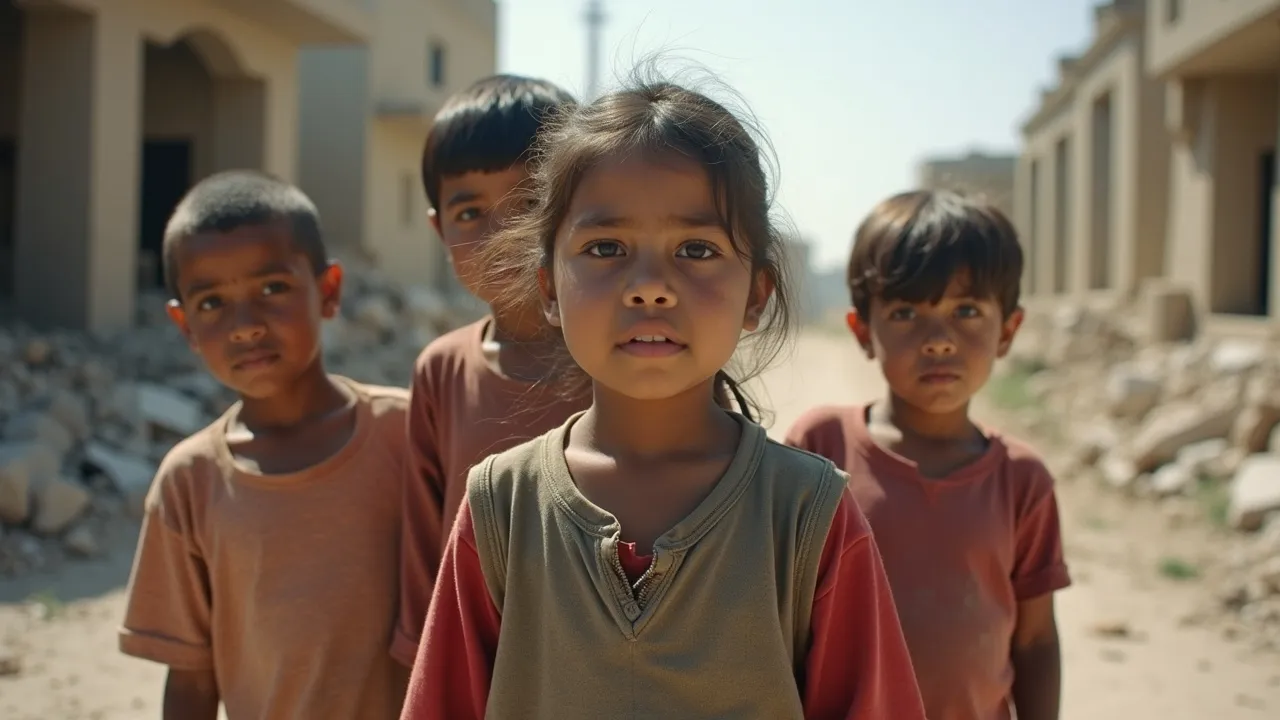
The International Day of Innocent Children Victims of Aggression, observed on June 4th, is a UN-designated day to raise awareness about the impact of armed conflict on children and to advocate for their protection and rights worldwide.
History and Origins
The International Day of Innocent Children Victims of Aggression was established by the United Nations General Assembly in 1982, following a period of intense global concern over the plight of children caught in armed conflicts. The day serves as a solemn reminder of the suffering endured by countless children worldwide due to acts of aggression.
The Foundational Catalyst: The 1982 Lebanon War
The immediate catalyst for the creation of this observance was the 1982 Lebanon War, during which the Israeli military invasion resulted in heavy civilian casualties, particularly among children. The siege of Beirut and the Sabra and Shatila massacre shocked the international community, highlighting the vulnerability of children in conflict zones. Graphic images of injured and orphaned children galvanized world opinion and spurred diplomatic action. The United Nations Security Council and General Assembly convened emergency sessions to address what was perceived as a gross violation of human rights.
The Legislative Adoption: UN General Assembly Resolution
On August 19, 1982, the UN General Assembly adopted resolution ES-7/8, which not only condemned the aggression but also proclaimed June 4th as the International Day of Innocent Children Victims of Aggression. The resolution called upon all states to respect the provisions of the Geneva Conventions and to ensure the protection of children. The date was chosen to commemorate the many children who lost their lives or were permanently traumatized by the conflict. This resolution laid the groundwork for subsequent international legal frameworks, including the Convention on the Rights of the Child (1989) and the Optional Protocol on the Involvement of Children in Armed Conflict (2000).
Modern Global Legacy
Since its inception, the day has evolved to encompass all children affected by violence, not just those in international wars but also victims of civil unrest, terrorism, and organized crime. The observance is now a platform for advocacy, fundraising, and education. Numerous NGOs, such as UNICEF and Save the Children, use this day to release reports on the state of children in conflict, launch campaigns for demobilization of child soldiers, and call for ceasefires. The day also honors the resilience of children who survive and rebuild their lives despite unimaginable trauma.
How to Celebrate International Day of Innocent Children Victims of Aggression
Commemorating this day involves both reflection and action. Individuals, schools, and organizations can engage in meaningful activities to raise awareness and support affected children. Below are specific strategies for different groups.
For Individuals
- Educate yourself about the impact of war on children by reading reports from UNICEF or the United Nations. Share on social media using hashtags like #ChildrenNotSoldiers or #ProtectChildren.
- Donate to verified charities that provide emergency aid, education, and psychological support to children in conflict zones, such as War Child or the International Rescue Committee.
- Write letters to elected officials urging them to support policies that protect children in conflict, including ratifying international treaties and funding humanitarian assistance.
For Schools
- Organize a classroom discussion or assembly focused on the rights of the child, using age-appropriate materials. Show documentaries like "The Uncondemned" or "Watchers of the Sky."
- Host a fundraising event such as a bake sale or walkathon, with proceeds going to child protection programs. Involve students in creating posters and presentations.
- Invite guest speakers from NGOs or local refugee organizations to share firsthand accounts and inspire empathy and action.
For Organizations
- Launch a corporate social responsibility campaign matching employee donations to child-focused charities. Offer paid volunteer days for staff to participate in related activities.
- Host a webinar or panel discussion featuring experts on child protection, international law, and conflict resolution. Record and share the event online.
- Create and distribute informational materials, such as fact sheets or infographics, highlighting the plight of children in conflict and ways to help.
In different regions, specific traditions have emerged. In the Middle East, many faith-based organizations hold prayer vigils. In Europe, schools often dedicate the day to studying the UN Convention on the Rights of the Child. In the United States, some cities hold peace rallies and film screenings. Regardless of the approach, the ultimate goal is to amplify the voices of vulnerable children and demand a world where they can grow up free from fear.
Global Impact of Armed Conflict on Children
Armed conflict inflicts devastating and lasting harm on children, affecting every aspect of their lives. The United Nations reports that over 250 million children currently live in conflict-affected areas. The impacts are multifaceted and can be categorized as follows.
Physical and Emotional Trauma
Children exposed to violence suffer from physical injuries, disabilities, and psychological trauma. Post-traumatic stress disorder (PTSD), depression, and anxiety are common. Many children witness the death of family members or friends, leading to profound grief. The stress of displacement and loss of normalcy disrupts brain development, with effects that can persist for decades.
Displacement and Disruption of Education
Armed conflict forces families to flee, creating millions of refugees and internally displaced persons. As of recent estimates, more than 30 million children are displaced worldwide due to conflict. Displacement disrupts education, with many children missing years of schooling. This not only stunts their academic growth but also exposes them to risks such as child labor, early marriage, and recruitment into armed groups.
Child Soldiers and Recruitment
Despite international prohibitions, thousands of children are forcibly recruited as soldiers, porters, or spies. The Optional Protocol on the Involvement of Children in Armed Conflict sets 18 as the minimum age for direct participation, yet violations persist. Child soldiers are often subjected to harsh training, forced to commit atrocities, and suffer severe physical and psychological abuse. Reintegration programs exist but are underfunded.
Health and Nutrition
Conflict disrupts health systems, leading to increased mortality from preventable diseases. Malnutrition rates soar during wars due to food insecurity. Access to clean water and sanitation is often compromised, leading to outbreaks of cholera and other diseases. The destruction of health facilities and the killing of medical personnel further compound the crisis.
These impacts underscore the urgent need for sustained international attention and concrete measures to protect children in conflict zones.
The Role of the United Nations and International Law
The United Nations has been at the forefront of efforts to protect children in armed conflict through legal frameworks, monitoring mechanisms, and peacekeeping operations. Key developments include the Convention on the Rights of the Child (CRC), the Optional Protocols, and the Security Council's Children and Armed Conflict (CAAC) agenda.
Convention on the Rights of the Child (1989)
The CRC is the most widely ratified human rights treaty, establishing the fundamental rights of children, including protection from violence, abuse, and neglect. It explicitly calls on states to protect children affected by armed conflict. The Committee on the Rights of the Child monitors compliance and issues recommendations.
Optional Protocol on the Involvement of Children in Armed Conflict (2000)
This protocol raises the minimum age for compulsory recruitment to 18 and prohibits the direct participation of children under 18 in hostilities. It also requires states to take measures to demobilize and rehabilitate child soldiers. As of today, over 170 countries have ratified this protocol.
Security Council Resolutions
The UN Security Council has adopted a series of resolutions (e.g., 1612, 1882, 1998, 2225) that establish a monitoring and reporting mechanism on grave violations against children, including killing, maiming, recruitment, sexual violence, and attacks on schools and hospitals. The Secretary-General publishes an annual "Children and Armed Conflict" report listing parties that commit violations, which can lead to sanctions.
UN Agencies and Programs
UNICEF, as the lead agency for children, provides emergency aid, education, and psychosocial support in conflict zones. The Office of the Special Representative of the Secretary-General for Children and Armed Conflict advocates for the release of child soldiers and the protection of children's rights. Peacekeeping missions often include child protection advisers.
Despite these efforts, implementation gaps remain, and political will is often insufficient. The day serves as an opportunity to hold perpetrators accountable and push for stronger enforcement.
Themes and Advocacy Campaigns
Each year, the International Day of Innocent Children Victims of Aggression is marked by a specific theme or focus area to direct global attention. These themes are chosen by the UN in consultation with civil society. Recent themes have included "Protect Their Rights, Secure Their Future" (2023) and "End the Violence, Restore Their Childhood" (2022). The day is also used to launch major advocacy campaigns.
Annual Themes
- 2023: "Protect Their Rights, Secure Their Future" – Emphasized the importance of legal frameworks and accountability.
- 2022: "End the Violence, Restore Their Childhood" – Focused on the psychological impact and need for mental health support.
- 2021: "Children Under Siege" – Highlighted the plight of children in prolonged conflicts such as Syria, Yemen, and Palestine.
- 2020: "COVID-19 and Conflict" – Addressed the compounded vulnerabilities due to the pandemic.
Major Advocacy Campaigns
UNICEF's "No Lost Generation" initiative aims to provide education and protection for children affected by the Syria crisis. Save the Children's "Stop the War on Children" campaign reports annually on the six grave violations. Global Coalition to Protect Education from Attack (GCPEA) tracks attacks on schools. On this day, these organizations often coordinate social media blasts, celebrity endorsements, and fundraising drives. The day also sees the release of the "Children and Armed Conflict" annex by the Secretary-General, naming and shaming violators.
Engagement on social media is a critical component. The official UN hashtag is #InnocentChildren. Activists encourage users to share stories, photos, and demands for action. In addition, many governments issue official statements reaffirming their commitment to child protection. Some countries hold national parliamentary debates on the issue.
Looking Forward: Protecting Children in Future Conflicts
As the nature of armed conflict evolves—with urbanization, cyber warfare, and climate-induced conflicts—new threats to children emerge. The international community must adapt its protection strategies. Key priorities include strengthening legal enforcement, investing in conflict prevention, and ensuring that child protection is central to humanitarian responses.
Strengthening Accountability
Impunity for violations against children remains a major challenge. The International Criminal Court (ICC) has prosecuted cases of recruiting child soldiers, but more robust mechanisms are needed. National courts should prosecute crimes under universal jurisdiction. The UN Human Rights Council's Universal Periodic Review should include child protection benchmarks.
Investing in Conflict Prevention
Preventing conflict before it erupts is the most effective way to protect children. This requires addressing root causes such as inequality, resource scarcity, and governance failures. Education, economic opportunity, and social cohesion programs can build resilience. Early warning systems that incorporate child protection indicators can trigger rapid diplomatic interventions.
Integrating Child Protection into Humanitarian Action
Humanitarian responses must prioritize children's needs from the outset. This includes child-friendly spaces, mental health support, family reunification, and continuation of education even during emergencies. The Minimum Standards for Child Protection in Humanitarian Action provide a framework. Donors must allocate sufficient funding specifically for child protection, which currently represents a tiny fraction of humanitarian budgets.
Embracing Technology for Protection
Digital tools can help identify and track violations, facilitate reporting, and deliver remote education. However, they also expose children to new risks such as cyberbullying and exploitation. Responsible innovation is needed to balance benefits and harms.
The International Day of Innocent Children Victims of Aggression is not only a day of remembrance but also a call to action. By recommitting ourselves to this cause, we can create a safer world for every child, regardless of where they live.
Historical Timeline
The United Nations General Assembly adopts Resolution ES-7/8, establishing the International Day of Innocent Children Victims of Aggression on June 4th, in response to the 1982 Lebanon War and its impact on children.
The UN General Assembly adopts the Convention on the Rights of the Child (CRC), the most widely ratified human rights treaty, which includes provisions for protecting children in armed conflict.
Graca Machel releases the landmark report 'Impact of Armed Conflict on Children,' commissioned by the UN General Assembly, highlighting the devastation and calling for action.
The Optional Protocol on the Involvement of Children in Armed Conflict is adopted, raising the minimum age for direct participation in hostilities to 18.
The UN Security Council establishes a monitoring and reporting mechanism on grave violations against children in conflict zones via Resolution 1612.
The UN reports that the COVID-19 pandemic exacerbates the vulnerabilities of children in conflict, with increased recruitment and attacks on healthcare.
The theme 'End the Violence, Restore Their Childhood' focuses on mental health support for children affected by aggression, with major campaigns from UNICEF and Save the Children.
The United Nations highlights that over 250 million children live in conflict zones, and calls for renewed commitment to the Protection of Children in Armed Conflict agenda.