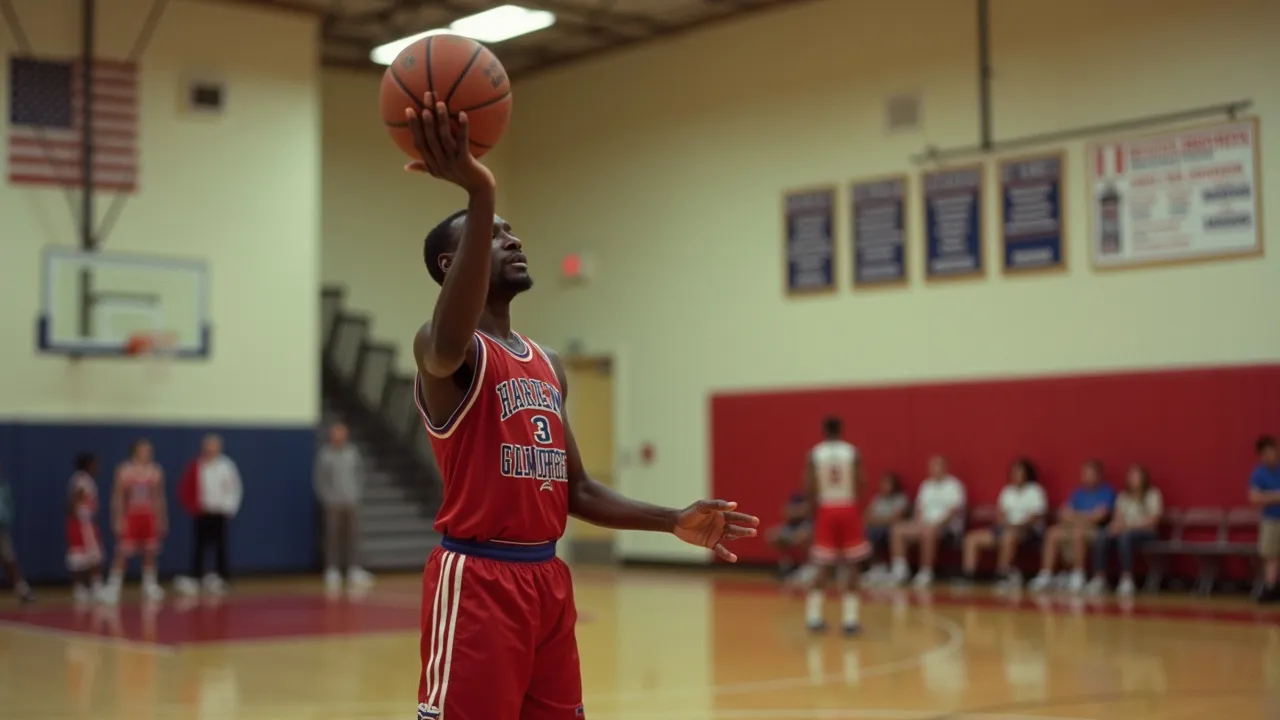
Harlem Globetrotters Day on January 7th honors the legendary exhibition basketball team, celebrating their first game in 1927, their global impact, and decades of entertainment, athleticism, and cultural influence.
The Historical Origins & Evolutionary Journey
Harlem Globetrotters Day, observed annually on January 7th, commemorates the first game played by the world-famous exhibition basketball team in 1927. This day honors the team's rich history, from humble beginnings in a small Illinois gym to becoming a global phenomenon that transcends sports.
The Foundational Catalyst
The origins trace back to 1926 when a group of African American basketball players, originally called the "Savoy Big Five," began playing at Chicago's Savoy Ballroom. In 1927, promoter and coach Abe Saperstein took over the team, renaming them the "Harlem Globetrotters" to suggest an urban, cosmopolitan identity—even though they were based in Chicago. Saperstein's vision transformed the team into a traveling exhibition squad, blending athletic prowess with comedic entertainment. On January 7, 1927, the Globetrotters played their first official game in Hinckley, Illinois, defeating a local team 43-1.
The Legislative/Official Adoption
While not an official federal holiday, Harlem Globetrotters Day gained recognition through fan celebrations, team initiatives, and local proclamations. The date January 7th became firmly associated with the team's legacy after decades of annual tributes. In 2002, the team officially established January 7th as Harlem Globetrotters Day, encouraging fans worldwide to celebrate the team's contributions to basketball and entertainment.
Modern Global Legacy
Today, the Harlem Globetrotters are icons of sport and culture. They have played in over 120 countries and territories, entertaining over 148 million fans. The team has featured more than 600 players, including legends like Meadowlark Lemon, Curly Neal, and Wilt Chamberlain. Harlem Globetrotters Day now serves as a platform to promote the team's core values: teamwork, respect, integrity, and determination. Educational outreach and community events are central to modern celebrations.
How to Celebrate Harlem Globetrotters Day
Harlem Globetrotters Day offers numerous ways to honor the team's legacy, from attending games to engaging in community service. Here is the ultimate global guide to celebrating this unique observance.
For Individuals and Families
- Watch classic games: Stream historic Globetrotters matches online or host a viewing party featuring iconic moments like the 4-point shot or the "Magic Circle."
- Learn trick shots: Practice basketball tricks inspired by the Globetrotters—spin a ball on your finger, try behind-the-back passes, or attempt a half-court shot.
- Attend a live game: Check the team's tour schedule; attending a game on or near January 7th is the ultimate celebration.
For Schools and Community Groups
- Organize a basketball clinic teaching fundamentals through Globetrotter-inspired drills and games.
- Host a themed assembly featuring performances, trivia, and a history presentation.
- Coordinate a charity event: The Globetrotters have a strong tradition of community service—collect canned goods or raise funds for local youth programs.
Global Observances
While most events occur in the United States, international fans celebrate virtually. In Europe, fan clubs organize viewing parties. In Asia, social media campaigns with the hashtag #HarlemGlobetrottersDay trend. The team's digital platform offers free educational content for schools worldwide.
Cultural Impact and Social Significance
The Harlem Globetrotters have profoundly influenced American culture and global perceptions of basketball. As one of the first integrated sports teams, they broke racial barriers during the Jim Crow era. Their comedic style and showmanship challenged stereotypes, showcasing African American excellence and innovation.
Breaking Barriers
In the 1940s and 1950s, the Globetrotters traveled the South, often facing discrimination but winning over audiences with their skill. They hired female player Lynette Woodard in 1985, a pioneer for women in basketball. The team also signed international players, reflecting a commitment to diversity.
Entertainment Legacy
The Globetrotters influenced popular culture through appearances on The Simpsons, Scooby-Doo, and numerous films. Their signature moves—the "Houdini" (a trick behind-the-back pass) and the "Watermelon" (a comedic ball-handling routine)—are part of basketball lexicon.
Innovations in Basketball and Entertainment
Beyond entertainment, the Globetrotters introduced rule changes and innovations that shaped modern basketball. They popularized the three-point line (later adopted by the NBA) and the four-point line in exhibition games. Their use of trick shots and choreographed warm-ups inspired a generation of players to embrace creativity.
Technical Contributions
- First team to use a red, white, and blue basketball (to increase visibility).
- Pioneered the "jump ball" as a ceremonial start.
- Introduced coaching innovations like the "timeout" huddle (though the NBA already had it).
Global Influence
The Globetrotters helped popularize basketball worldwide, playing before packed stadiums in the Soviet Union, China, and Africa. Their tours often preceded NBA expansion into those markets.
Community Outreach and Philanthropy
The Harlem Globetrotters have a long-standing commitment to giving back. Their "Globetrotters Kidz" program promotes health, education, and anti-bullying. The team also partners with the Special Olympics, USO, and UNICEF.
Key Initiatives
- Education: Free online curriculum for teachers using basketball to teach math, science, and history.
- Anti-Bullying: Players share messages of inclusivity and respect at school assemblies.
- Health and Fitness: The team encourages active lifestyles through clinics and challenges.
On Harlem Globetrotters Day, many players participate in volunteer activities, such as visiting children's hospitals or hosting free basketball camps.
Notable Players and Their Contributions
The Harlem Globetrotters have featured over 600 players, each contributing to the team's legacy. Here are some of the most influential:
Meadowlark Lemon (1932-2015)
Known as the "Clown Prince of Basketball," Lemon played for 27 years, dazzling fans with his ball-handling, humor, and athleticism. He became the face of the team and a cultural icon.
Curly Neal (1938-2020)
The bald-headed dribbling wizard, Neal's trademark ball control and comedic timing made him a fan favorite. He performed for 22 years and appeared in numerous TV shows.
Wilt Chamberlain
The NBA legend started his career with the Globetrotters in 1958-1959 before joining the Philadelphia Warriors. His year with the team helped refine his skills.
Lynette Woodard
The first female player (1985-1986), Woodard was a former Olympic gold medalist and NCAA star. She paved the way for women in professional basketball.
The Team's Role in Sports Diplomacy
The Harlem Globetrotters have served as unofficial ambassadors of goodwill, particularly during the Cold War. Their tours to the Soviet Union (1959) and China (1970s) promoted cultural exchange and soft power. In 1951, they played a historic game in Berlin, Germany, drawing massive crowds. The team's ability to transcend politics and language through laughter and sport makes them a unique diplomatic tool.
Diplomatic Milestones
1959: First American sports team to tour the Soviet Union.
1974: Played in China during the thaw in US-China relations.
1990s: Tours to Cuba and South Africa under Nelson Mandela.
Historical Timeline
Team founded as the Savoy Big Five in Chicago, Illinois, playing at the Savoy Ballroom.
Abe Saperstein takes over, renames team to Harlem Globetrotters. First official game on January 7 in Hinckley, Illinois.
Globetrotters become a premier attraction, integrating players from the Negro leagues and touring nationwide.
Globetrotters defeat the NBA champion Minneapolis Lakers, showcasing their skill against top professionals.
First American team to tour the Soviet Union, playing to sold-out crowds and promoting cultural exchange.
Meadowlark Lemon leads the team to a record 2,500th consecutive win (exhibition games).
Lynette Woodard becomes first female player, joining the Globetrotters as a groundbreaking move.
Globetrotters inducted into the National Basketball Hall of Fame as a team.
January 7 officially declared Harlem Globetrotters Day by team ownership.
Globetrotters surpass 150 million fans worldwide, playing in over 120 countries.
Team launches digital platform for free educational content, expanding global reach.