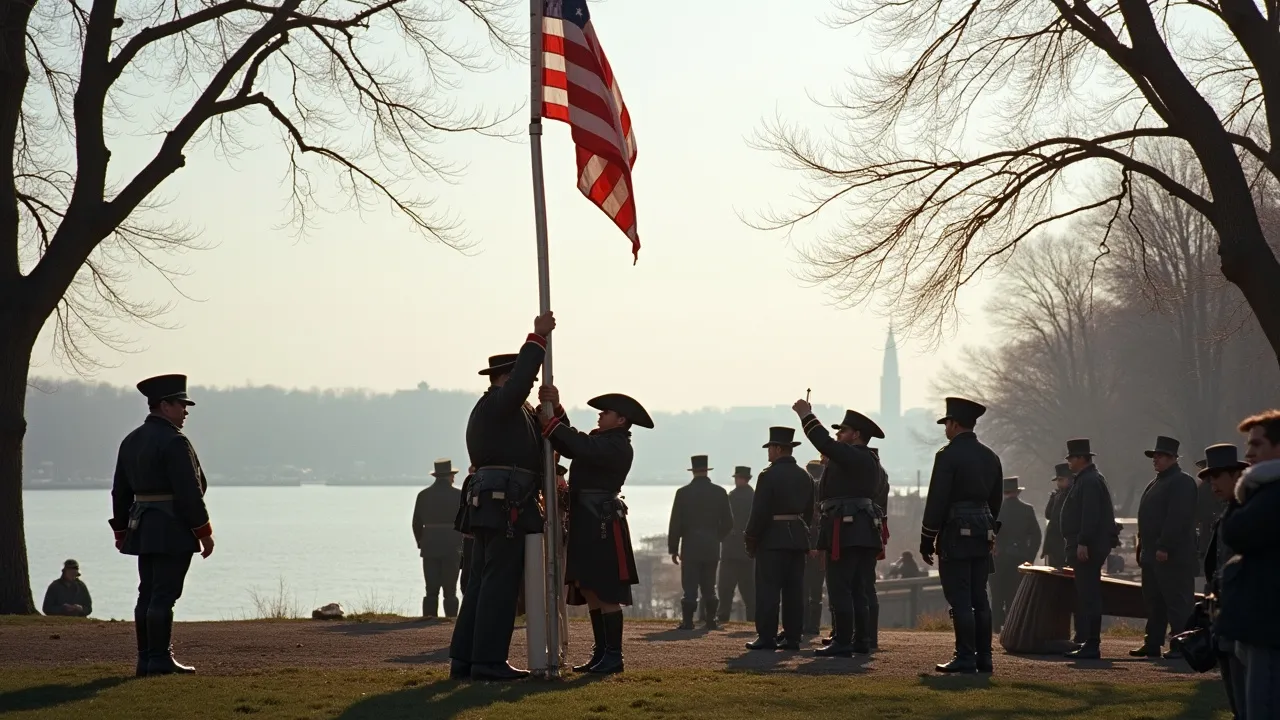
Evacuation Day on November 25th commemorates the 1783 departure of British forces from New York City, marking the end of the American Revolutionary War. It was once a major state holiday and is remembered through reenactments and historical events.
The Historical Origins & Evolutionary Journey
Evacuation Day, observed on November 25th, marks the pivotal moment in 1783 when the last British troops evacuated New York City, ending seven years of occupation during the American Revolutionary War. This day also saw General George Washington triumphantly re-enter the city, solidifying American independence.
The Foundational Catalyst
The catalyst for Evacuation Day was the signing of the Treaty of Paris on September 3, 1783, which formally ended the war and recognized American sovereignty. The British agreed to evacuate all remaining posts, including New York City, their last stronghold. The evacuation was delayed until November due to logistical issues and the need to transport thousands of Loyalists and military supplies. On November 25, 1783, at approximately 1 PM, the final British soldiers boarded ships and departed from Battery Park. Upon their departure, American troops raised the Stars and Stripes over the city, a moment famously depicted in historical art.
The Legislative/Official Adoption
New York State officially designated November 25th as Evacuation Day, a legal public holiday, in the early 19th century. The day was celebrated with parades, fireworks, and patriotic speeches throughout the 1800s. As the decades passed, the holiday's popularity waned, especially after the merger with Thanksgiving celebrations in the mid-20th century. Evacuation Day was removed from the official list of New York State holidays in the 1910s, though local observances continue.
Modern Global Legacy
While no longer an official state holiday, Evacuation Day remains a symbolic date in American history. Historically, it served as a unifying celebration for New Yorkers and a reminder of the nation's founding. Today, reenactments, flag-raising ceremonies, and educational events are held near Battery Park and Fraunces Tavern, preserving the legacy for future generations.
How to Celebrate Evacuation Day (New York)
Celebrating Evacuation Day offers a chance to connect with Revolutionary War history. Here are definitive ways to observe the day:
For Individuals and Families
- Attend Reenactments: Visit Battery Park for the annual reenactment of the British evacuation and American flag raising, organized by historical societies.
- Tour Historic Sites: Walk through Fraunces Tavern (where Washington said farewell to his officers) or the Morris-Jumel Mansion for special tours.
- Read Primary Sources: Explore George Washington's letters or contemporary newspapers for firsthand accounts.
For Schools and Students
- Classroom Lessons: Teach students about the Treaty of Paris and New York's role in the Revolution using interactive timelines.
- Flag-Raising Ceremonies: Organize a mock flag-raising with the 13-star Betsy Ross flag.
- Essay Contests: Host a contest on "Why Evacuation Day Matters."
For Organizations and Historical Groups
- Public Lectures: Host historians to discuss the day's significance and the Loyalist experience.
- Volunteer Cleanups: Participate in park cleanups at historic sites, tying community service to preservation.
Internationally, there are no widespread traditions, but British and American cultural institutions sometimes mark the date with discussions.
The Decline and Merger with Thanksgiving
Throughout the 19th century, Evacuation Day was one of New York's most prominent holidays, rivaling Independence Day. However, multiple forces led to its decline:
- Political Changes: Post-Civil War, national holidays like Memorial Day and Thanksgiving gained precedence.
- Immigration: Influx of non-British heritage immigrants lessened attachment to the British evacuation.
- Merger with Thanksgiving: By the late 1800s, Thanksgiving often fell near November 25th, and eventually the two celebrations merged. In 1917, New York State officially discontinued Evacuation Day as a separate holiday, encouraging citizens to celebrate Thanksgiving instead.
This evolutionary shift reflects broader American cultural integration, where local observances gave way to national traditions.
Significance in the American Revolutionary War
Evacuation Day is not merely a local commemoration; it symbolizes the final British acknowledgment of American independence. The peaceful transfer of power demonstrated the success of the fledgling nation's diplomacy and military. Key outcomes include:
- End of Hostilities: The evacuation ensured no further armed conflict on American soil.
- Loyalist Exodus: Thousands of Loyalists fled, reshaping demographics in Canada and the Caribbean.
- Washington's Leadership: His entry cemented his status as national hero and first president.
The day is also a reminder of the costs of war, as the city had suffered under occupation with fires, disease, and property destruction.
Modern Commemorative Sites and Events
Today, Evacuation Day is kept alive by historical societies and parks. Key locations include:
- Battery Park: Site of the flag-raising, with a commemorative plaque.
- Fraunces Tavern Museum: Hosts annual events and exhibits on the evacuation.
- Statue of George Washington: Located at Federal Hall, where he was inaugurated.
Annual reenactments by the New York City Evacuation Day Committee attract hundreds of participants. In 2023, the 240th anniversary saw a large parade and educational fair. These events ensure the historical memory endures.
Evacuation Day in Popular Culture and Education
Though obscure, Evacuation Day appears in historical novels, documentaries, and school curricula. It is often featured as a case study in the challenges of post-war reconstruction. Educational resources include:
- Podcasts: Episodes by "Ben Franklin's World" and "The American Revolution Podcast" cover the event.
- Digital Archives: The New York Public Library has digitized contemporary newspapers from 1783.
- Museum Exhibits: The Museum of the American Revolution often highlights the evacuation in their timeline.
Its relatively low profile makes it a hidden gem for history enthusiasts seeking lesser-known patriotic events.
Historical Timeline
American victory at Yorktown forces British to negotiate peace, setting stage for eventual evacuation.
Treaty of Paris signed, officially ending the Revolutionary War and requiring British evacuation of all territories.
British troops begin evacuating Long Island and Staten Island, converging on Manhattan.
Final British troops depart from Battery Park; American troops raise the flag at 1 PM. George Washington enters the city later that day.
Washington bids farewell to his officers at Fraunces Tavern, cementing the location's historical significance.
Evacuation Day becomes a major state holiday in New York, with parades, fireworks, and school closings.
New York State removes Evacuation Day from official holiday calendar, merging its observance with Thanksgiving.
Local historical societies begin reviving interest through annual reenactments at Battery Park.
240th anniversary celebrated with large-scale reenactment, educational events, and media coverage.