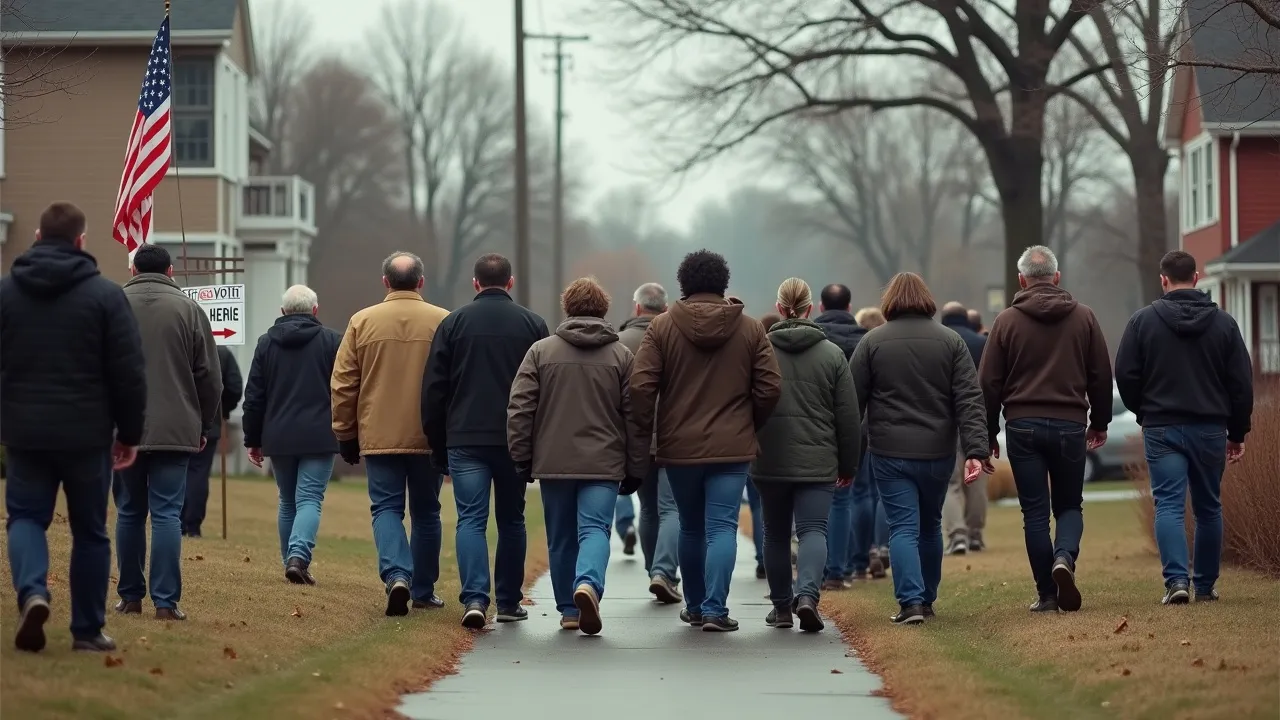
Election Day in the United States is the first Tuesday after the first Monday in November, when citizens vote for federal, state, and local offices. It is a cornerstone of American democracy, established by law in 1845.
The Historical Origins & Evolutionary Journey
Election Day in the United States traces its roots to the founding of the republic, evolving from a patchwork of state-controlled dates to a single, federally designated day. The journey reflects the nation's struggle to balance state autonomy with national unity, and its ongoing effort to expand the franchise.
The Foundational Catalyst
In the early Republic, each state set its own voting day, leading to confusion and staggered results. The Constitution left election mechanics to the states, but by the 1840s, the need for a uniform date became clear. The development of railroads and telegraphs made a single Election Day practical, as results could be transmitted quickly.
Legislative Adoption
In 1845, Congress passed a law designating the first Tuesday after the first Monday in November as the day for electing presidential electors. This date avoided interfering with the Sabbath (Sunday) and market day (often Wednesday). It also accounted for travel times in an agrarian society, as November fell after the harvest but before winter weather made roads impassable.
The law stated: The electors of President and Vice President shall be appointed in each State on the Tuesday next after the first Monday in the month of November.
This date has remained unchanged, though states later adopted it for most federal and state elections.
Modern Legacy
Over time, Election Day has become a symbol of civic duty. The 19th and 20th centuries saw expansions of suffrage: the 15th Amendment (1870) granted Black men the right to vote, the 19th (1920) gave women the vote, and the 26th (1971) lowered the voting age to 18. The Voting Rights Act of 1965 eliminated many barriers, though challenges persist.
Today, Election Day is not a federal public holiday, but many states have made it a holiday or encourage employers to allow time off. Efforts to make it a national holiday continue, with proponents arguing it would increase participation.
How to Celebrate Election Day (US)
Celebrating Election Day goes beyond casting a ballot—it is a day of civic engagement, community, and reflection. Below are actionable ways individuals, schools, and organizations can honor the day.
For Individuals
- Vote Early or on Election Day: Check your polling place, hours, and ID requirements. If voting in person, bring a friend or family member to encourage turnout.
- Volunteer as a Poll Worker: Many jurisdictions need volunteers to staff polling stations. Training is typically provided.
- Host a Viewing Party: After polls close, gather to watch results, but respect others' opinions. Focus on the democratic process.
- Educate Yourself: Read about candidates and issues before voting. Use nonpartisan sources like League of Women Voters.
For Schools
- Organize a mock election to teach students about the voting process.
- Hold a civics lesson on the history of suffrage and the importance of participation.
- Encourage students to accompany parents to the polls.
For Organizations
- Provide paid time off for employees to vote or serve as poll workers.
- Host a voter registration drive in the weeks leading up to Election Day.
- Offer nonpartisan transportation services to help people get to polling places.
Election Day is also a time to respect the process. Avoid confrontations, and remember that every valid vote counts. Whether your candidate wins or loses, participation strengthens democracy.
The Electoral Process: How It Works
The U.S. electoral system is complex, combining federal, state, and local elements. On Election Day, voters cast ballots for president, Congress, state legislators, and local officials, as well as ballot measures.
Presidential Elections
Voters technically choose electors for the Electoral College, not the candidate directly. Each state gets a number of electors equal to its congressional delegation. Most states use a winner-take-all system. A candidate needs 270 of 538 electoral votes to win.
Congressional Elections
All 435 House seats and about one-third of Senate seats are up for election every two years. House members serve two-year terms, senators six-year terms. Elections are determined by popular vote within districts or states.
State and Local Elections
Governors, state legislators, mayors, and city council members are often elected on the same day. Many states also include ballot initiatives and referendums where citizens vote directly on laws.
Voting Methods
- In-person on Election Day at assigned polling places.
- Early voting (in person before Election Day in many states).
- Mail-in or absentee voting (by request or universal in some states).
Ballots are cast on paper, optical scan, or electronic machines. After polls close, votes are counted and results reported, though some states take days to finalize counts due to mail ballots.
Voter Rights and Access
Voting rights are protected by the Constitution and federal laws, but access varies by state. Understanding your rights is crucial for a smooth voting experience.
Federal Protections
- Voting Rights Act of 1965: Prohibits racial discrimination in voting. Section 2 applies nationwide; Section 5 requires certain jurisdictions with a history of discrimination to pre-clear voting changes.
- National Voter Registration Act (1993): Allows registration at DMVs and public agencies.
- Help America Vote Act (2002): Provides funding for voting machines and requires provisional ballots.
- Uniformed and Overseas Citizens Absentee Voting Act: Enables military and overseas voters to vote absentee.
State Variations
State laws govern voter ID requirements, registration deadlines, early voting, and mail voting. Some states require photo ID; others accept non-photo IDs or signatures. Some states allow same-day registration; others require registration weeks in advance. Check your state's election website for details.
Common Barriers
- Long lines due to insufficient polling places or equipment.
- Confusing ballot designs.
- Voter purges from rolls.
- Lack of language assistance for non-English speakers.
Organizations like the ACLU and League of Women Voters provide hotlines and resources for voters facing issues on Election Day.
Impact of Election Day on Society
Election Day shapes American society in profound ways, influencing policy, public discourse, and civic engagement. High turnout elections tend to produce governments that reflect the broader electorate, while low turnout can skew representation.
Civic Engagement
Election Day is a unique moment of collective participation. It fosters a sense of shared responsibility and community. Studies show that voting is habitual; those who vote are more likely to engage in other civic activities like volunteering and contacting officials.
Policy Outcomes
Elected officials make decisions on healthcare, education, taxes, and civil rights. Election outcomes determine the direction of legislation and judicial appointments. Midterm elections often serve as a referendum on the sitting president's performance.
Media and Information
Election season is a major driver of media coverage, fact-checking, and political advertising. Social media platforms implement policies to combat misinformation. The day itself is a focal point for news cycles and public conversation.
Economic Impact
Elections can cause short-term economic uncertainty but also long-term effects through policy changes. Stock markets may fluctuate based on expectations. The day itself is often a holiday for some workers, with many businesses closing or adjusting hours.
Overall, Election Day reinforces democratic norms and provides a peaceful mechanism for transferring power—a model that has inspired movements worldwide.
Controversies and Reforms
Election Day is not without controversy. Debates over voter ID laws, gerrymandering, campaign finance, and voting machine security are perennial. Reforms aim to make elections more fair, secure, and accessible.
Voter ID Laws
Proponents argue they prevent fraud; critics say they suppress minority and low-income voters. Courts have struck down some strict ID laws as discriminatory. The debate continues over balancing security and access.
Gerrymandering
Drawing district boundaries to benefit one party undermines competitive elections. Some states have created independent redistricting commissions to reduce partisan bias. The Supreme Court has allowed gerrymandering as a political question but does review racial gerrymandering.
Campaign Finance
Spending by Super PACs and dark money groups has skyrocketed since Citizens United v. FEC (2010). Reforms like disclosure requirements and public financing are proposed to reduce the influence of wealthy donors.
Voting Machine Security
After the 2016 election, concerns about foreign interference and hacking led to increased funding for paper ballots and post-election audits. Many states now require a paper trail for every vote.
Making Election Day a Holiday
Proposals to make Election Day a federal holiday aim to increase turnout by giving workers time off. Critics note that low-wage workers and hourly employees might still need to work, and that early voting already provides flexibility. Australia and other countries hold elections on Saturdays with high turnout.
Ongoing reforms include automatic voter registration, expanded early voting, and restoring voting rights for felons. The goal is to ensure that every eligible citizen can participate fully.
Election Day in Popular Culture
Election Day has been depicted in movies, TV shows, literature, and art, often highlighting the drama, tension, and civic importance of the event.
Film and Television
- The West Wing episode 'Election Day' portrays the excitement and behind-the-scenes campaign pressure.
- Recount (2008) dramatizes the 2000 Florida recount.
- All the President's Men touches on Watergate's impact on elections.
- Election (1999) satirizes high school student council elections but mirrors real political dynamics.
Literature
Political novels like All the King's Men and The Plot Against America explore election dynamics. Non-fiction books like The Victory Lab detail the science of get-out-the-vote efforts.
Art and Photography
Photographers like Dorothea Lange and Gordon Parks captured voting scenes during the Civil Rights era. Artists like Shepard Fairey create iconic election-themed posters ('Hope' for Obama).
Election Day also features in music, from Woody Guthrie's protest songs to modern anthems like 'Fight the Power' by Public Enemy, which emphasize political engagement.
Through these cultural lenses, Election Day is portrayed as a pivotal moment where ordinary citizens shape their government.
Historical Timeline
First presidential election under the Constitution held over several months, with states voting on different days.
Congress passes law designating the first Tuesday after the first Monday in November as the uniform date for presidential elections.
15th Amendment ratified, prohibiting denial of vote based on race, color, or previous servitude.
19th Amendment grants women the right to vote nationwide.
Voting Rights Act signed into law, banning discriminatory voting practices.
26th Amendment lowers voting age to 18.
National Voter Registration Act (Motor Voter) enacted, allowing registration at DMV offices.
Controversial Florida recount in presidential election leads to Supreme Court decision in Bush v. Gore.
Help America Vote Act (HAVA) passed to reform voting systems after 2000 election issues.
Shelby County v. Holder strikes down key provision of Voting Rights Act, allowing states to change voting laws without federal preclearance.
COVID-19 pandemic leads to unprecedented expansion of mail-in voting; record turnout of 66.7%.